
Wolfach
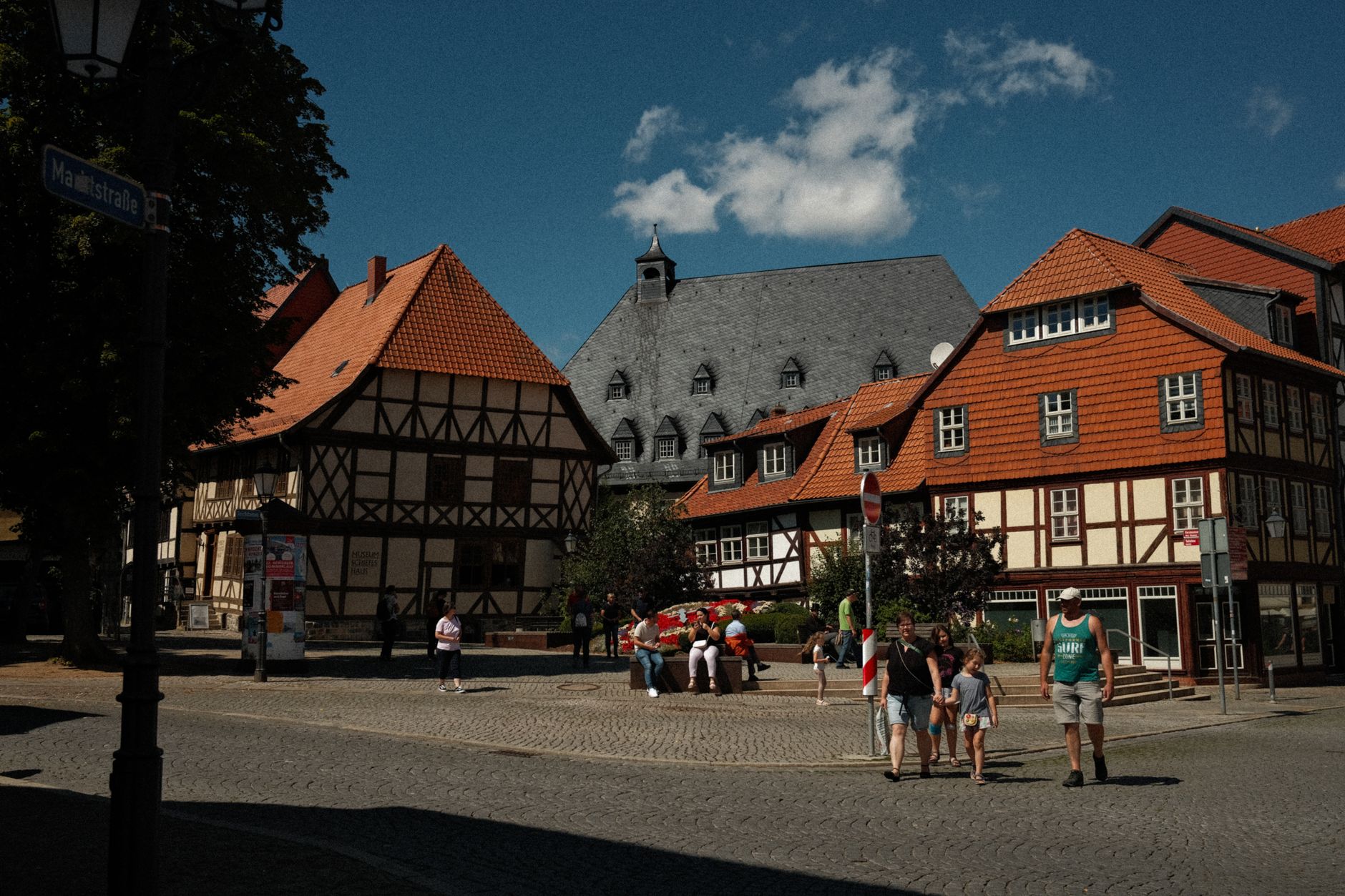
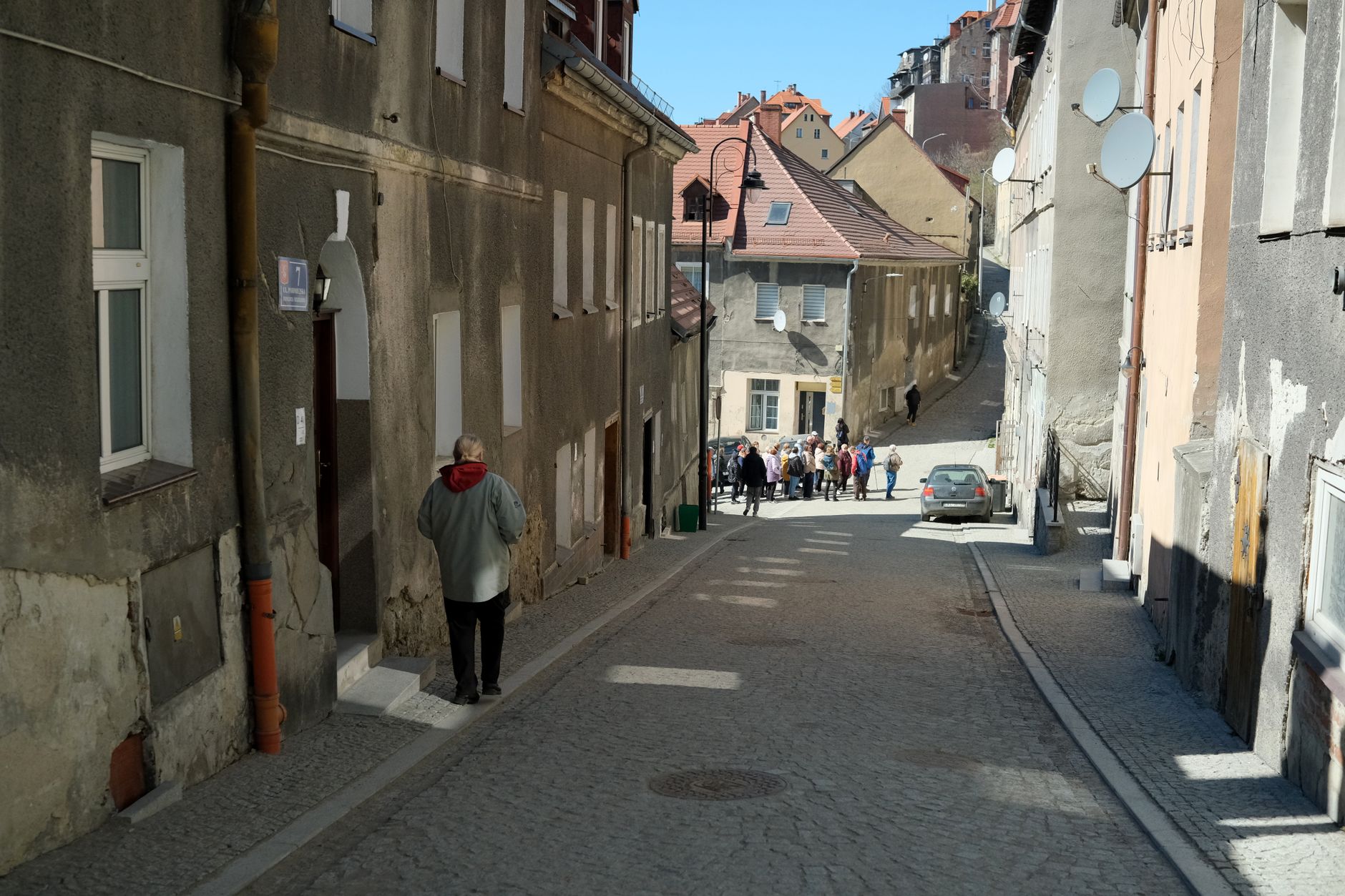
Wolfach announces itself with a single long main street — fountains, sandstone facades, and town houses that run from the 16th century straight through to the 19th — and a castle at the top of the hill that is, at 110 metres across, one of the largest in central Baden. The Kinzig and Wolf rivers meet here, and for centuries that confluence meant timber: logs floated downstream in great rafts until the railways made the trade obsolete.
Today the town is small enough to cover on foot in an afternoon, but specific enough to reward close attention. There is a glassworks where you can watch mouth-blown pieces take shape, a ruined 11th-century castle on the ridge above town, and a riverside park where interpretation panels tell the story of the rafting trade with a demonstration raft moored alongside.
💛 What travellers fall for
People who come back tend to time a visit to the Dorotheenhütte Glassworks when the furnaces are running — the difference between watching a piece being blown and simply seeing the finished shelf display is considerable. The walk up to the Ruine Wolfach afterward, with the Kinzig valley spreading below, earns its twenty minutes.
Deals in Wolfach
Book directly at the provider


How Wolfach came to be
The name Wolfach appears in records as early as 1084 — Wolphaha — and a noble family of that name is thought to have occupied a hilltop castle north of town from the late 11th century. The town itself was formally founded in the 13th century, and by the 14th century its citizens had secured the right to hold markets, a significant civic milestone. The wolf's hook rod on the blue coat of arms traces back to the Herren von Wolfach, who took control in 1260.
For almost six centuries — from the 13th century until 1806 — the Lords of Fürstenberg shaped the town's character. Their most lasting mark is the four-winged castle built between 1671 and 1681 by Landgrave Maximilian Franz von Fürstenberg-Stühlingen, which now houses local authorities, a chapel, and the raftsmen's museum. The timber trade that once defined Wolfach's economy ran from the 15th century until the late 19th, when the railway arrived and made river rafting redundant.
Who and what shaped it
People who shaped it
Landmark buildings
See Wolfach in motion
Plan your visit
On the map
When to go
Summers are mild — July days reach around 24°C with good sunshine — while winters are long, cold, and reliably snowy, with January daytime temperatures around 4°C and nights that drop below freezing. Rain falls throughout the year, with May the wettest month, so a layer and waterproof are useful in any season.
Right now
Background & history adapted from Wikipedia (CC BY-SA) · specs from Wikidata (CC0) · weather from Open-Meteo · map data © OpenStreetMap contributors · photos from Wikimedia Commons / Unsplash with per-image credit. No third-party reviews or social posts reproduced.