
Wernigerode
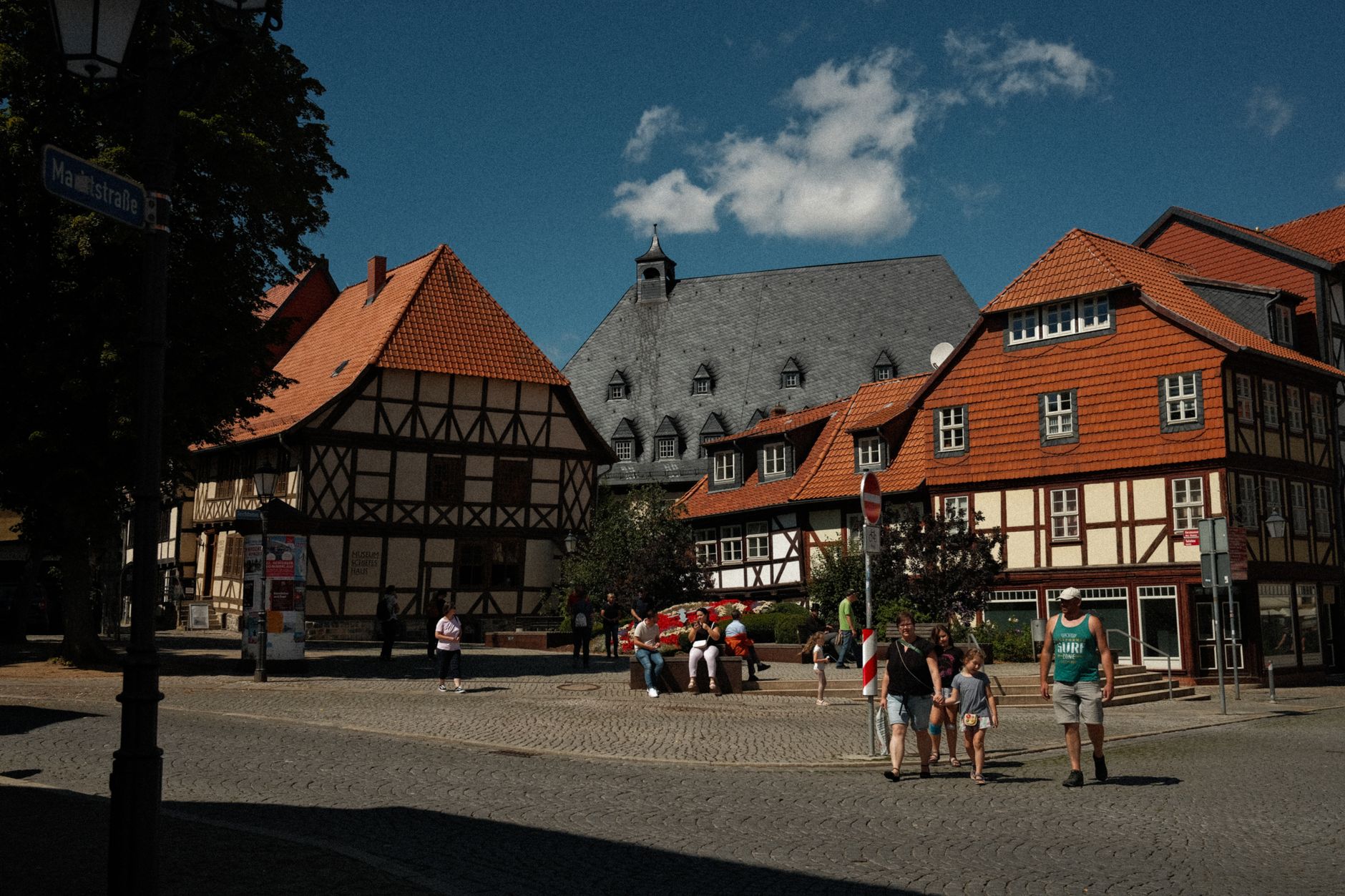
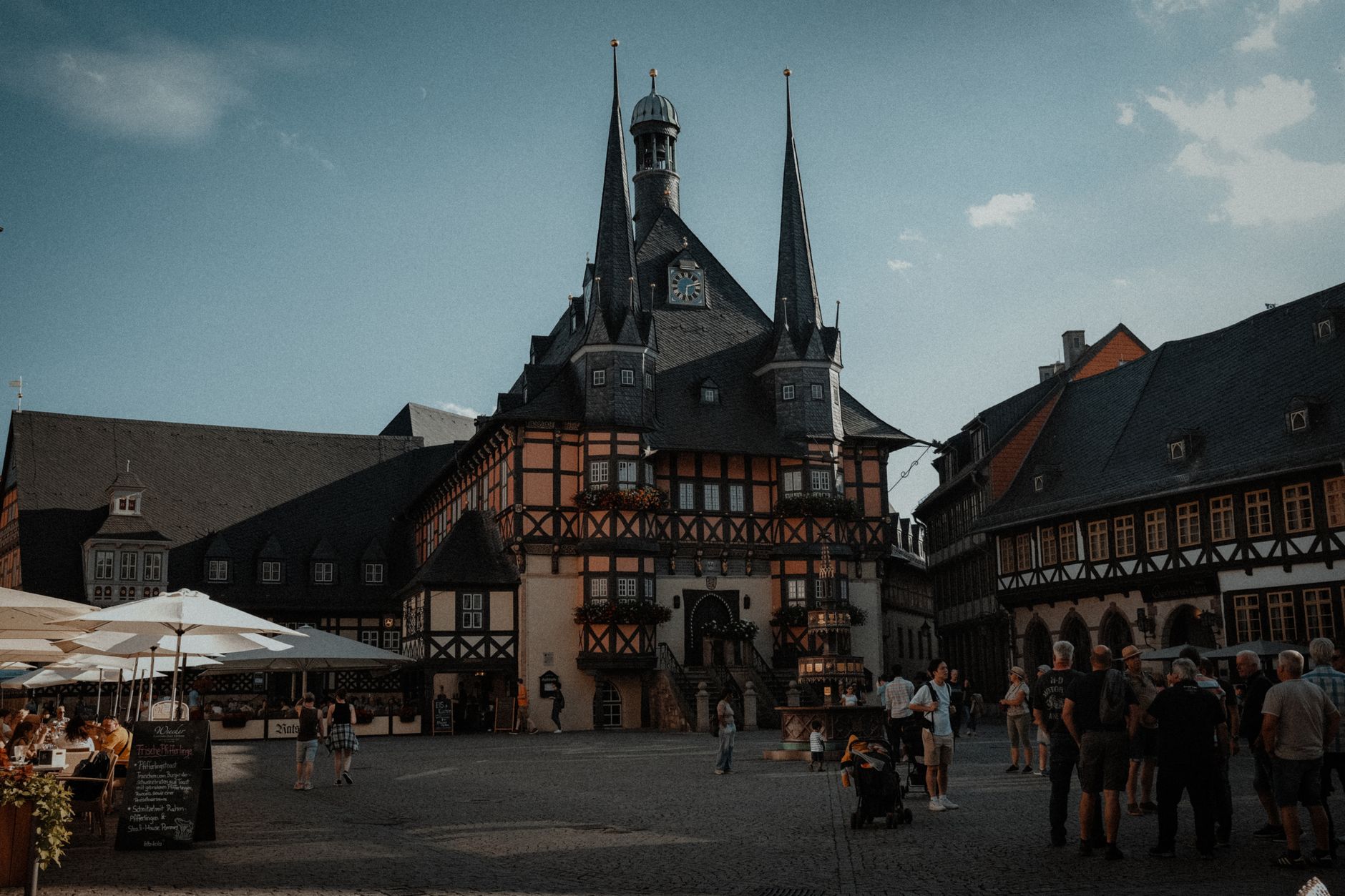
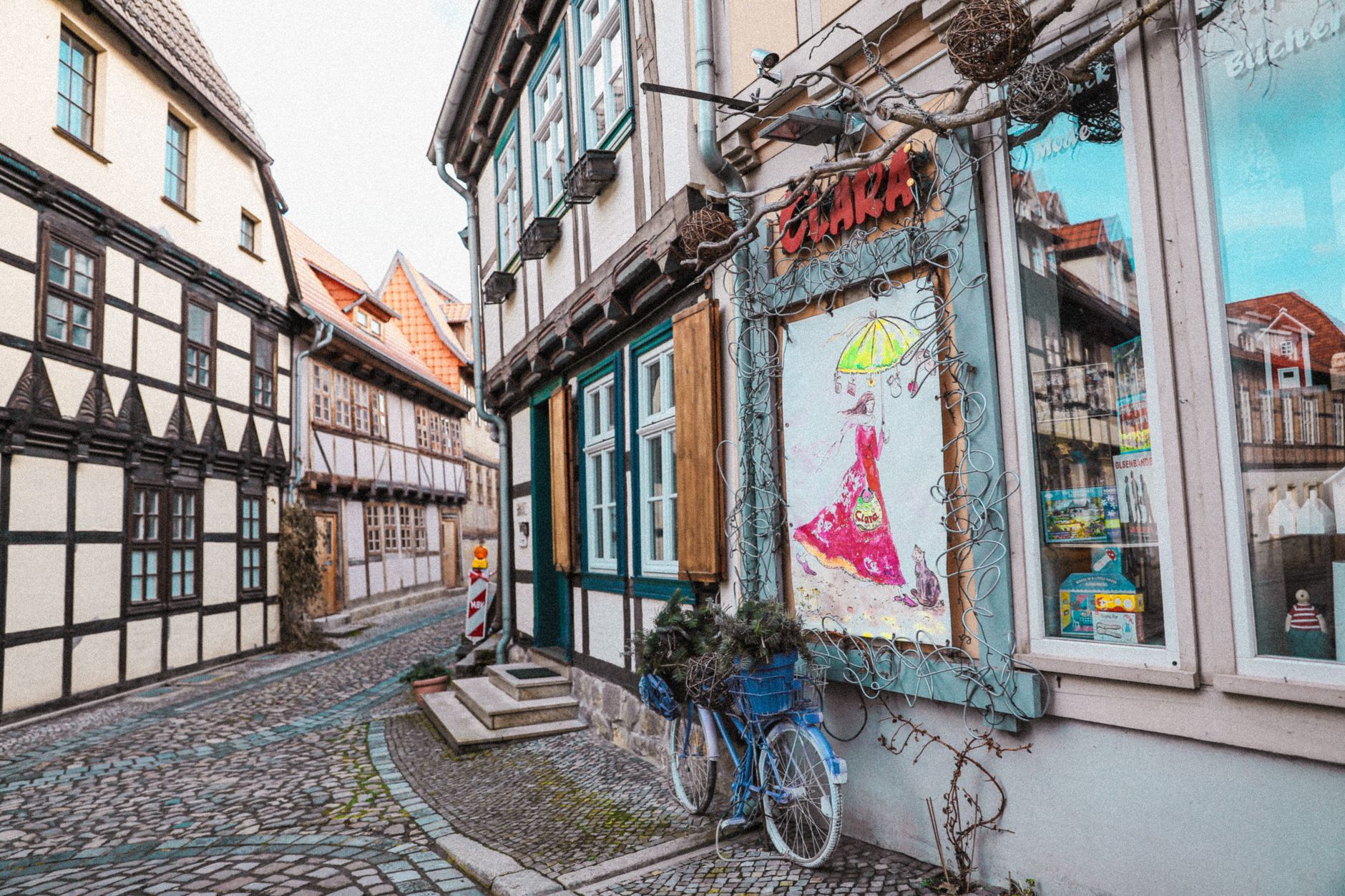
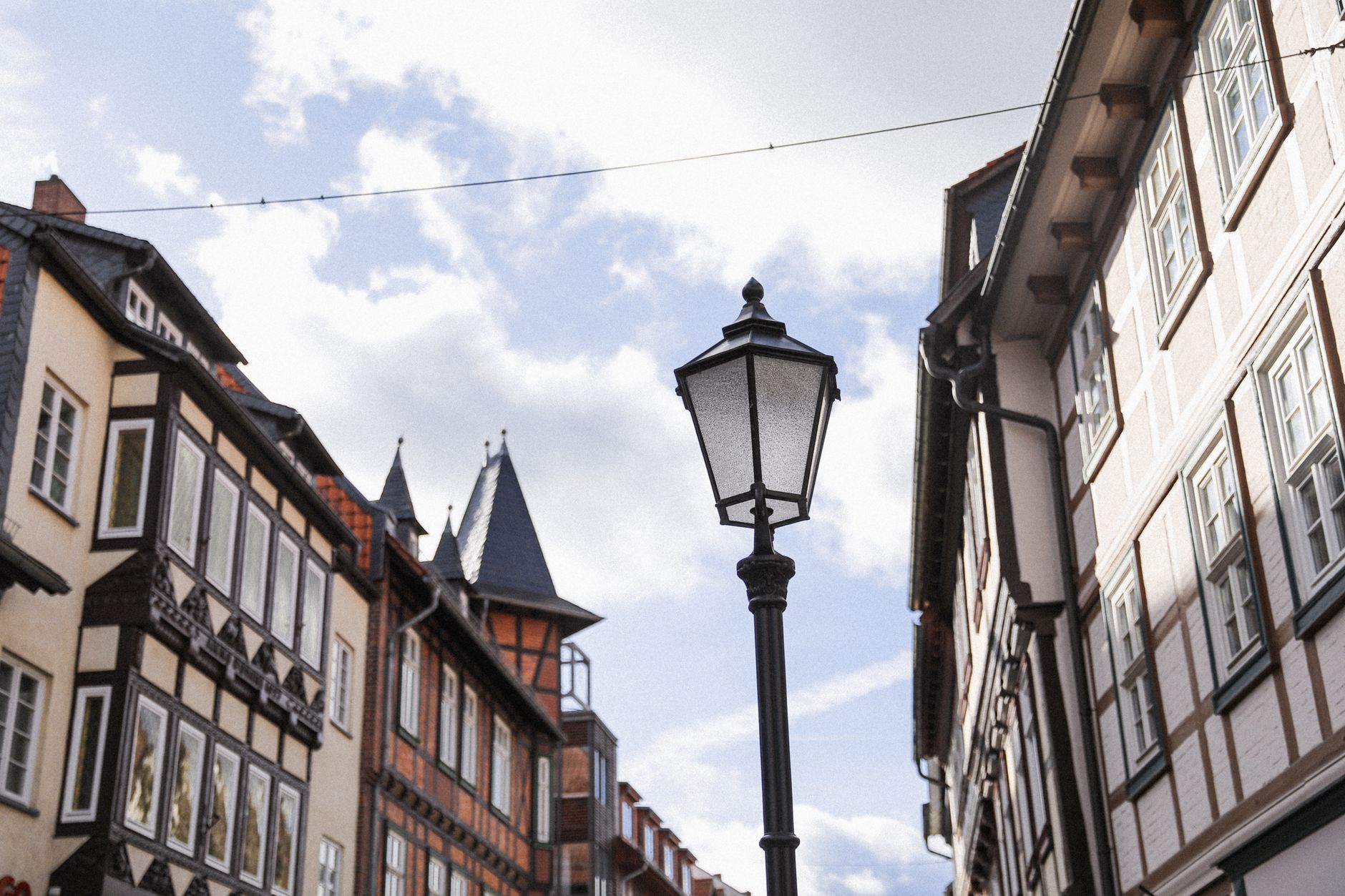
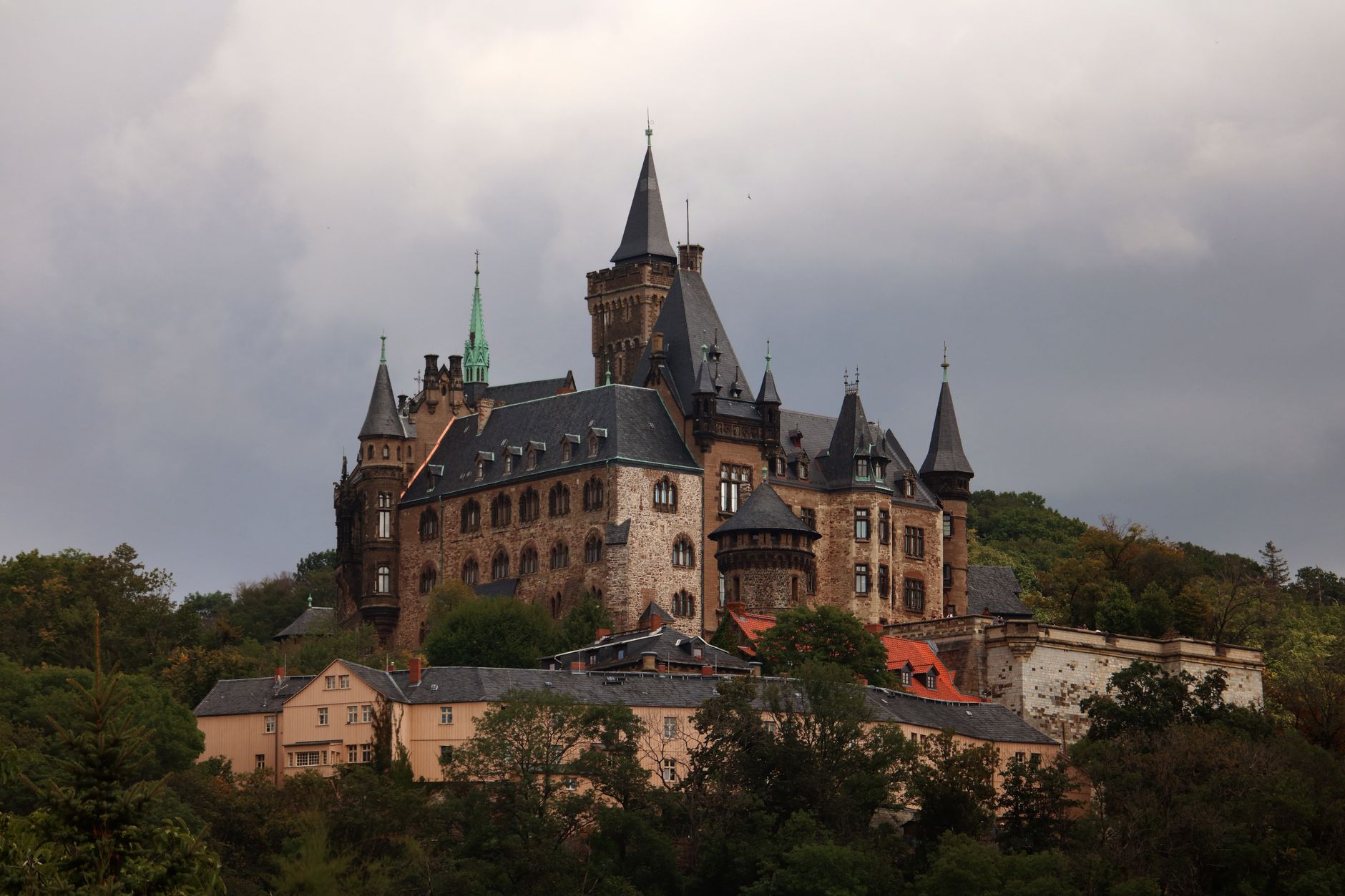
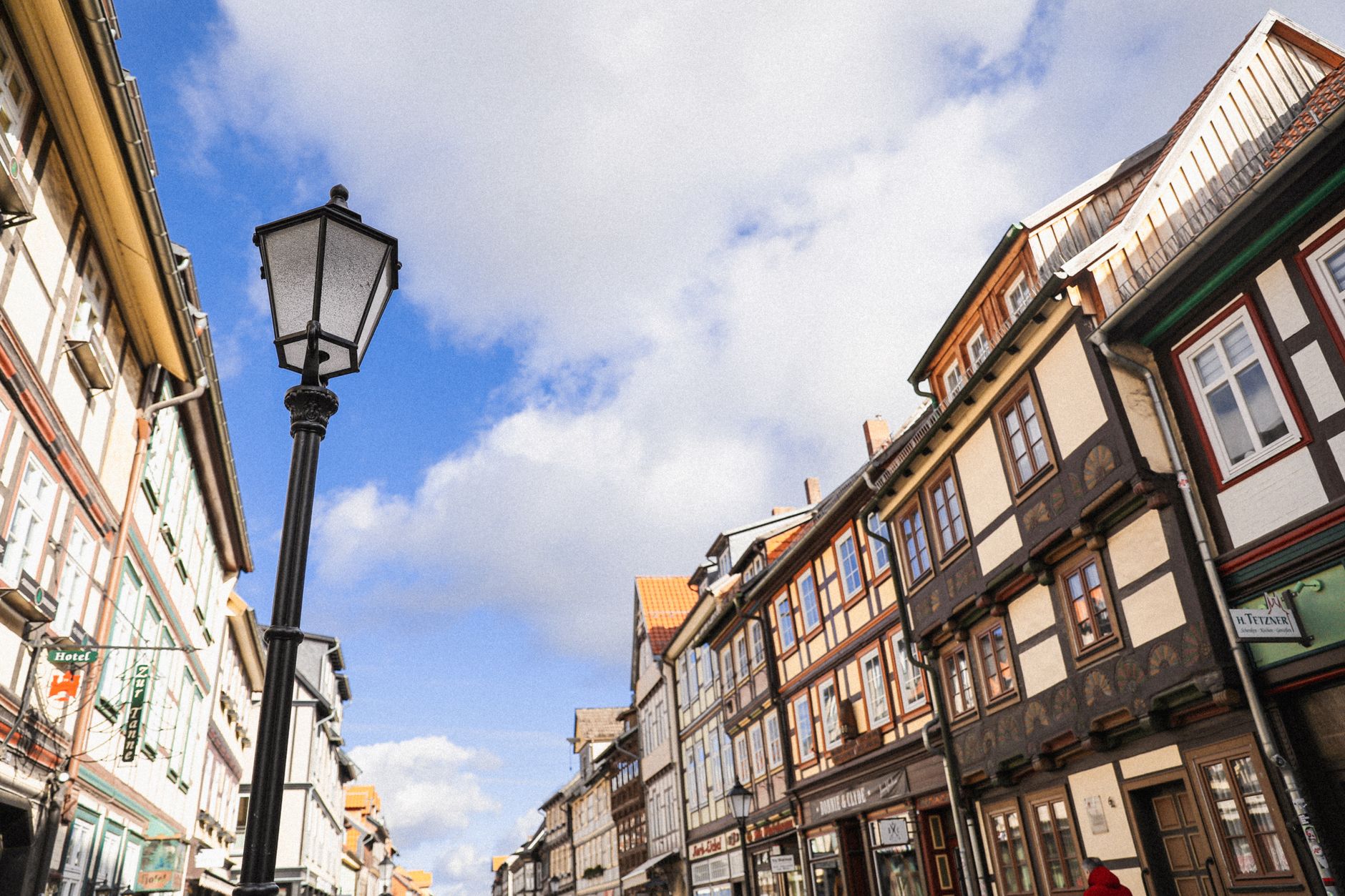
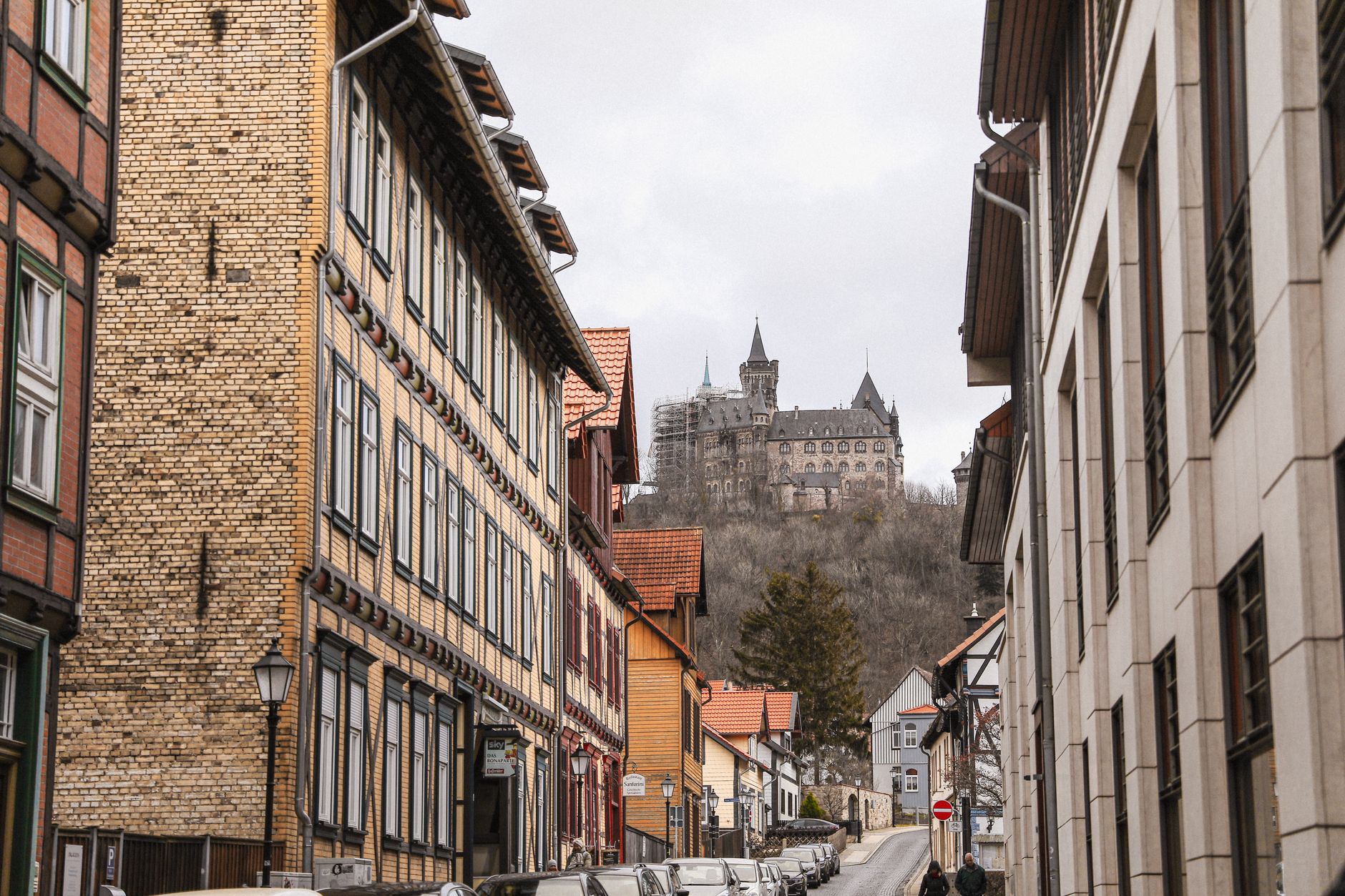
The castle gives the game away before you even reach the centre. Schloss Wernigerode sits on its wooded hill above the rooftops, a silhouette of towers and steep slate roofs that has been rebuilt so many times — Romanesque fortress, Renaissance palace, Baroque residence, Neo-Gothic fantasy — that its restless outline almost tells the town's whole story by itself. Below it, the market square holds a timber-framed town hall that started life in 1420 as a comital playhouse, and the streets radiating outward are lined with half-timbered houses in various states of lean, including one that tilts 130 centimetres forward and technically out-angles Pisa.
Wernigerode is the northern gateway to the Harz narrow-gauge railway, a working steam network that climbs 60 kilometres south before branching up to the Brocken summit. Trains leave from beside the main station, usually hauled by 2-10-2 tank engines built in the mid-1950s. The combination of medieval streetscape and live steam gives the town an unusually layered quality — less curated than some of its Harz neighbours, more genuinely in use.
💛 What travellers fall for
People who come back tend to arrive by the first steam departure to Brocken and return for a long lunch in the old quarter. The Krummel House on the Breite Straße — its entire facade carved in dense 17th-century woodwork — rewards a second look once the morning tour groups have moved on. Late afternoon, the castle museum is quieter and the light through the historicist windows is worth the climb.
Deals in Wernigerode
Book directly at the provider

How Wernigerode came to be
The name Wernigerode appears in records from 1121, when the first of the Counts of Wernigerode surfaces in documents — the clearing settlement itself is thought to be roughly a century older. The counts navigated shifting overlordships, passing under the margraves of Brandenburg in 1268 and the archbishops of Magdeburg in 1381, before the line died out in 1429 and the county passed to the Stolbergs, who established the Stolberg-Wernigerode branch in 1645.
Count Christian Ernest brought the seat of government back to the town in 1710 after recasting the castle as a Baroque palace, and in 1714 accepted the overlordship of the Prussian king. A century and a half later, Count Otto zu Stolberg-Wernigerode — who would serve as German Vice-Chancellor from 1878 — undertook the castle's most dramatic transformation, reshaping it into the Neo-Gothic complex completed in 1893 that now functions as a museum of 19th-century art and cultural history. Wernigerode became part of the Prussian Province of Saxony in 1815, spent four decades in the GDR after 1949, and returned to the restored state of Saxony-Anhalt in 1990.
Who and what shaped it
People who shaped it
Landmark buildings
See Wernigerode in motion
Plan your visit
On the map
When to go
Summers are mild and green, the best season for the narrow-gauge railway and castle terrace, though July and August bring the heaviest visitor numbers. Winters are cold and often snowy, which suits the half-timbered streets well; the Brocken line runs year-round, and a steam train through a white Harz landscape is a different journey entirely.
Right now
Background & history adapted from Wikipedia (CC BY-SA) · specs from Wikidata (CC0) · weather from Open-Meteo · map data © OpenStreetMap contributors · photos from Wikimedia Commons / Unsplash with per-image credit. No third-party reviews or social posts reproduced.