
Volksdorf

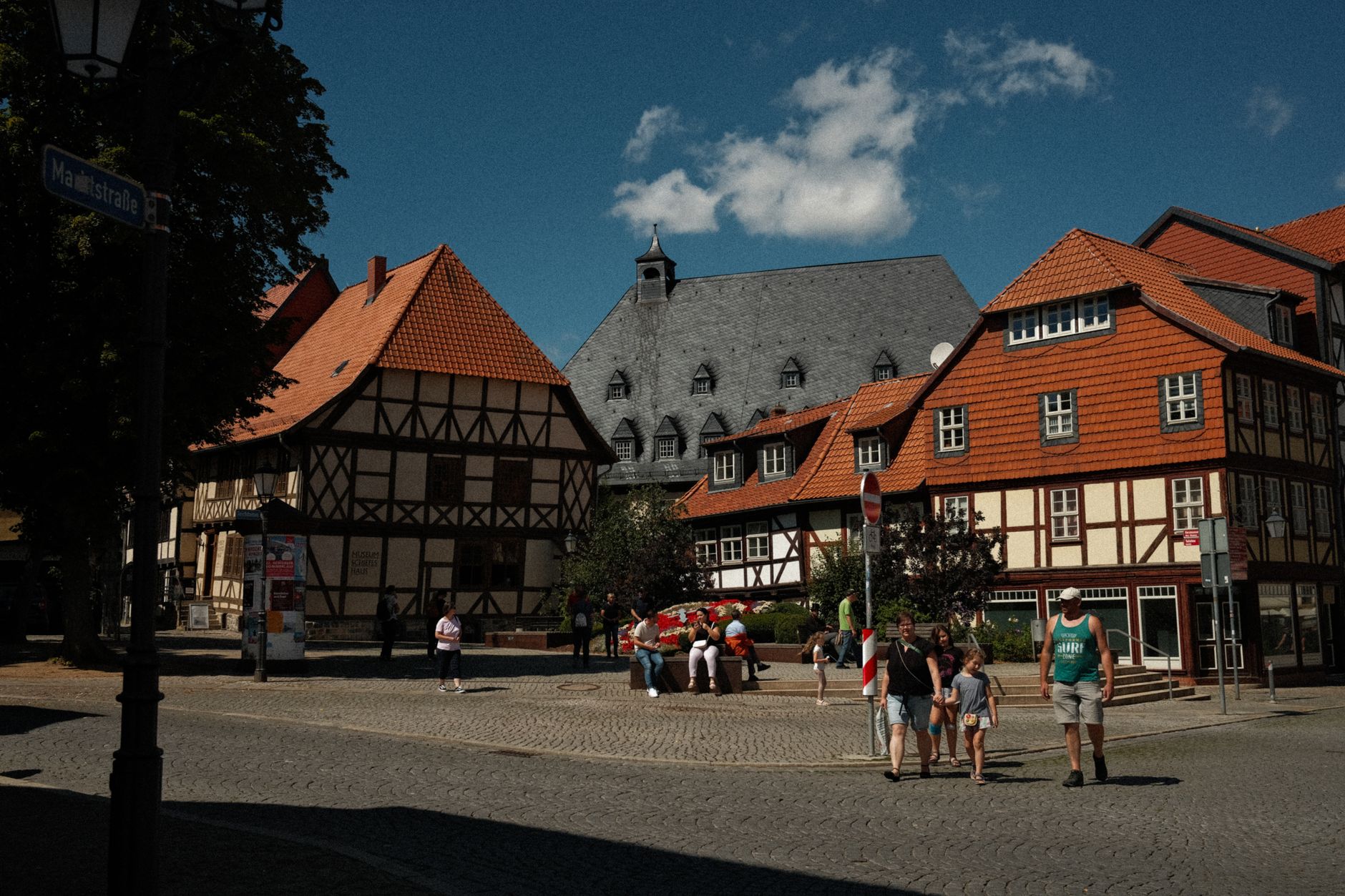
Volksdorf sits at the end of the U1 line, where Hamburg quietly becomes something older and slower. The pedestrianised square called Weiße Rose anchors the centre — a few cafes, a post office, the ordinary rhythm of a neighbourhood that has been a neighbourhood for a long time. What draws people out here is the Museumsdorf: eleven historic farm buildings, a working gristmill, a forge, and livestock that have no interest in tourism. The oldest structure, the Spiekerhus, dates to 1624 and smells accordingly.
This is Hamburg's only open-air museum, and it earns the journey on its own terms. But Volksdorf is also a place people actually live in, with a cinema inside the Bürgerhaus Koralle, a park that once belonged to the Ohlendorff estate, and a U-Bahn connection that puts the city centre 29 minutes away.
💛 What travellers fall for
Regulars tend to time a visit around the Museumsdorf on a weekday, when school groups are thin and the blacksmith is actually working. Afterwards, the park behind the Ohlendorff-Villa is the obvious next move — wide lawns, old trees, no entry fee. The Bürgerhaus Koralle cinema is worth checking for evening screenings if you're staying late.
Deals in Volksdorf
Book directly at the provider

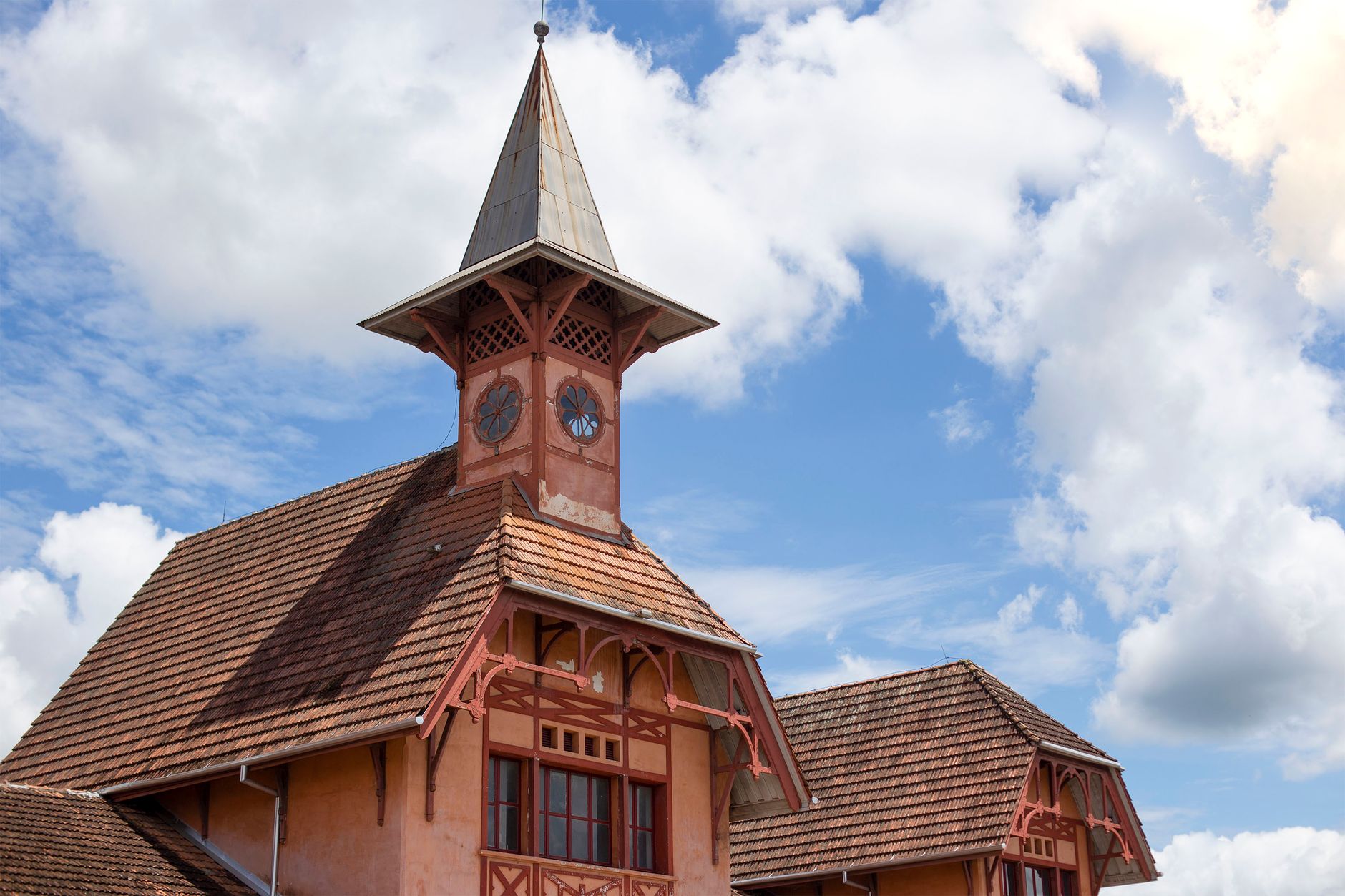
How Volksdorf came to be
The village's name traces back to a founder called Volkward — first written down in 1296, when tithes were sold to a Cistercian nunnery. Long before that, people were already here: flint tools survive from the Stone Age, and the area yielded one of the largest Bronze Age treasure finds in Hamburg.
For centuries Volksdorf remained a farming settlement of a few hundred souls. That changed in 1867, when merchant Heinrich Ohlendorff began acquiring farmsteads and hunting rights, eventually building the country estate whose villa and park still stand. A small rail line arrived in 1904; the Walddörferbahn station opened in 1918 and was electrified into the U-Bahn network by 1925 — the link that turned a rural village into a reachable corner of a growing city.
Who and what shaped it
People who shaped it
Landmark buildings
See Volksdorf in motion
Plan your visit
On the map
When to go
Winters are cold and grey, with temperatures around freezing in January and more sleet than proper snow. Summers are mild and generally pleasant — the best time to be in the Museumsdorf or the Ohlendorff park, though you should carry a layer even in July.
Right now
Background & history adapted from Wikipedia (CC BY-SA) · specs from Wikidata (CC0) · weather from Open-Meteo · map data © OpenStreetMap contributors · photos from Wikimedia Commons / Unsplash with per-image credit. No third-party reviews or social posts reproduced.