
Vieste
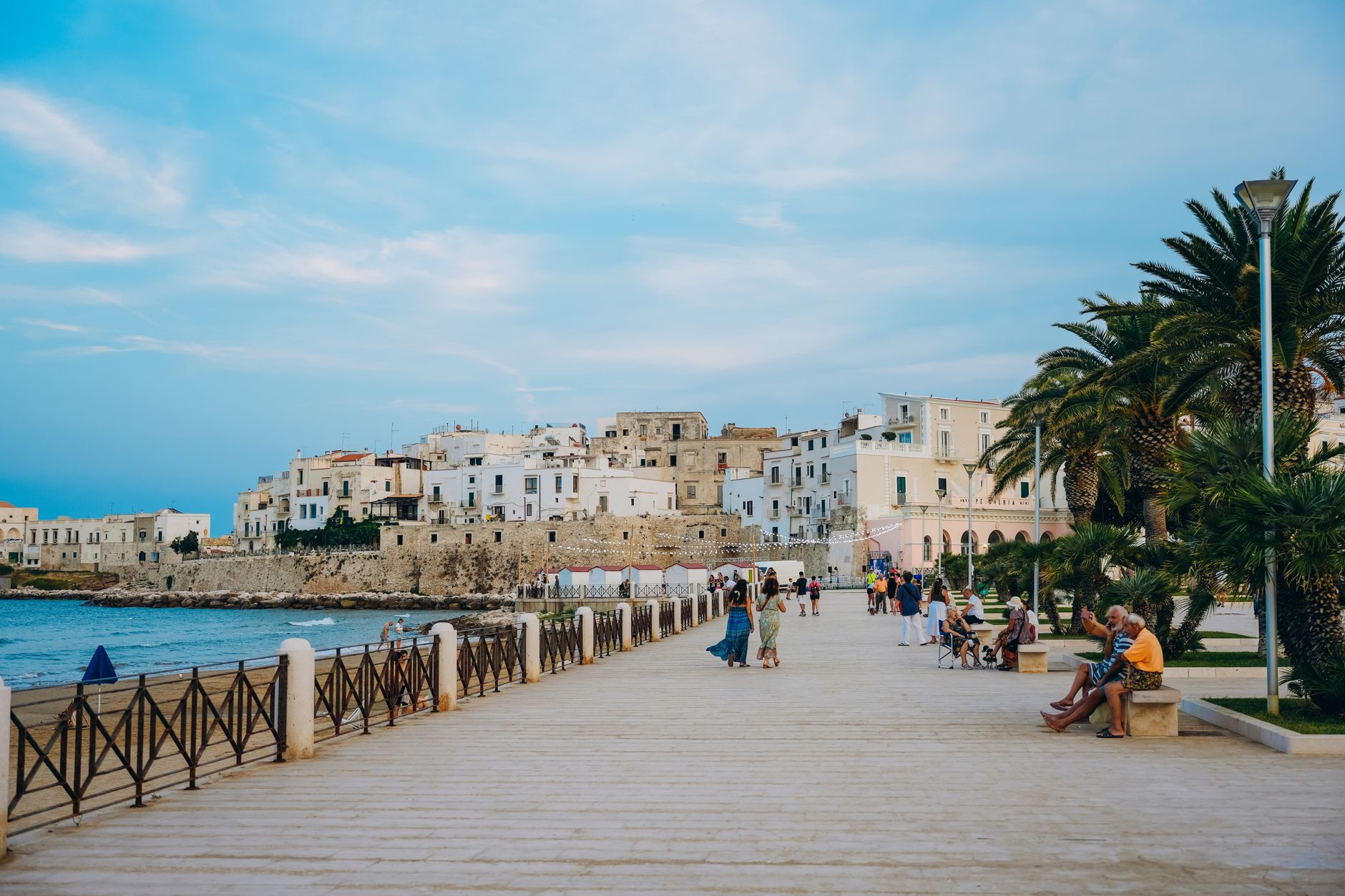
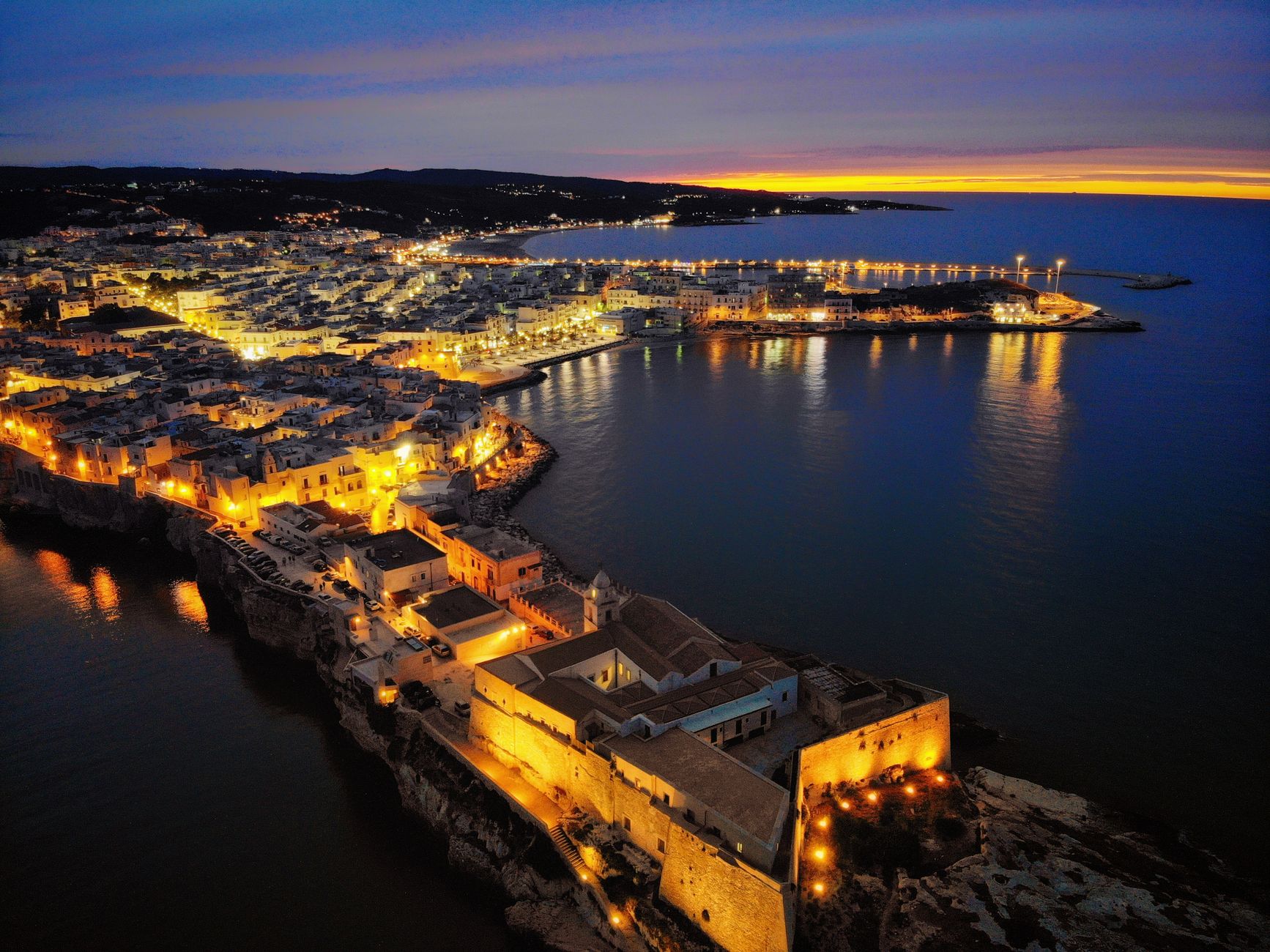
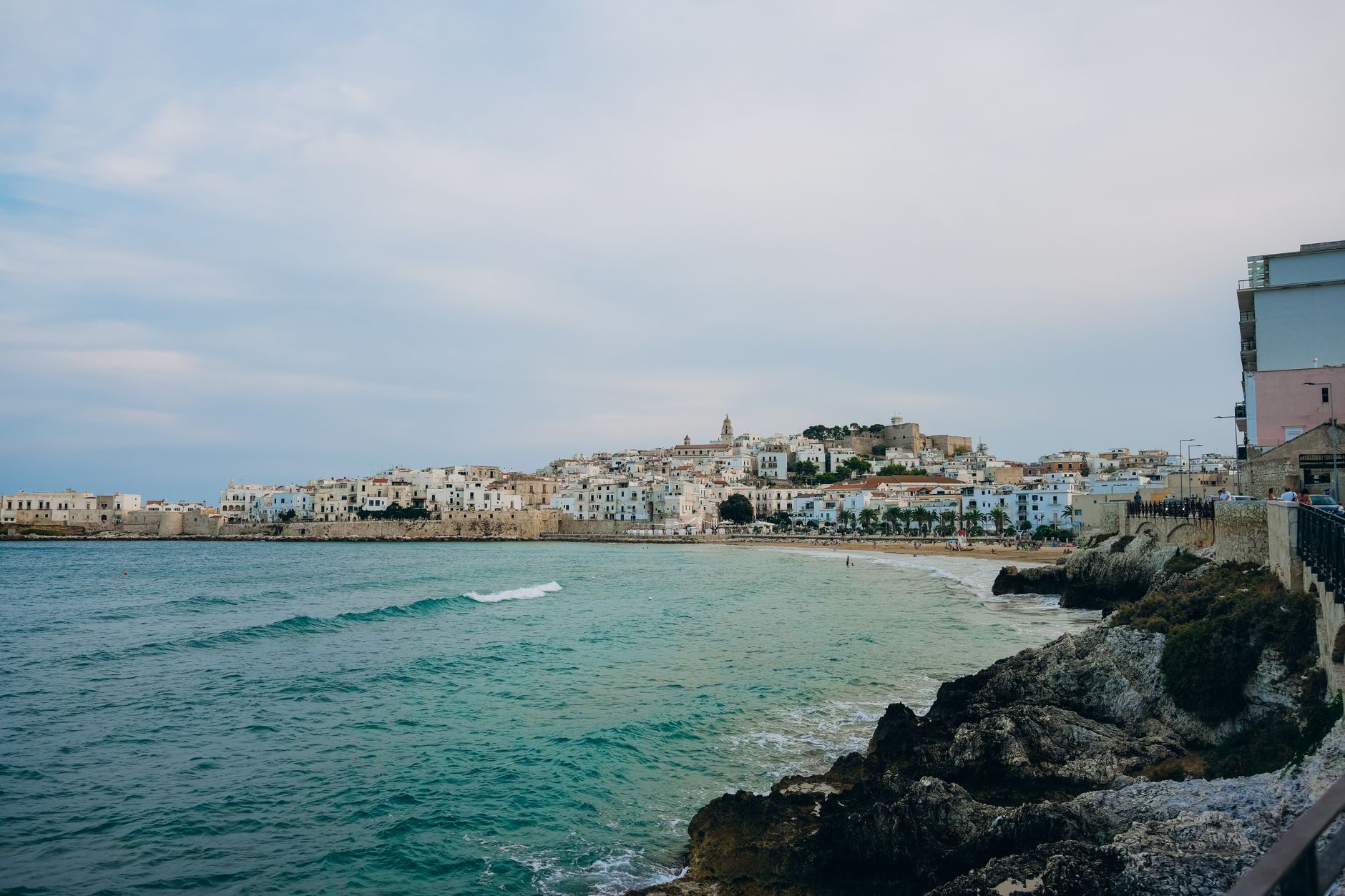
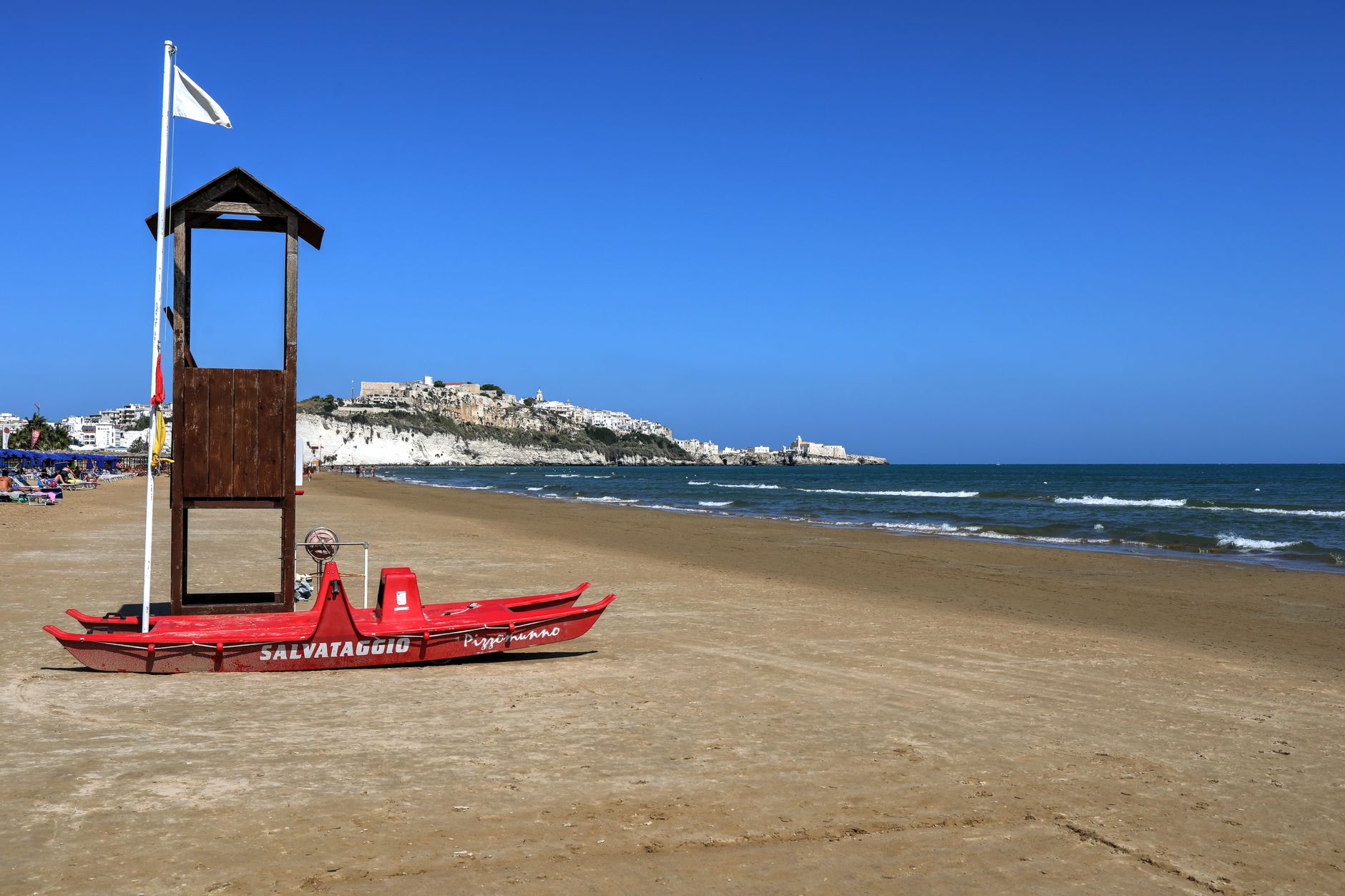
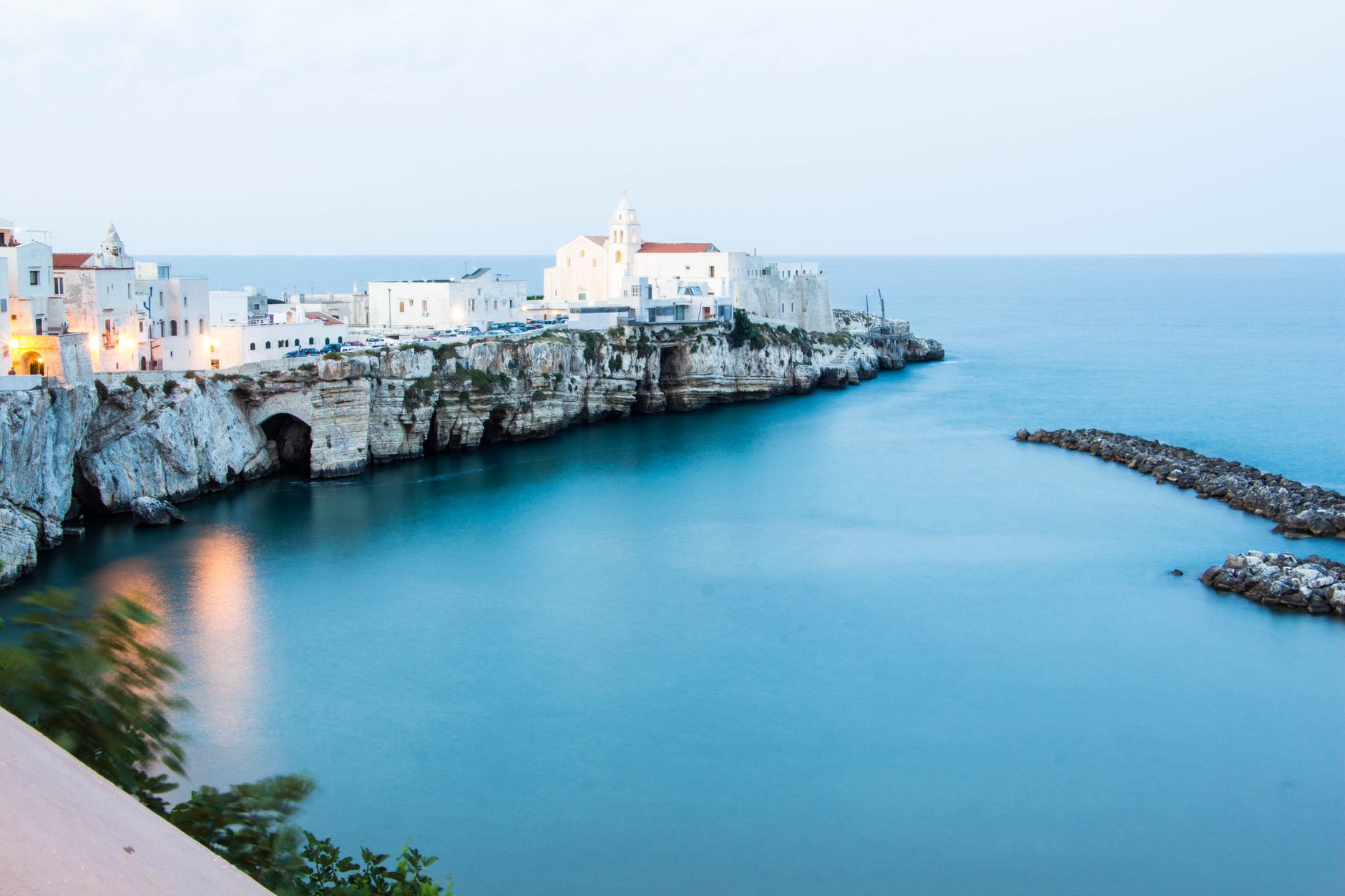
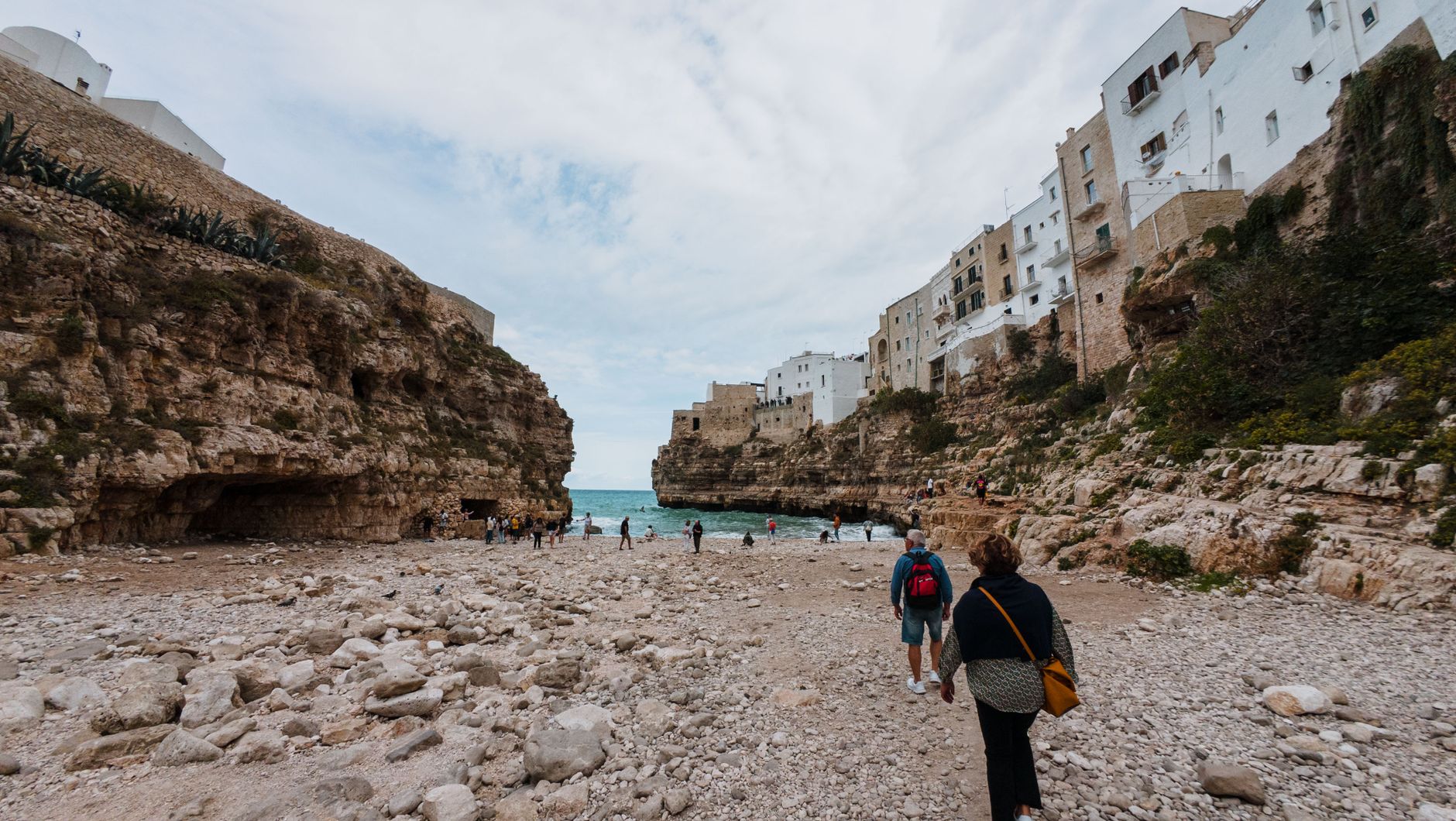
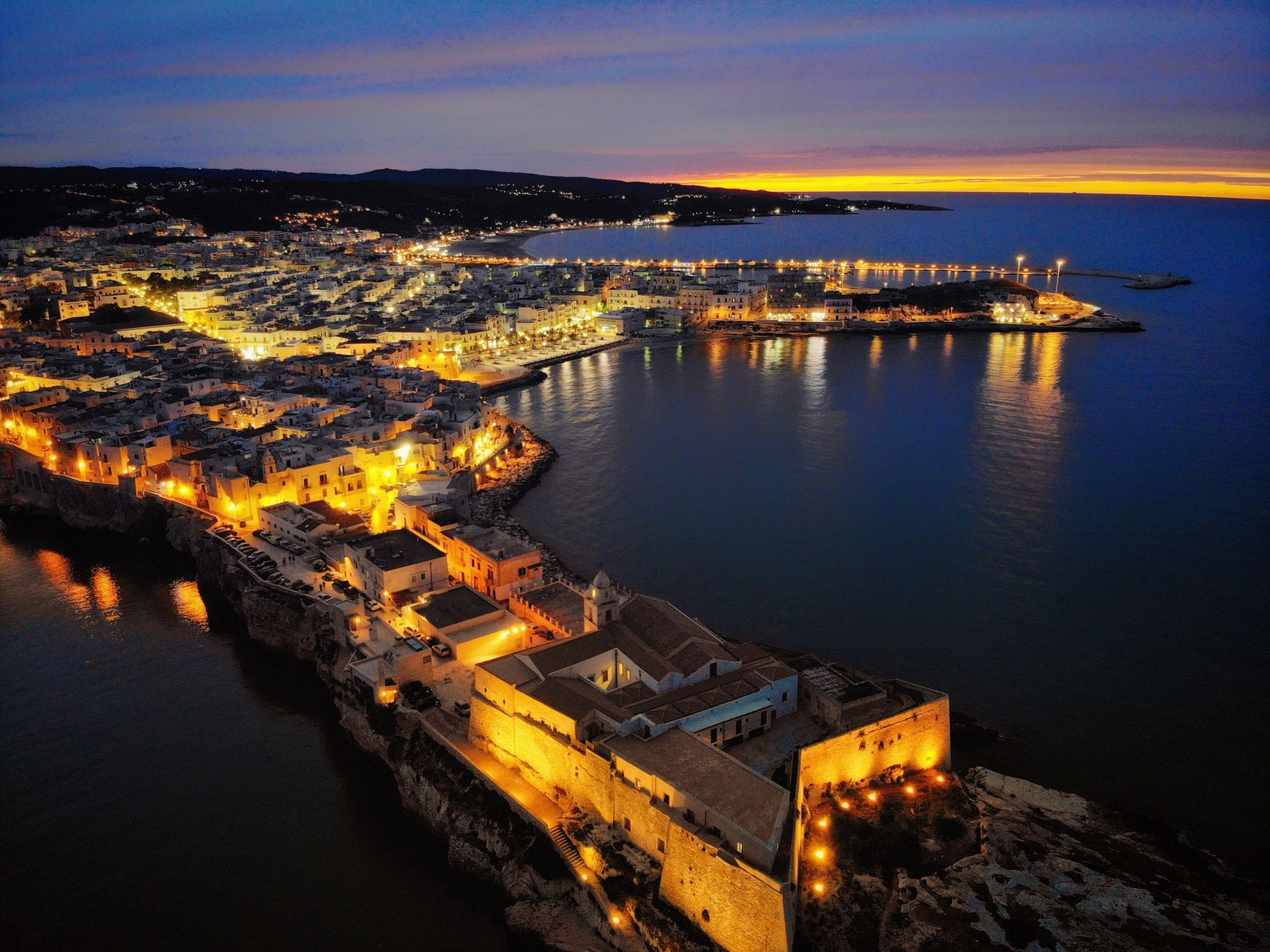
Vieste sits at the tip of the Gargano promontory like a white fist pushed into the Adriatic, its old town stacked on a limestone spur above two beaches. The 26-metre sea stack called Pizzomunno rises from the sand below the castle, and on summer mornings it casts a long shadow across the shore before the crowds arrive.
This is one of the southernmost points of a peninsula that juts east from the Italian mainland — geographically its own world, separate from the flat olive plains of the rest of Puglia. The sea is the constant: clear, close, and never far from the town's long memory of what arrived by water.
💛 What travellers fall for
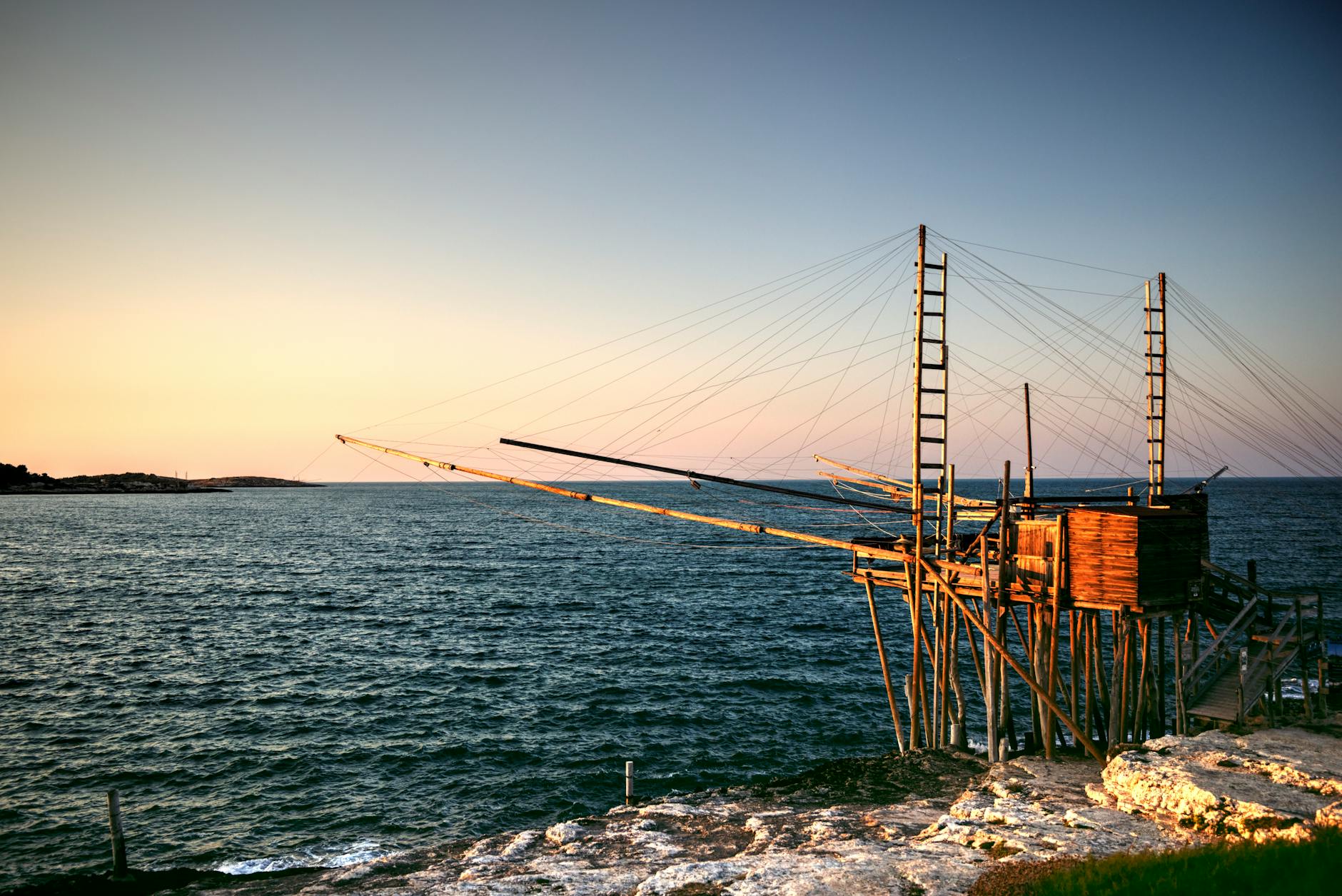
People who come back tend to go early to Spiaggia del Castello, before the sun is fully up, when Pizzomunno is still in shadow. They eat at one of the trabucchi — the old wooden fishing platforms converted into restaurants cantilevered over the water — and they walk the Chianca Amara without quite knowing what to say about it.
Experiences you don't want to miss




Deals in Vieste
Book directly at the provider
How Vieste came to be
People have lived on this spur since at least the tenth century BC — the ancient name Uria appears in inscriptions found in a cave on the nearby island of Santa Eufemia, where a cult of Venus Sosandra left its mark in stone. The Normans gave the town its modern shape in the eleventh century, and Frederick II fortified the castle here in 1242, the same triangular, thick-walled structure that still stands as a military installation today.
The darkest chapter came in 1554, when the Ottoman corsair Dragut Rais led a raid that enslaved roughly 7,000 inhabitants. Those too old or infirm to be taken were killed at a flat rock near the cathedral still known as the Chianca Amara — the Bitter Stone. The town marks this event every year. Three centuries later, Vieste passed into unified Italy; between 1861 and 1863, more than four hundred pro-Bourbon fighters died in the clashes that followed.
Who and what shaped it
Landmark buildings
See Vieste in motion
Plan your visit
On the map
When to go
Summers are hot and dry, with the Adriatic staying warm enough to swim from June through October. Spring and autumn bring mild temperatures and far fewer visitors; winters are cool and quiet, with occasional sharp winds off the sea.
Right now
Background & history adapted from Wikipedia (CC BY-SA) · specs from Wikidata (CC0) · weather from Open-Meteo · map data © OpenStreetMap contributors · photos from Wikimedia Commons / Unsplash with per-image credit. No third-party reviews or social posts reproduced.