
Vic
Vic announces itself through smell before anything else — the sharp, paprika-tinged air of cured meat drifting from deli counters and market stalls around the Plaça Major. This porched medieval square sits at the highest point of the old town and has held a market every Tuesday and Saturday since the 9th century. People still come to buy fuet, the slender, lightly mould-dusted sausage that Vic has been making for centuries.
The city sits in a plain ringed by mountains, roughly halfway between Barcelona and the Pyrenees. That geography gives it a distinct personality: provincial in the best sense, self-sufficient, with a cathedral that has been rebuilt, remodelled and repainted across a thousand years of changing ambition.
💛 What travellers fall for
People who come back tend to time it for a Tuesday or Saturday market, then spend the slow midday hours inside the Episcopal Museum — the Romanesque collection in particular stops most visitors cold. The €2 cloister ticket is worth it for the Gothic stonework alone. Pick up fuet to take home; the stalls around the square sell better than anything you'll find vacuum-packed at a motorway stop.
Experiences you don't want to miss




Deals in Vic
Book directly at the provider

How Vic came to be
The Romans established a settlement here in the 1st or 2nd century AD — the restored temple still standing in the city is the physical evidence — calling it Vicus Ausonae. The Moors destroyed it in the early 7th century, and the city only reassembled itself after 878, when Count Wilfred the Hairy created the county of Osona and Vic began to grow again around its new administrative identity.
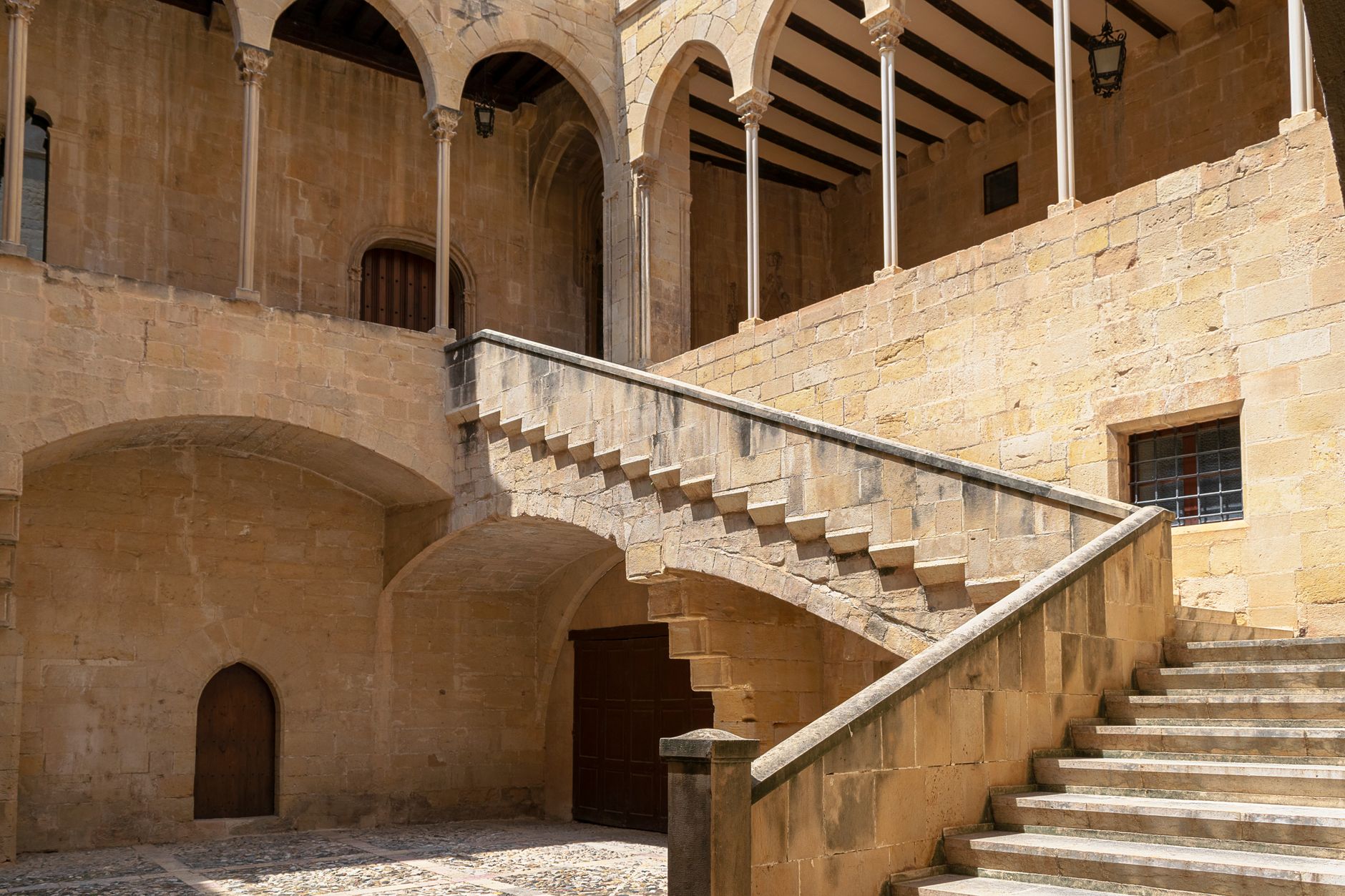
The cathedral's long biography runs through Bishop Oliba de Vich, who built it in Romanesque style and saw it consecrated in 1038, through a neoclassical overhaul begun in 1781, to a near-catastrophe in 1936 when revolutionary mobs burned it and most of the vaulting collapsed. The interior murals you see today — dark, monumental — were painted by Josep Maria Sert as part of the post-war restoration.
Who and what shaped it
People who shaped it
Landmark buildings
See Vic in motion
Plan your visit
On the map
When to go
Summer days reach around 28°C with cool evenings, making June through August the most comfortable window. Winters are another matter: the surrounding mountains trap cold air over the plain, producing persistent fog, occasional snowstorms, and temperatures that can drop well below freezing — the city holds an absolute low of -24°C.
Right now
Background & history adapted from Wikipedia (CC BY-SA) · specs from Wikidata (CC0) · weather from Open-Meteo · map data © OpenStreetMap contributors · photos from Wikimedia Commons / Unsplash with per-image credit. No third-party reviews or social posts reproduced.