
Vernazza
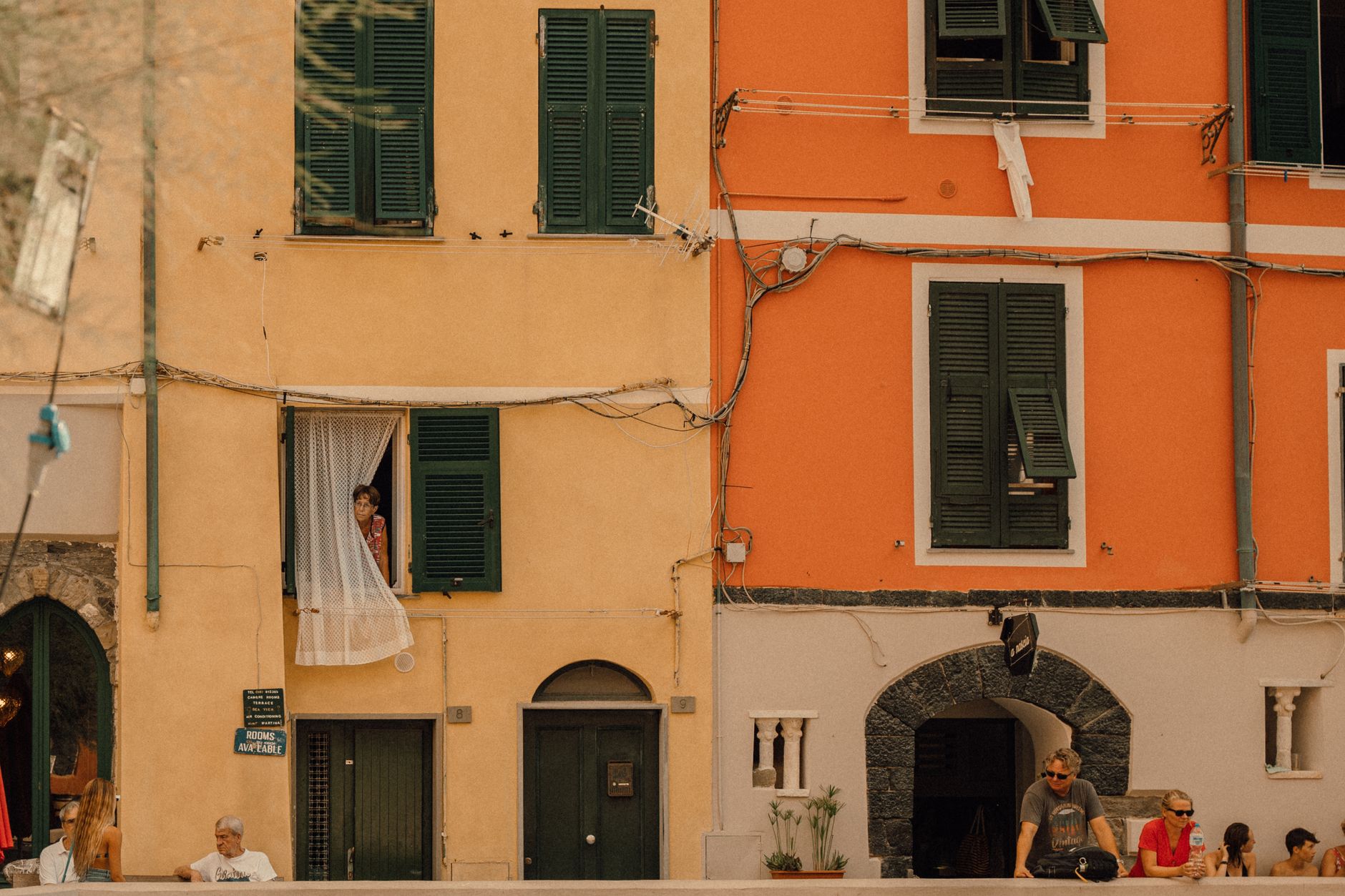
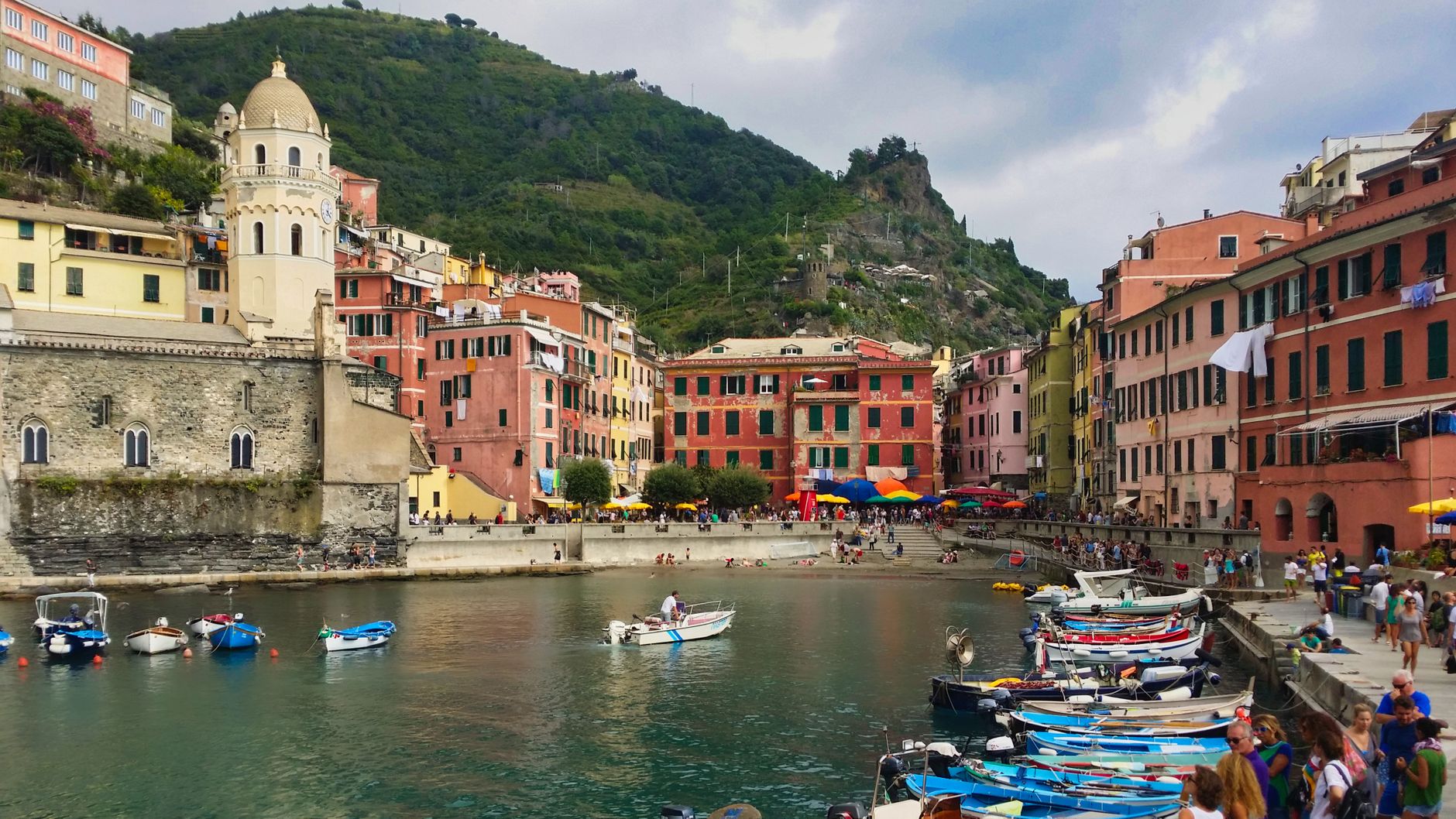
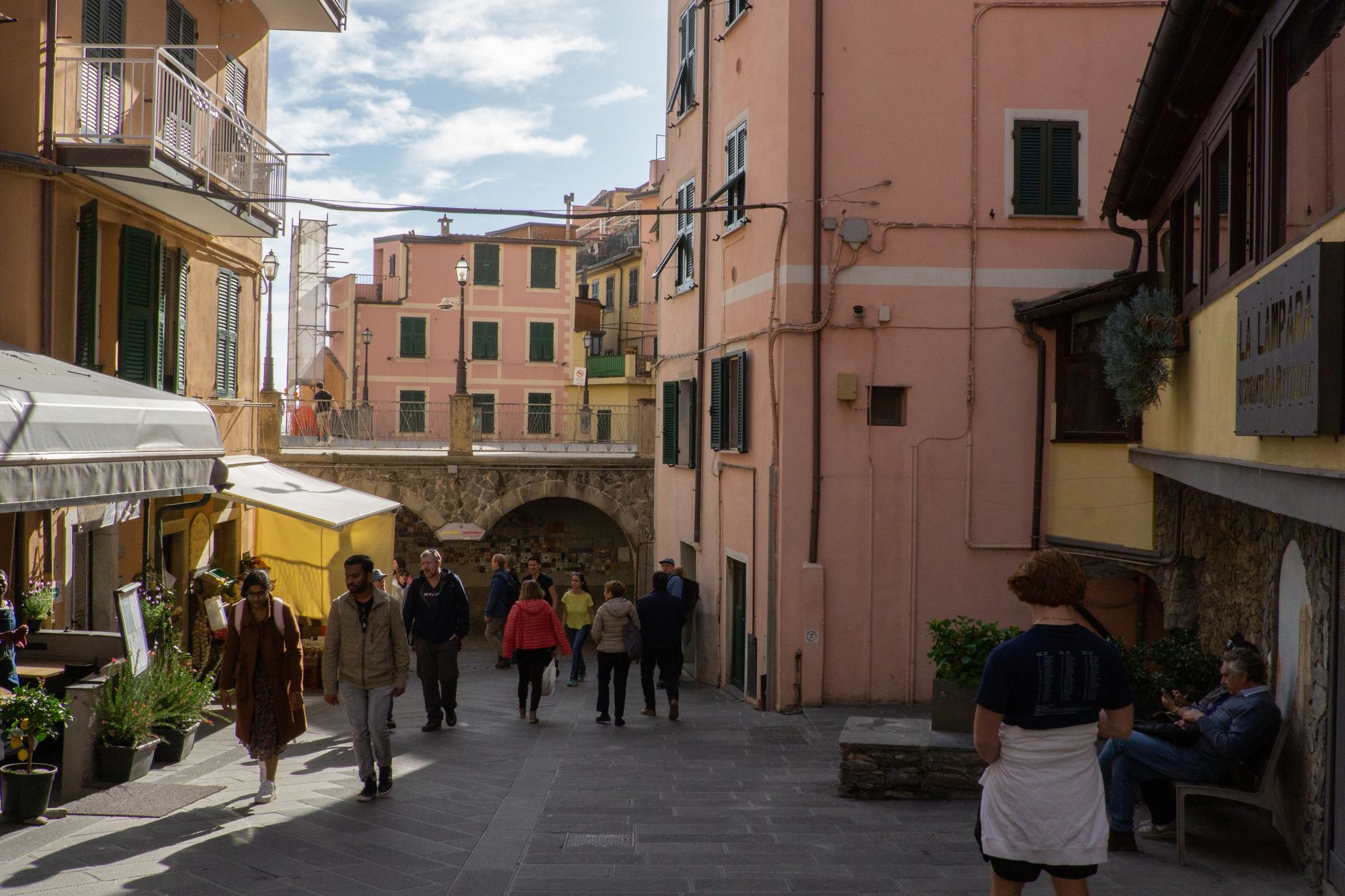
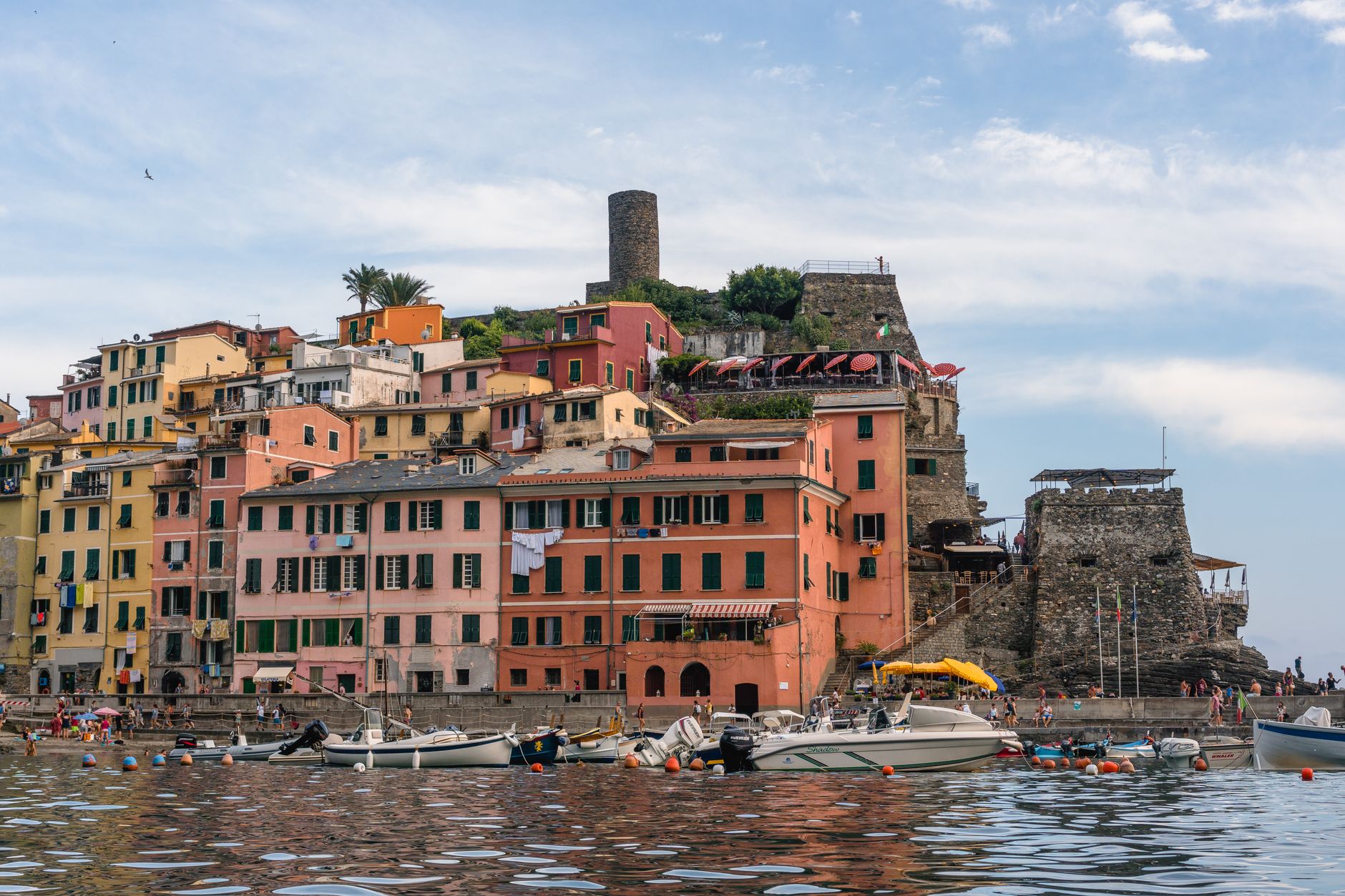
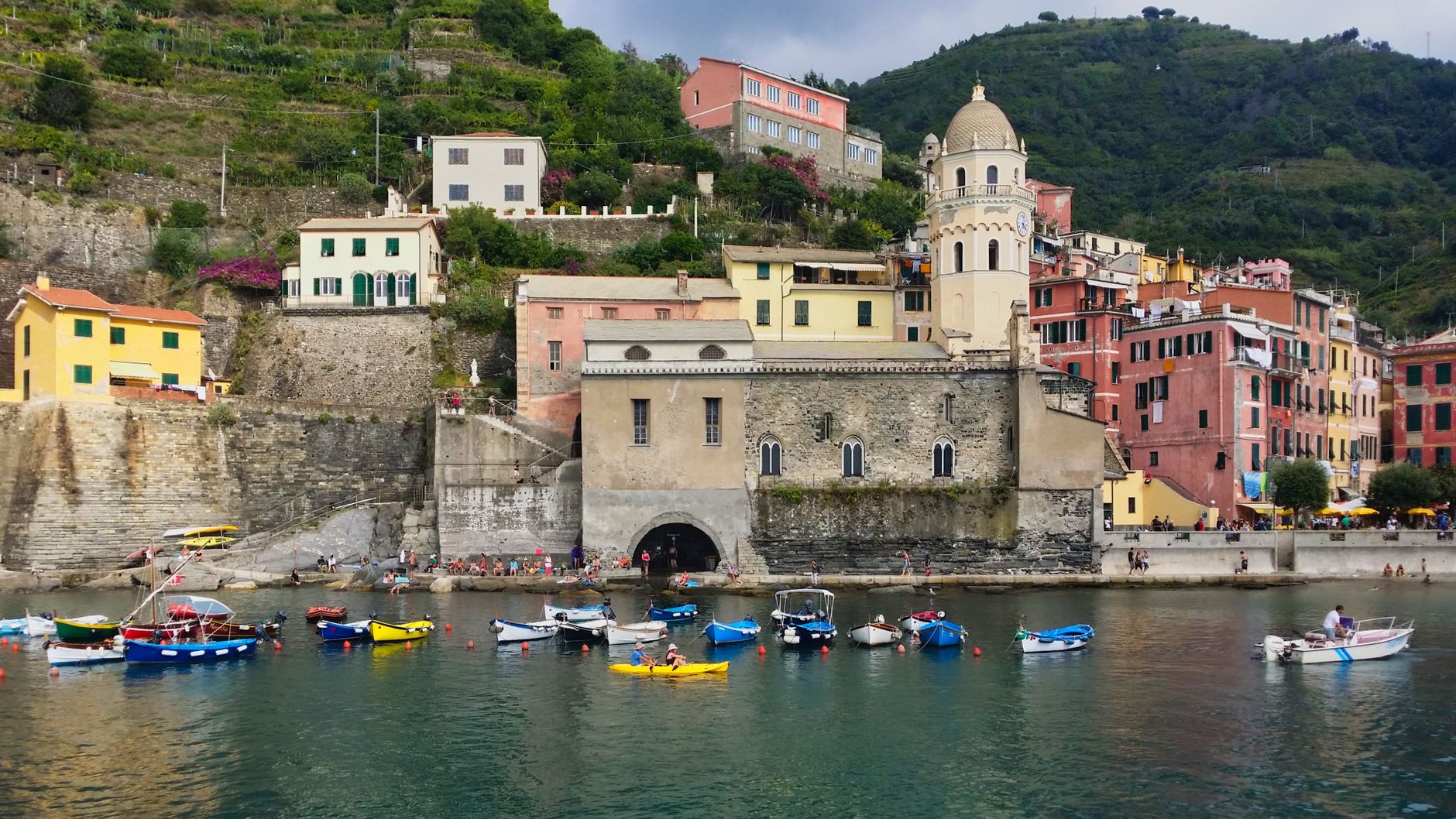
Vernazza ends at the water. The main square, Piazza Marconi, sits right at the harbour's edge — a rectangle of old stone where fishermen sort gear in the early morning and café chairs multiply by mid-morning, and the striped facade of Santa Margherita d'Antiochia closes one end of it all. The village has no car traffic, so the only sounds are voices, water, and the regional train passing above.
Of the five Cinque Terre villages, Vernazza has the most intact harbour, a small natural inlet that once made it the coast's most significant maritime base. Everything here — the castle above, the church beside the square, the terraced vines climbing the slopes — grew from that fact.
💛 What travellers fall for
People who come back tend to arrive on the first train from La Spezia, before the day-trippers, and take a coffee at one of the tables facing the water. The five-minute walk down from the station gives you a clean first look at the rooftops before the lanes fill. The ferry back to Manarola, when the sea allows it, beats retracing your steps.
Experiences you don't want to miss


Deals in Vernazza
Book directly at the provider

How Vernazza came to be
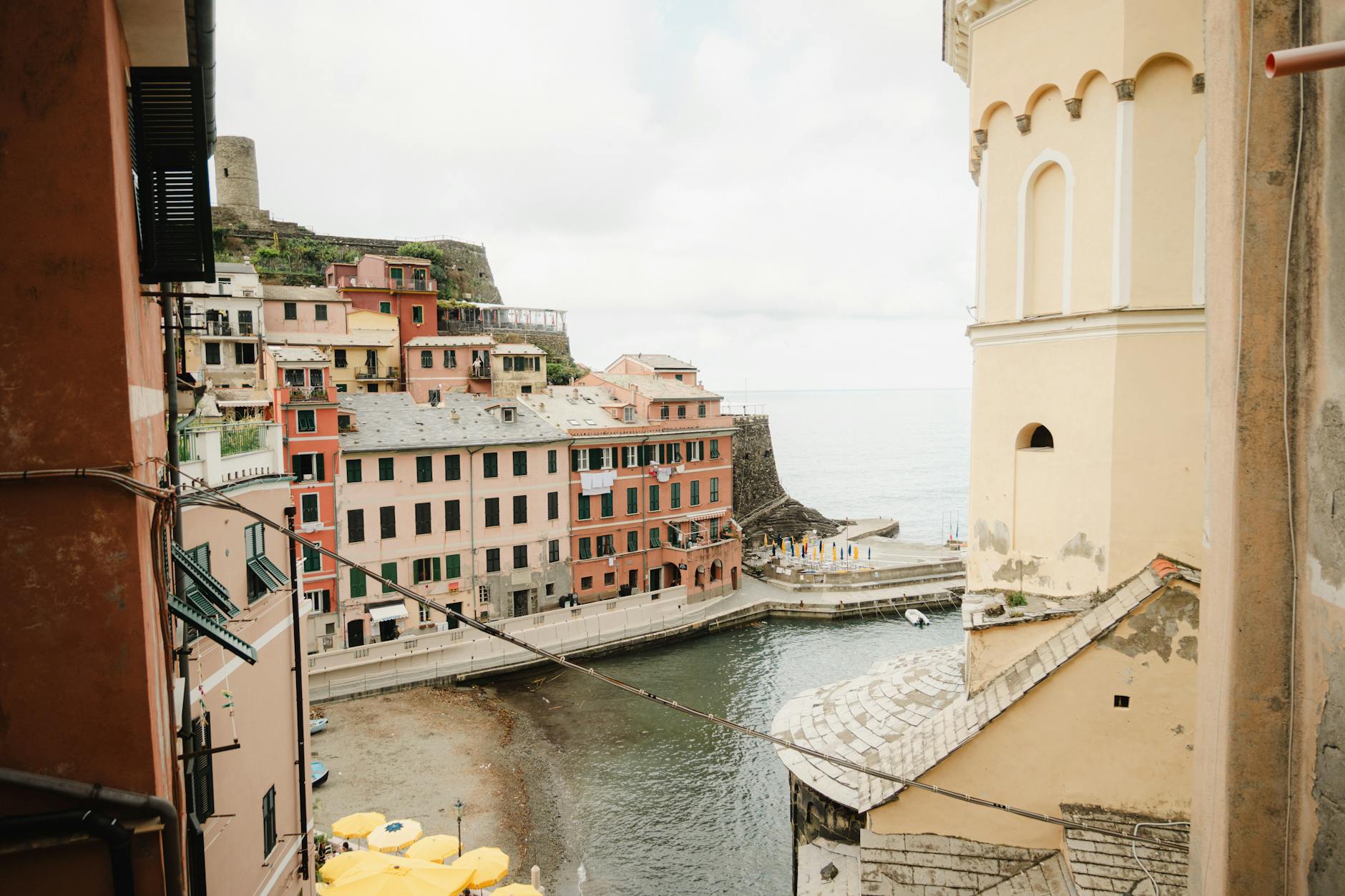
Vernazza appears in the historical record as a fortified maritime base of the Obertenghi, a Ligurian noble family, around 1080. Its position — a natural harbour on an otherwise cliff-edged coast — made it strategically valuable from the start. In 1254 the Fieschi family took control and reinforced its defences against Saracen pirates; by 1276 it had been sold to the Republic of Genoa, which continued expanding the Castello Doria above the port.
The 17th century brought decline and a long contraction of the wine trade that had sustained the terraced hillsides. Recovery came slowly, accelerating in the 19th century when the Genoa–La Spezia rail line ended Vernazza's coastal isolation and vineyards were replanted. In October 2011, a single day of torrential rain buried the village under more than four metres of mud and debris, causing over 100 million euros in damage — a reminder that the landscape here is as forceful as it is photogenic.
Who and what shaped it
Landmark buildings
See Vernazza in motion
Plan your visit
On the map
When to go
May and June are the most comfortable months to visit — warm enough to sit outside, cool enough to walk the lanes without effort. July and August bring heat and crowds in equal measure; autumn is quieter and the light on the harbour turns softer, though the October flood of 2011 is a reminder that the season can turn fast.
Right now
Background & history adapted from Wikipedia (CC BY-SA) · specs from Wikidata (CC0) · weather from Open-Meteo · map data © OpenStreetMap contributors · photos from Wikimedia Commons / Unsplash with per-image credit. No third-party reviews or social posts reproduced.