
Vendôme
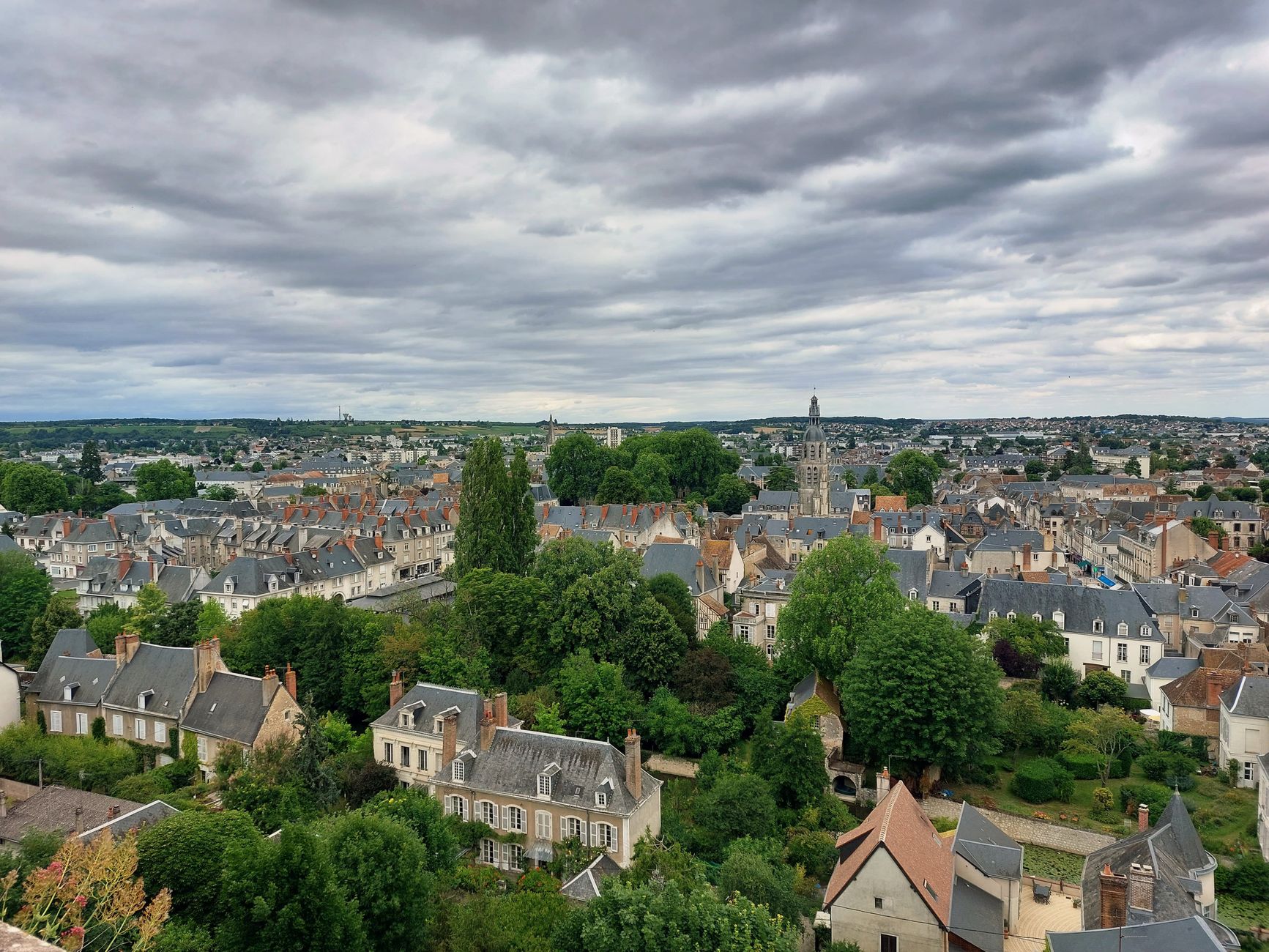
Forty minutes from Paris by TGV and Vendôme feels like it belongs to a slower century — the Loir threading through town, a medieval water gate still straddling one of its branches, and the Flamboyant Gothic facade of the Trinity Abbey rising above a market square. The abbey's 80-metre bell tower went up in the 12th century; the facade Jean Texier added in 1508 is a lesson in late Gothic stone-carving, all tracery and nerve.
This is a town that rewards walking slowly. The ruined château on the hill opens freely at any hour, its grounds softened by a 19th-century English park where an 1807 cedar still stands and the hydrangeas, bred here by local horticulturists, are remarkable in summer.
💛 What travellers fall for
People who come back tend to time it for the château grounds at dusk, when the park empties and the collegiate church of Saint-Georges catches the last light. They also mention the Chapelle Saint-Jacques — easy to miss, worth finding — which has been hosting exhibitions since 1982 inside walls that once sheltered pilgrims heading to Santiago de Compostela.
Experiences you don't want to miss



Deals in Vendôme
Book directly at the provider
How Vendôme came to be
The site was a Roman fortification before it became a feudal stronghold, and the town grew around the castle that followed. Christianity arrived in the 5th century, and in 1040 Geoffrey and Agnes signed the charter founding the Abbey of the Holy Trinity, which would anchor the town's identity for centuries. Vendôme led a county — elevated to a duchy in 1515 — that passed through some of France's most consequential hands.
Henry IV inherited the duchy with his Bourbon lands, folded it into the royal domain in 1589, and gave the title Duke of Vendôme to his illegitimate son César in 1598 — the same César whose Paris mansion gave Place Vendôme its name. The town took damage in World War II but was largely rebuilt, and the medieval core has held its shape.
Who and what shaped it
People who shaped it
Landmark buildings
See Vendôme in motion
Plan your visit
On the map
When to go
Spring and early summer bring mild temperatures and the hydrangeas in the château grounds at their best; July and August are warm and dry, good for walking the old streets. Winters are cool and quiet — fine for the abbey and museum, less so for lingering outdoors.
Right now
Background & history adapted from Wikipedia (CC BY-SA) · specs from Wikidata (CC0) · weather from Open-Meteo · map data © OpenStreetMap contributors · photos from Wikimedia Commons / Unsplash with per-image credit. No third-party reviews or social posts reproduced.