
Umhlanga
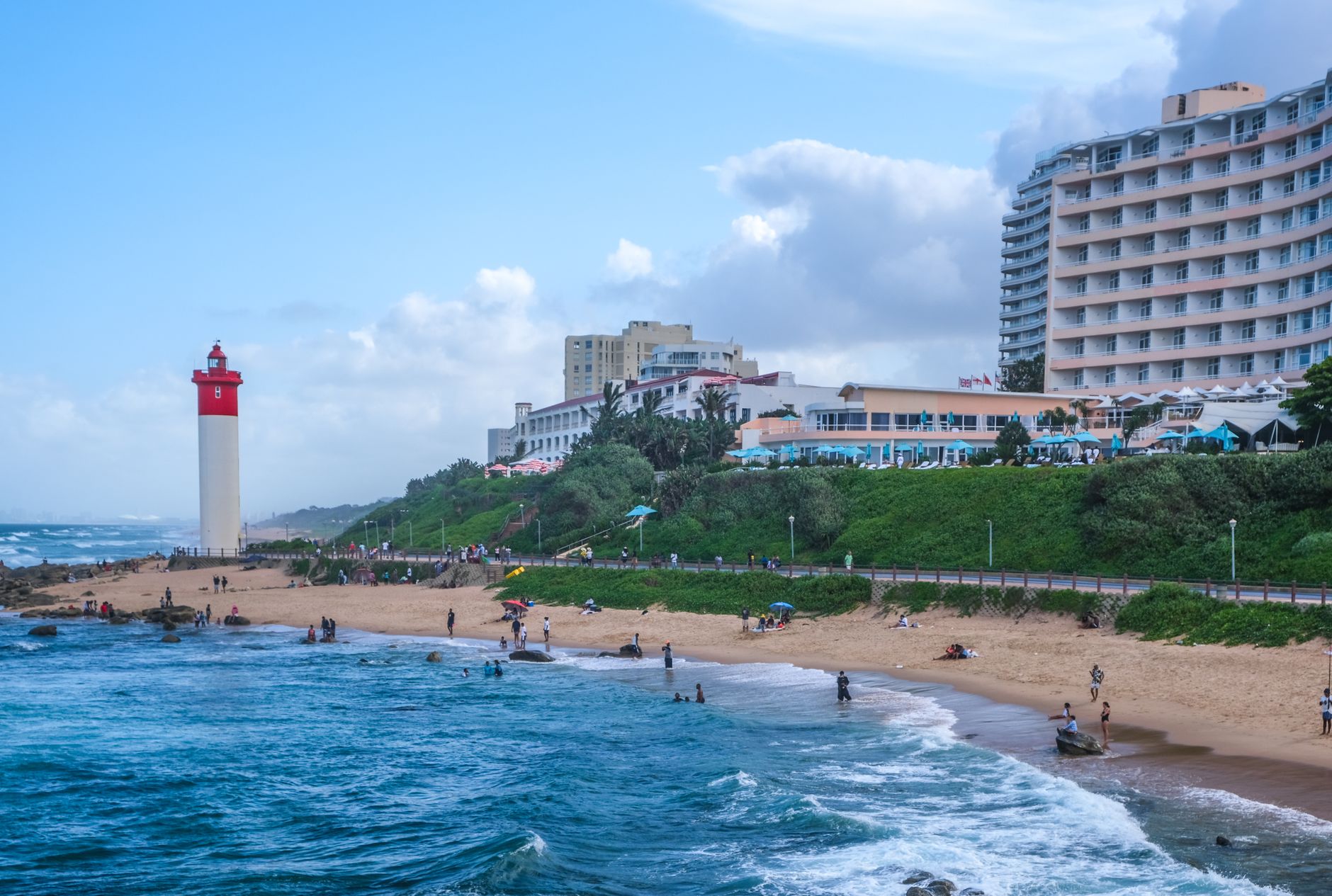
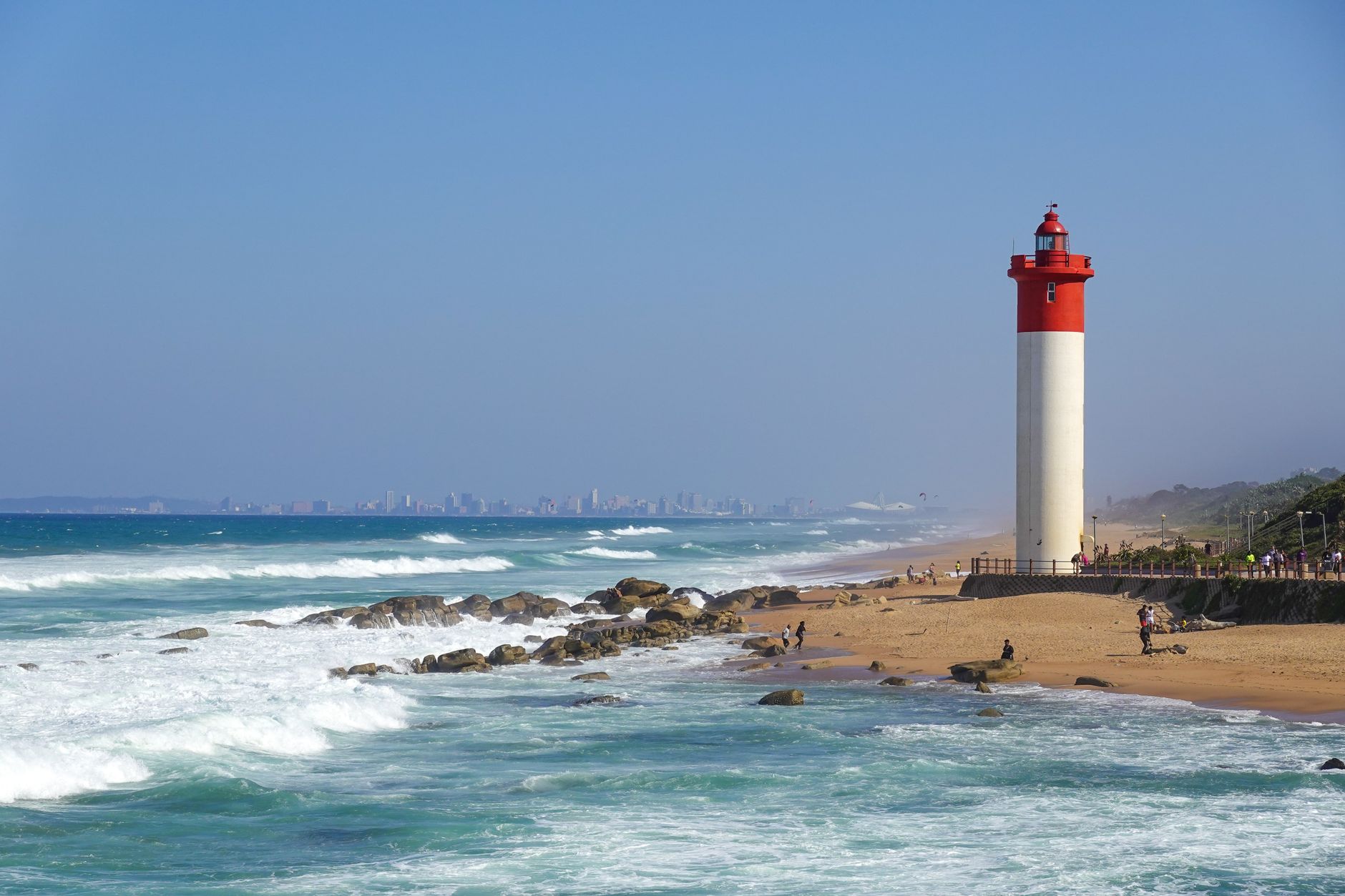
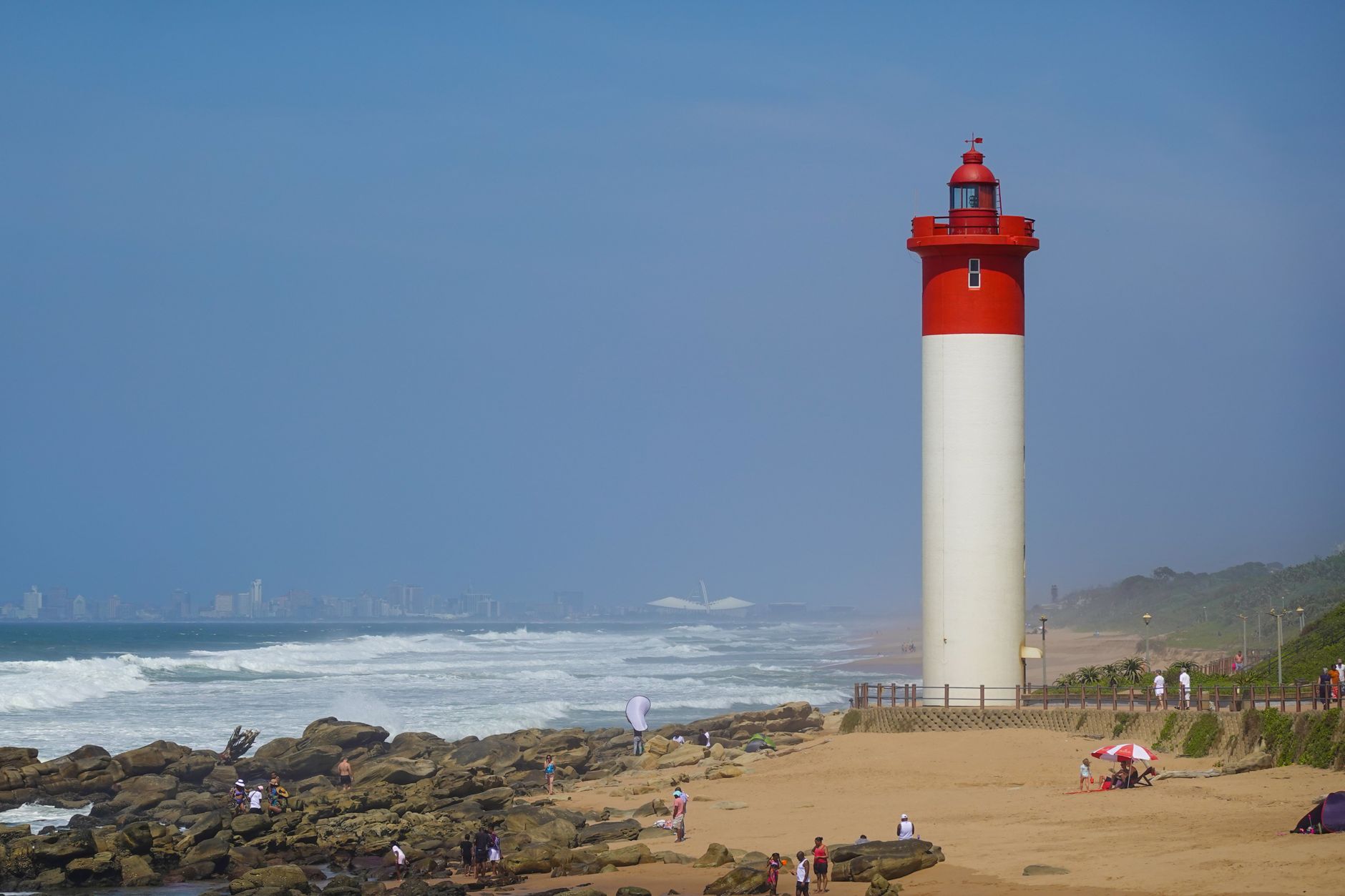
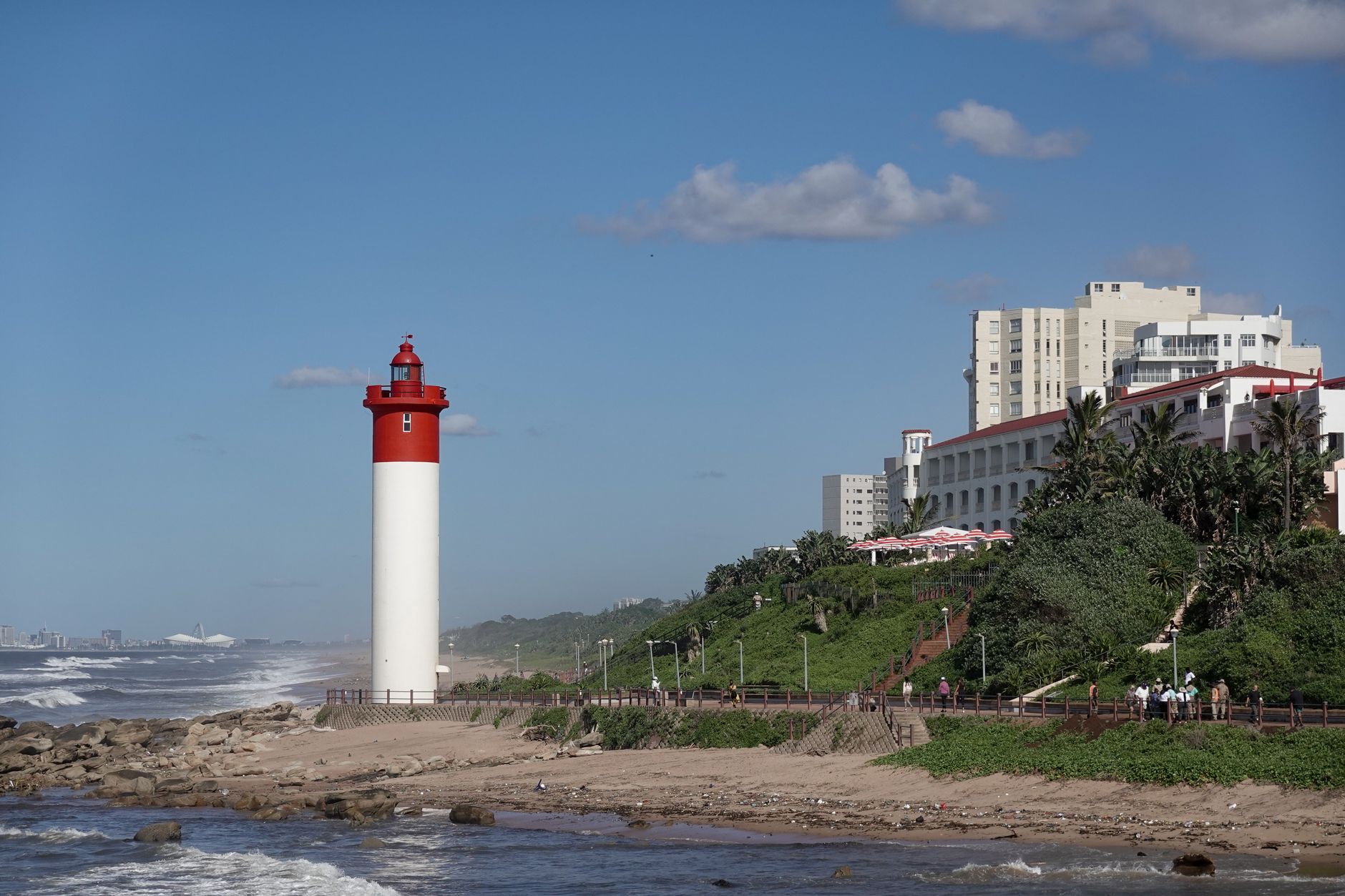
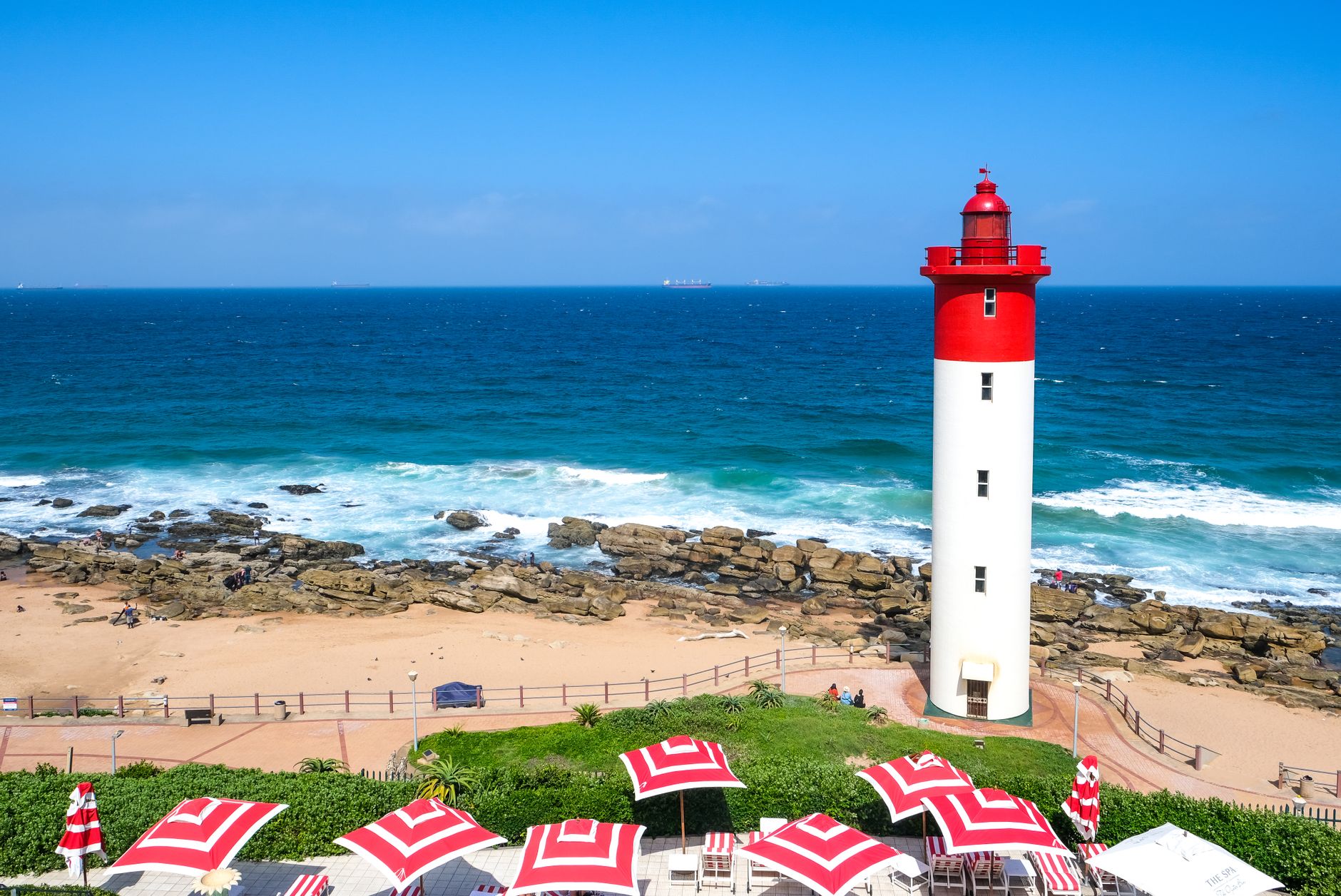
The red-and-white lighthouse is the thing you notice first — a 21-metre cylinder that was assembled in under five days and has been throwing light 24 nautical miles out to sea ever since 1954. Umhlanga sits 16 kilometres north of Durban, where the Indian Ocean runs warm and the coastline curves enough that you can watch container ships pass from a beach chair.
It began as a sugar baron's idea of a seaside retreat and has since grown into KwaZulu-Natal's most polished coastal address — a place where a 1950s hotel still anchors the beachfront while glass towers and the continent's largest thatched dome have stacked up behind it.
💛 What travellers fall for
People who come back tend to anchor their mornings at the Ken O'Connor Promenade before the heat builds, walk north toward the lagoon reserve, and save the Oyster Box for a sundowner rather than a full stay. The lighthouse steps — all 55 of them — are worth the climb early, before the tour groups arrive.
Deals in Umhlanga
Book directly at the provider


How Umhlanga came to be
San hunter-gatherers were the first people to move through this coastline, followed by Nguni-speaking communities who came under King Shaka's authority in the early nineteenth century. British settlers arrived not long after, and the land eventually passed to Sir Marshall Campbell, an English emigrant who had come to Natal in 1850 and built a fortune in sugar. Campbell founded Umhlanga in 1895, and his son William Alfred later developed it as a quiet holiday destination for mill workers, building a beach cottage on the site where the Oyster Box Hotel now stands.
The first hotel followed in 1920, and the modern municipality took its present shape in 1972 when Umhlanga Rocks merged with the suburb of La Lucia. The official spelling shifted to uMhlanga in 2010, a gazette change that restored the Zulu orthography to the name.
Who and what shaped it
People who shaped it
Landmark buildings
See Umhlanga in motion
Plan your visit
On the map
When to go
Umhlanga runs subtropical year-round, with February highs around 28°C and July sitting closer to 23°C. The wet season stretches from October through April — afternoon downpours are short but heavy — while the winter months from June to August are dry, clear, and considerably easier for walking the promenade.
Right now
Background & history adapted from Wikipedia (CC BY-SA) · specs from Wikidata (CC0) · weather from Open-Meteo · map data © OpenStreetMap contributors · photos from Wikimedia Commons / Unsplash with per-image credit. No third-party reviews or social posts reproduced.