
Uluwatu
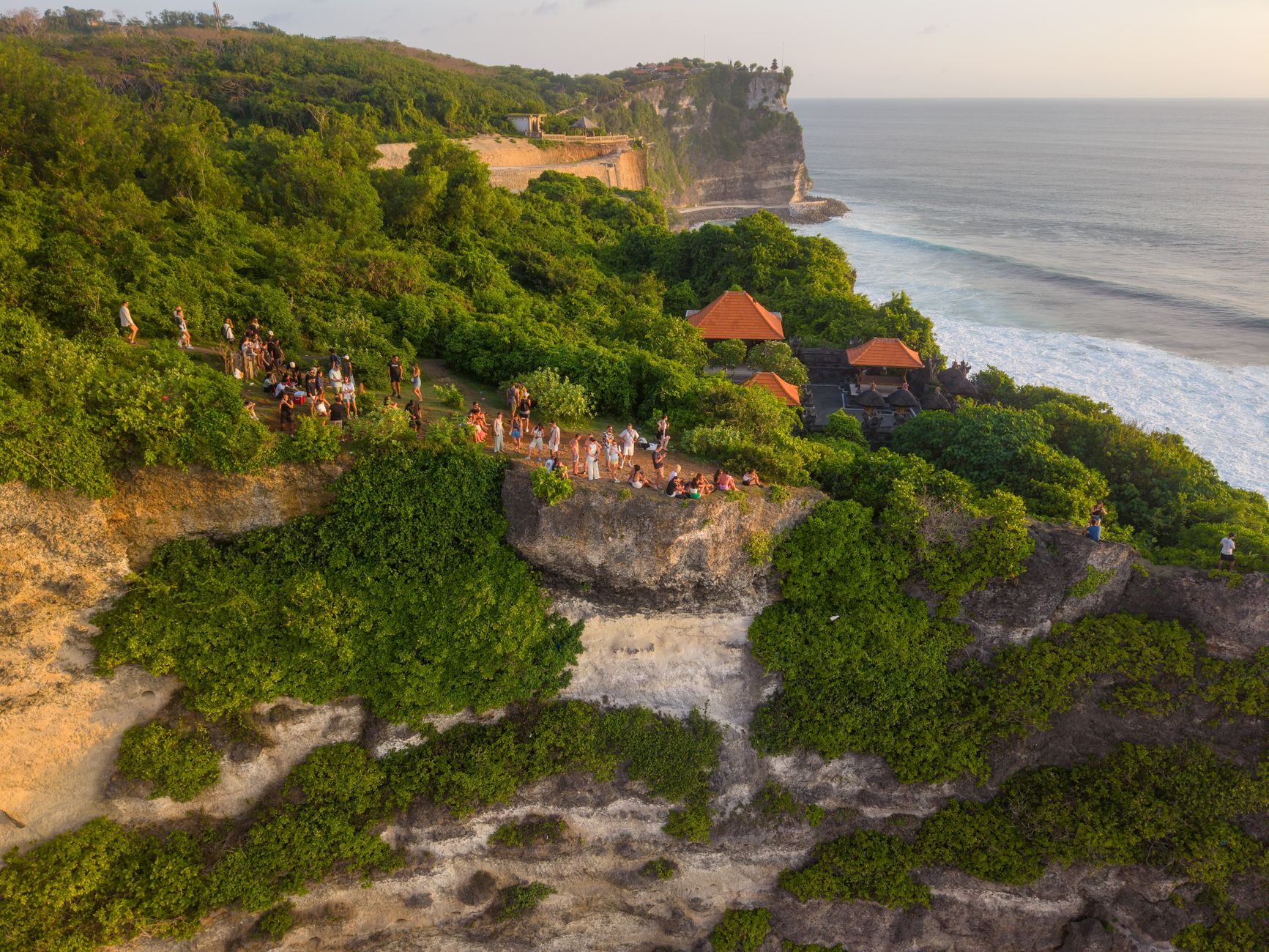
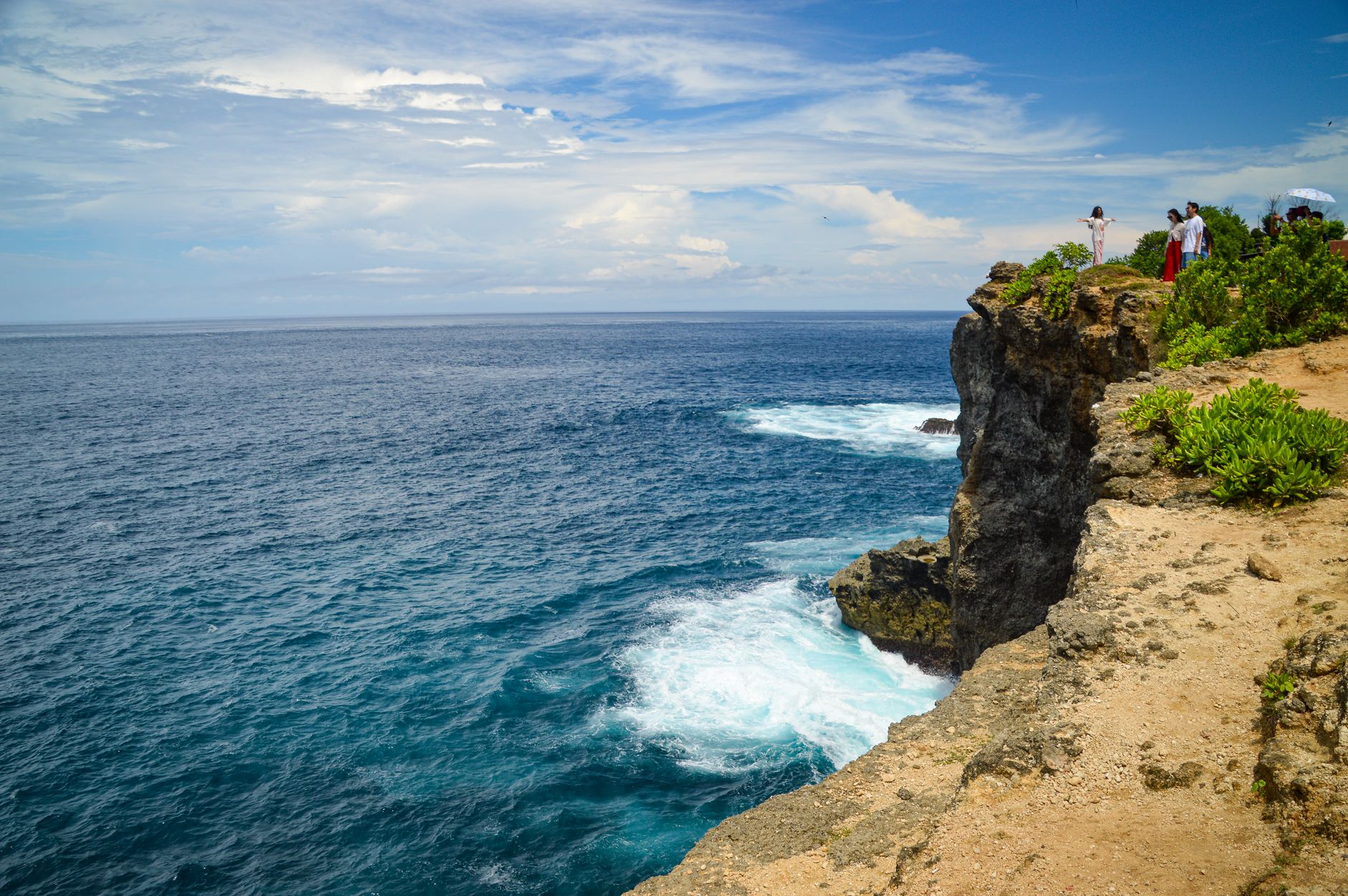
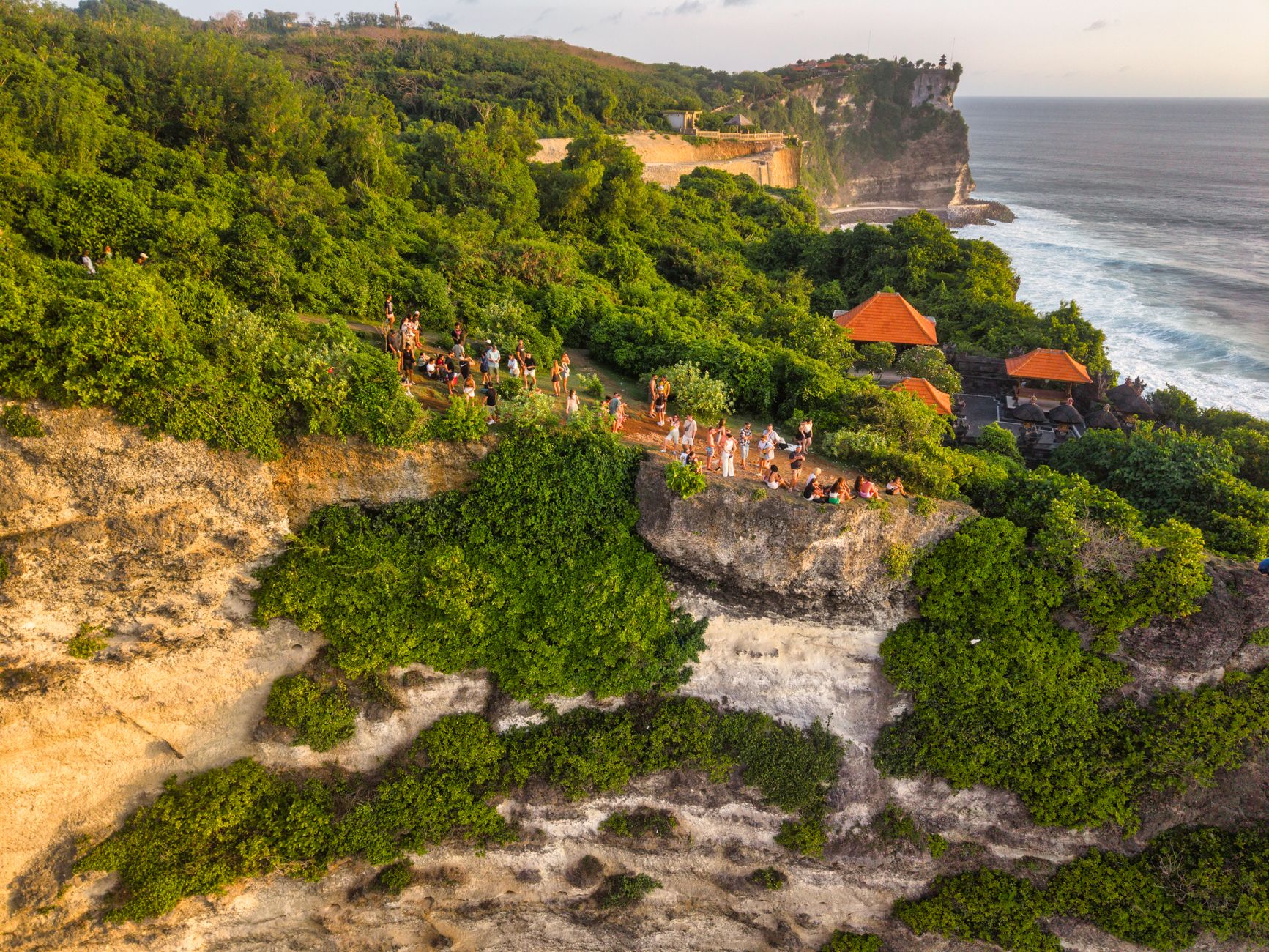
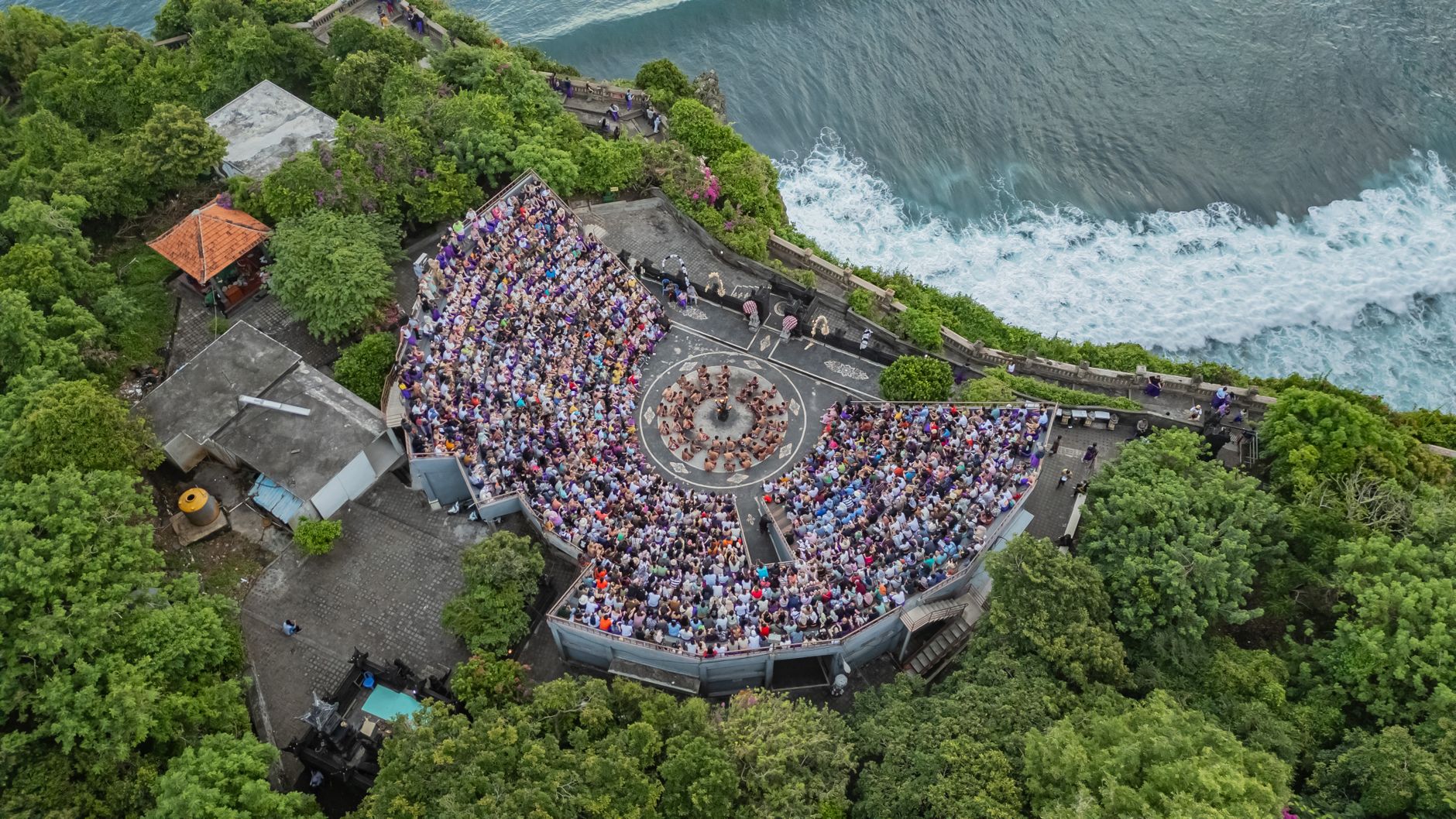
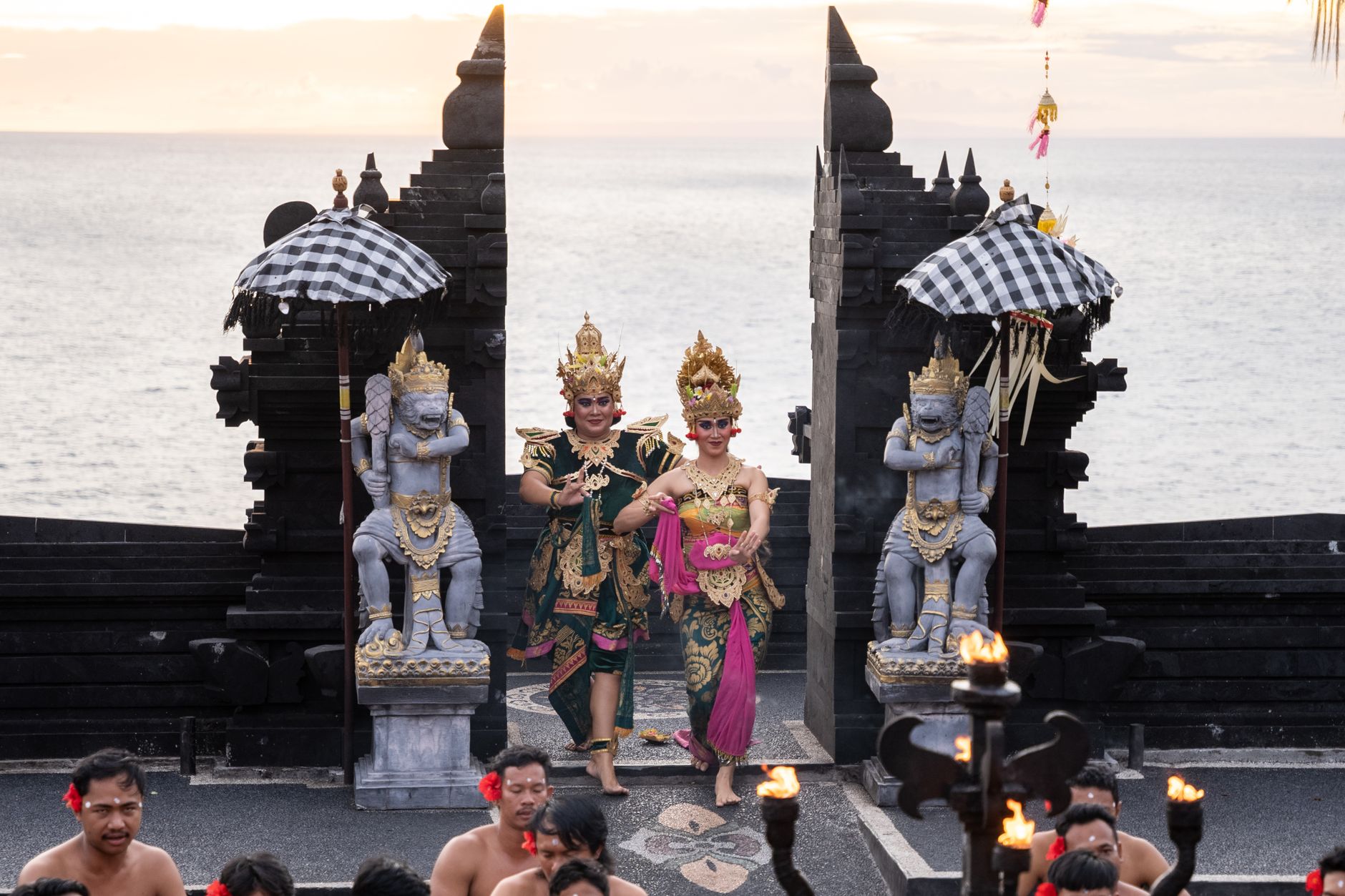
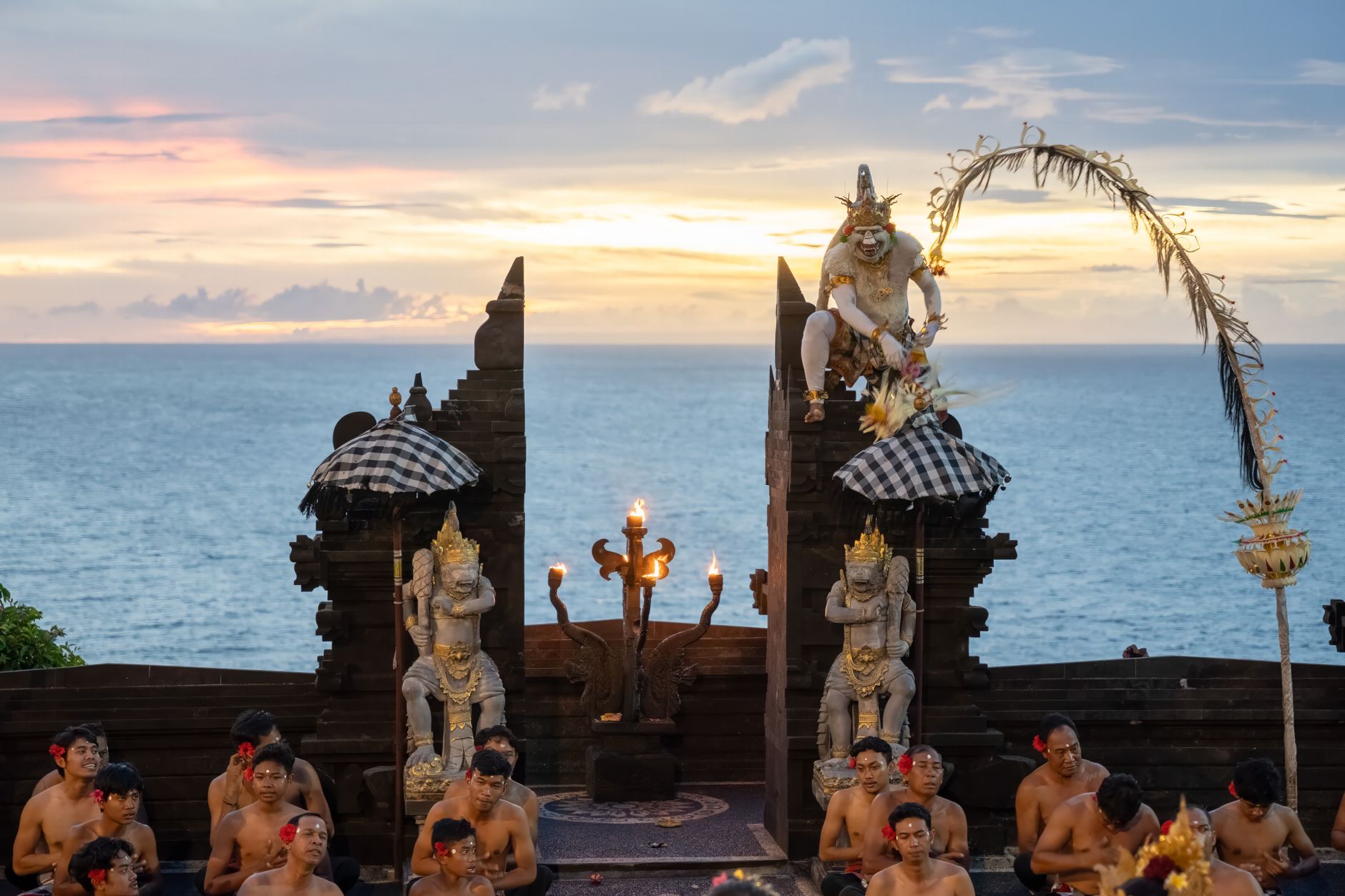
At the southwestern tip of Bali's Bukit Peninsula, the land simply ends — a 70-metre cliff of dark coral rock dropping straight into the Indian Ocean. Pura Luhur Uluwatu sits at that edge, its ancient shrines strung along a paved path above the surf, dedicated to Rudra, the fierce manifestation of Sang Hyang Widhi Wasa. Every evening, a 1,200-seat amphitheater fills for the Kecak Fire Dance, performed against a sky going orange above open water.
Uluwatu is also, separately, one of the world's storied surf breaks. The two identities — sacred clifftop temple and world-class left-hander — coexist without much ceremony, which is part of what makes the place feel singular rather than curated.
💛 What travellers fall for
People who come back tend to time their arrival at the temple for late afternoon, walking the cliffside path before the crowds gather for the Kecak show. The 150,000 IDR ticket for the dance is worth booking ahead; seats with an unobstructed view of the sunset fill early. Keep one eye on your belongings — the resident monkeys are practiced thieves.
Deals in Uluwatu
Book directly at the provider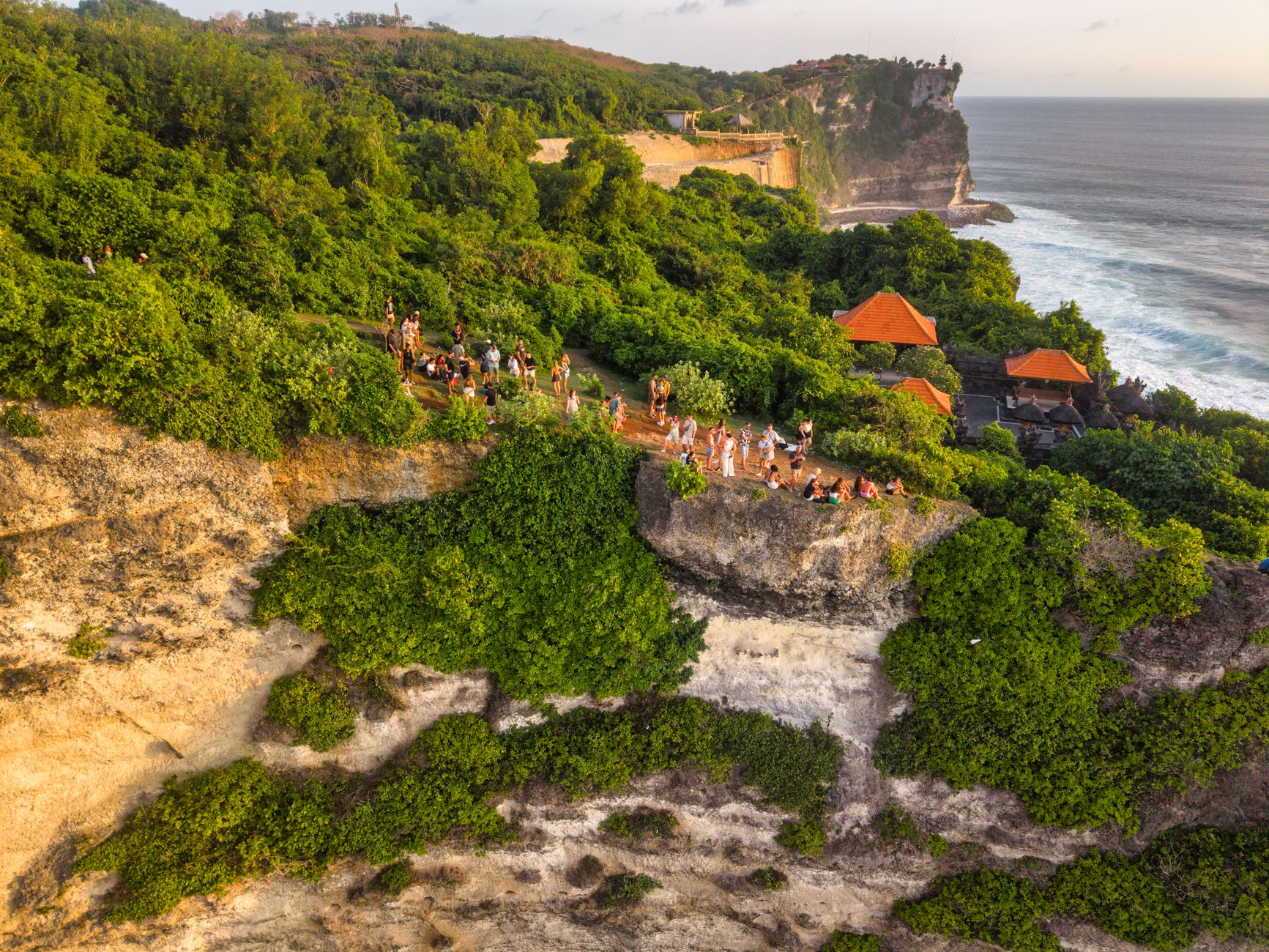


How Uluwatu came to be
A stone chronogram at the temple complex places a structure here as early as 886 AD. The site's deeper development is tied to Mpu Kuturan, an influential Hindu sage who arrived in Bali during the reign of King Sri Msula-Masuli in the 11th century. Then, at the turn of the 16th century, Danghyang Nirartha — a priest from East Java who reshaped the architecture of Balinese Hinduism — introduced the padmasana shrines. Local tradition holds that he attained moksha here, an event the Balinese call ngeluhur, meaning 'to go up.'
The Kecak Fire Dance, now performed nightly, has a more recent origin: in the 1930s, German painter Walter Spies and Balinese dancer Wayan Limbak adapted a traditional trance ritual into the dramatic Ramayana-based performance seen today. Uluwatu entered the surf world's consciousness in 1972, when a teenage Steve Cooney rode the first filmed wave here for Alby Falzon and David Elfick's film Morning of the Earth.
Who and what shaped it
People who shaped it
Landmark buildings
See Uluwatu in motion
Plan your visit
On the map
When to go
May through September brings dry, sunny days with reliable offshore winds — the preferred window for both sightseeing and surfing. The wet season, roughly October to April, brings humidity and afternoon downpours, though the temple and cliffs remain open and considerably less crowded.
Right now
Background & history adapted from Wikipedia (CC BY-SA) · specs from Wikidata (CC0) · weather from Open-Meteo · map data © OpenStreetMap contributors · photos from Wikimedia Commons / Unsplash with per-image credit. No third-party reviews or social posts reproduced.