
Tui

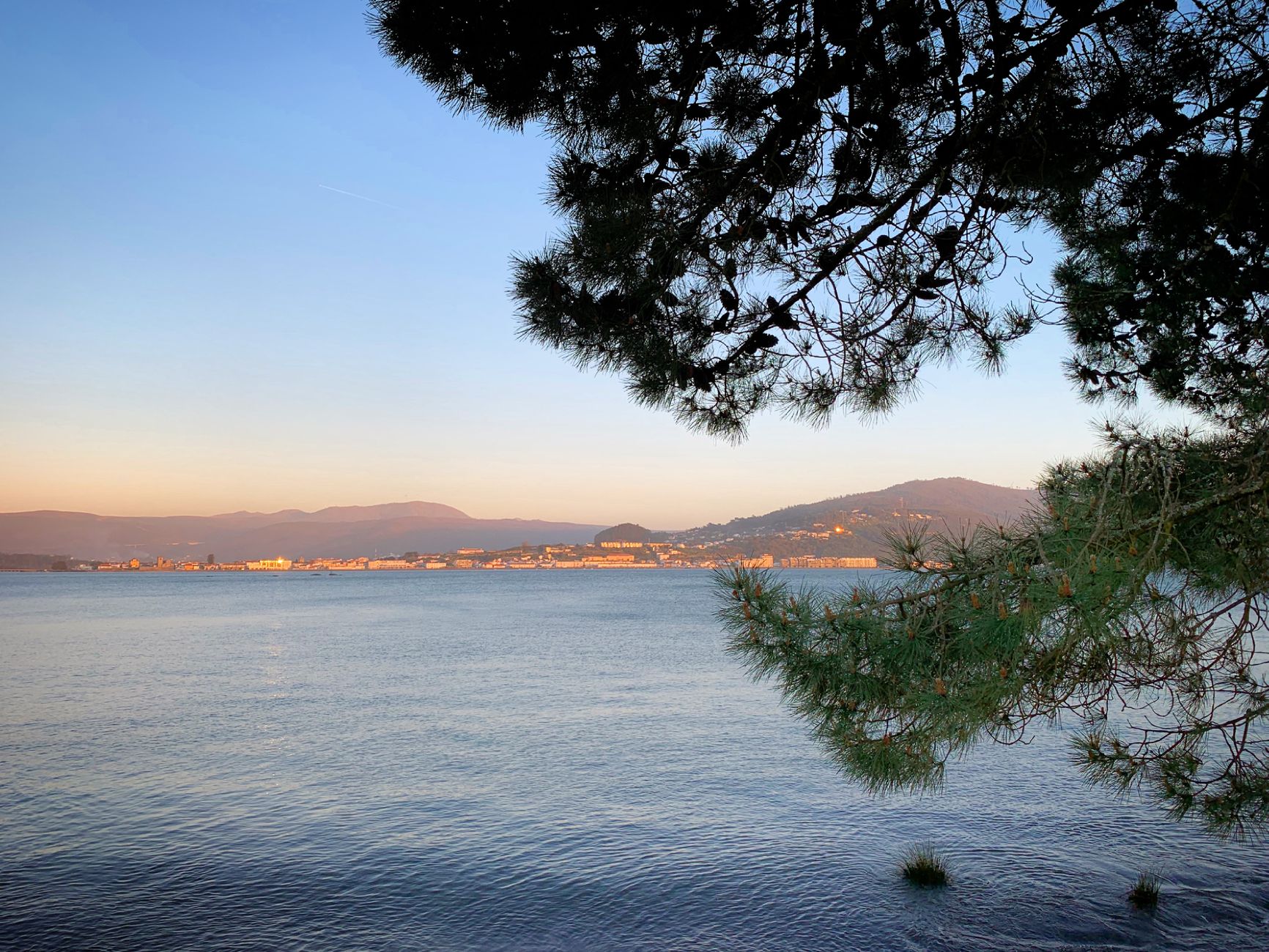
Tui sits on a granite bluff above the Miño River, looking straight across at Portugal's Valença — two walled towns facing each other across a few hundred metres of green water, connected by a 19th-century iron bridge that carries both trains and road traffic on separate decks. The cathedral anchors everything: a fortress of a church, crenellated and severe, begun in 1120, with the largest medieval cloister in Galicia tucked inside.
At 17,500 people, Tui is small enough to walk in an afternoon, but the old quarter repays a slower pace. The Camino Portugués passes through here, so pilgrims and day-trippers from Vigo share the cobbled lanes, and the border adds a particular edge — this has always been a place where different worlds negotiate.
💛 What travellers fall for
People who come back tend to mention the Convent of the Poor Clares on Rúa das Monxas: ring the bell, leave €10, and the nuns pass almond cakes through the turn. It sounds like a rumour until it happens. The Paseo Fluvial along the river beneath the east ramparts is quieter in the morning, before the day-trippers arrive from Vigo.
Experiences you don't want to miss



Deals in Tui
Book directly at the provider


How Tui came to be
Pliny the Elder and Ptolemy both recorded the settlement as Tude in the first century AD, and by the sixth century it was already an episcopal see under Suevic rule. It briefly served as a Galician capital during the Visigothic period, then was emptied out entirely after Alfonso I's campaigns in the 740s, left as a buffer zone between Moorish and Christian territories. Vikings raided it in the tenth century. What exists today grew from an eleventh- and twelfth-century repopulation.
The cathedral, begun in 1120 and consecrated in 1225 under Alfonso IX, carries that layered history in stone — Romanesque bones, a Gothic main façade, a cloister that remains the only Gothic one preserved among Galician cathedrals. A menorah carved into the cathedral wall marks the presence of a medieval Jewish community. The preacher Pedro González Telmo died here in 1246 and was buried in the cathedral; a Portuguese Baroque church was later built on the site of his death.
Who and what shaped it
People who shaped it
Landmark buildings
See Tui in motion
Plan your visit
On the map
When to go
Tui sits in the wet Atlantic corner of Galicia: winters are mild but persistently damp, summers warm and occasionally humid, with the driest and most settled weather running from June through September. Spring brings green hills and lighter crowds, though rain is always possible.
Right now
Background & history adapted from Wikipedia (CC BY-SA) · specs from Wikidata (CC0) · weather from Open-Meteo · map data © OpenStreetMap contributors · photos from Wikimedia Commons / Unsplash with per-image credit. No third-party reviews or social posts reproduced.