
Tudela
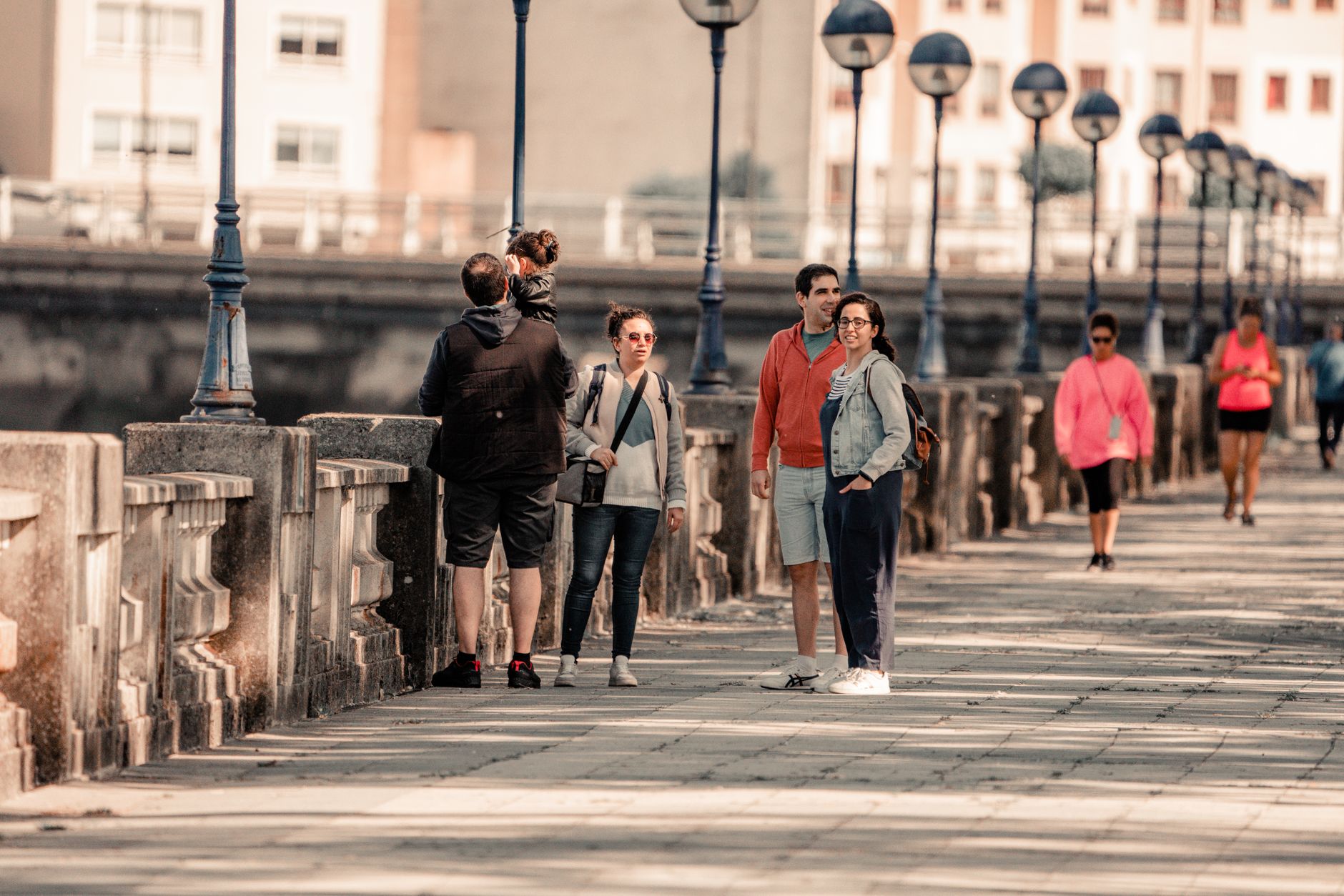
Tudela sits where the Ebro makes a long bend through Navarre, and the city's seventeen-arch stone bridge — built in the twelfth and thirteenth centuries — still carries you across it. This is a place where three religions left their marks on the same streets: the cathedral rose on the site of a mosque, and the Torre Monreal stands on a hill that has been watched over since at least the tenth century.
The old quarter is compact enough to walk in an afternoon, but the layers reward a slower pace. The Plaza de los Fueros, built between 1687 and 1691 with the clean symmetry of a city that knew its own mind, anchors the centre. Around it, Romanesque churches, a Baroque palace with the finest imperial staircase in Navarre, and a cathedral portal carved with scenes of the Last Judgement pull you down one street after another.
💛 What travellers fall for
People who come back tend to mention the Portada del Juicio on the cathedral — the Portal of the Last Judgement — and how long they stood in front of it without meaning to. They also mention the Torre Monreal's camera obscura, which sounds like a novelty and turns out to be a genuinely good way to read the city's geography before you walk it.
Experiences you don't want to miss



Deals in Tudela
Book directly at the provider


How Tudela came to be
Settlement here goes back to the Lower Palaeolithic, and the Romans built on what the Celtiberians left. The city as it is recognisably shaped today dates to 802, when it was founded under Muslim rule. The Banu Qasi family — local magnates who had converted to Islam — made it their base in the ninth century, maintaining a careful independence from the emirs of Córdoba. Alfonso the Battler took the city in 1119, and after his death in 1134 Tudela passed into the Kingdom of Pamplona, remaining part of Navarre ever since.
The medieval city was home to Jewish, Muslim, and Christian communities whose intellectual output was extraordinary for its size: Benjamin of Tudela left in the twelfth century and spent a decade travelling as far as the Middle East, filling notebooks that became one of the earliest geographical records of the medieval world. The philosopher and poet Judah Halevi was born here, as was Abraham Ibn Ezra. That era ended sharply: Jews were expelled in 1498, Muslims in 1516, and Moriscos in 1610. On 23 November 1808, Marshal Lannes won the Battle of Tudela during the Peninsular War, a reminder that the Ebro crossing was always strategic.
Who and what shaped it
People who shaped it
Landmark buildings
See Tudela in motion
Plan your visit
On the map
When to go
Tudela sits in the Ebro valley, which runs dry and hot in summer — July and August temperatures regularly climb above 35°C. Spring and autumn are the most comfortable seasons for walking the old quarter; winters are cold and clear, with occasional frost.
Right now
Background & history adapted from Wikipedia (CC BY-SA) · specs from Wikidata (CC0) · weather from Open-Meteo · map data © OpenStreetMap contributors · photos from Wikimedia Commons / Unsplash with per-image credit. No third-party reviews or social posts reproduced.