
Trier
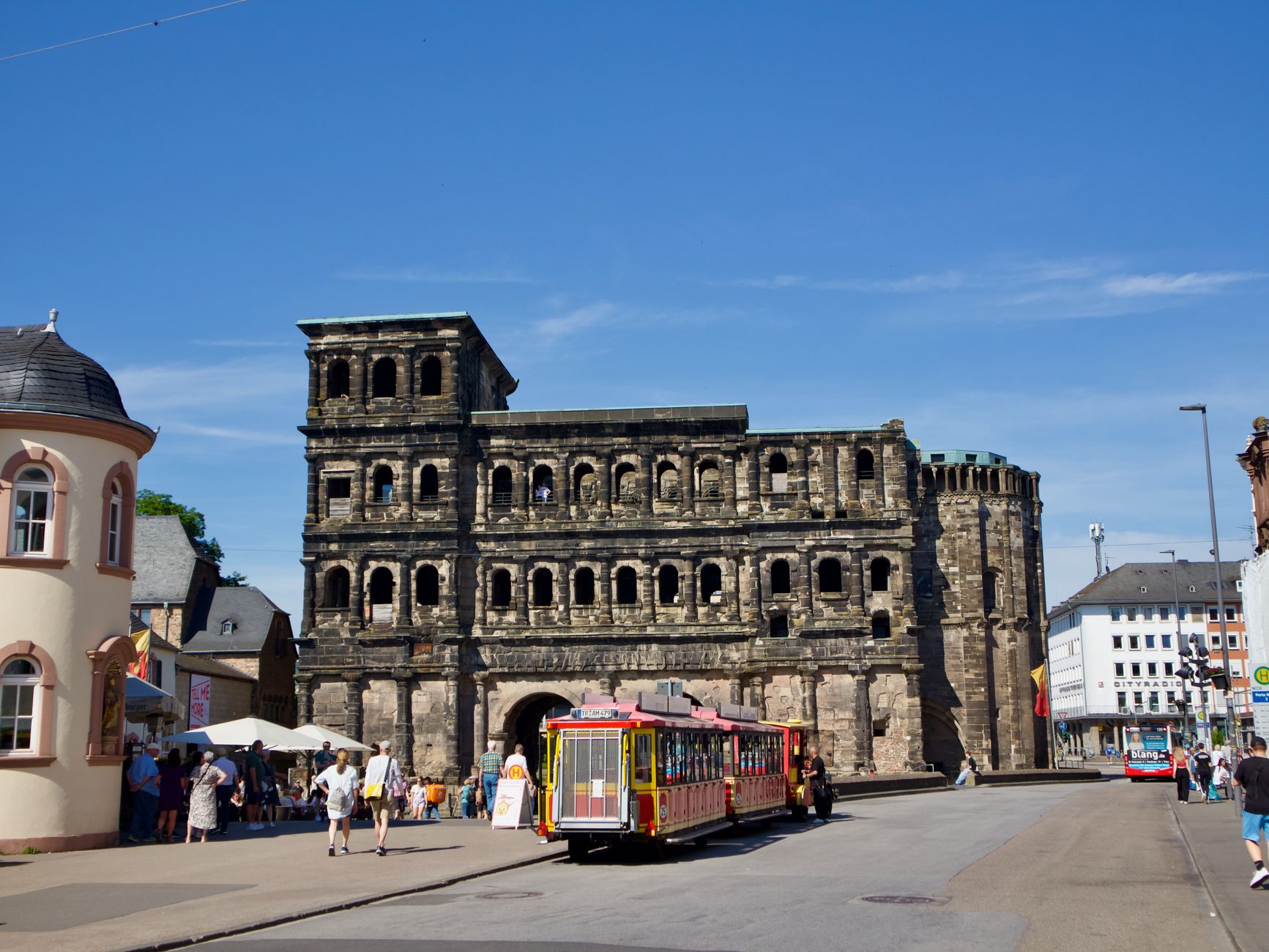
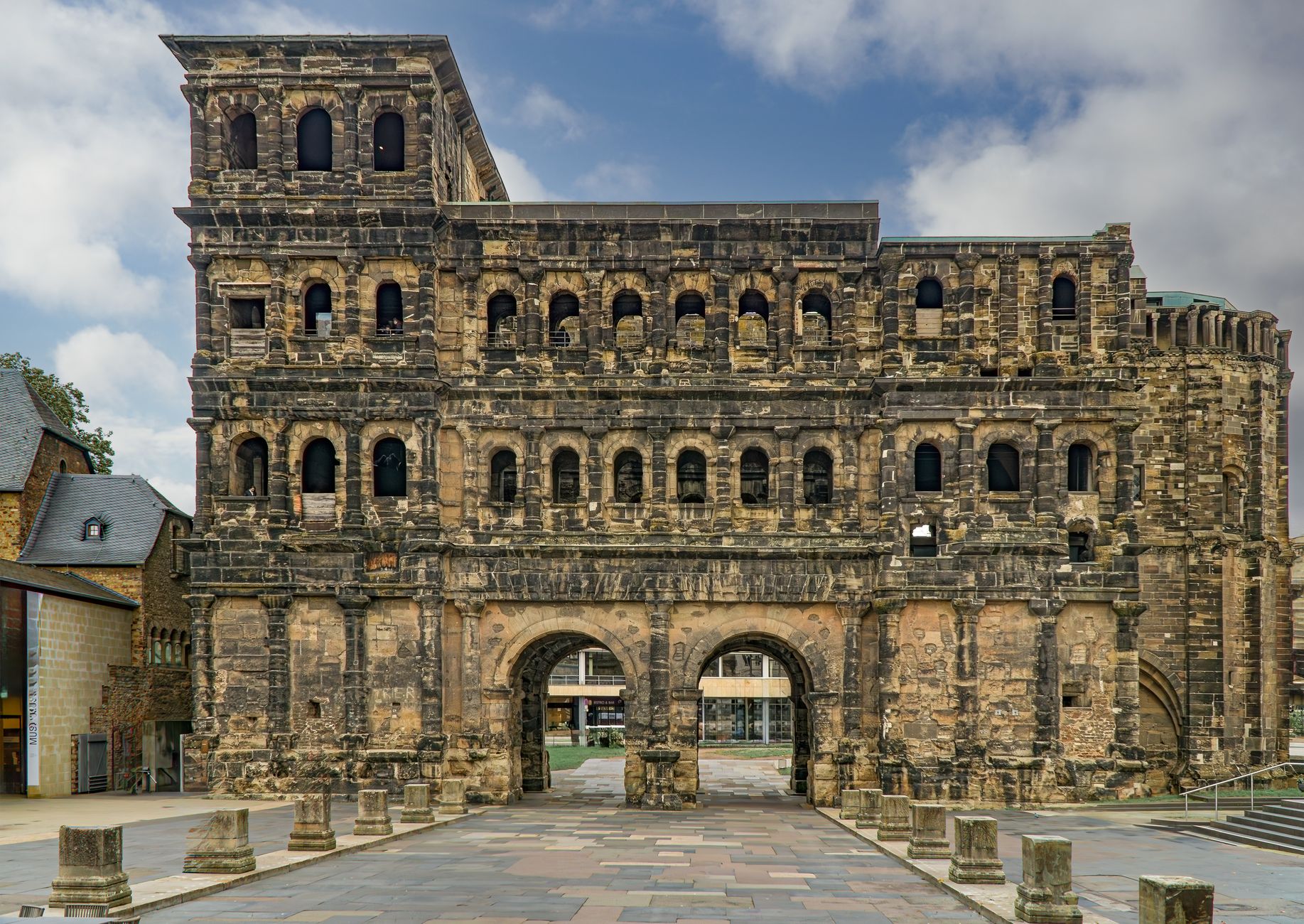
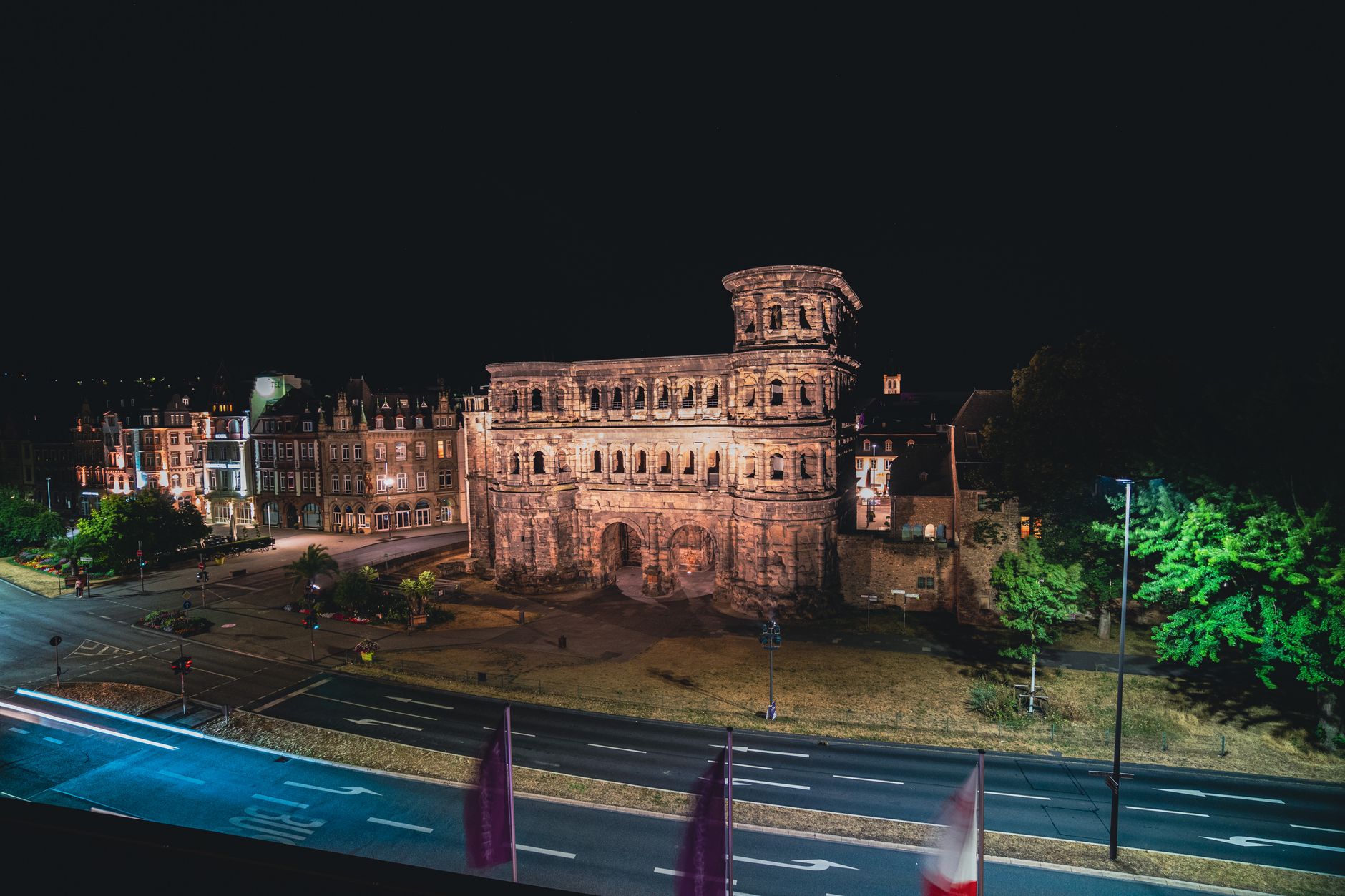
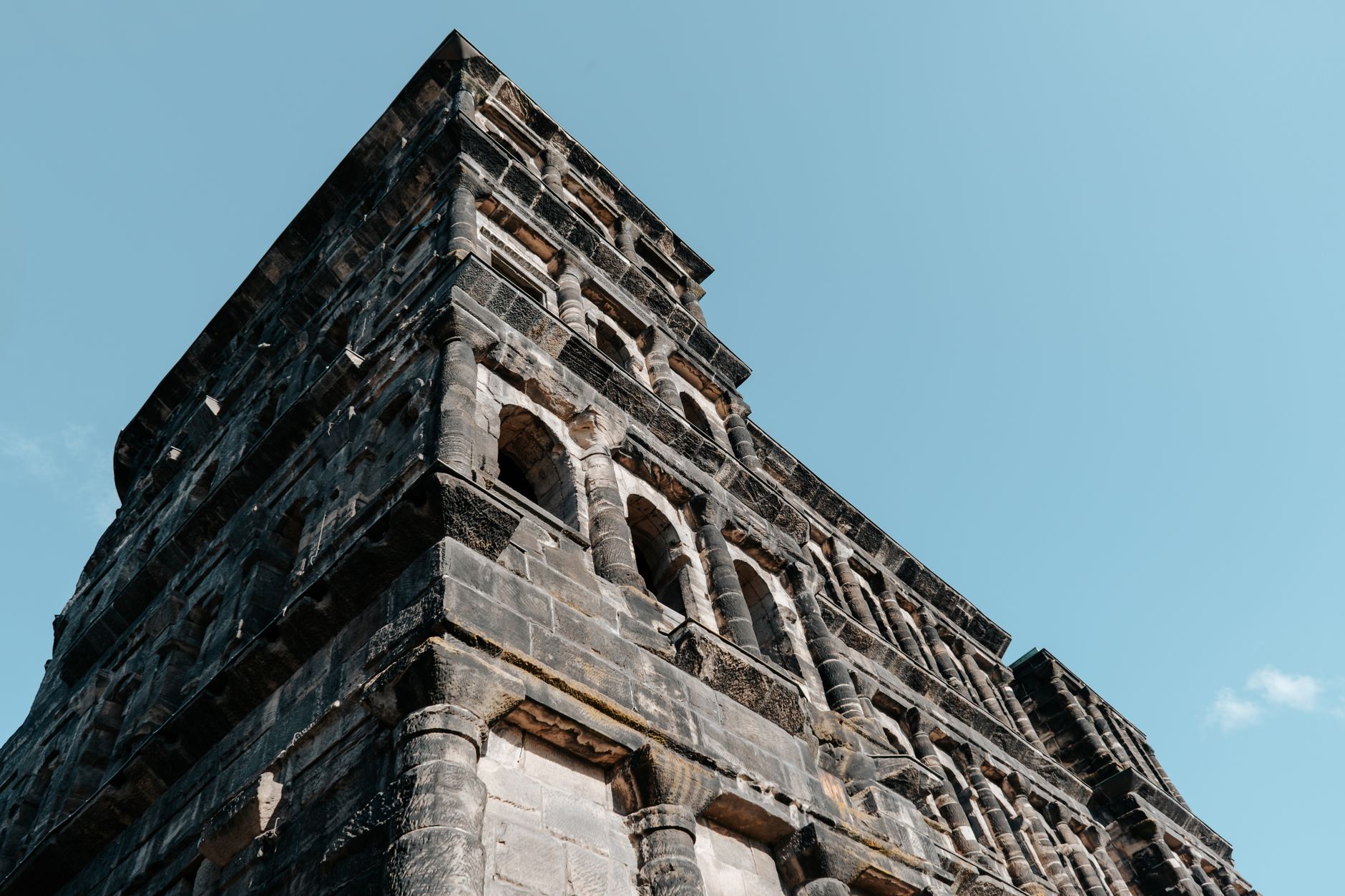
The oldest city in Germany announces itself before you've read a single sign. A Roman gate the size of a small fortress stands at the edge of the old town in dark sandstone — the Porta Nigra, built after 170 AD, its upper stones still rough where the masons never finished their work. Trier was already old when the medieval world began.
Founded no later than 16 BC as Augusta Treverorum on the banks of the Mosel, it served as a seat of Roman emperors, sheltered Constantine, and later produced Karl Marx. Two thousand years of stone, doctrine, and political argument are stacked here in a single walkable city.
💛 What travellers fall for
People who come back tend to go straight to the Aula Palatina on a quiet morning — the sheer scale of that brick hall, 33 metres high and still intact, lands differently when the tour groups haven't arrived. The Cathedral's treasury, with the Holy Robe, rewards a slow look. And the Kaiserthermen's underground service tunnels are stranger and darker than the brochures suggest.
Deals in Trier
Book directly at the provider

How Trier came to be
The Celtic Treveri lived here before Julius Caesar's campaigns subdued them between 58 and 50 BC. Rome built a wooden bridge across the Mosel around 17–16 BC — its basalt pillars still carry a road bridge today — and the settlement grew into Augusta Treverorum. By the 2nd century it was capital of the Belgic division of Roman Gaul; by the end of the 3rd, Emperor Diocletian had made it the capital of the western Roman Empire.
Constantine resided here from 306 to 312 AD and began the cathedral in 326. The city was sacked by Vikings in 882, absorbed into the East Frankish Empire, and eventually passed to Prussia in 1815 after a stint under French rule following 1794. In 1818, Karl Marx was born on Brückenstrasse.
Who and what shaped it
People who shaped it
Landmark buildings
See Trier in motion
Plan your visit
On the map
When to go
Summers are warm and dry enough to spend most of the day outside, though the river valley can hold humidity in July and August. Spring and October bring cooler, clearer air that suits the stone architecture well; winters are mild but grey, and several Roman sites reduce their hours considerably from November through February.
Right now
Background & history adapted from Wikipedia (CC BY-SA) · specs from Wikidata (CC0) · weather from Open-Meteo · map data © OpenStreetMap contributors · photos from Wikimedia Commons / Unsplash with per-image credit. No third-party reviews or social posts reproduced.