
Trani
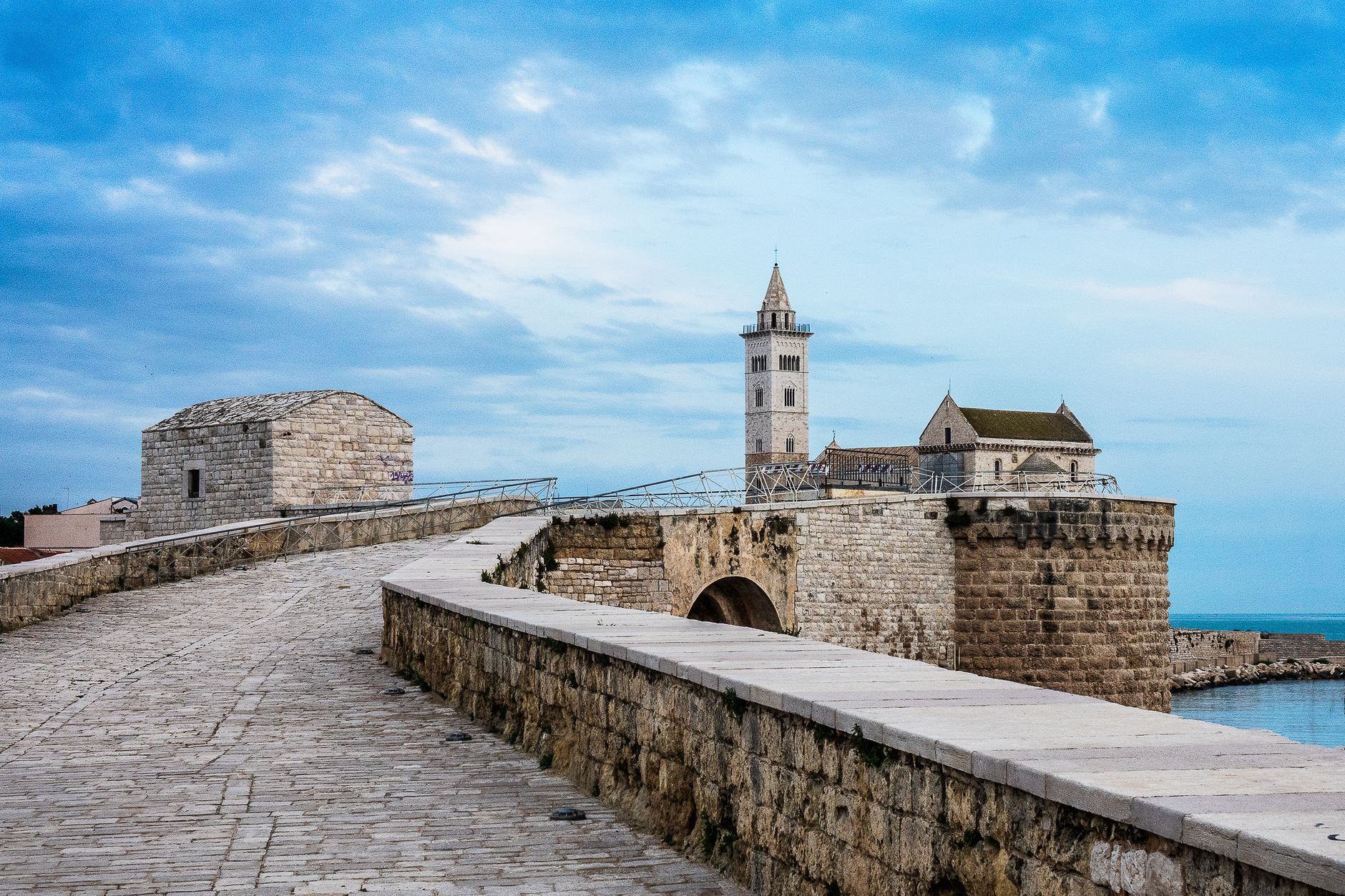
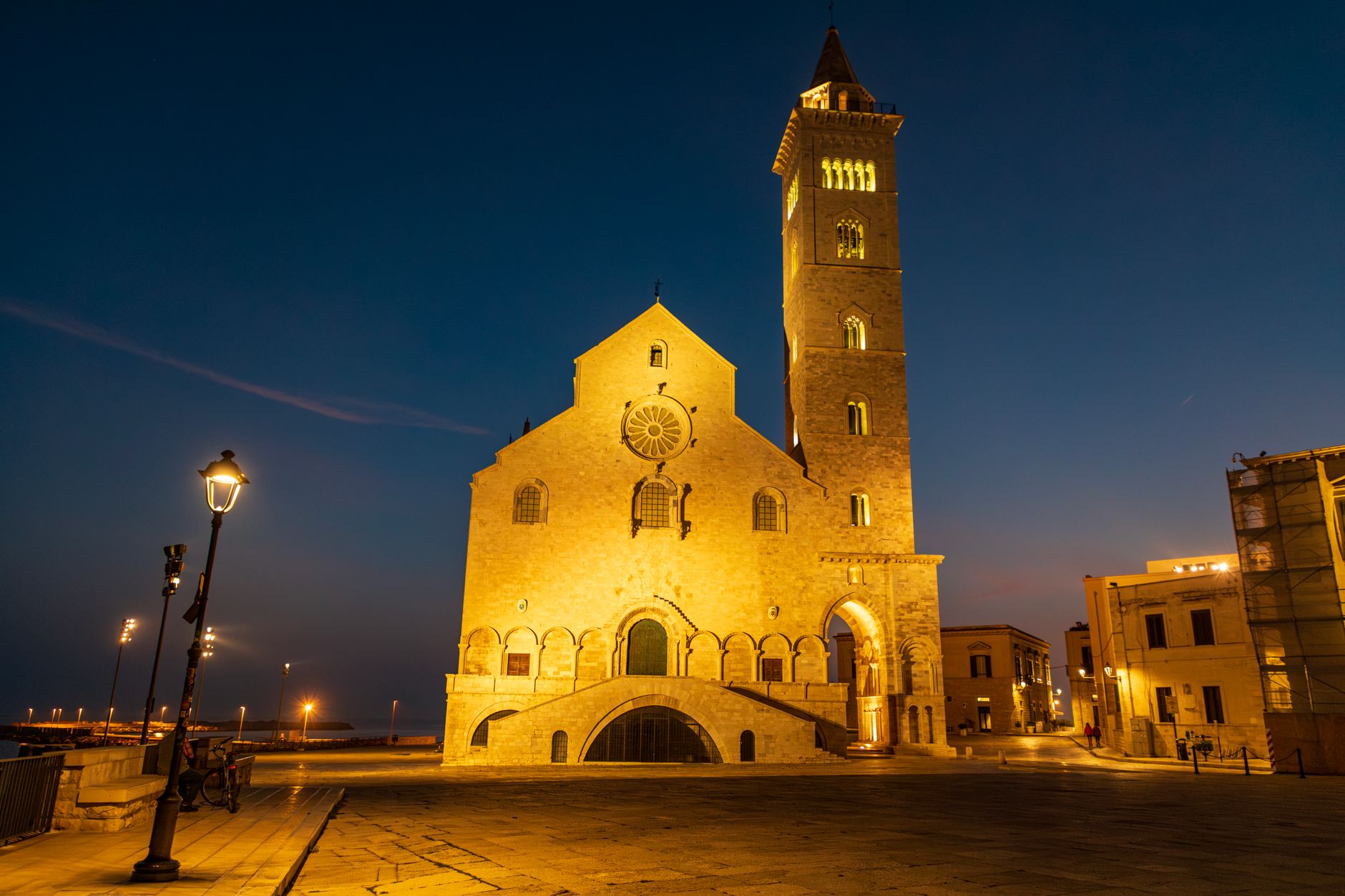
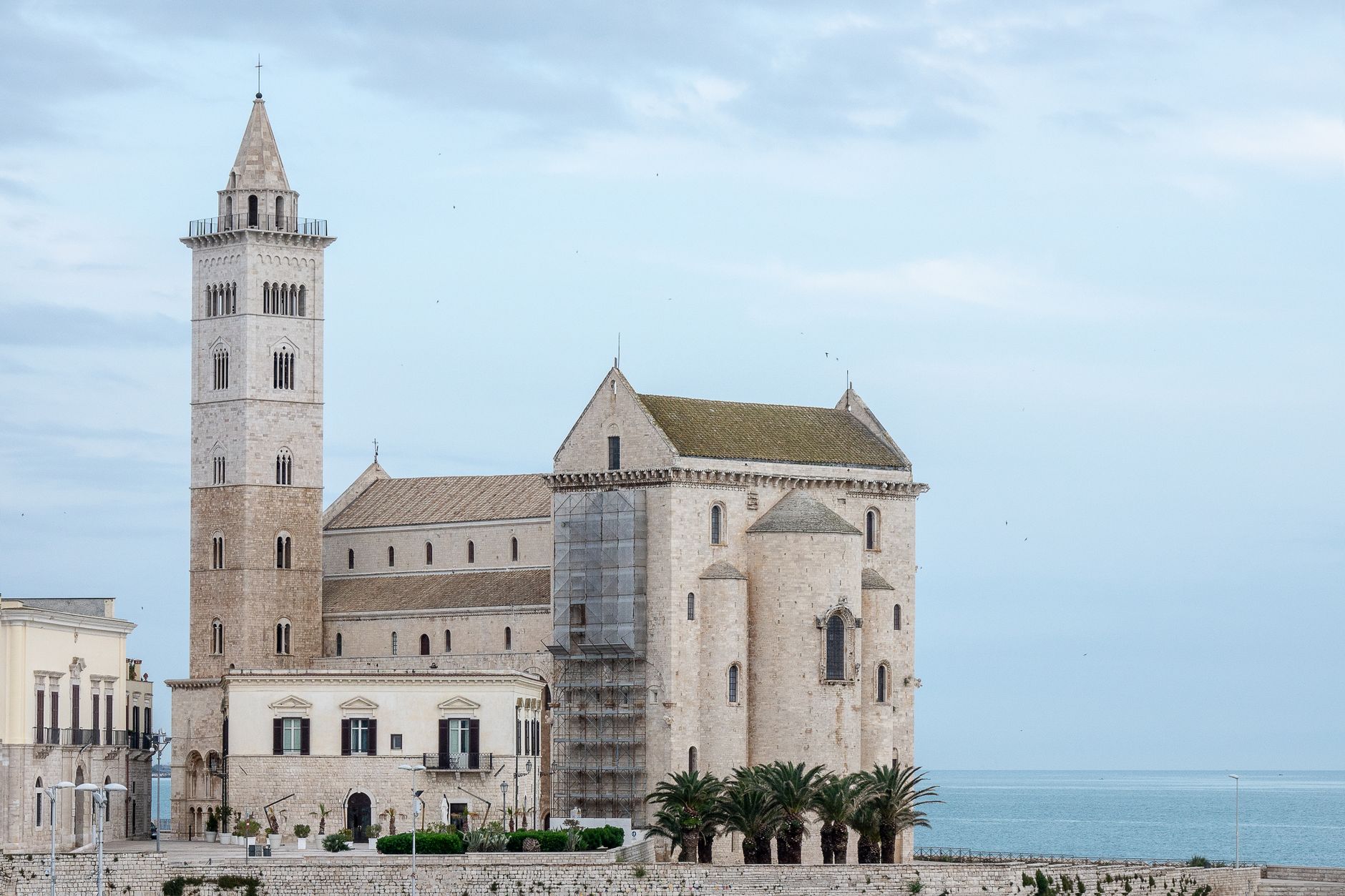
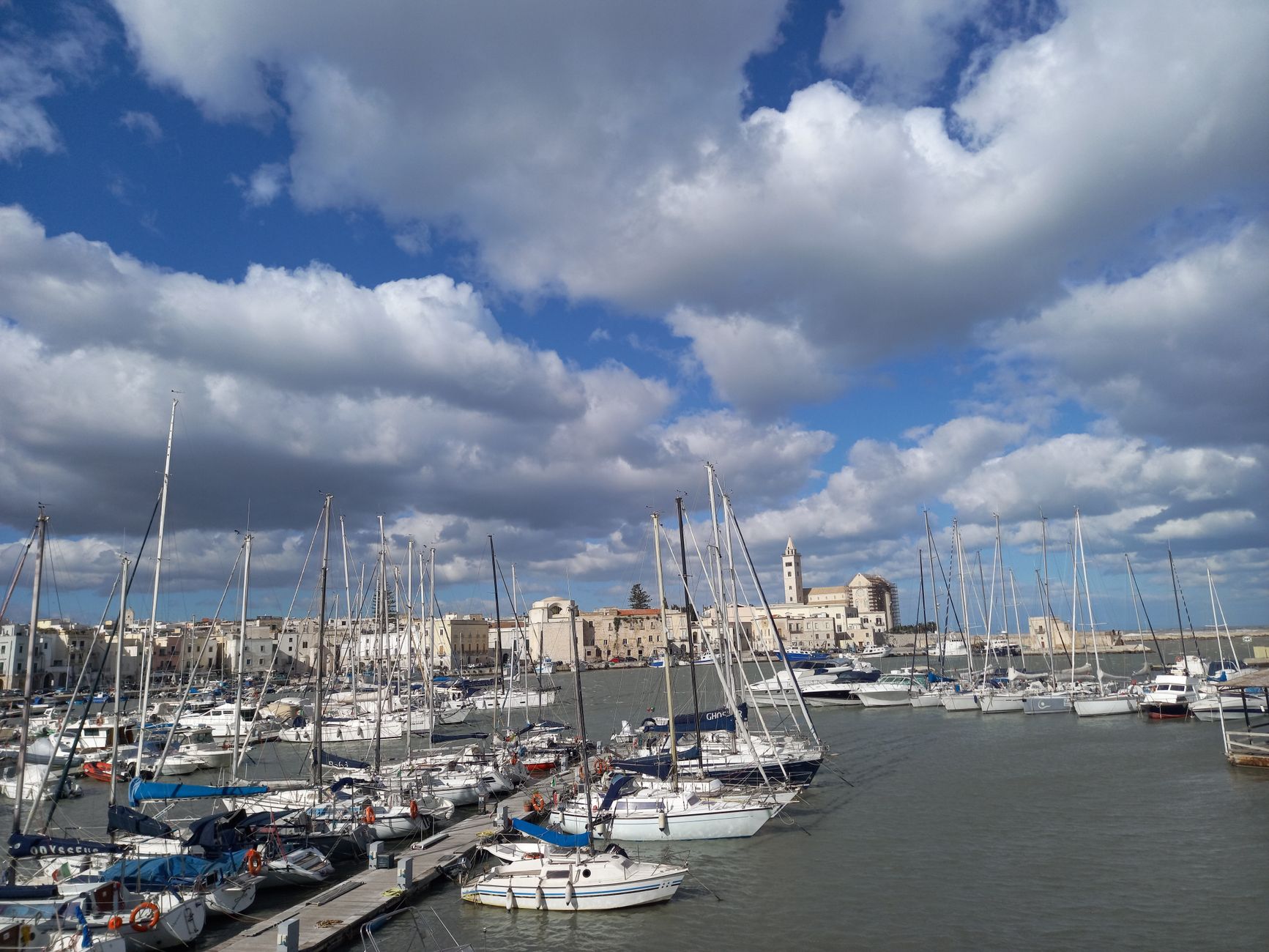
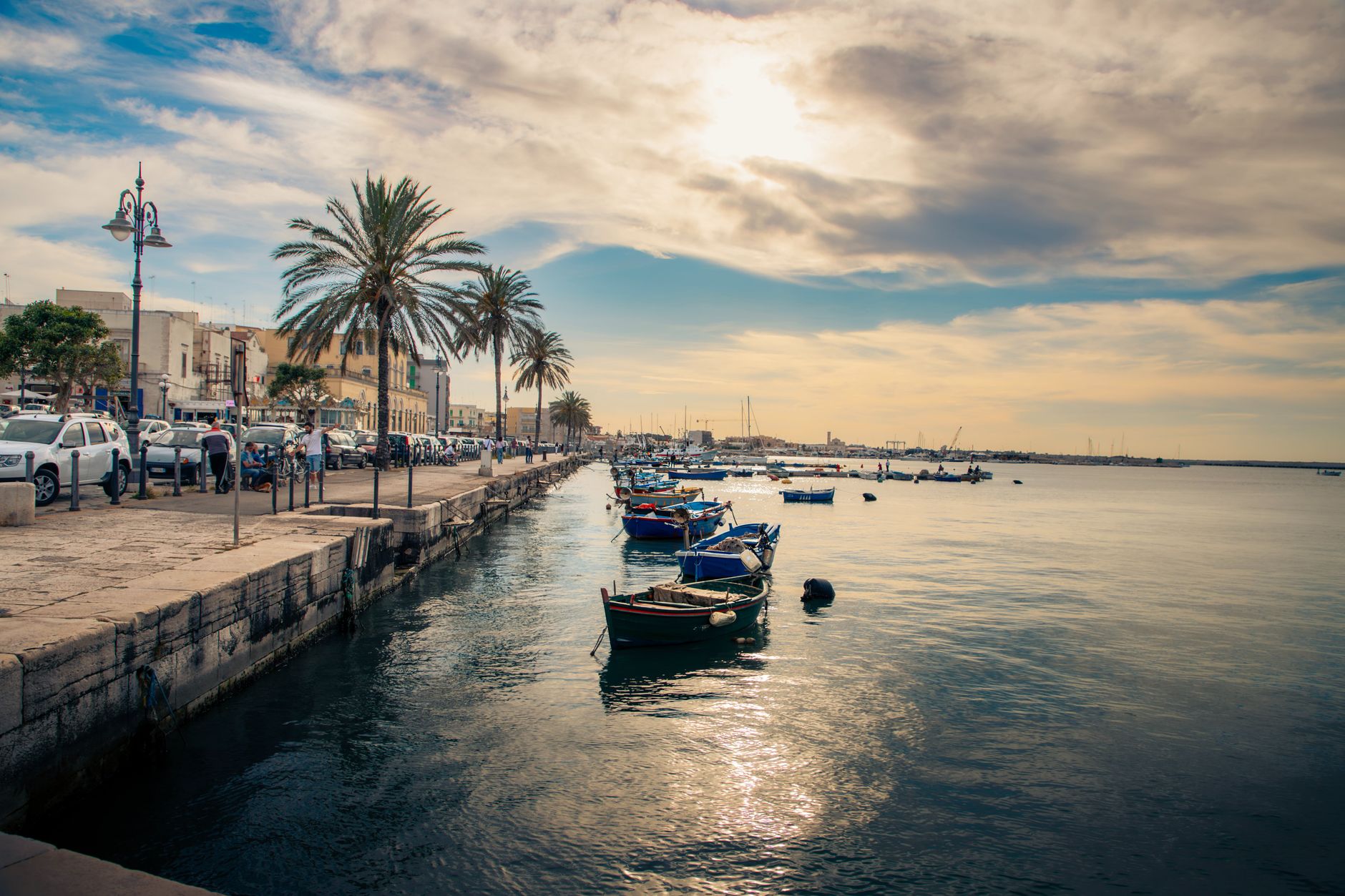
Stand at the edge of Trani's harbour at dusk and the cathedral seems to float — its pale limestone turning the colour of warm sand as the light drops over the Adriatic. That stone is the key to the whole city. Quarried from the caves beneath the streets, it built the churches, paved the lanes, and made the merchants rich. Trani still trades it today under the name Bianco di Trani, shipping slabs of it across Italy and beyond.
For a city of this size, the historical weight is remarkable. Trani produced the oldest surviving maritime law code in the Latin West, sheltered a Jewish community whose scholars reshaped European halakhic thought, and reached its apex under Frederick II's Holy Roman Empire before Napoleonic reorganisation handed provincial capital status to Bari.
💛 What travellers fall for
People who come back tend to arrive on the early train from Bari — €3.60, about forty minutes — and walk straight down to the harbour before the tour coaches appear. The cathedral before noon, the Scolanova synagogue after lunch, the castle in the late afternoon when the light hits the four corner towers at an angle worth photographing.
Experiences you don't want to miss




Deals in Trani
Book directly at the providerHow Trani came to be
Trani appears in a Roman road itinerary as Turenum, but its first real urban footprint dates to the 9th century. The city grew quickly: by 1063 it had issued the Ordinamenta et consuetudo maris, a maritime code that became the foundational legal reference for seafarers across the medieval Latin West. The cathedral broke ground in 1099, and its bronze doors — cast by Barisanus of Trani in 1175 — were already considered exceptional work for southern Italy.
The city's peak came under Frederick II, whose Swabian castle rose between 1233 and 1249. From that same period, a Jewish quarter near the port produced Rabbi Isaiah ben Mali di Trani, a halakhic authority whose rulings circulated through Jewish communities from Italy to Ashkenaz. The neighbourhood's synagogues survived into the 14th century; one, the Scolanova, was reconsecrated as a synagogue in 2006 after six centuries as a church.
Who and what shaped it
People who shaped it
Landmark buildings
See Trani in motion
Plan your visit
On the map
When to go
Summers are warm, dry and mostly clear — August averages 31°C with little rain, though the sea breeze keeps the harbour tolerable. Spring and autumn (April–June, September–November) sit between 18°C and 27°C, which is when the light on the limestone is at its best. Winters are long and can be cold and windy.
Right now
Background & history adapted from Wikipedia (CC BY-SA) · specs from Wikidata (CC0) · weather from Open-Meteo · map data © OpenStreetMap contributors · photos from Wikimedia Commons / Unsplash with per-image credit. No third-party reviews or social posts reproduced.