
Townsville



The thing you notice first about Townsville is Castle Hill — a great pink granite dome rising straight out of the city grid, turning rust-red at dusk while the Coral Sea catches the last light below it. This is North Queensland's largest city, a working port town that has never quite decided whether it wants to be rugged or refined, and is more interesting for the tension.
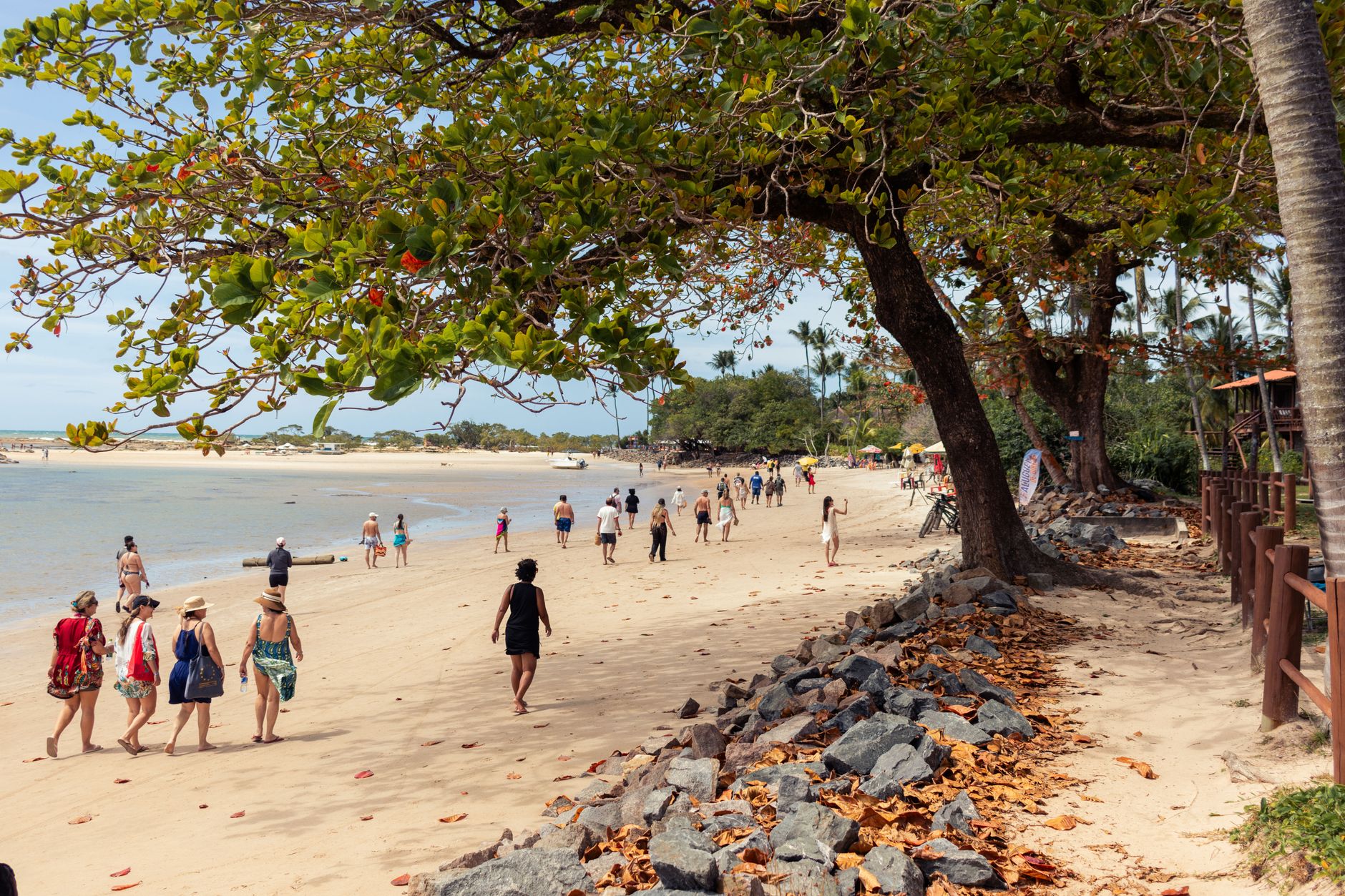
The Strand runs along the waterfront for nearly three kilometres, and on any given morning you'll find swimmers, cyclists and the occasional reef heron sharing it without ceremony. Magnetic Island sits twenty minutes offshore by ferry, close enough to feel like a suburb, far enough to slow everything down.
💛 What travellers fall for
People who come back tend to have a ritual: the early ferry to Magnetic Island before the day-trippers arrive, coffee somewhere on Flinders Street, then an evening walk up Castle Hill for the city-lights-and-sea view that no photograph quite captures. The Perc Tucker Regional Gallery is worth the detour even if you weren't planning on art.
Deals in Townsville
Book directly at the provider


How Townsville came to be
Townsville exists because of a practical problem: North Queensland's pastoral runs needed a port. In 1864, John Melton Black — acting with the financial backing of Sydney merchant Robert Towns — sent Andrew Ball to find a suitable coastal site. Ball found it, the settlement followed, and when the municipality was proclaimed in 1866, Black became its first mayor. The town that bore Towns's name grew fast once gold was found at Ravenswood and Charters Towers in the hinterland, cementing Townsville's role as the de facto capital of the north.
By 1882 the population stood at 4,000; within a decade it had more than tripled. The Victorian-era confidence of that growth is still legible in the streetscape — the 1886 Post Office, the bank buildings of 1887–88, the Victoria Bridge, a rare swing bridge that opened in 1889 to let shipping pass upstream. In the twentieth century the city left its own marks: the Cenotaph unveiled on Anzac Day 1924, and Eddie Mabo's Black Community School, founded here in 1973, which would eventually change Australian land law.
Who and what shaped it
People who shaped it
Landmark buildings
See Townsville in motion
Plan your visit
On the map
When to go
Townsville sits in a dry tropics zone and gets far less rainfall than most of coastal Queensland — it's sometimes called Australia's most sun-drenched city. The dry season (roughly May to September) brings warm days, low humidity and clear skies; the wet season (November to April) is hotter and occasionally dramatic, with cyclone risk peaking between January and March.
Right now
Background & history adapted from Wikipedia (CC BY-SA) · specs from Wikidata (CC0) · weather from Open-Meteo · map data © OpenStreetMap contributors · photos from Wikimedia Commons / Unsplash with per-image credit. No third-party reviews or social posts reproduced.