
Tour Gabriel
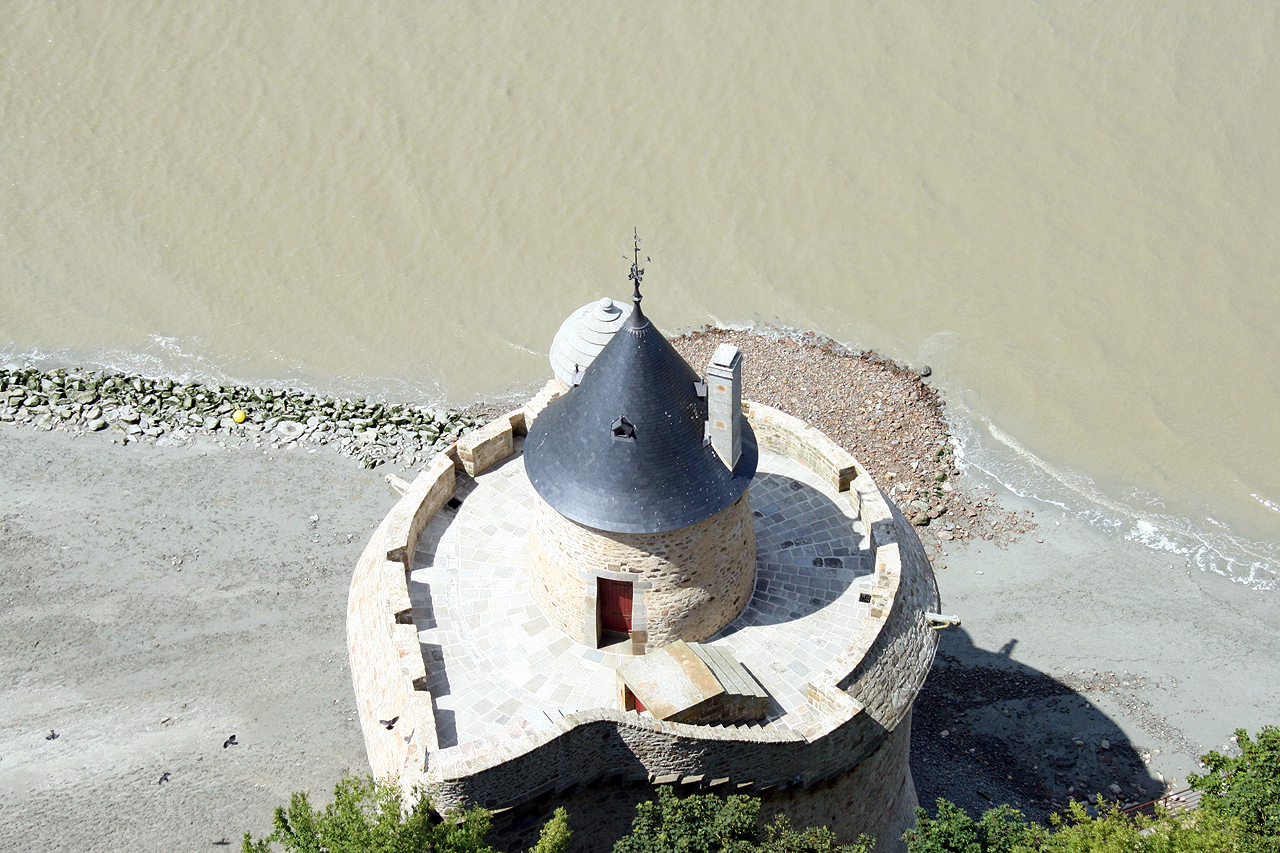
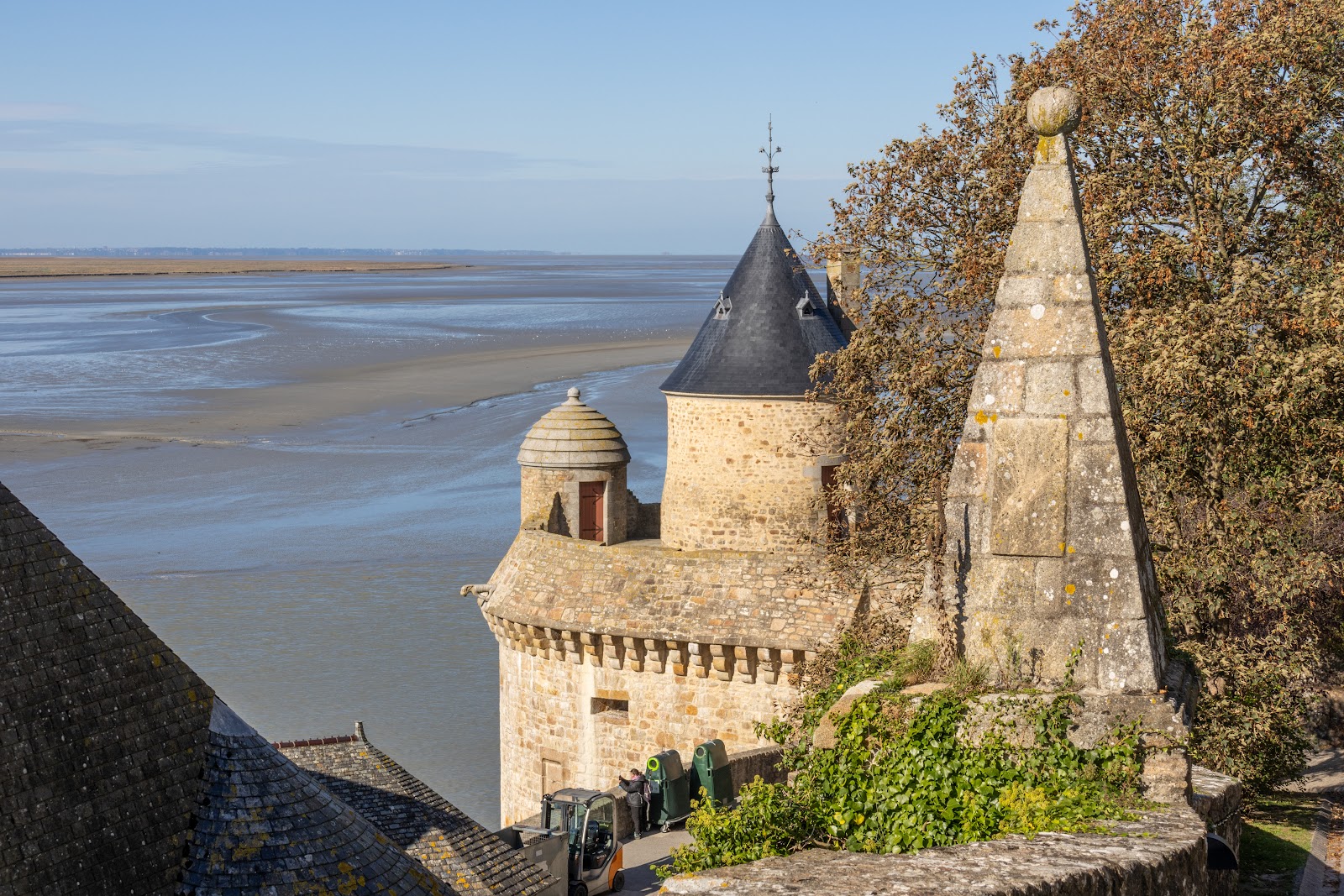
Stand at the southwestern corner of Mont Saint-Michel and you'll find a tower that has, across five centuries, served as a cannon battery, a lighthouse, and a windmill — sometimes one after another. Tour Gabriel rises from the ramparts with a conical spire and the ghost of a windmill on top, a silhouette that makes more sense once you know its restless history.
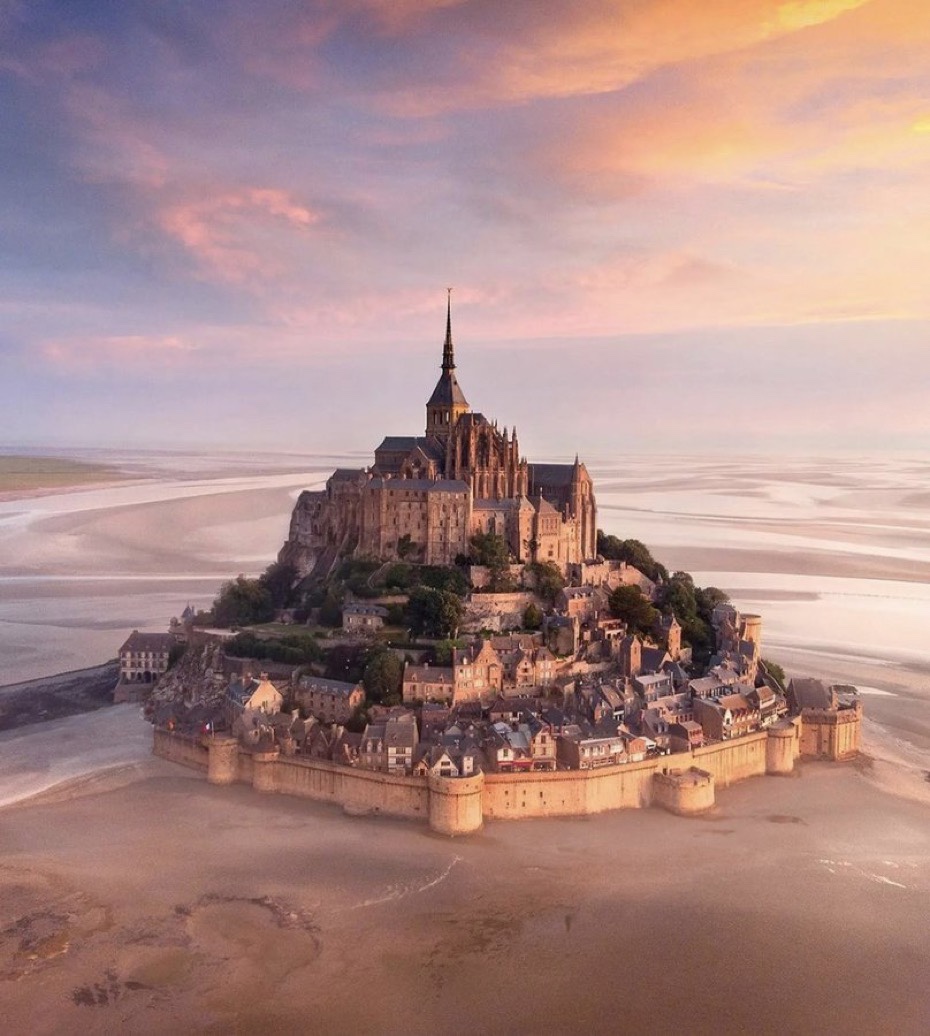
Most visitors are already tilting their necks toward the abbey spire by the time they pass this way, which means the tower tends to hold its quiet. From here, the bay opens wide — the Couesnon estuary, the continental shore, the tidal flats that twice a day disappear under some of the fastest-moving water in Europe.
💛 What travellers fall for
People who've been to Mont Saint-Michel more than once tend to head southwest early, before the Grande Rue fills up. The views from Tour Gabriel's corner — out over the bay rather than back into the village — are the ones that stay with you longest, and you'll likely have them to yourself if you arrive before mid-morning.
The story behind Tour Gabriel
In 1534, Gabriel du Puy ordered the construction of this tower on Mont Saint-Michel's western flank. Its job was specific: to protect the warehouses known as the Fanils and to defend the Mount from seaward attack. Inside its thick walls, cannons were arranged across three floors, each able to fire through flared loopholes in almost any direction — a serious military installation dressed in handsome masonry.
Over time, the urgency of coastal defence faded and the tower found new purposes. It became a lighthouse to guide ships through the treacherous bay. Later still, someone added a windmill to its crown. That windmill no longer turns, but it remains, a slightly incongruous hat on a tower that was built to make things stop moving.
Good to know
The village and ramparts are free to enter, no ticket required for Tour Gabriel itself. Parking is 2.5 km away; shuttle buses run frequently. Skip most of the island's museums and tourist-facing restaurants — they're not worth your time or money.
The bay catches Atlantic weather without much shelter: even in July and August, temperatures rarely climb above 21°C, and rain is possible any month. Autumn brings stormier skies that suit the tower's silhouette well; winter is cold and occasionally icy, but the crowds thin considerably and the tidal light can be extraordinary.
Where is Tour Gabriel?
More tickets & tours for Tour Gabriel
Book directly at the provider
What travellers say about Tour Gabriel
A well known attraction is located in Rennes, Bretange that is called “Mont St. Michel” Walking from the bus station to the landmark will take time for 40-50 mins,on the other hand, you can take the shuttle bus as well The atmosphere was very nice and windy It was such a great experience for see sightseeing here The best thing to do is get the views with water around the st.michel when it’s in moon waxing
Built in the 16th century by order of Gabriel du Puy, the Gabriel tower defended the west side of the Mount. Inside, protected by thick walls, the cannons, arranged on three floors, could fire in all directions through flared loopholes to the outside. This great bastion could have withstood a siege by itself.
Sadly, another tower we only saw from above. You probably need two full days to completely see all that Mont St. Michel has tomorrow.
The Castle is beautiful. The streets are narrow and full of tourists, but worth visiting! The walk towards the Castle and towers takes 45 minutes from the parking.
Get your cameras ready—this place is known as the most photographed place in France. Enjoy!
More of Mont Saint-Michel
Discover where to stay, what to do and the best deals for your trip.
Explore Mont Saint-Michel →More attractions in Mont Saint-Michel
All of Mont Saint-Michel →
Background adapted from Wikipedia (CC BY-SA) · map data © OpenStreetMap contributors · ratings & place photos via Google · other photos with per-image credit. Ticket links may earn us a commission at no extra cost to you.