
Torres de Serranos
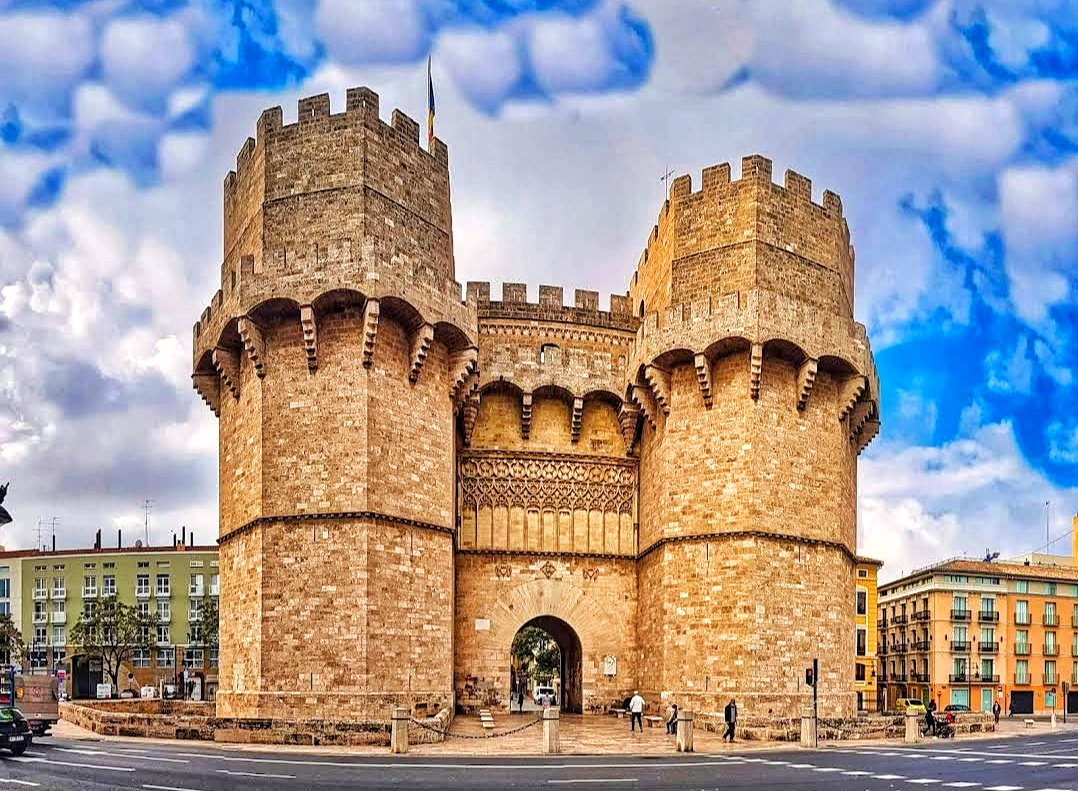
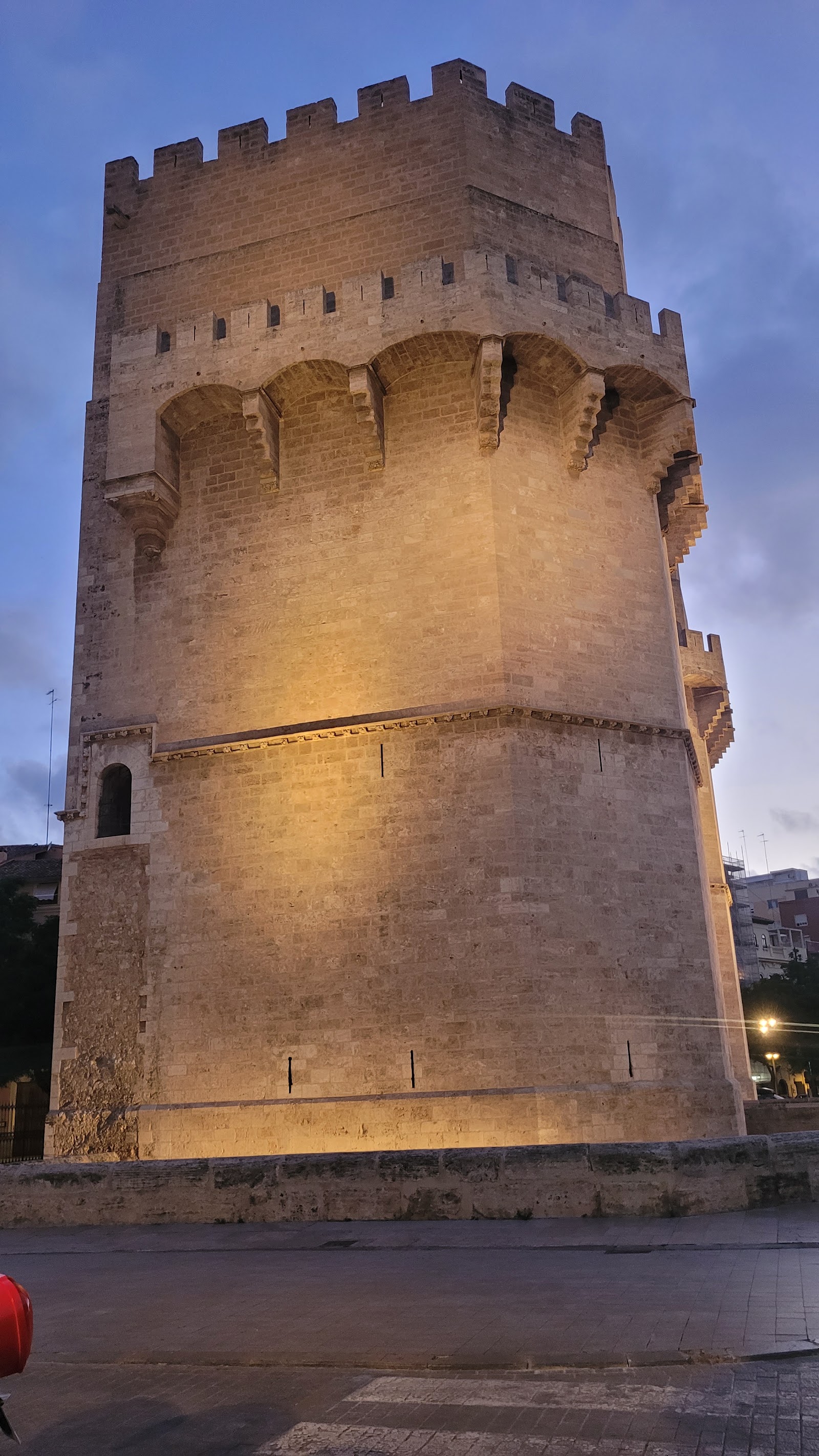
A small green bell from the 15th century still hangs on the rear façade of the Torres de Serranos, easy to miss if you're already looking past it toward the Turia park below. It was there to warn the city of danger. The towers themselves served a similar purpose — two 33-metre limestone sentinels that once marked the main road into Valencia from Aragón, and are now considered the largest surviving Gothic city gateway in Europe.
The name comes from the serranos, the merchants and travellers who descended from the Los Serranos mountains and passed through this gate into the city. Stand beneath the polygonal arches and that movement of people — centuries of it — is not hard to imagine.
💛 What travellers fall for
People who come back tend to time it for a Sunday morning, when entry is free and the light on the limestone is at its best. The climb is short but steep, so comfortable shoes matter more than you'd think. The rear terrace, overlooking the old Turia riverbed, is quieter than the front and worth a slow look.
The story behind Torres de Serranos
Construction began on 6 April 1392, when master stonemason Pere Balaguer was commissioned by the Valencian government to build a monumental new gate as part of King Pedro IV's reinforcement of the city wall. He completed it by March 1398. The two symmetric towers, clad in limestone from the nearby town of Alginet, each rise through three vaulted floors to an open terrace.
The building has survived a great deal. From the 16th century until 1887 it served as a prison for nobles and knights. In 1865, when the rest of the medieval wall was demolished, the towers were spared. Their most unusual chapter came in December 1936, during the Spanish Civil War, when a 90-centimetre layer of reinforced concrete was laid on the first floor to protect artworks evacuated from the Prado Museum in Madrid.
Good to know
Open Monday–Saturday 10:00–19:00, Sunday 10:00–14:00; closed Mondays. Entry is €2, free on Sundays and public holidays. Not accessible for visitors with limited mobility. Allow 20–40 minutes. Nearest metro is Alameda (Lines 3 and 5).
Spring and early autumn are the most comfortable seasons for the climb — mild temperatures and good light. Summer visits are entirely possible but the ascent gets warm; July and August regularly reach 30–32°C. Autumn brings the highest chance of rain, and visits can be restricted in fog or strong wind.
Where is Torres de Serranos?
More tickets & tours for Torres de Serranos
Book directly at the provider
What travellers say about Torres de Serranos
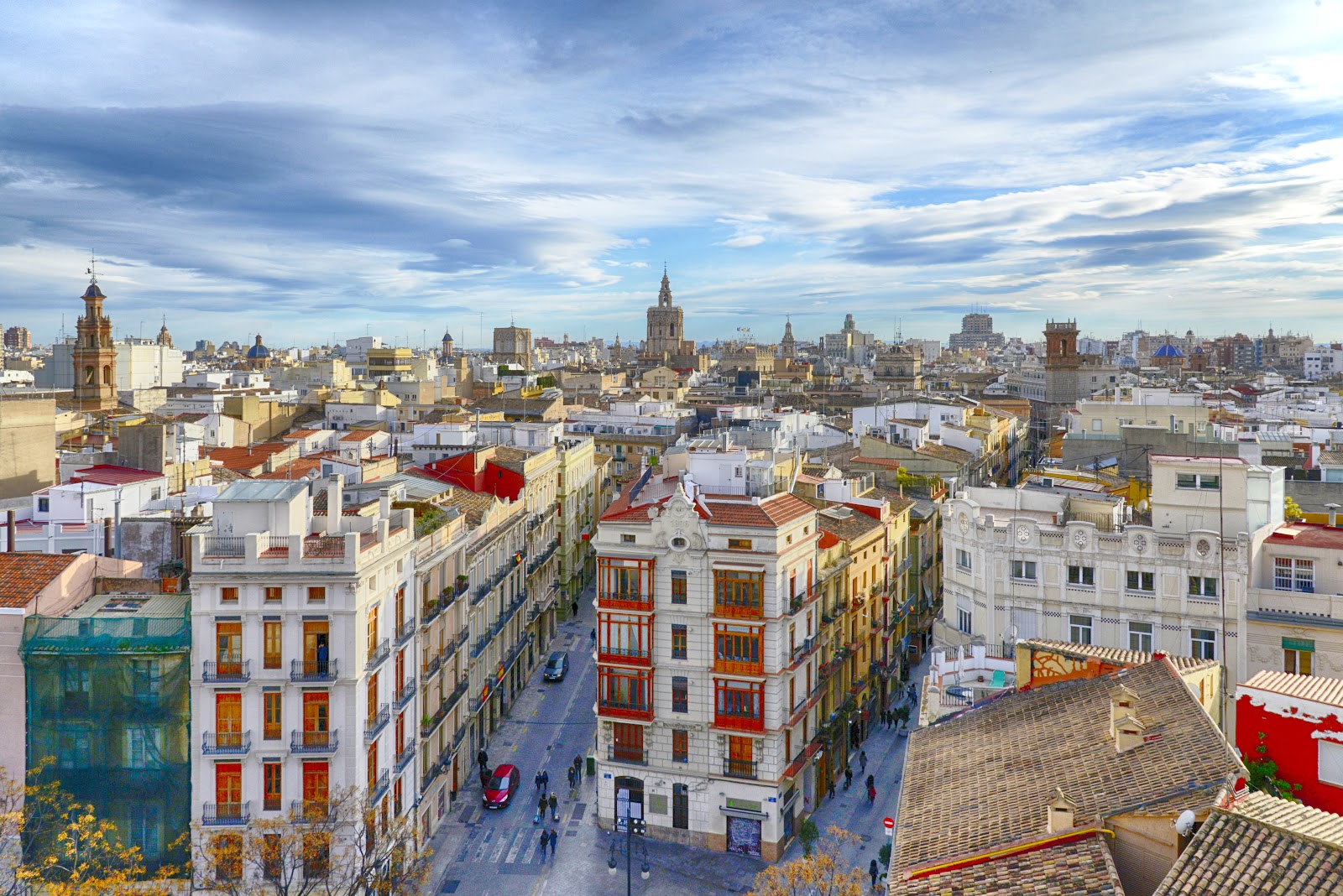
Torres de Serranos is one of the most beautiful and impressive historical landmarks in Valencia. The towers are very well preserved and give a strong sense of the city’s medieval past. Their architecture is striking from the outside, and they look especially impressive when you approach them from the old riverbed park or from the historic center. Climbing to the top is definitely worth it, because you get a great view over Valencia, including the old town, the Turia Gardens, and the surrounding streets. The visit is not very long, but it is very enjoyable, especially if you like history, architecture, or panoramic views. What makes this place special is that it feels both monumental and easy to include in a walk around the city. It is close to many other interesting areas, so it is a perfect stop while exploring Valencia. Overall, a beautiful and memorable place that is definitely worth visiting.
If you have time this is a great historic spot to visit. There was no wait and it was easy to get around. Lots of people when we were there, so some great photos could be difficult. It has really great views of the surrounding area and really easy to imagine a couple of grunt guards manning a post and talking crap about some royal person arriving through the gates. It was a great visit and worth the price of admission
I’d seen photos beforehand, but standing right beneath the towers made me appreciate the scale and history in a completely different way. The stonework and Gothic detail give it real character. I decided to climb to the top, and I’m glad I did. The views over the old town and the Turia gardens were worth every step. I liked that it didn’t feel overly commercialised, just authentic, historic, and quietly impressive. For me, it was a simple stop that delivered more than I expected. Short visit, lasting impression.
An extraordinary looking monument, the entrance to the old town that leads you to the Cathedral, the market, the beautiful squares and the architecture you want to see. In addition to the fact that it is close to the auzobus stop and will protect you when it rains, you can climb the stairs to the top (it offers a nice view of that part of the city), and there are cafes, food, ice cream, souvenirs nearby.
Amazing views. Be aware of the steps and the sun because these days it’s extremely hot. Climb to the top because you won’t be disappointed. Definitely recommend visiting!
More of Valencia
Discover where to stay, what to do and the best deals for your trip.
Explore Valencia →More attractions in Valencia
All of Valencia →
Background adapted from Wikipedia (CC BY-SA) · map data © OpenStreetMap contributors · ratings & place photos via Google · other photos with per-image credit. Ticket links may earn us a commission at no extra cost to you.