
Torre del Oro
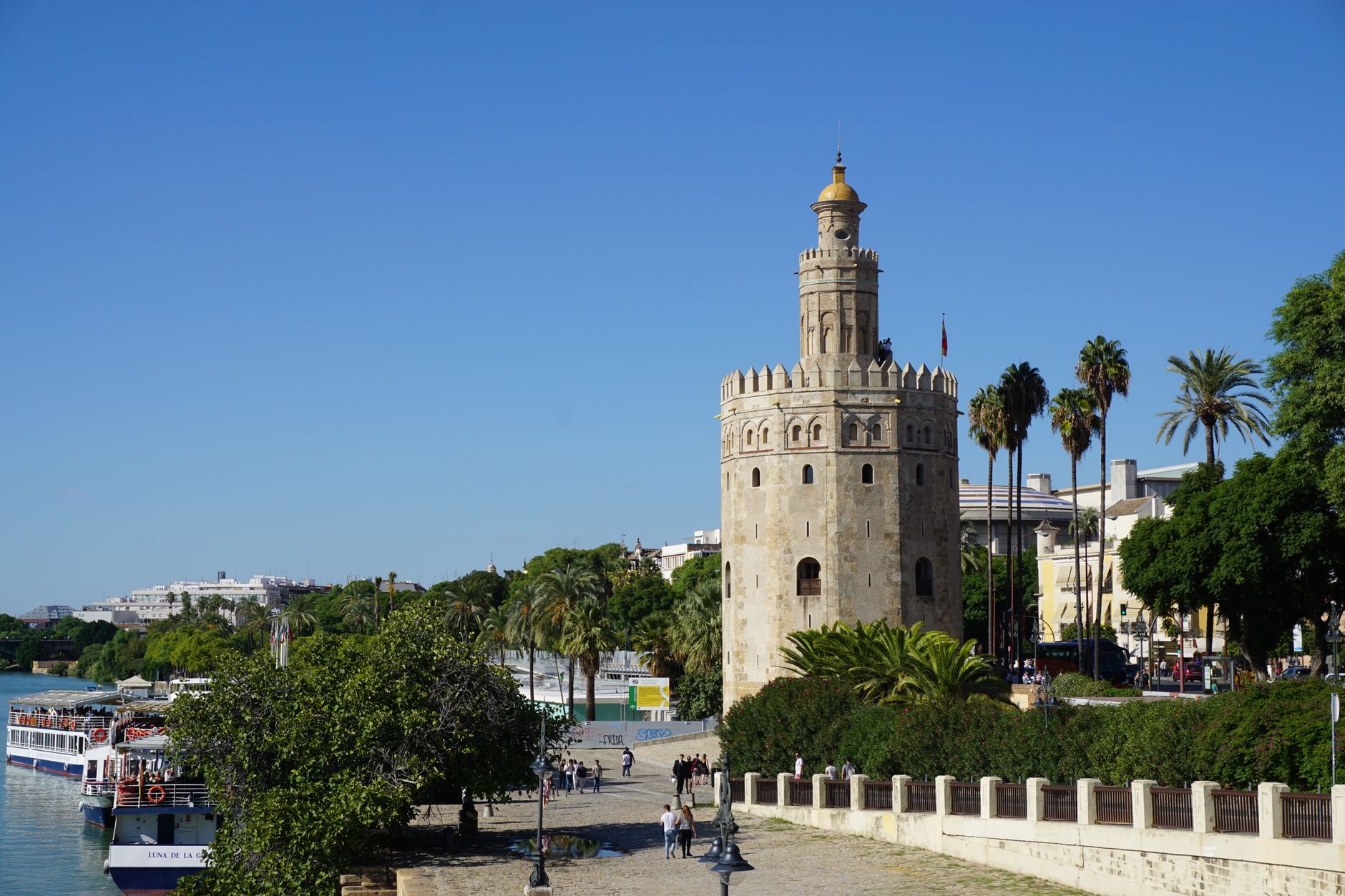
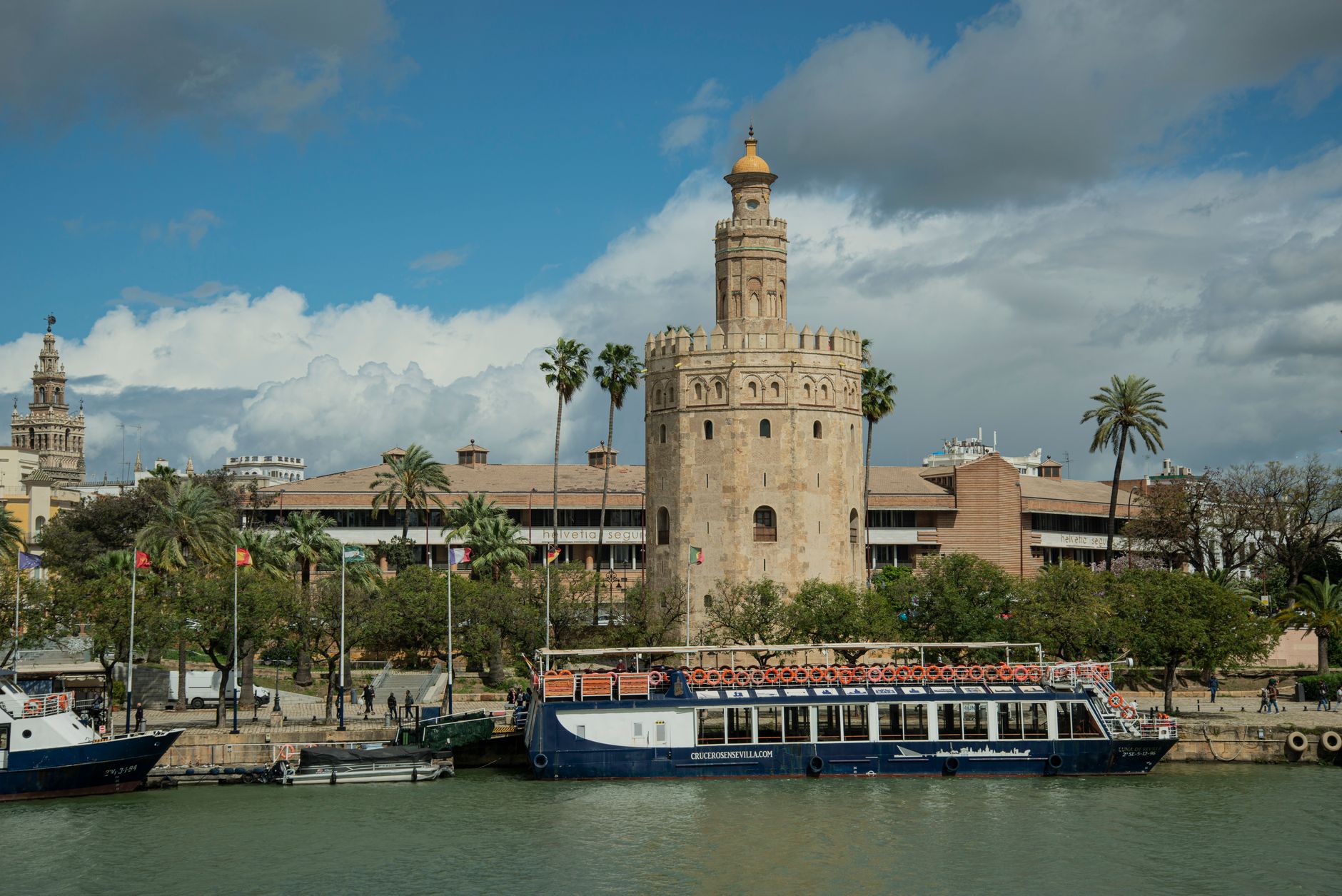
The golden dome of the Torre del Oro catches the afternoon light off the Guadalquivir and throws it back at you before you've even crossed the road. That shimmer isn't gilding — a 2005 restoration confirmed the tower is faced in lime mortar mixed with pressed straw, a material that happens to behave like gold at the right hour. Stand on the riverbank and you'll understand how the name stuck.
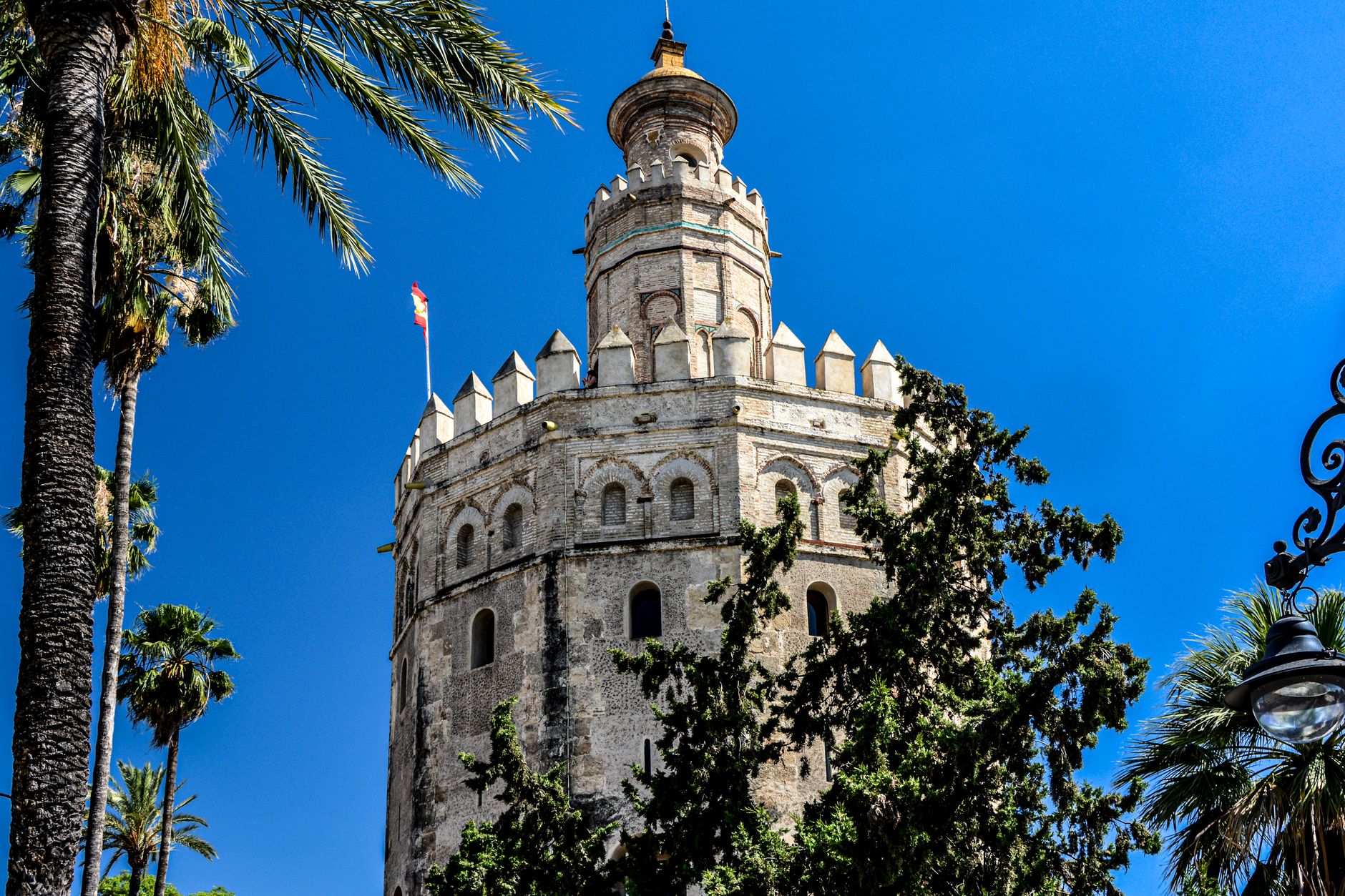
At 36 metres, the tower reads as three different centuries stacked on top of each other: a 13th-century Almohad base, a 14th-century second tier ordered by Peter of Castile, and an 18th-century cylindrical drum added after earthquake damage. Inside, the Spanish Navy runs a small maritime museum across three floors connected by a spiral staircase.
💛 What travellers fall for
People who return tend to come back on a Monday — admission is free, and the ground floor's model of the Real Fernando (Spain's first steamship) gets more attention without the crowds. The panoramic terrace is narrow, so early weekday mornings are the time to linger over the river bend without negotiating around other visitors.
The story behind Torre del Oro
Abù l-Ulà, the Almohad governor of Seville, ordered the first dodecagonal tier built in 1220 as a military watchtower guarding the river approach. A chain is said to have stretched from its base across the Guadalquivir to control river traffic. Peter of Castile added a second dodecagonal level in the 14th century; the tower then stood largely unchanged for four hundred years.
The 1755 Lisbon earthquake badly damaged the structure, and the Marquis of Monte Real proposed demolition. Seville's citizens appealed to the king, who intervened. Military engineer Sebastian Van der Borcht — who also designed the Royal Tobacco Factory — rebuilt the upper cylindrical body and added the dome by 1760. The tower was declared a historic-artistic monument in 1931 and has been under the care of the Spanish Navy since 1870, housing the maritime museum since 1944.
Good to know
Bus lines 03, 05 and EA stop directly outside on Paseo Colón; Metro L1 to Puerta de Jerez is a three-minute walk. General entry is €3; free Mondays. No advance booking — tickets at the door only. The spiral staircase is steep and narrow; upper floors are not accessible by wheelchair. Allow an hour.
The terrace is fully exposed, which matters in Seville's summers — temperatures above 38°C are common from June through August and the stone holds heat. Spring and autumn give you the river light without the weight of the midday sun.
Where is Torre del Oro?
More tickets & tours for Torre del Oro
Book directly at the provider
What travellers say about Torre del Oro
Actually inside is Seville naval history museum. You can donate as much as you want. Otherwise is free. Museum is small but as a history lover I could be there at least one hour or more. The view is really beautiful. Highly recommended.
Astonishing tower accompanied by magnificent views of the skyline. Entry is free and does not need to be pre booked. There was a line of approximately two people that took less than five minutes to wait through and then we were inside. The second story boasts a modest naval history museum and the views from the skyline are depicted in my photos. Highly recommend if you have time in Seville.
A great place to visit in Seville. Admission is almost free — you simply make a donation of any amount, and payment is by card only. Inside, there is a small but interesting museum with ship models and an exhibition about the history of the tower itself. At the top, there is an observation deck with beautiful views of the surrounding area and the river, which makes the visit especially worthwhile. Torre del Oro is one of Seville’s most famous landmarks. It was built in the 13th century during the Almohad period as part of the city’s defensive system and was used to control access along the Guadalquivir River. Today, it is not only an important historic monument, but also a very pleasant place for a short visit. I definitely recommend stopping by.
A beautiful and iconic tower in Seville. The Torre del Oro is one of the city’s most recognizable landmarks, and it looks especially impressive standing by the river. The golden tones of the tower, particularly in the sunlight, make it a great spot for photos. It’s definitely worth seeing while exploring the city. Even if you just admire it from the outside during a walk along the river, it adds a lot of charm and history to the atmosphere of Seville.
It’s a beautiful building but the exhibits within are a little lacking. Entry It’s a little of putting as a donation is requested before entry. Perhaps if this was done on exit there would be a fear that there would be a significant reduction in the value of the donation. That is a realist prospect! A collection of poorly labelled paintings and nautical exhibits lie with in. The view from the tower is not worth the climb ( there are not many steps ) at the top the turrets are protected from tourists being foolish. We donated 10€ on entry but felt 5€ was perhaps the real value. The main entrance is among the many phonetical bus tour salesfolk. Step off the main road onto the river, find a bench and take in the history of the building. It is a beautiful building.
More of Seville
Discover where to stay, what to do and the best deals for your trip.
Explore Seville →More attractions in Seville
All of Seville →
Background adapted from Wikipedia (CC BY-SA) · map data © OpenStreetMap contributors · ratings & place photos via Google · other photos with per-image credit. Ticket links may earn us a commission at no extra cost to you.