
Todi
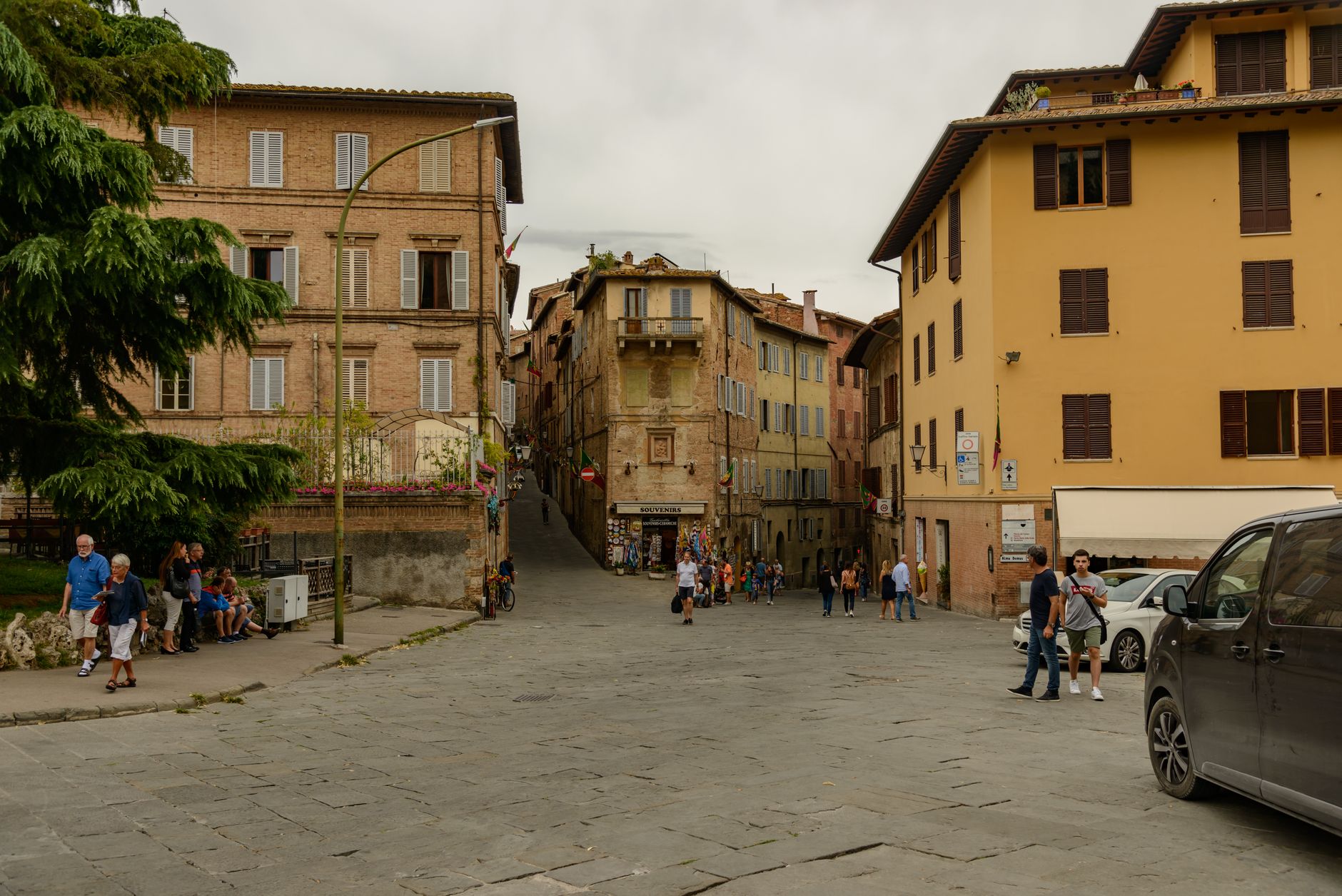
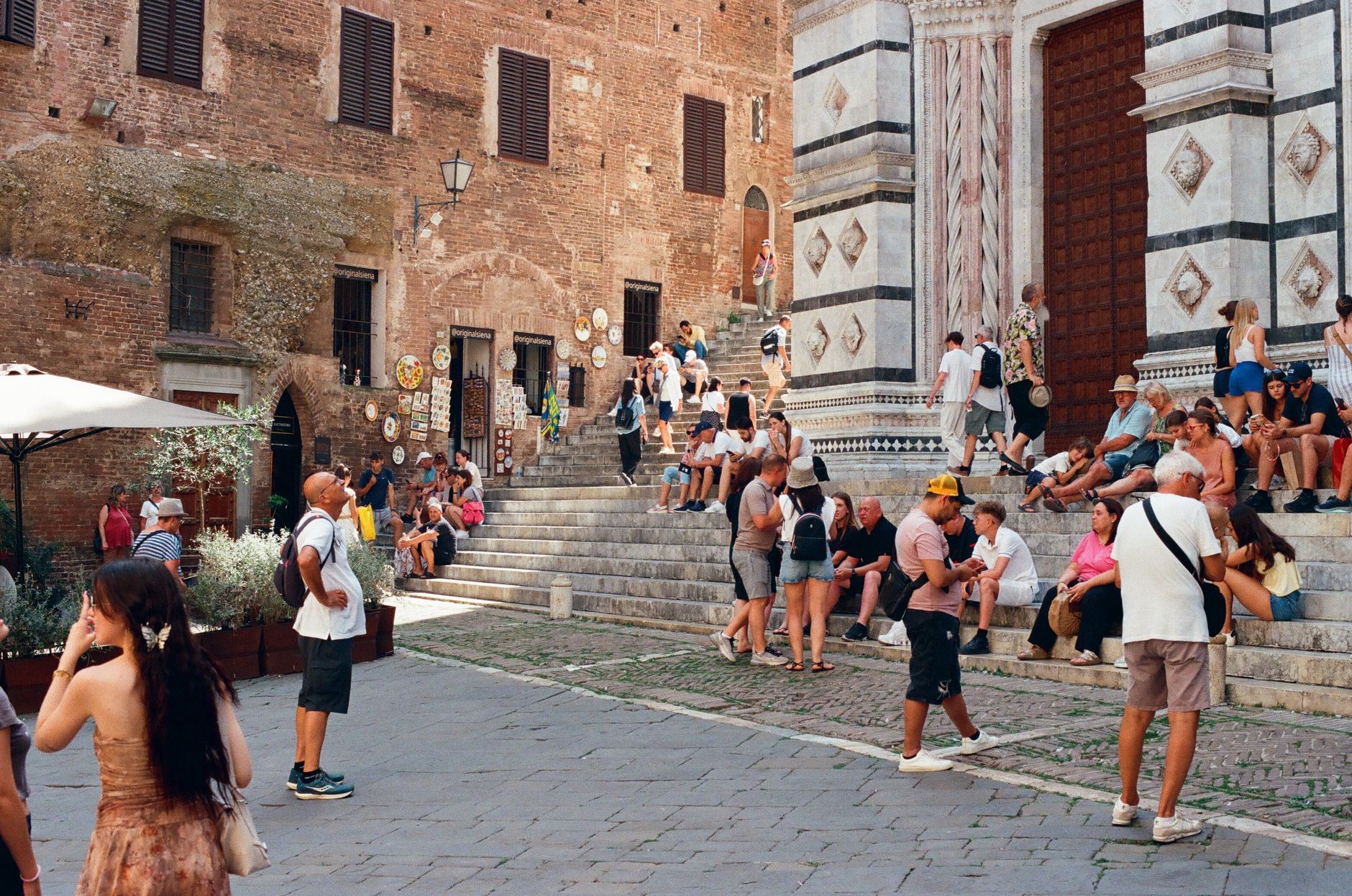
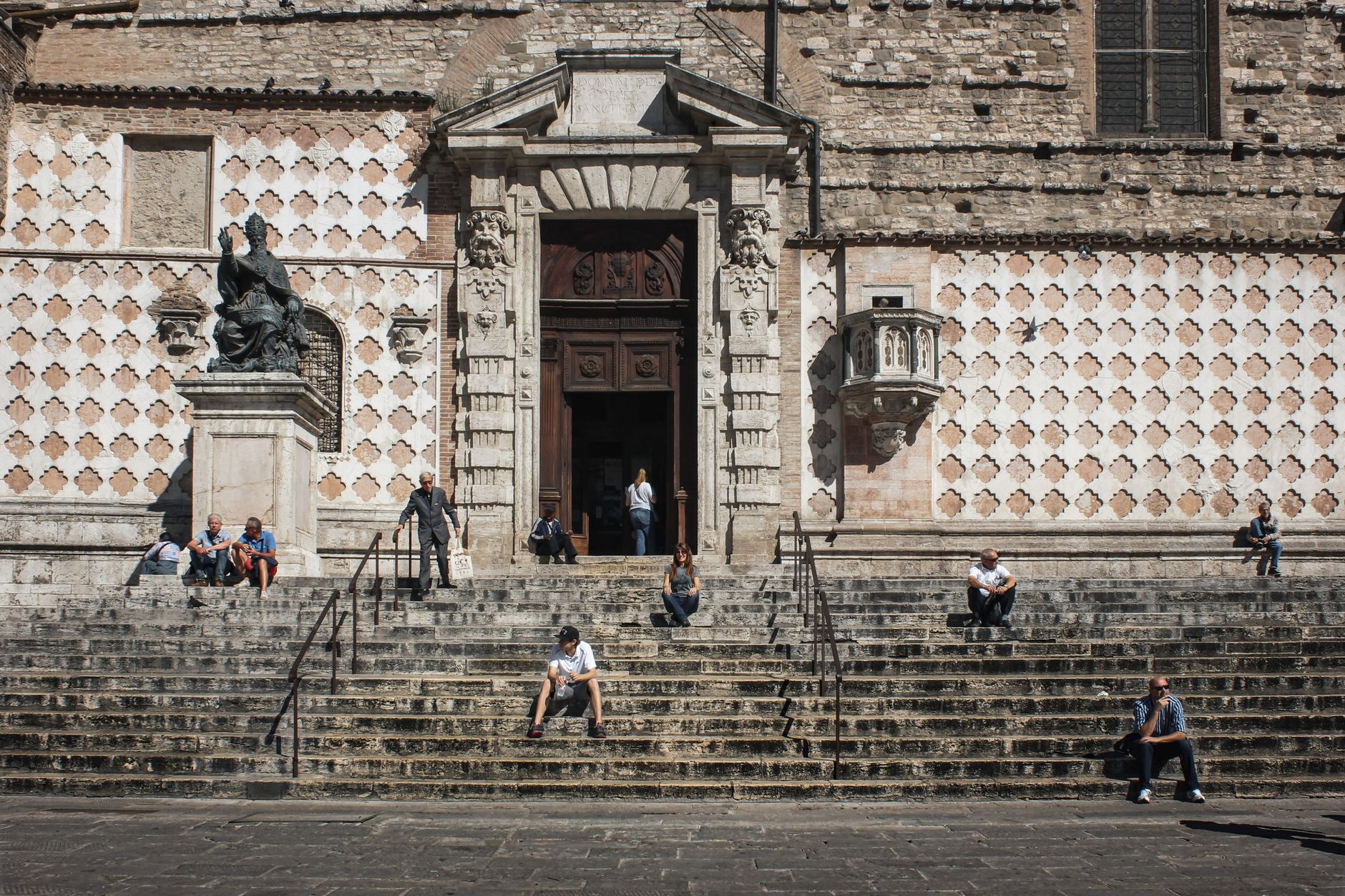
Todi sits at 398 metres on the summit of Colle Nidoli, and the first thing you notice is that the town has not sprawled — it ends, cleanly, where the medieval walls end. Piazza del Popolo occupies the exact footprint of the old Roman forum, which means you are drinking your coffee on ground that has been the centre of public life for roughly two thousand years.
The hill itself is the organizing principle of everything here. Streets drop away from the piazza in long, steep curves. The four monumental gates — Porta Orvietana, Porta Perugina, Porta Romana, Porta Amerina — still mark the compass points of a town that has been drawing its own borders since the Umbri named it Tutere, meaning frontier.
💛 What travellers fall for
People who come back tend to say the same thing: go to San Fortunato late in the afternoon, when the light comes through the incomplete façade at a low angle. Then walk down to the Nicchioni — the great Roman concrete niches — before dinner. The sequence takes an hour and covers two thousand years without feeling like a tour.
Experiences you don't want to miss


Deals in Todi
Book directly at the provider

How Todi came to be
The Umbri founded Tutere — 'the border town' — in the 8th or 7th century BC, on the frontier with Etruscan territory. Rome absorbed it, and under Augustus it became Colonia Julia Fida Tuder, settled by veterans of the 41st legion. The amphitheatre they built outside the walls followed standard Roman practice; the great concrete Nicchioni still stand at the edge of the old forum.
The medieval city grew outward in layers. In 1204 Todi appointed its first podestà — required by law to be an outsider, a Bolognese named Spagliagrano — to hold judicial authority at arm's length from local interests. The Palazzo del Popolo went up around the same time, one of the oldest public palaces in Italy. By 1368 the free municipality was gone, absorbed first by noble families, then definitively by the Church under Pope Alexander VI and Cesare Borgia. Todi stayed papal territory until 1860.
Who and what shaped it
People who shaped it
Landmark buildings
See Todi in motion
Plan your visit
On the map
When to go
Spring and early autumn are the most comfortable seasons — mild temperatures and the kind of clear light that makes the stone of Piazza del Popolo look almost warm. July and August are hot on the hilltop and draw more visitors; January and February are quiet and occasionally sharp, but the town empties in a way that has its own appeal.
Right now
Background & history adapted from Wikipedia (CC BY-SA) · specs from Wikidata (CC0) · weather from Open-Meteo · map data © OpenStreetMap contributors · photos from Wikimedia Commons / Unsplash with per-image credit. No third-party reviews or social posts reproduced.