
The Loop
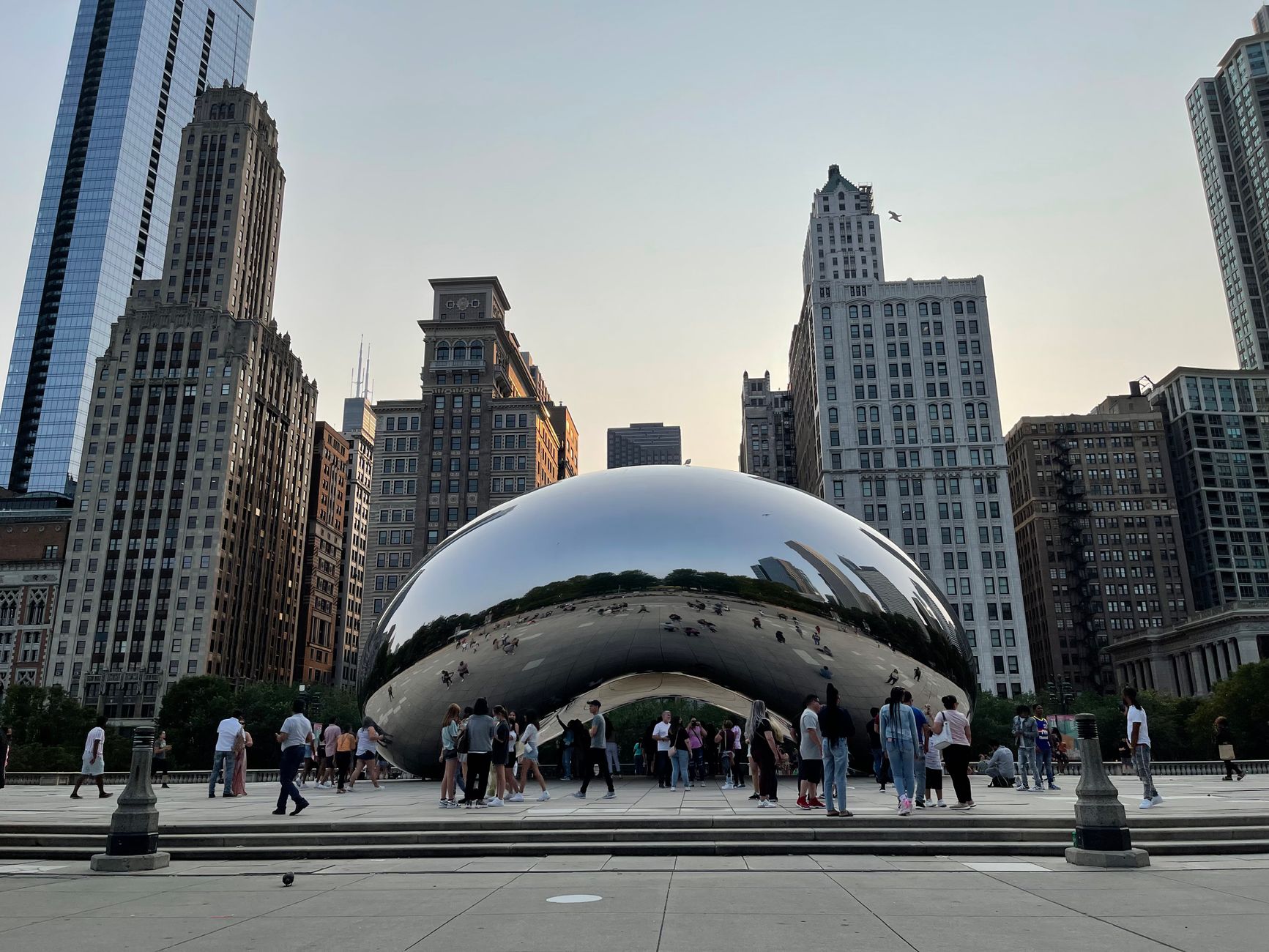
Stand on the corner of Wabash and Lake on a weekday morning and you'll hear the Loop before you see it — the steel shriek of an 'L' train curving overhead, close enough that you can count the rivets. That 1.79-mile rectangle of elevated track, opened in 1897, is the skeleton around which the rest of Chicago's downtown has grown, and it still sets the rhythm of everything below it.
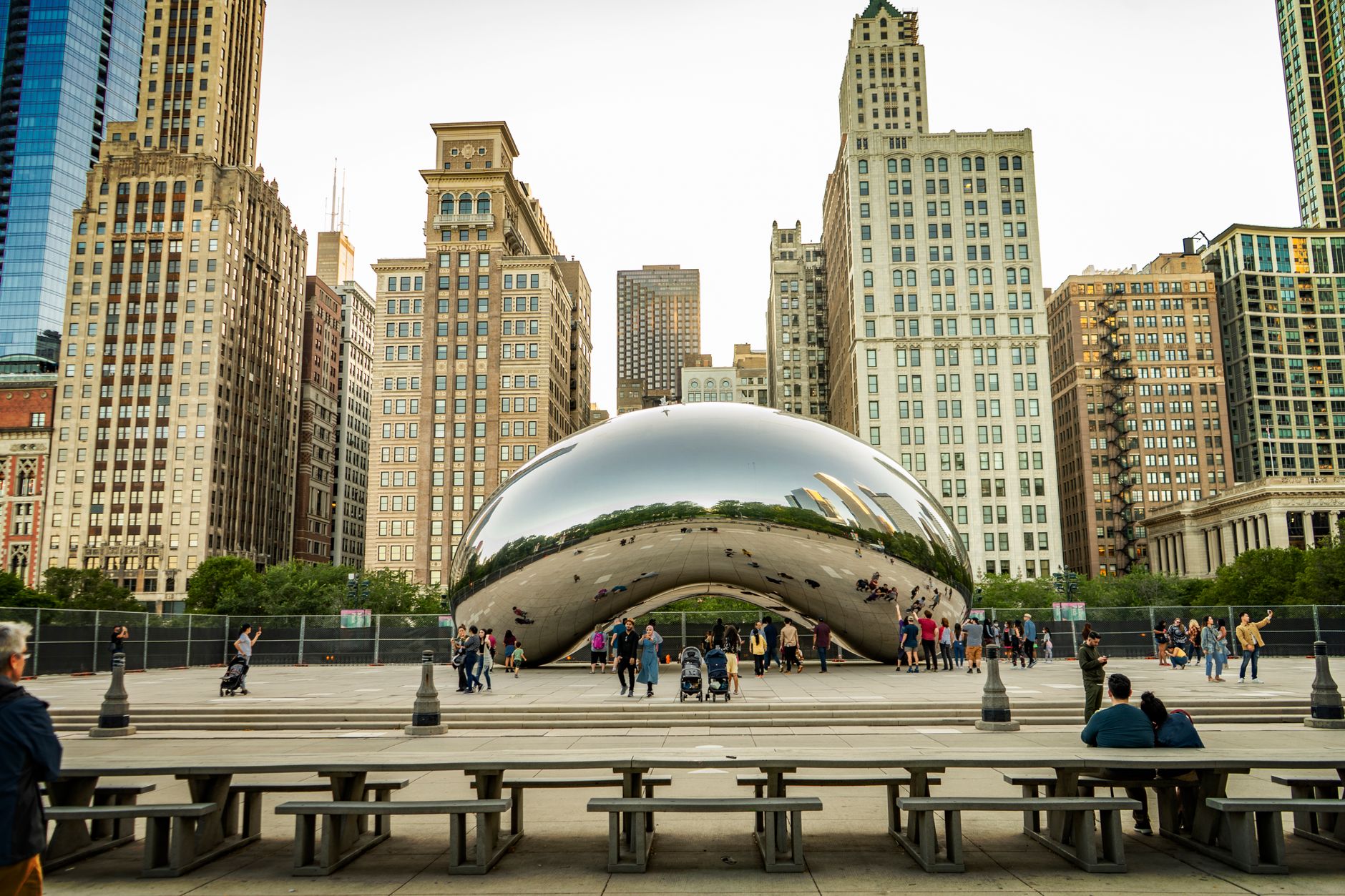
The Loop is Chicago's commercial and civic core: the address of early skyscrapers that rewrote what a city could look like, of open plazas holding sculptures by Picasso and Calder, and of the LaSalle Street canyon where the Board of Trade Building caps the view.
💛 What travellers fall for
People who come back regularly tend to make a slow walk down South Dearborn Street a ritual — pausing at the Rookery, the Monadnock, the Marquette Building in sequence, noting the way each one solved the same problem of height slightly differently. The outdoor sculpture collection sneaks up on you; Abakanowicz's headless figures near the river are easy to walk past twice before they stop you.
Deals in The Loop
Book directly at the provider


How The Loop came to be
The name predates the tracks. A cable-car line looped the central business district as early as 1882, though historian Bruce Moffat argues there's no evidence anyone called the area 'the Loop' until the elevated railroad arrived. That structure — built in sections between 1895 and 1897, its steel framework designed by bridge engineer John Alexander Low Waddell — was financed by Charles Tyson Yerkes, who already controlled much of the city's streetcar network.
Before any of that, Jean Baptiste Point DuSable had a trading post just north of the river in the late 1700s, and Fort Dearborn followed in 1803. The Great Fire of 1871 erased nearly everything standing in what is now the Loop, which is partly why the architecture that replaced it was so consequential: the 10-story Home Insurance Building on LaSalle and Adams, completed 1885 and demolished 1931, was the first structure supported entirely by an internal metal frame — the founding logic of every skyscraper that came after it.
Who and what shaped it
People who shaped it
Landmark buildings
See The Loop in motion
Plan your visit
On the map
When to go
Chicago winters are genuinely cold, with wind off the lake making temperatures feel sharper than the thermometer suggests; the 'L' tracks offer little shelter. Late May through September is the most forgiving stretch, though summer afternoons can turn humid quickly. Spring and fall are variable enough that layers are never a bad idea.
Right now
Background & history adapted from Wikipedia (CC BY-SA) · specs from Wikidata (CC0) · weather from Open-Meteo · map data © OpenStreetMap contributors · photos from Wikimedia Commons / Unsplash with per-image credit. No third-party reviews or social posts reproduced.