
The Getty Center
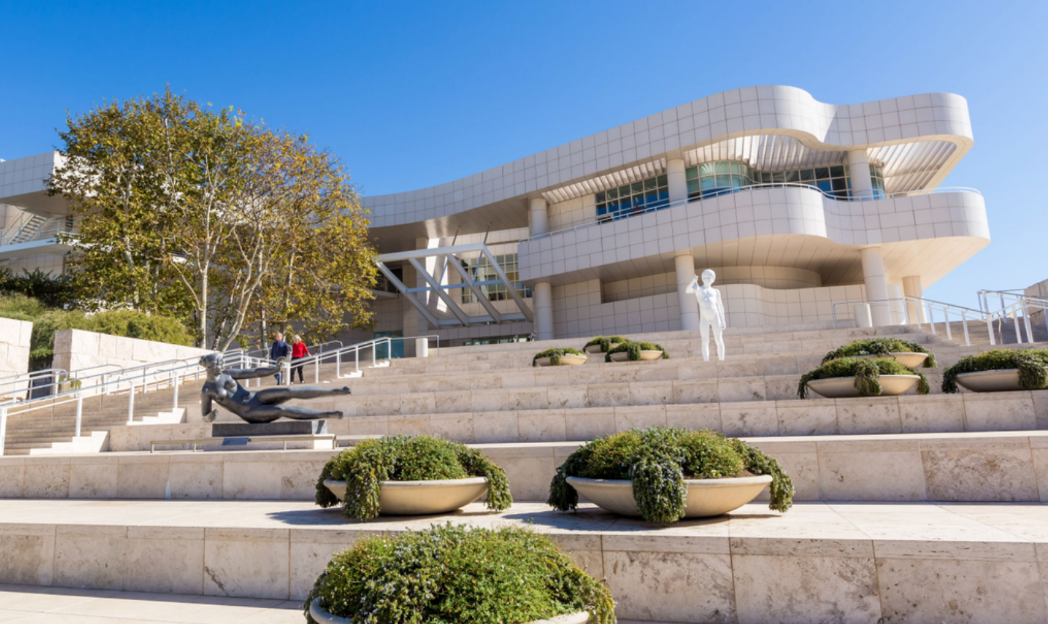
The tram that carries you up from Sepulveda Boulevard is three minutes of suspension — freeway below, scrub-covered hillside rising, and then the travertine campus appearing above you like something quarried from a Roman hillside and set down on the Santa Monica Mountains. That stone, 16,000 tons of it from Bagni di Tivoli, splits open to reveal fossilized leaves and feathers pressed into it millions of years before anyone thought to build here.
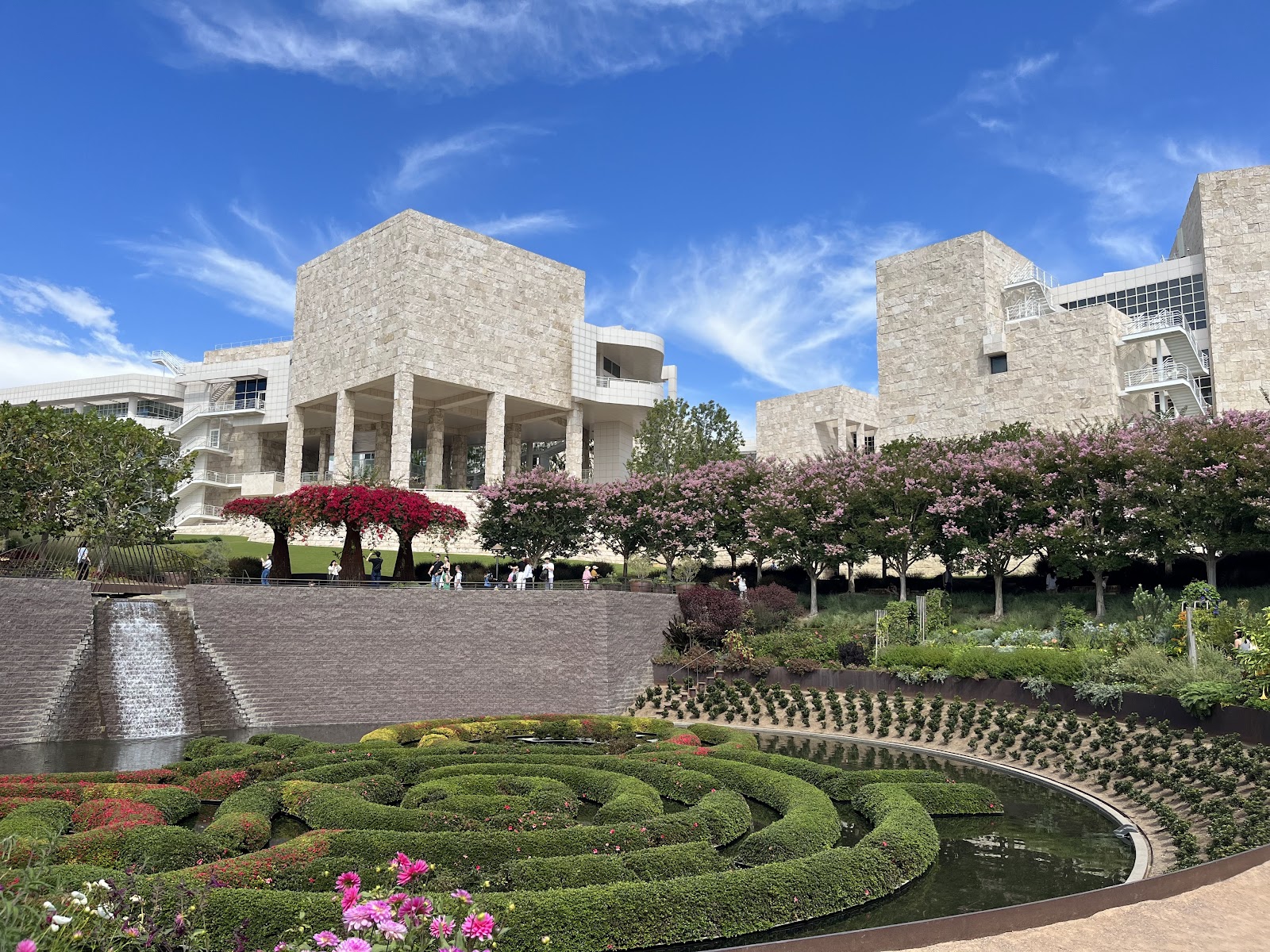
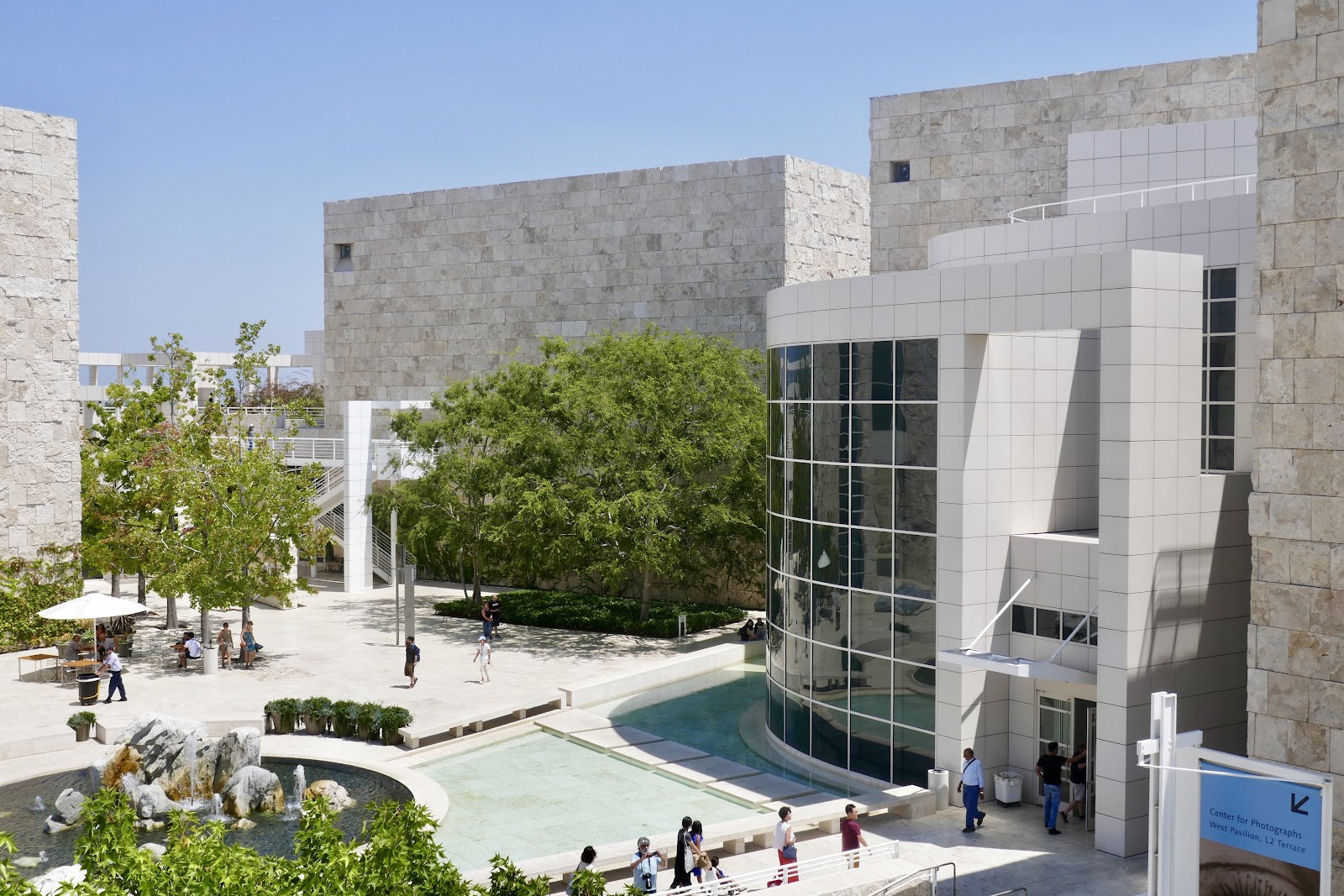
At the top, Richard Meier's six-building complex opens onto views that run from the Pacific to the San Gabriel Mountains, with the city grid spread between them. The galleries hold Rembrandt, Van Gogh, and Cézanne, lit by filtered California daylight through a computer-managed system of louvers. Robert Irwin's Central Garden, with more than 500 plant species, occupies the canyon between the pavilions.
💛 What travellers fall for
Regulars tend to arrive early on a weekday — the travertine catches the morning light sharply before it softens into afternoon warmth. Most skip the tram queue on the way back down by walking the switchback path instead. The Central Garden rewards a second look once you've done the galleries; Irwin designed it to change continuously, and it does.
The story behind The Getty Center
J. Paul Getty began collecting art in his Pacific Palisades home in 1954, and in 1974 opened a replica Roman villa on the same property to house a growing collection. He died in 1976, leaving roughly $700 million in Getty Oil Company stock to the Getty Trust — a bequest that transformed a private obsession into one of the wealthiest arts institutions in the world.
The villa site couldn't absorb what the collection and its ambitions had become. In 1982 a hillside site above the Sepulveda Pass was chosen, and the Getty Trust commissioned Richard Meier — who had won the Pritzker Prize in 1984 — to design the campus. Construction ran from 1984 to 1997, took thirteen years, and cost $1 billion. The Getty Center opened on December 16, 1997.
Good to know
Admission is always free; you need a timed-entry reservation. Metro routes 761, 734, and 234 all stop here, which sidesteps the parking fee entirely. Several gallery wings are currently closed for renovation, so check the Getty's site before planning around specific collections. Budget at least two hours; a full day is easy.
Where is The Getty Center?
More tickets & tours for The Getty Center
Book directly at the provider
What travellers say about The Getty Center
The Getty Museums are amazing! Been to both of them and they are beautiful, organized and have amazing works! The day I visited was a Friday and it was a bit noisy as there were many kids from several schools there. If you are looking for a more sedate time, maybe go during the weekend or when school is out. Enjoyed our time and will go back to see what we missed on another visit. You can't beat the free admission and the garage parking was $25. It was great to see children being exposed to the arts and their guides and teachers piquing their interest. A+ run organization and museum. Enjoy!
We finally went to the Getty Museum again… it’s been on my wish list for a few years. You can walk there endlessly (or at least until you’re completely tired). Old paintings, sculptures, photography, beautiful gardens, flowers it’s all there. Fun fact: the Getty is actually free to visit (you just pay for parking), and the views over Los Angeles are almost as impressive as the art. Also, the museum sits on a hill and you get there by a little tram it already feels like part of the experience before you even see the art.
The The Getty Center is, without a doubt, one of the most impressive cultural destinations in Los Angeles. Perched high above the city, the Getty Center offers breathtaking panoramic views of LA — from downtown to the Pacific Ocean on a clear day. Just getting there is part of the experience, as you ride the sleek tram up the hill to this stunning architectural masterpiece designed by Richard Meier. The museum itself is world-class. You’ll find an incredible collection of European paintings, sculptures, decorative arts, and photography. Seeing works by masters like Van Gogh, Rembrandt, and Monet in such a beautifully curated space makes the visit unforgettable. But what really sets the Getty apart is the atmosphere. The clean white architecture, open spaces, natural light, and perfectly designed gardens create a peaceful, almost surreal environment. The Central Garden alone is worth the visit — a living work of art that changes with the seasons. Best of all, admission is free (you only pay for parking), which makes the value absolutely unbeatable. If you’re visiting Los Angeles, this place is not just recommended — it’s essential. 👉 Check my profile for travel tips and hidden spots.
This is the first place I went as a first time, Los Angeles visitor, and it was absolutely stunning. The grounds were huge and there was so much you could explore. While the architecture is impressive I think that the landscaping is some of the most beautiful I’ve seen. The backside also offered incredible views of Los Angeles. Of course the art collections were great as well. I think this is a must do activity if you’re visiting Los Angeles for the first time.
One of my favorite places in Los Angeles. Beautiful architecture, stunning gardens, incredible views, and a peaceful atmosphere. It’s the perfect place to spend a few hours, disconnect from the city, slow down, and simply enjoy art, nature, and the surroundings. I always leave feeling inspired and refreshed.
More of Los Angeles
Discover where to stay, what to do and the best deals for your trip.
Explore Los Angeles →More attractions in Los Angeles
All of Los Angeles →

Background adapted from Wikipedia (CC BY-SA) · map data © OpenStreetMap contributors · ratings & place photos via Google · other photos with per-image credit. Ticket links may earn us a commission at no extra cost to you.