
Terrasson-Lavilledieu
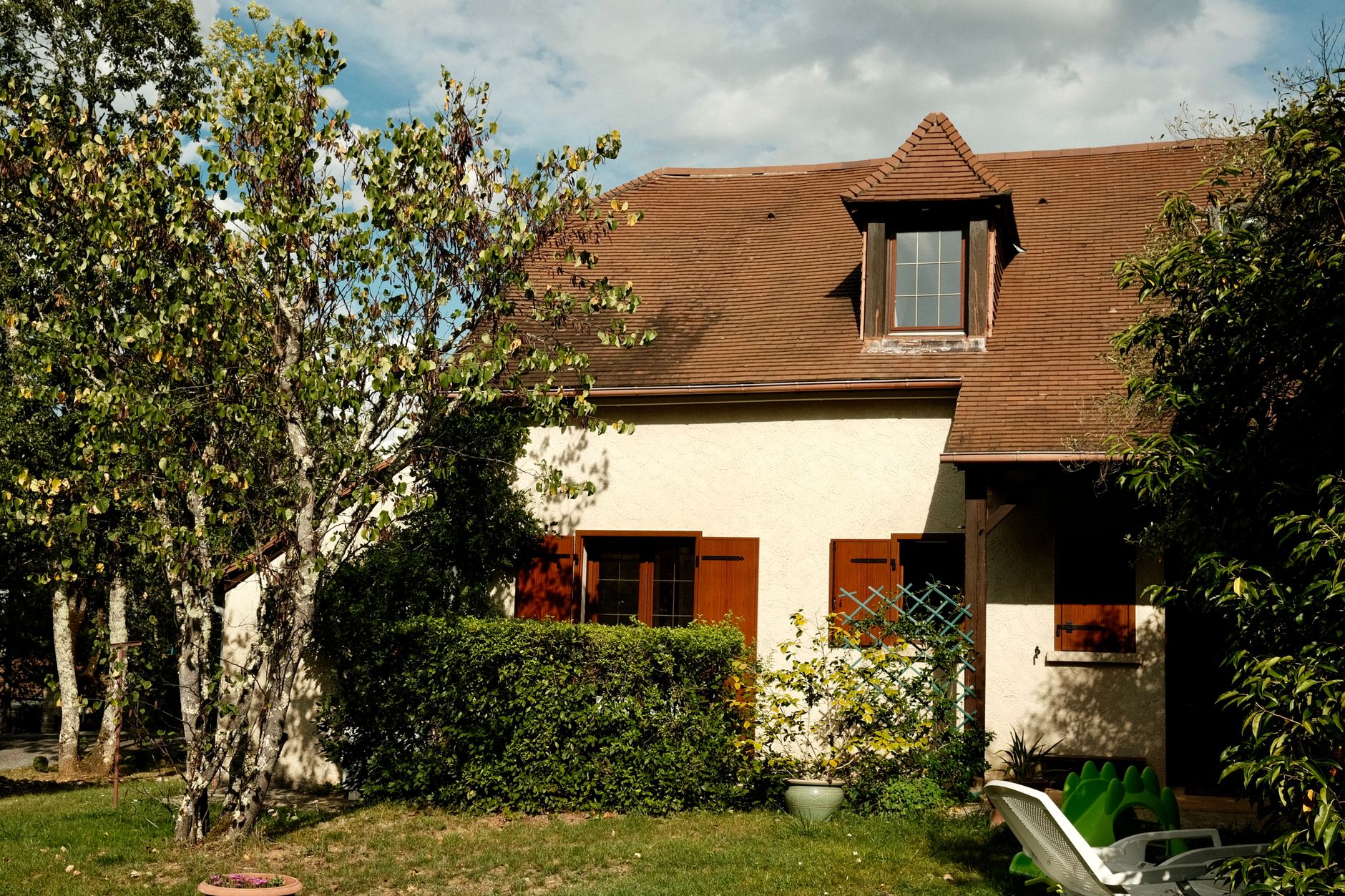
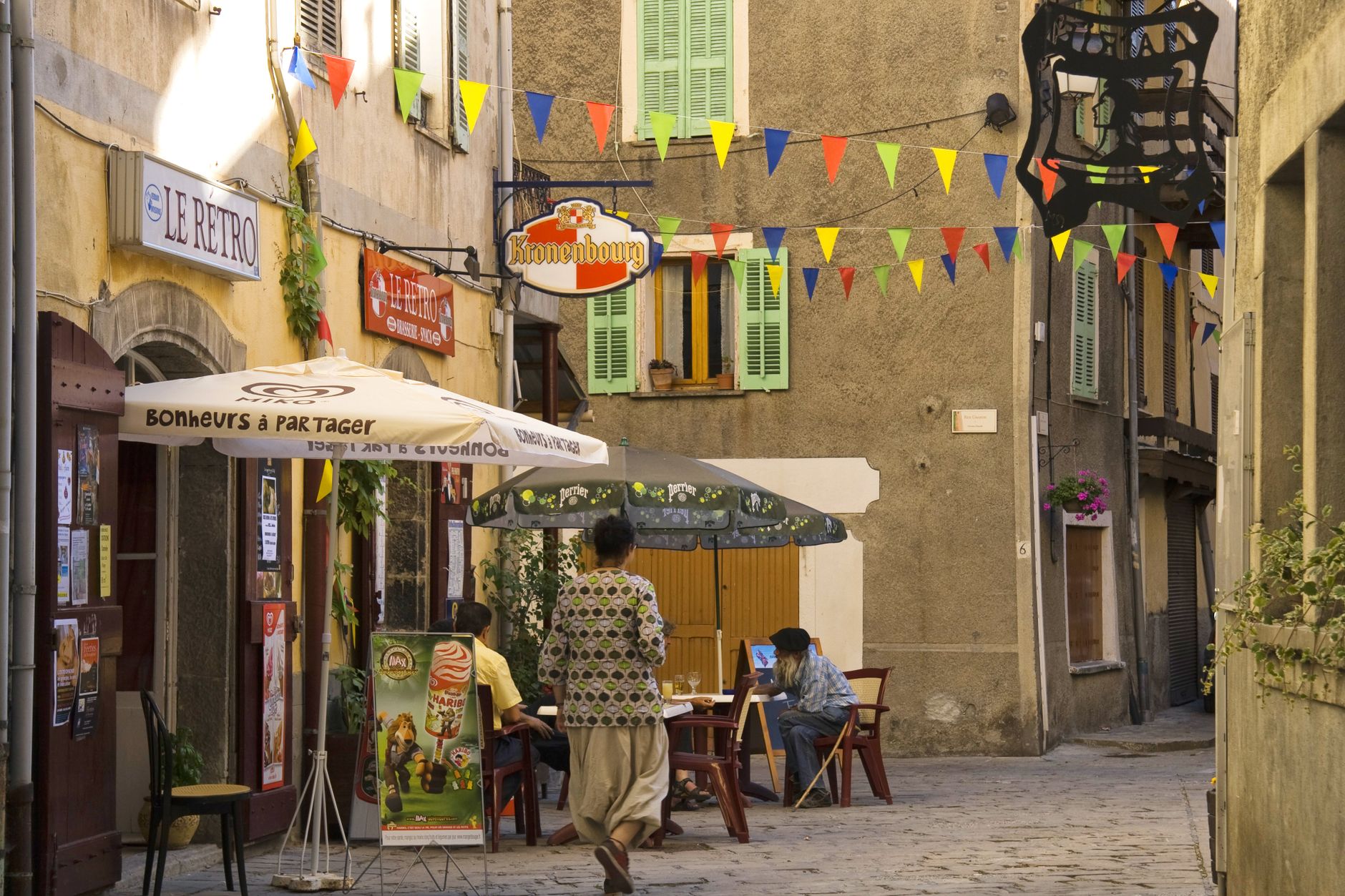
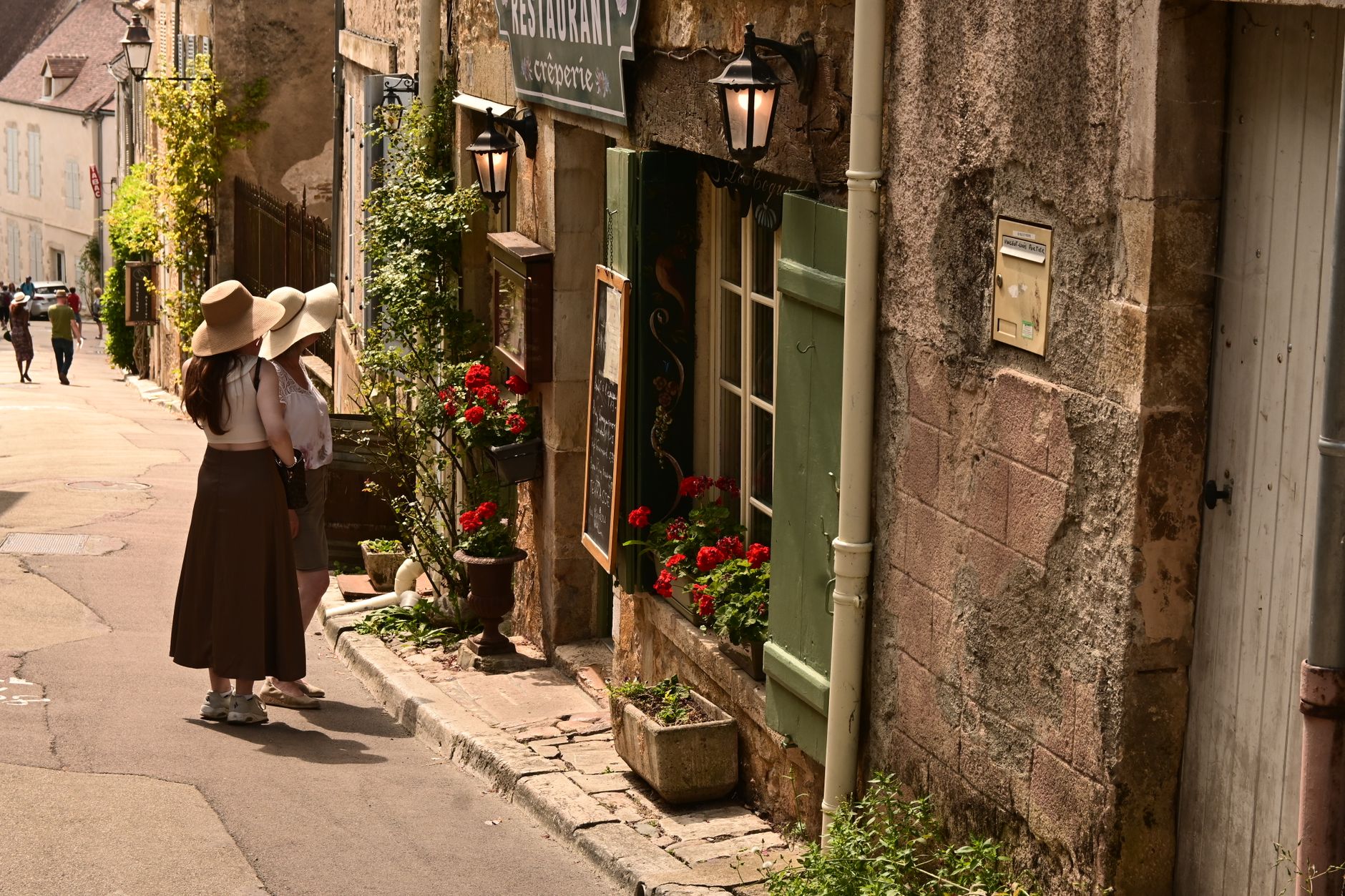
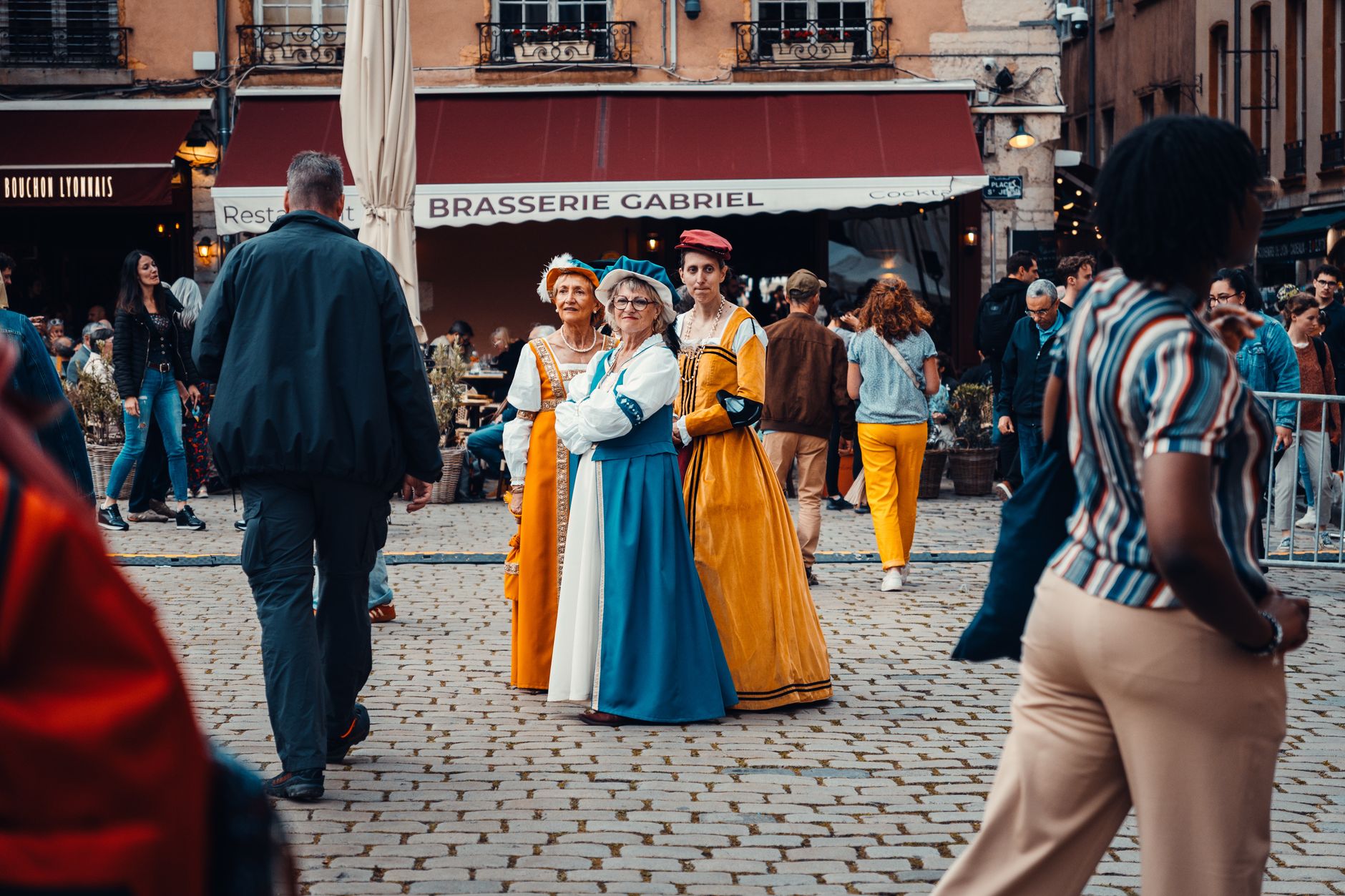
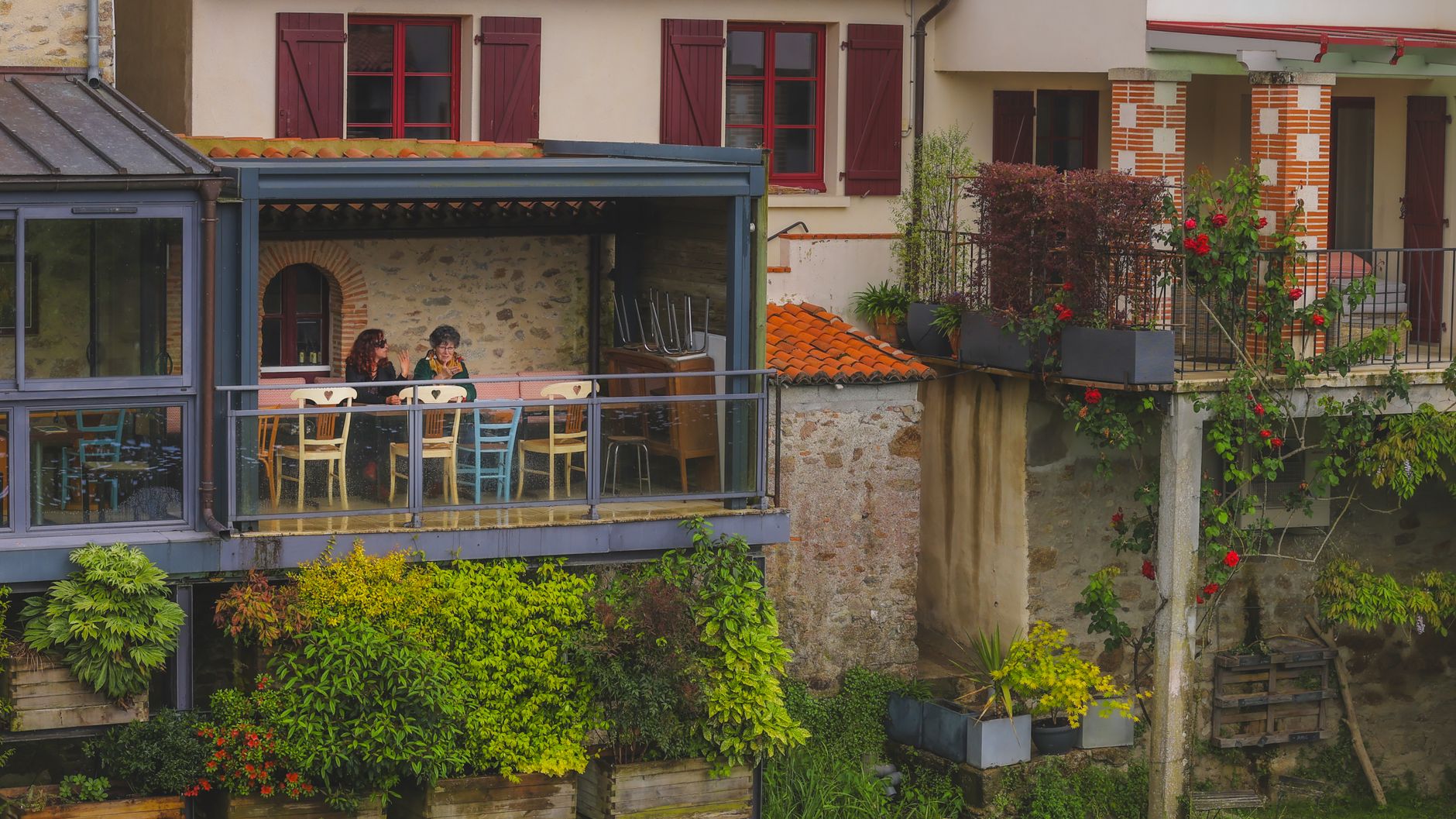
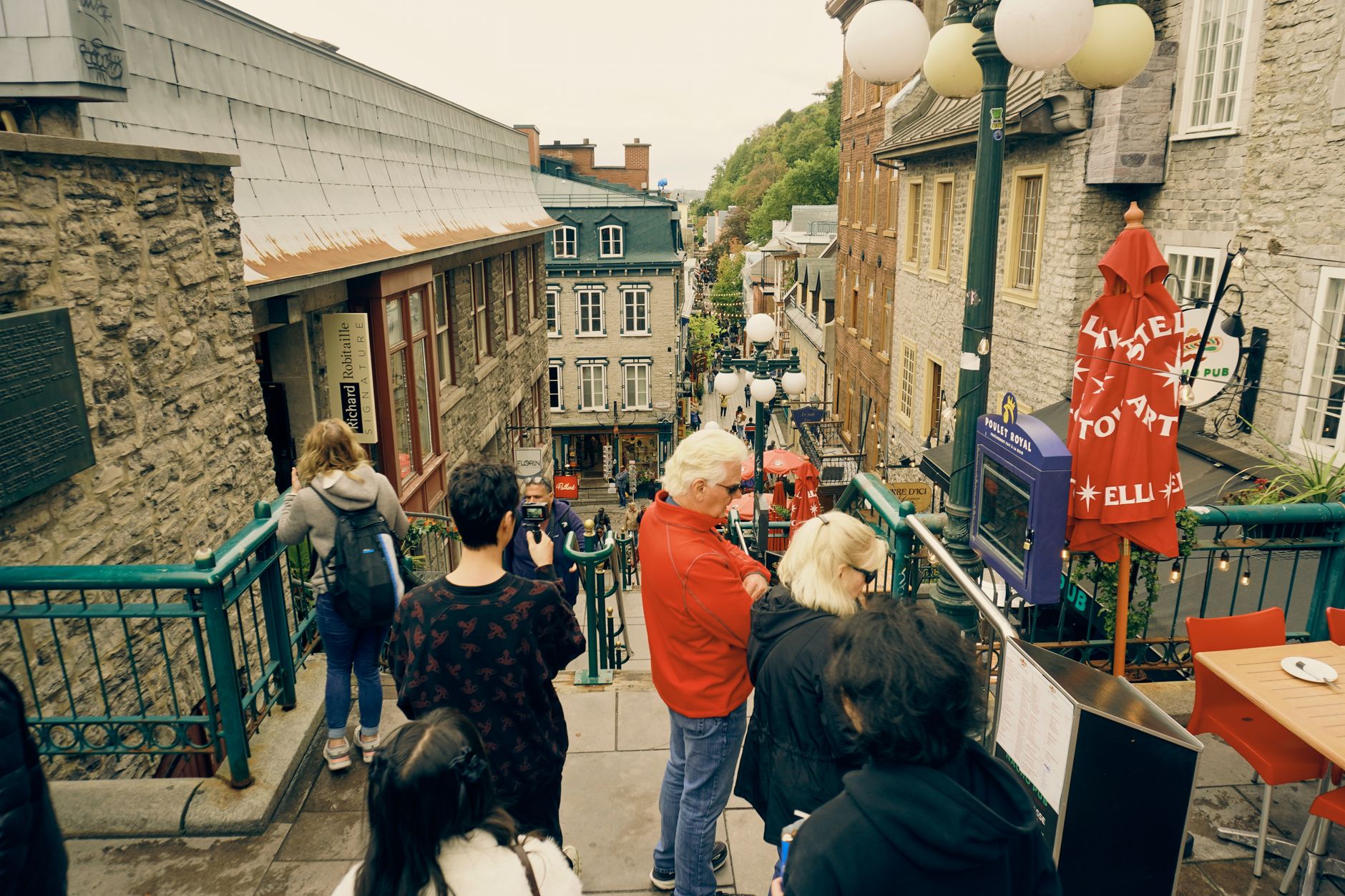
The blue slate roofs are the first thing that sets Terrasson-Lavilledieu apart — unusual in the Dordogne, where limestone and terracotta tend to dominate. The town straddles the Vézère, its newer half holding the Thursday market and the shops, its older half climbing the rock above the river toward an abbey church that has been rebuilt, burned, and rebuilt again across fifteen centuries.
What anchors the place is the river itself. A 12th-century humpback bridge — 104 metres, six Romanesque arches, projecting cutwaters — still carries foot traffic across the Vézère, and a flat-bottomed gabarre still makes the same run that medieval traders once did. Up on the Malpas cliff, 200-million-year-old sandstone looks down over all of it.
💛 What travellers fall for
People who come back tend to time it for a Thursday, when the market spreads across both banks and the truffle sellers appear between November and February. The Jardins de l'Imaginaire reward a second visit in a different season — Kathryn Gustafson's thirteen tableaux read differently in autumn light. The cluzeaux visits, booked through the tourist office, are easy to miss on a first trip and quietly memorable on a second.
Experiences you don't want to miss




Deals in Terrasson-Lavilledieu
Book directly at the provider

How Terrasson-Lavilledieu came to be
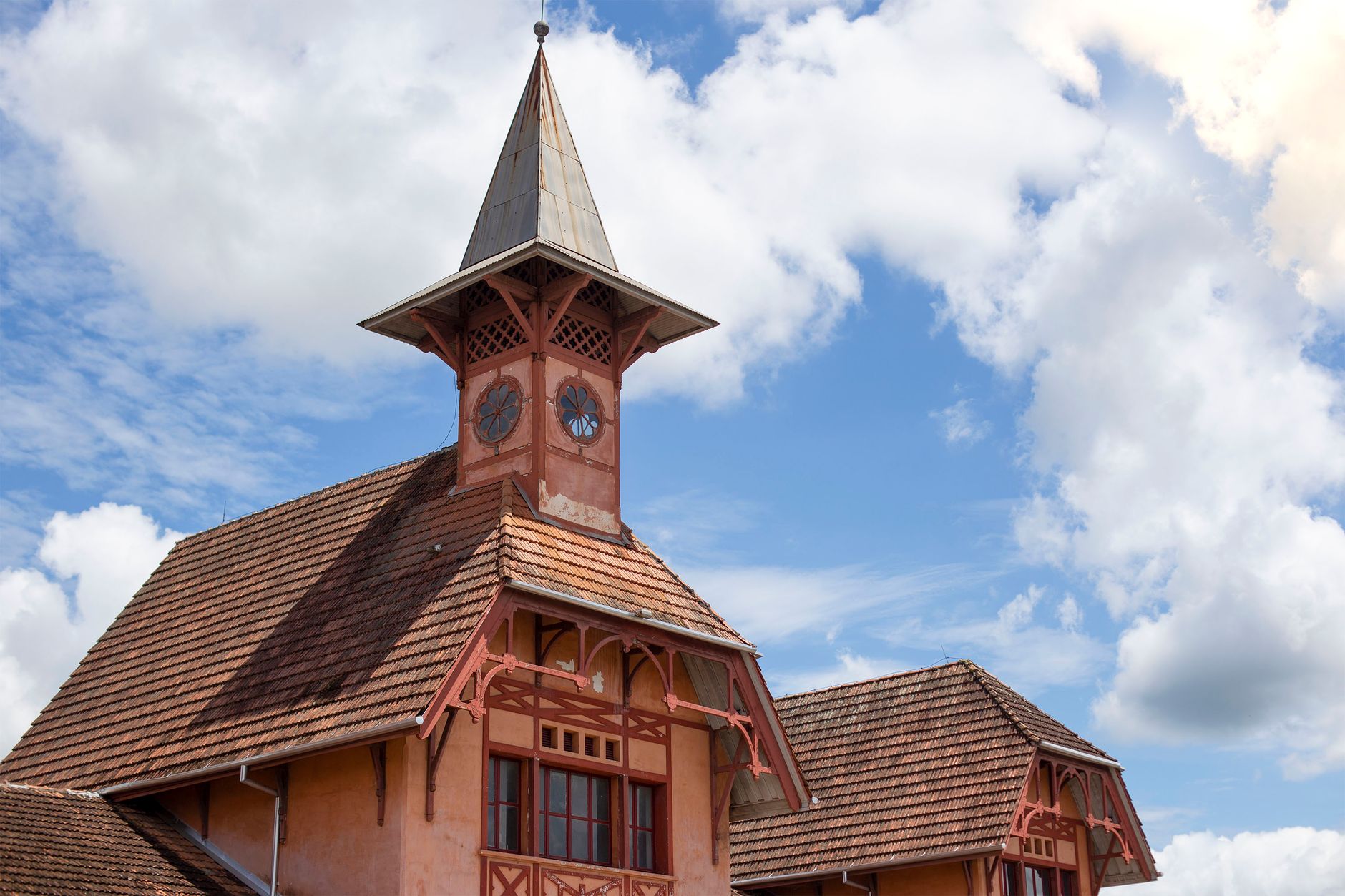
Terrasson's story begins with a hermit. In the 6th century, a man named Sorus settled here, and the Benedictine monastery that grew up around him gave the town its first reason to exist. By the 12th century, the monks had built a bridge over the Vézère — the Pont Vieux still standing today — and the town became a serious node of river commerce, flat-bottomed boats moving goods up and down the Vézère in both directions.
The abbey church of Saint-Sour absorbed the damage of the Hundred Years' War and the Wars of Religion and came back in Flamboyant Gothic in the 15th and 16th centuries. The railway arrived on 17 September 1860, redirecting the town's connections overland. The modern commune only came into being in 1963, when Terrasson and Lavilledieu merged; the hyphen between them was formalised in 1997.
Who and what shaped it
People who shaped it
Landmark buildings
See Terrasson-Lavilledieu in motion
Plan your visit
On the map
When to go
The Dordogne sits in southwestern France with warm, often dry summers and mild, cool winters — July and August bring the best light for the cliff walks and the evening video-mapping projection on the church façade. Spring and autumn are quieter and green, with the truffle season pulling a different kind of visitor from November onward.
Right now
Background & history adapted from Wikipedia (CC BY-SA) · specs from Wikidata (CC0) · weather from Open-Meteo · map data © OpenStreetMap contributors · photos from Wikimedia Commons / Unsplash with per-image credit. No third-party reviews or social posts reproduced.