
Templo de Debod
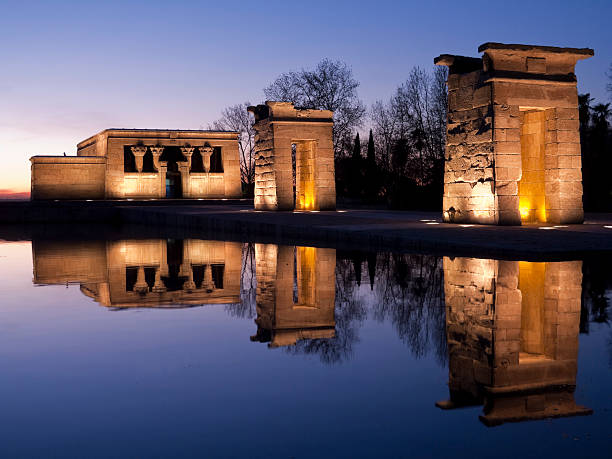
An Egyptian temple built in the second century BC stands on a hill in western Madrid, its sandstone walls catching the afternoon light above a park where Madrileños spread picnic blankets on weekends. The temple faces east to west, exactly as it did when it first rose in Nubia — that original orientation preserved through a remarkable act of diplomatic gratitude, stone by numbered stone.
The park around it, Parque del Cuartel de la Montaña, runs into the neighbouring Parque del Oeste, with city panoramas, fountains, and a rose garden within easy walking distance. The ground beneath has its own layered history — this was once a military barracks, and before that, a site of Napoleonic-era violence.
💛 What travellers fall for
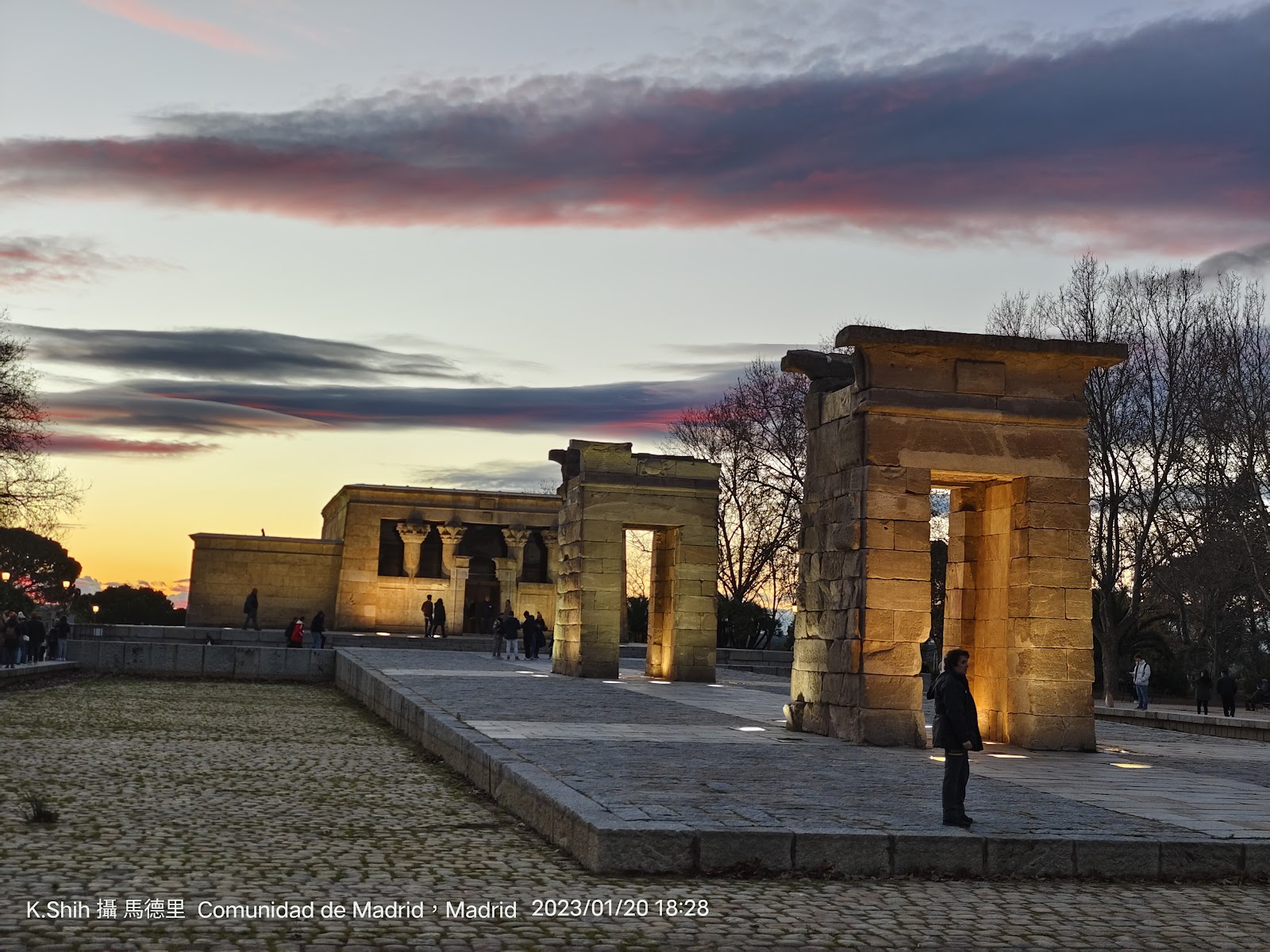
People who've been more than once tend to skip the interior queue and come instead at dusk, when the temple walls are lit and the city drops away behind the hill. The walk west into Parque del Oeste afterward, past the rose garden, earns its own half-hour.
The story behind Templo de Debod
King Adijalamani of Meroë ordered the original chapel built in the early second century BC, dedicated to Amun and Isis. Ptolemaic rulers expanded it over successive generations; later, under Roman rule, Augustus and Tiberius — and possibly Hadrian — completed its decoration. By the sixth century AD, after Nubia converted to Christianity, the temple was sealed and forgotten.
Twenty centuries later, the construction of Egypt's Aswan Dam threatened to submerge it. In 1961 the temple was dismantled stone by stone, moved to Elephantine Island for storage, and nine years later shipped — via Alexandria and Valencia — to Madrid. Egypt donated it to Spain in 1968 in recognition of Spanish archaeological work in Nubia. It was rebuilt on Príncipe Pío Hill and inaugurated in July 1972 by Madrid's then-mayor, Carlos Arias Navarro.

Good to know
Reach it via Metro to Plaza de España or Ventura Rodríguez (line 3). Entry is free, but only 30 people allowed inside at a time — queues can be long. The interior can close without warning for conservation or events. Check hours carefully: summer and winter schedules differ, and Mondays it stays shut.
Madrid summers are hot and dry — the park offers little shade, so mornings are easier than midday visits in July and August. Spring and autumn bring mild, clear days that suit an unhurried wander; winter afternoons are cool but often sunny, and the lower crowds make the interior queue shorter.
Where is Templo de Debod?
More tickets & tours for Templo de Debod
Book directly at the provider
What travellers say about Templo de Debod
This is one of my favourite spots in Madrid. Not only is the Temple of Debod an interesting piece of history, it is also one of the best places in the city to watch the sunset with the combination of open sky, city views and relaxed atmosphere. Whether you’re taking photos, going for a walk or simply sitting and watching the light change over Madrid, it’s a lovely place to spend an evening. It's definitely worth a visit, especially at sunset.
Visited Templo de Debod and had an unforgettable experience. The temple is one of the most unique and fascinating landmarks in Madrid, combining ancient history, architecture, and beautiful scenery in a truly remarkable setting. One of the highlights is the extraordinary atmosphere surrounding the monument. The fact that an authentic ancient Egyptian temple stands in the middle of Madrid makes the experience feel both surprising and special. The structure is beautifully preserved and offers a strong sense of history and cultural significance. I especially appreciated the location and panoramic views around the temple. The open surroundings and reflecting pools create a calm and scenic environment, particularly during sunset when the lighting becomes especially beautiful. The area is ideal for photography, relaxation, and simply enjoying the peaceful ambience. The site is clean, accessible, and well maintained, with enough open space to walk around comfortably and admire the temple from different angles. The contrast between the ancient architecture and the modern city skyline adds even more charm to the experience. Another positive aspect is the cultural importance of the temple as a gift from Egypt to Spain, which gives the site additional historical meaning and uniqueness. Overall, a memorable and highly worthwhile visit. Templo de Debod is one of Madrid’s most distinctive attractions and highly recommended for anyone interested in history, architecture, photography, or scenic viewpoints.
An absolute must-visit in Madrid, especially around sunset. Watching the sun go down behind this historic Egyptian temple, with the silhouette of the city and the Royal Palace in the distance, is truly magical. It’s the perfect place to slow down, enjoy a walk through the park, and take in one of the best views in the city. A serene and memorable experience.
Cool Egyptian temple atop a hill. We did not get to get close due to a surly security guard, but it was worth the climb to the hill. Also a great vista overlooking the city at sunset, with various buskers entertaining the crowds. It’s not a hidden secret though, so get here in plenty of time to stake out a nice spot.
A great little temple site for a short visit. The tickets get you inside the temple building, which is quite small. The upstairs was closed during our visit making this an even shorter visit. Be sure to walk through the whole site, as there are ancient carvings and even some modern graffiti around all the place. (I'm looking at you Laura and Karol. Whoever you are) Bottom line, it's worth the visit.
More of Madrid
Discover where to stay, what to do and the best deals for your trip.
Explore Madrid →More attractions in Madrid
All of Madrid →
Background adapted from Wikipedia (CC BY-SA) · map data © OpenStreetMap contributors · ratings & place photos via Google · other photos with per-image credit. Ticket links may earn us a commission at no extra cost to you.