
Tapia de Casariego

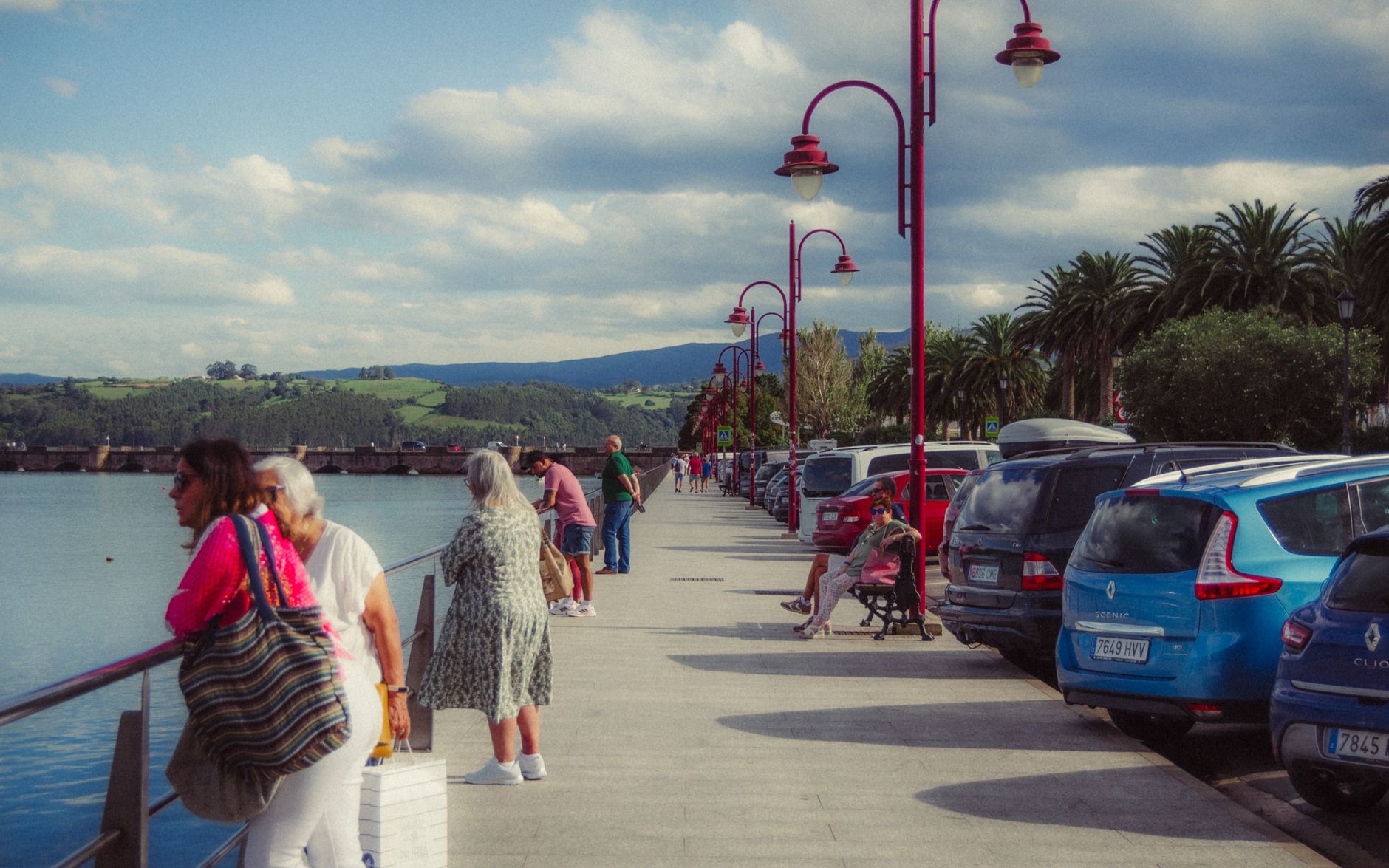
At the western edge of Asturias, where the coast tilts toward Galicia, Tapia de Casariego sits on a headland above a granite-piered port built with one man's money and a great deal of Atlantic weather. The lighthouse on its small island — joined to the town by a hundred-metre breakwater — has been marking this corner of the Bay of Biscay since 1859, and it remains the westernmost lighthouse in the region.
The town is compact enough to read in a day: a historic centre declared a Site of Cultural Interest, a neo-Gothic parish church, a 14th-century palace behind a semicircular arch, and a plaza where Fernando Fernández Casariego stands in bronze, watching over the port he paid to build.
💛 What travellers fall for
People who come back tend to do it in summer, when the water temperature in the bay finally reaches something swimmable and the light off the granite piers lasts until well past nine. The walk out along the breakwater to the lighthouse, with the town behind you and open Atlantic ahead, is worth doing twice — once in calm weather, once when there's swell.
Experiences you don't want to miss



Deals in Tapia de Casariego
Book directly at the provider


How Tapia de Casariego came to be
Tapia's recorded story begins in the 10th century, when King Ramiro II granted the territory between the Eo and Navia rivers to the Bishop of Oviedo — a grant ratified again by Alfonso VII in the 12th century. For centuries the port was defined by the sea's economy: Basque whalers introduced right whale hunting in the 17th and 18th centuries, and when that trade declined, coastal fishing and cabotage took over.
The town as it stands today is largely the project of one person. Fernando Fernández Casariego — born here in 1792, enriched through commerce in Madrid — funded the port's four granite piers in the 1870s, the Town Hall in 1864, and the first schools. He died in 1874, and in 1930 the town put up his bronze statue in the plaza that bears the constitution's name. Tapia only became an independent municipality in 1863, when its parishes were separated from Castropol and El Franco.
Who and what shaped it
People who shaped it
Landmark buildings
See Tapia de Casariego in motion
Plan your visit
On the map
When to go
Summers are comfortable and relatively dry, with August averaging around 18°C — the warmest the Bay of Biscay gets here. Winters run long, cold and wet, with November the rainiest month; the town is partly cloudy for much of the year, so a waterproof layer is sensible in any season.
Right now
Background & history adapted from Wikipedia (CC BY-SA) · specs from Wikidata (CC0) · weather from Open-Meteo · map data © OpenStreetMap contributors · photos from Wikimedia Commons / Unsplash with per-image credit. No third-party reviews or social posts reproduced.