
Swayambhunath
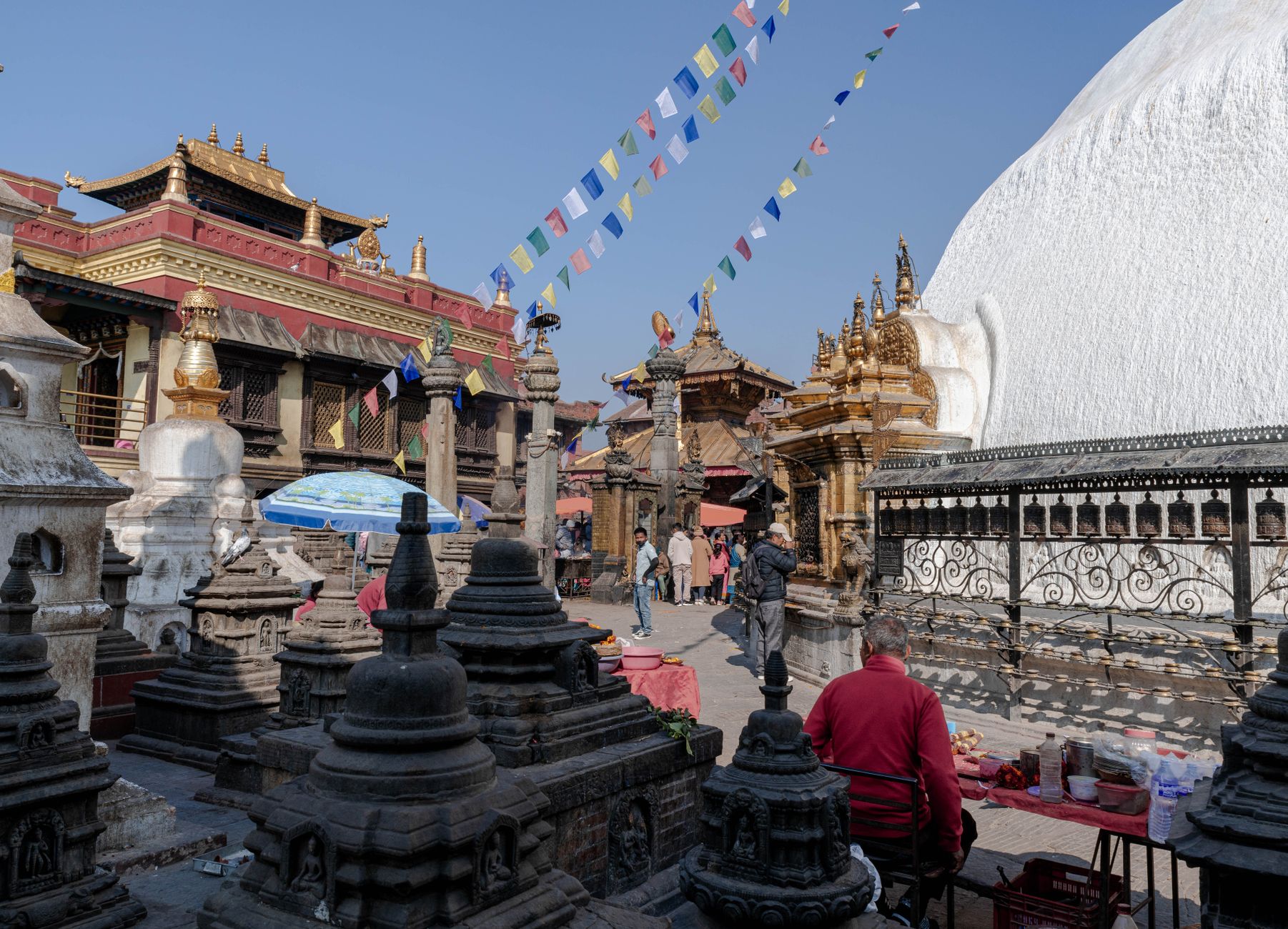
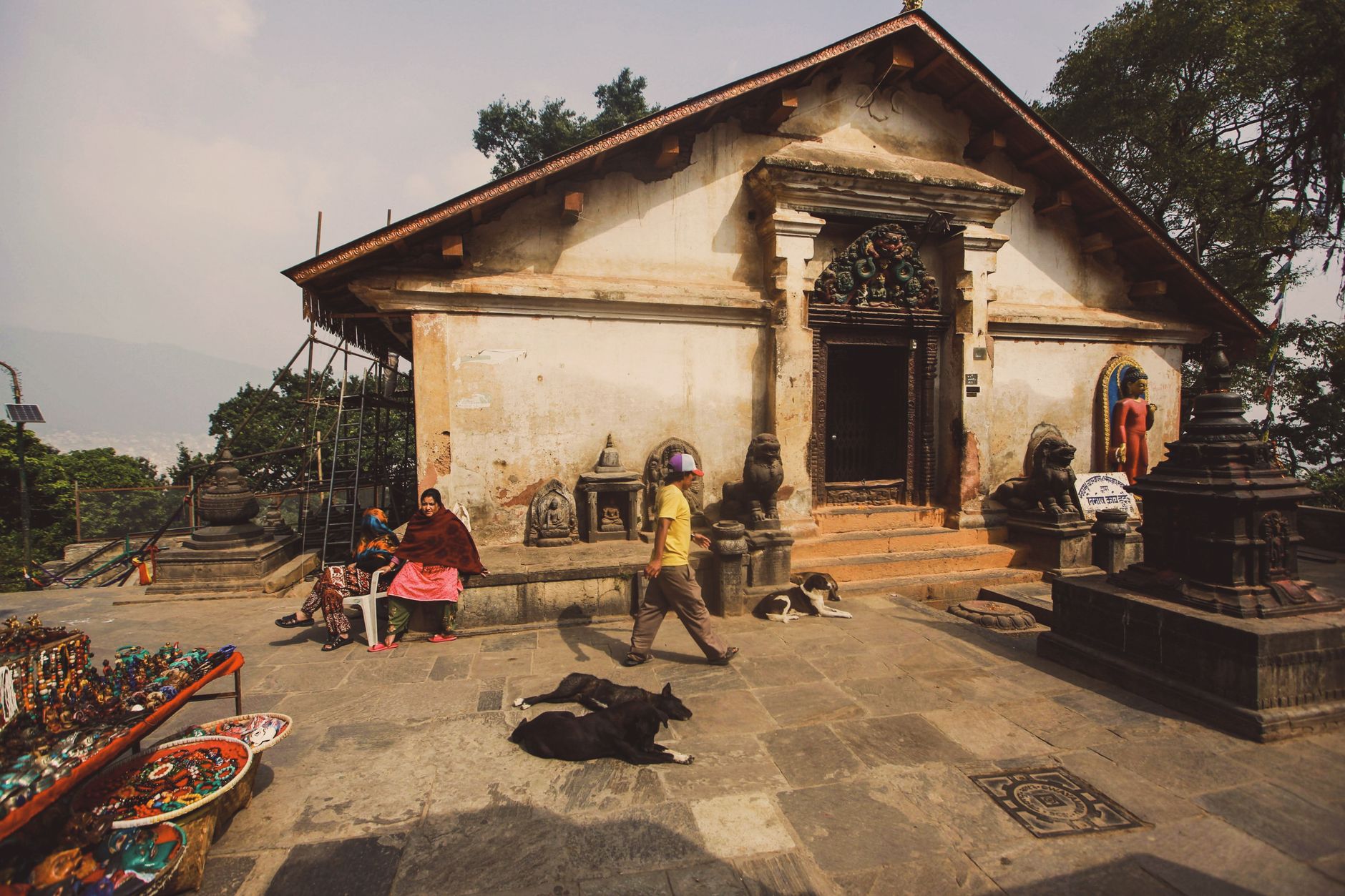
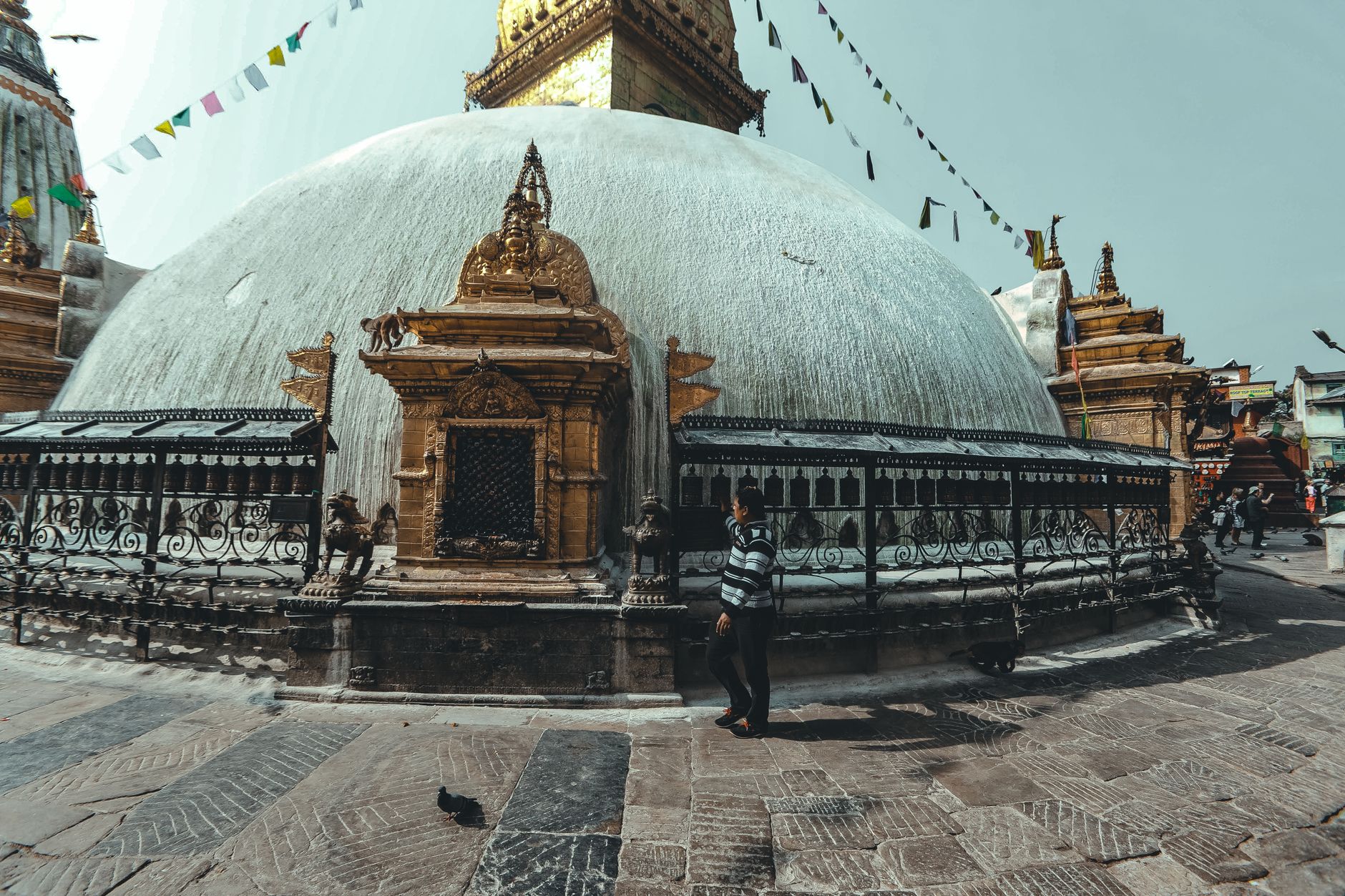
Three kilometres west of Kathmandu, a hill rises from the valley floor and on top of it a white dome watches the city through two painted eyes — steady, unblinking, faintly unsettling in the best way. That gaze belongs to Swayambhunath, one of Nepal's oldest religious sites, where the squiggle beneath those eyes is not a nose but the Nepali numeral for one, a quiet reminder of unity built into the architecture itself.
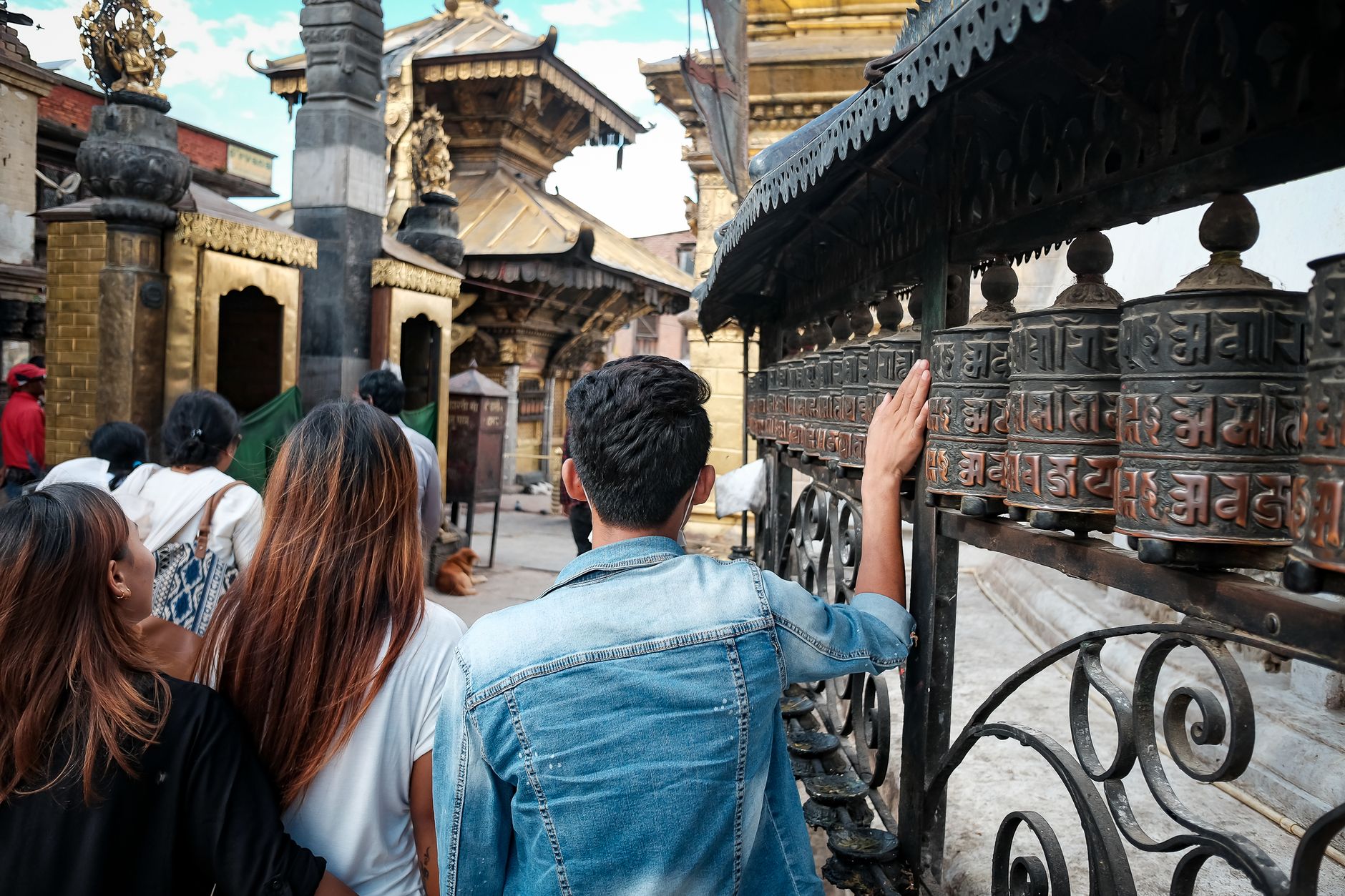
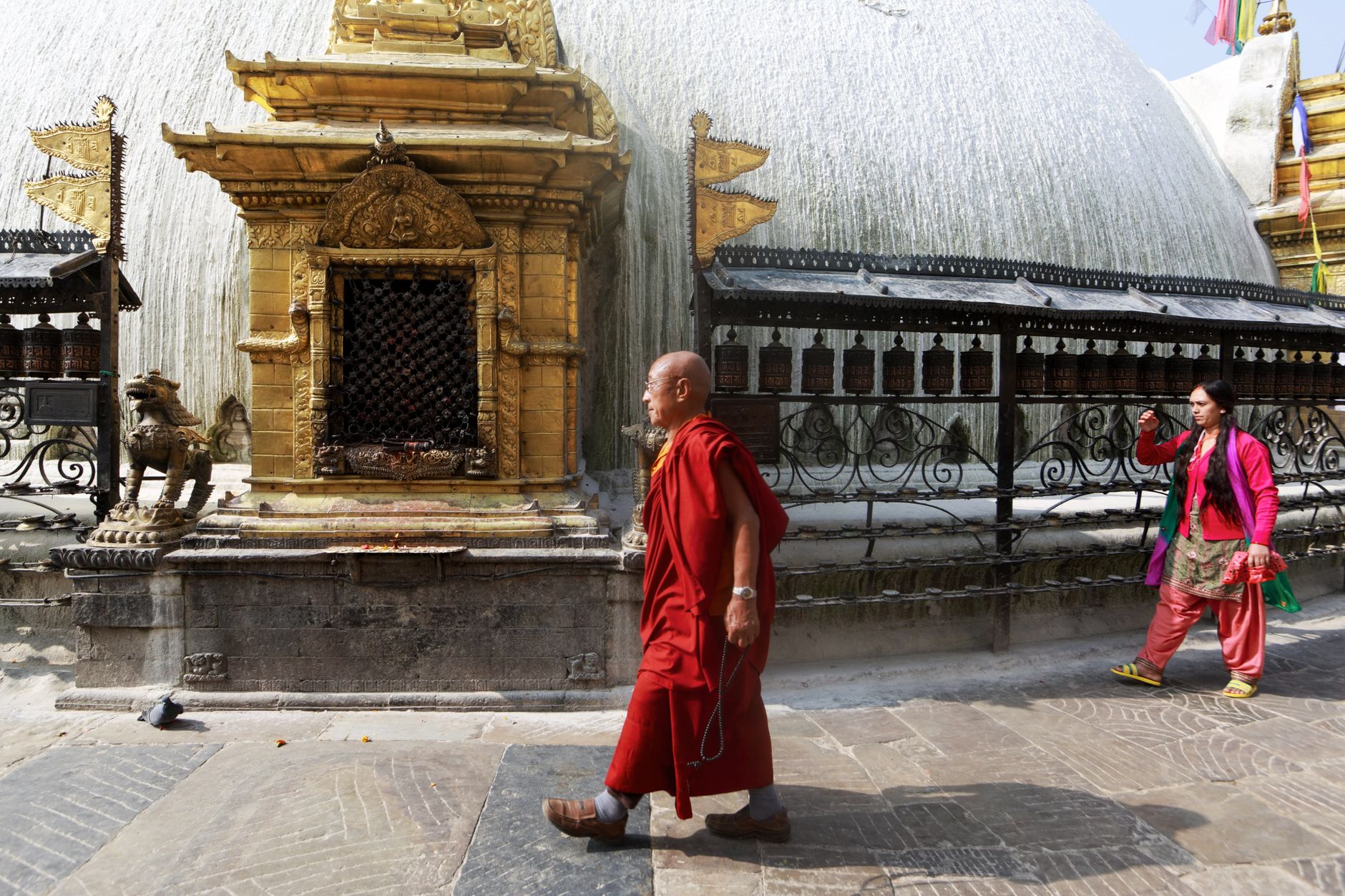
The complex draws Buddhists and Hindus alike, and has done so for well over a millennium. Spin one of the prayer wheels ringing the base of the stupa — each one embossed with om mani padme hum — and you are doing something people have done here, in some form, since at least the fifth century CE.
💛 What travellers fall for
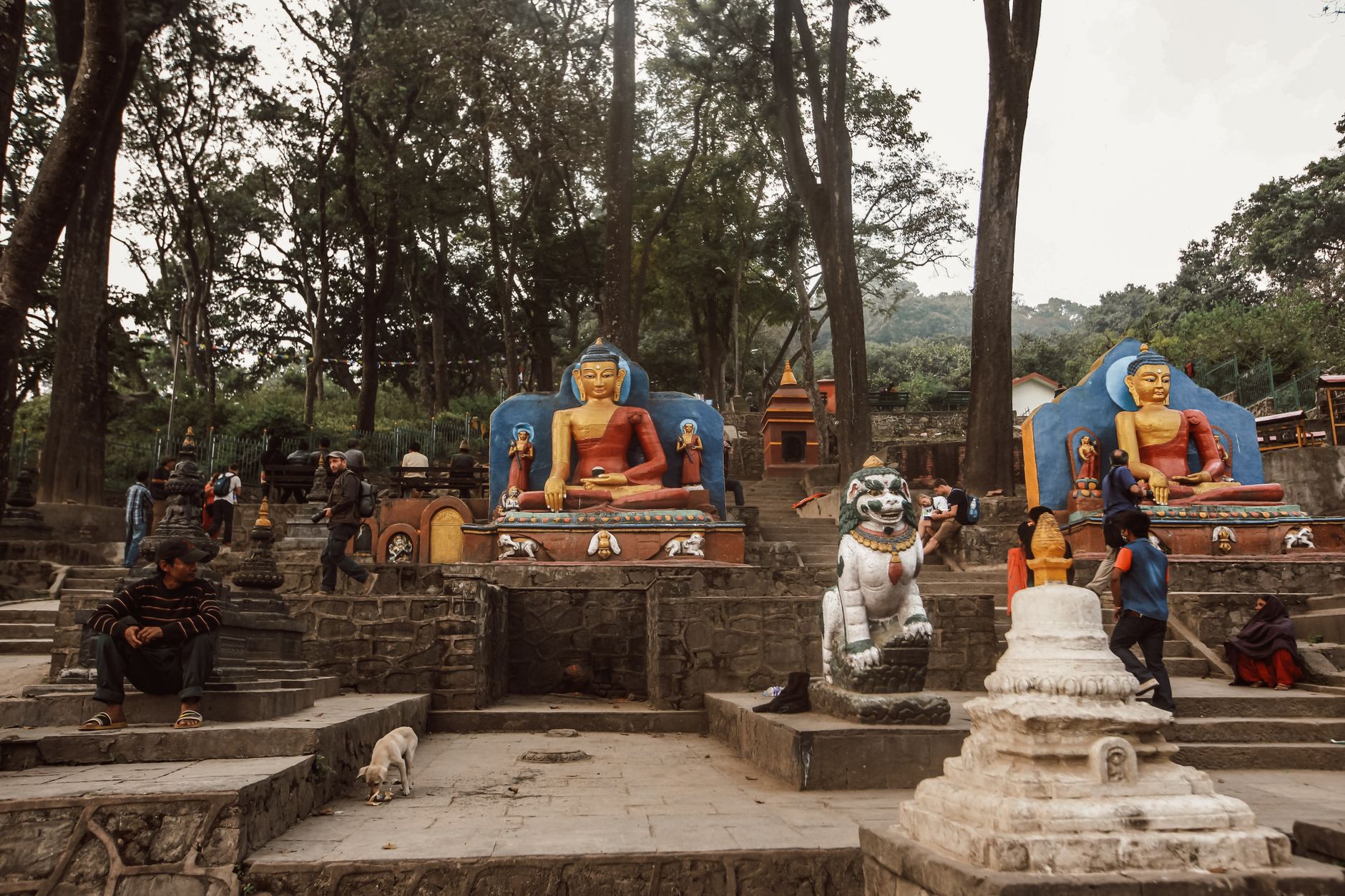
People who come back tend to agree: arrive before 8am. The resident rhesus macaques are still drowsy, the incense smoke rises straight in the still air, and you get the eyes to yourself for a few minutes. The 365 stone steps are worth it at that hour. Skip the motor road if your knees allow.
Deals in Swayambhunath
Book directly at the provider
How Swayambhunath came to be
The chronicles place the first establishment of Swayambhunath at the beginning of the fifth century CE, credited to King Vrsadeva, great-grandfather of King Manadeva, who is associated with building the central stupa around 460 CE. By the 15th century the structure had fallen into disrepair; the Indian Buddhist monk Śāriputra led its reconstruction, assisted by a Malla king. In 1504, Tibetan Buddhist master Tsangnyön Heruka arrived at the invitation of the Kathmandu king and completed a further renovation in three months.
The eastern staircase was added in the 17th century by the powerful Kathmandu king Pratap Malla. The most recent major restoration came in 2010 — the stupa's 15th in roughly 1,500 years — when the dome was re-gilded with 20 kilograms of gold. The 2015 earthquake shook the site hard but left the main stupa with only superficial damage.
Who and what shaped it
People who shaped it
Landmark buildings
See Swayambhunath in motion
Plan your visit
On the map
When to go
October through December brings clear skies and sharp views across the valley — the best window for visiting. The monsoon (June to August) wraps the hill in mist and makes the stone steps slick, though the green valley below has its own reward.
Right now
Background & history adapted from Wikipedia (CC BY-SA) · specs from Wikidata (CC0) · weather from Open-Meteo · map data © OpenStreetMap contributors · photos from Wikimedia Commons / Unsplash with per-image credit. No third-party reviews or social posts reproduced.