
Steglitz
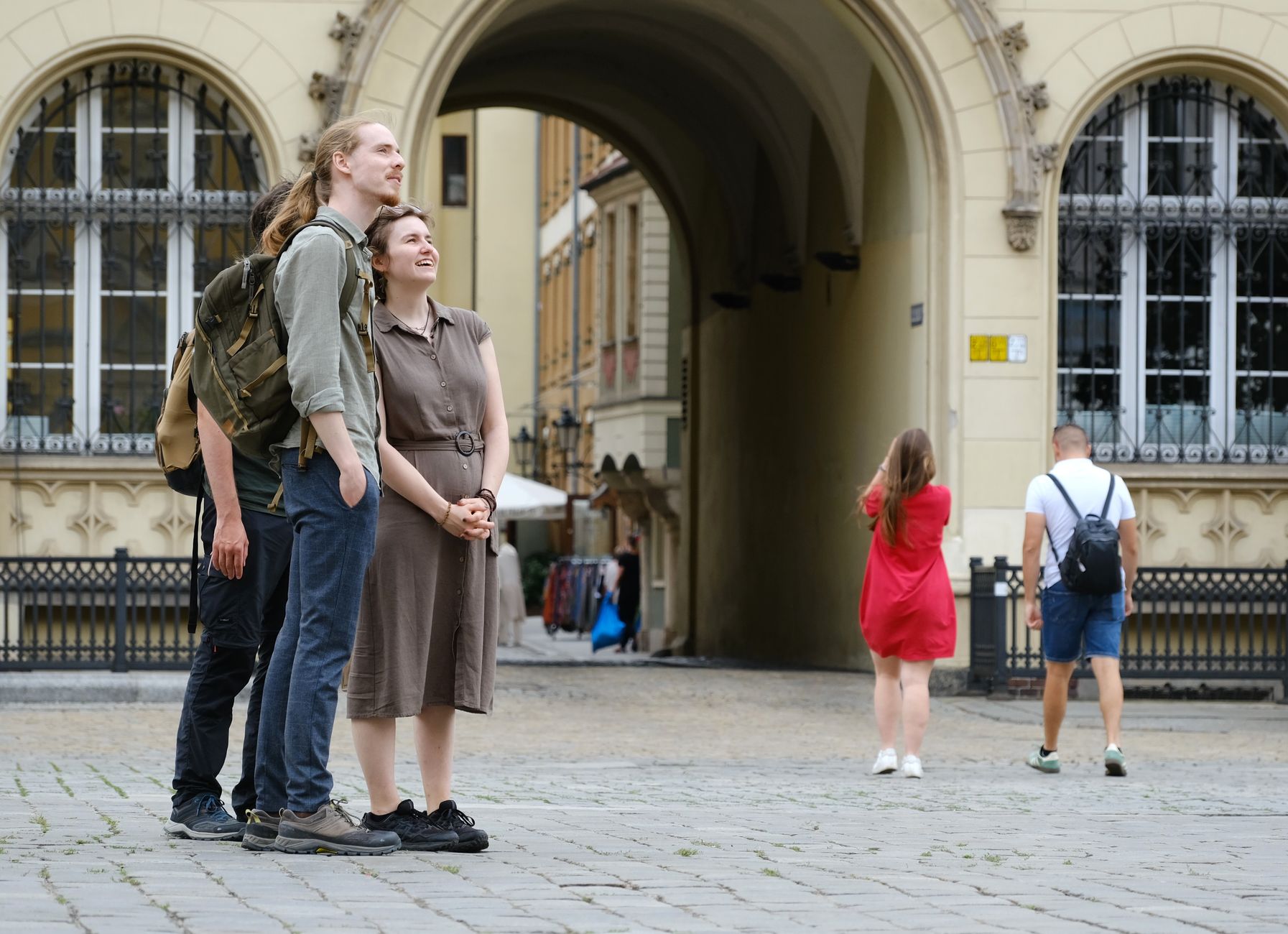
The Steglitzer Kreisel catches your eye before almost anything else — a 119-metre tower that ran out of money mid-construction, was later found to be full of asbestos, and now stands as a kind of accidental monument to West Berlin's complicated ambitions. Beside it, the Bierpinsel, a mushroom-shaped tavern on a stalk, was built in 1976 and has never quite decided what it wants to be. Steglitz deals in this kind of architectural candour.
West of Schloßstraße, the mood shifts. Long streets lined with pre-war apartment buildings and old linden trees run quietly toward Lepsiusstraße, and the Bismarckviertel arranges its fifteen streets around a single man's biography. The Spiegelwand — a mirrored wall bearing the names and addresses of 1,700 deported Jews — stands without ceremony and asks you to read it.
💛 What travellers fall for
People who come back tend to walk the residential streets west of Schloßstraße rather than shop on it — the rows of Gründerzeit buildings hold up better as an afternoon than the mall does. The Titania-Palast on Schloßstraße is worth finding: a 1928 New Objectivity cinema that hosted Berlin's first post-war Philharmonic concert and the opening night of the very first Berlinale.
Deals in Steglitz
Book directly at the provider

How Steglitz came to be
A knight named Henricus of Steglitz appears in a deed from 1197, and the village turns up again in Emperor Charles IV's Landbuch of 1375. For centuries it stayed rural. Then in 1792 Prussia built its first paved country road through here, and in 1838 the Stammbahn — Prussia's first railway — opened its line between Berlin and Potsdam, running through the district. The connection to the capital accelerated everything.
In 1920 Steglitz was absorbed into Greater Berlin as Bezirk IX. A century of modest urban layering followed: the neo-Gothic Rathaus in 1898, David Gilly's neoclassical Gutshaus in 1801, the Titania-Palast cinema in 1928. The 2001 administrative reform folded Steglitz into the wider Steglitz-Zehlendorf borough, where it sits today.
Who and what shaped it
People who shaped it
Landmark buildings
See Steglitz in motion
Plan your visit
On the map
When to go
Berlin's climate is temperate continental: summers are warm and often sunny, with long evenings that make the residential streets particularly good for walking in June and July. Winters are grey and cold, though the architecture reads just as well under flat winter light.
Right now
Background & history adapted from Wikipedia (CC BY-SA) · specs from Wikidata (CC0) · weather from Open-Meteo · map data © OpenStreetMap contributors · photos from Wikimedia Commons / Unsplash with per-image credit. No third-party reviews or social posts reproduced.