
Statue of Liberty
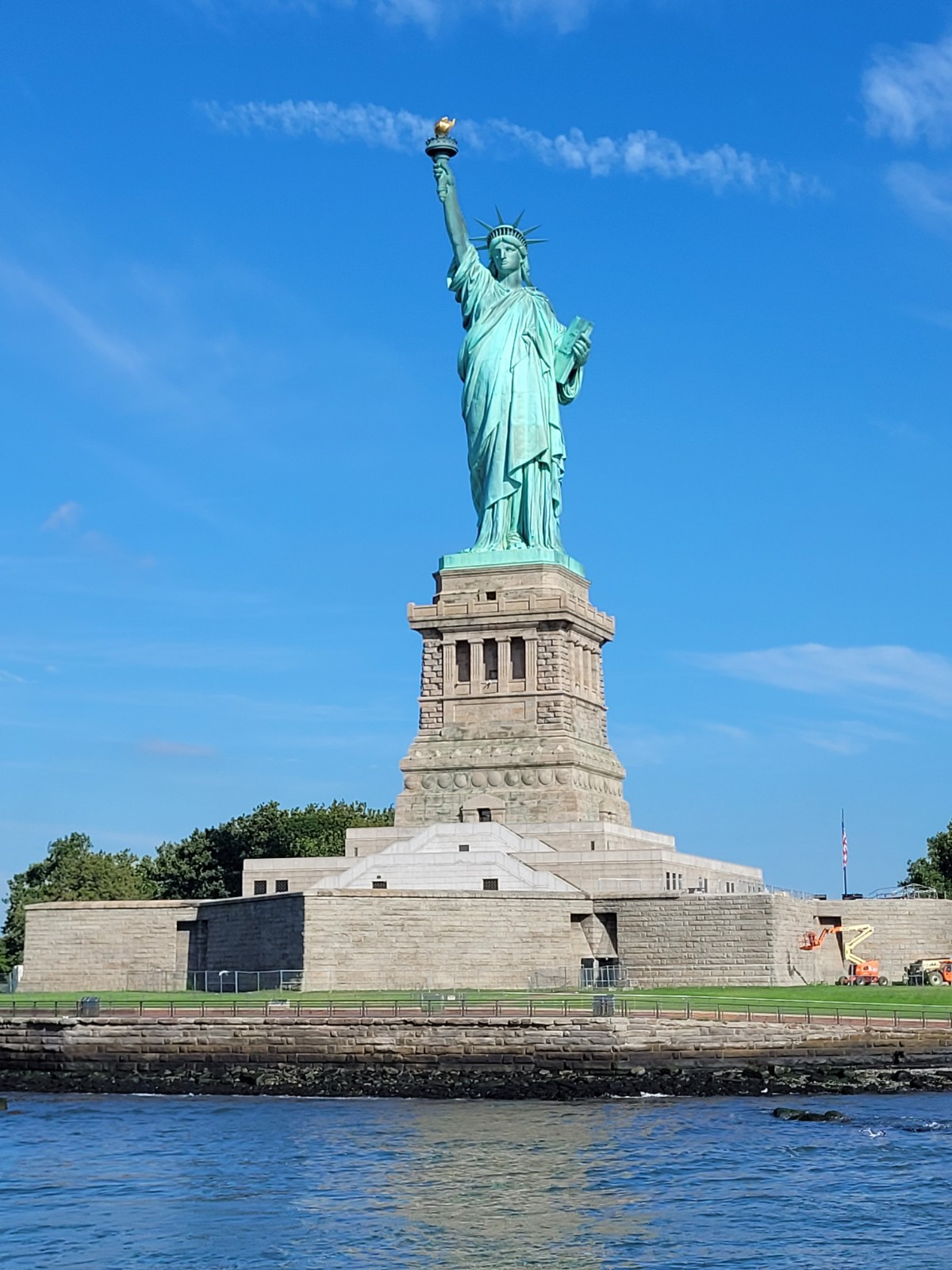
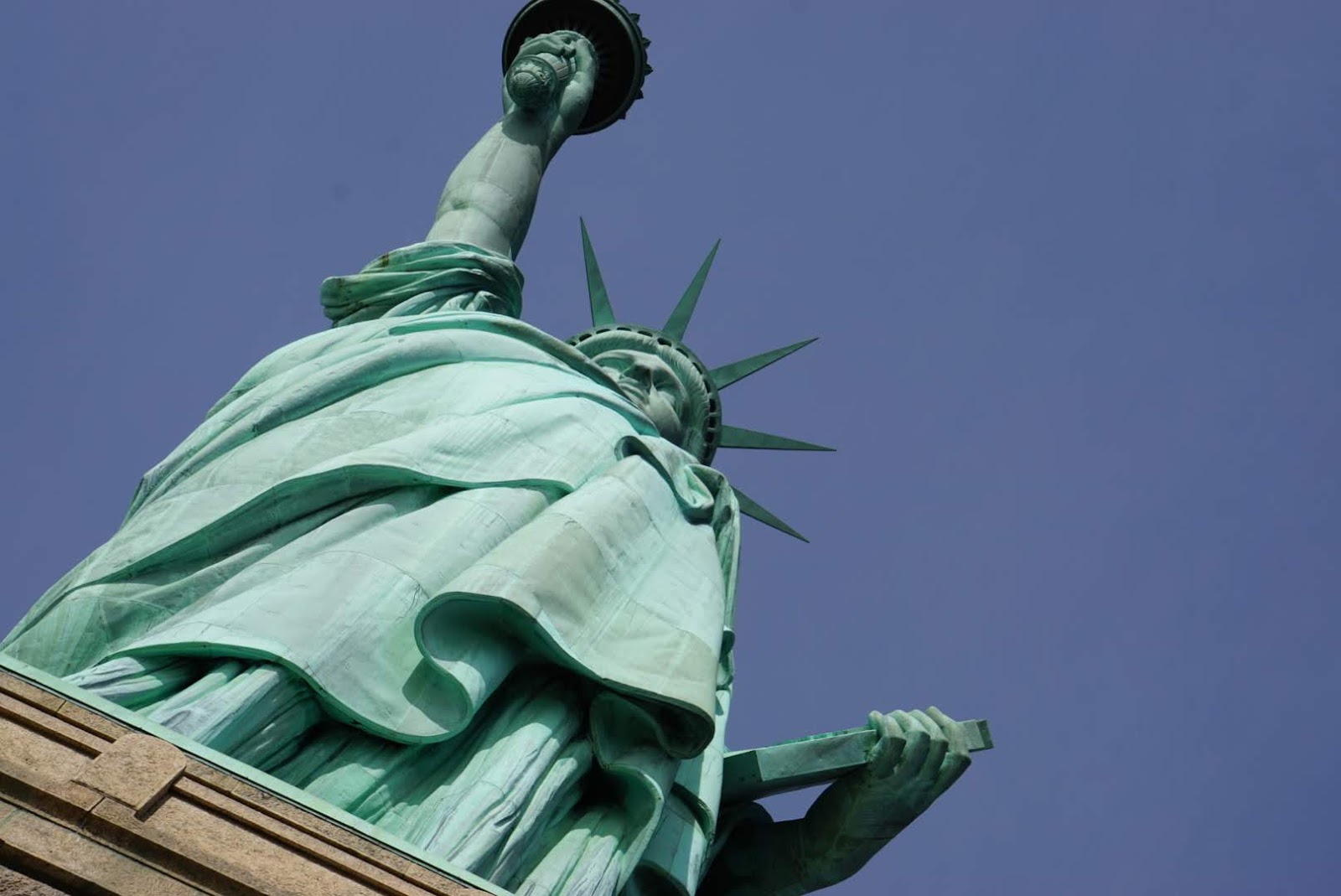
She stands 305 feet from the base of her pedestal to the tip of her torch, and the first thing that surprises most people is the scale — photographs flatten her. Up close, each of the 300 copper sheets that form her robe is the thickness of a coin, hammered by hand into shape and riveted together in Paris before the whole thing crossed the Atlantic in crates.
The green you see today wasn't the original plan. When she was dedicated on October 28, 1886, with President Grover Cleveland presiding, she was the warm reddish-brown of new copper. The patina came slowly, over decades, the salt air doing what salt air does.
💛 What travellers fall for
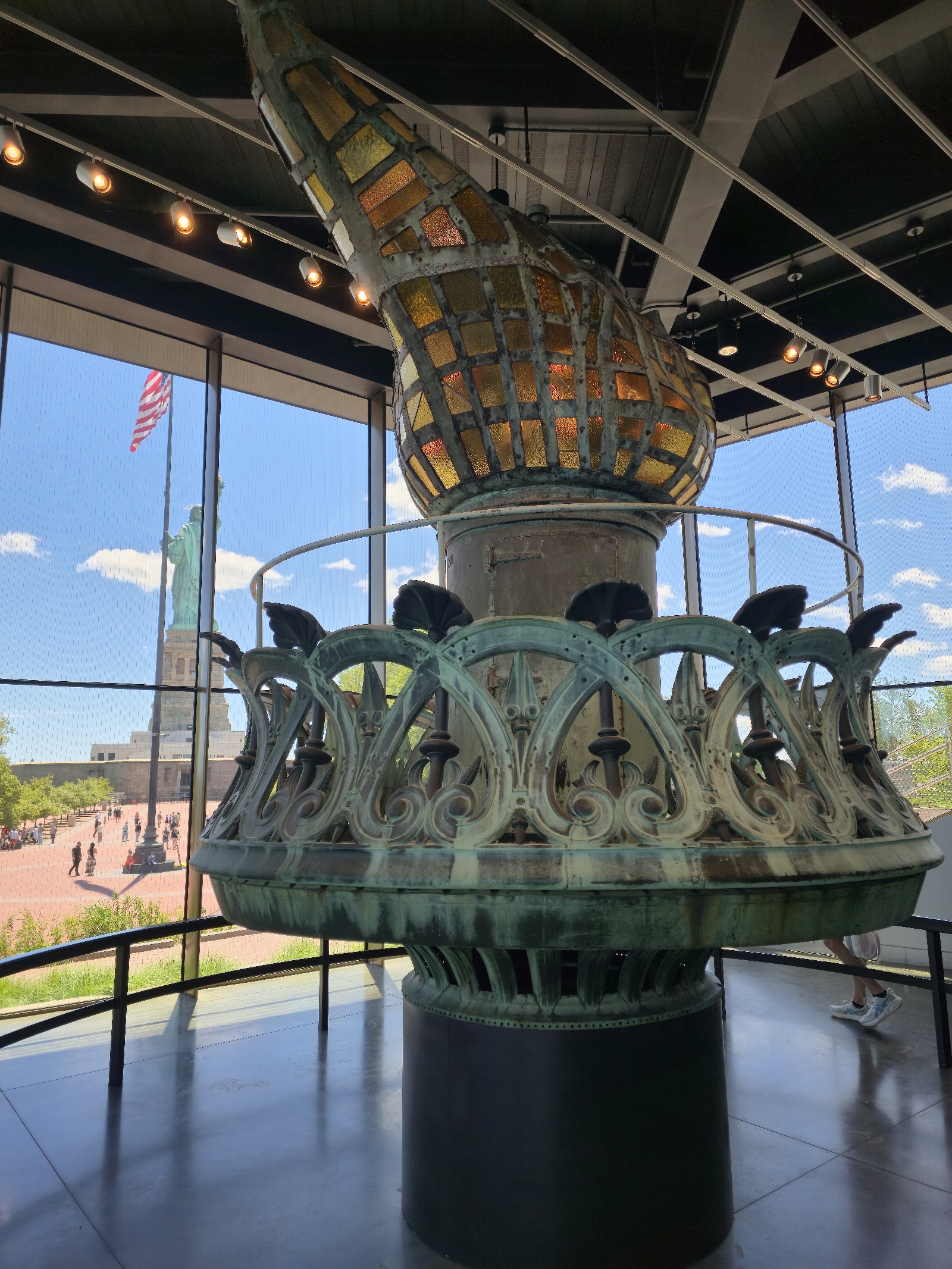
People who've made the trip more than once tend to say the same thing: book crown access the moment reservations open — up to six months out for summer dates — and go on a weekday, early ferry. The pedestal view is genuinely underrated if the crown is sold out. And the original torch, indoors at the museum, is worth lingering over.
The story behind Statue of Liberty
The idea began at a dinner table in France in 1865, when legal scholar Édouard de Laboulaye proposed a monument to the shared values of France and the United States. Sculptor Frédéric-Auguste Bartholdi took up the concept, and by 1881 he needed an engineer who understood wind loads. He turned to Gustave Eiffel, who devised the four-legged internal pylon that lets the copper skin move in the harbor wind without tearing itself apart. Architect Richard Morris Hunt designed the granite pedestal.
Poet Emma Lazarus donated a sonnet — "The New Colossus" — to a fundraising auction for that pedestal; her words were later cast in bronze and fixed to its base. The original torch was removed in 1984, corroded beyond repair, and a replica was installed and dedicated during the 1986 centennial. The crown, closed after September 11 and again during the pandemic, didn't reopen until October 2022.
Good to know
Statue City Cruises is the only authorized ferry operator; depart from Battery Park or Liberty State Park. Expect airport-style security before boarding. Museum and Ellis Island entry are included in your ferry ticket. Last outbound ferry leaves around 3:30 PM in regular season, 2:30 PM in winter.
Spring visits (March–May) bring mild temperatures and occasional showers; April is the wettest month. Summer is warm and the ferry lines are at their longest — early departures help. Winter crossings are cold and exposed on the water, but the island is far less crowded and the last ferry runs around 2:30 PM, so pace accordingly.
Where is Statue of Liberty?
Location
- In New York City
- 40.6892, -74.0445
- Open in Google Maps
Rating
4.7 ★ · 112,067 Google reviews
More tickets & tours for Statue of Liberty
Book directly at the provider
What travellers say about Statue of Liberty
Amazing experience! One of the must visit places in NYC! If you want to visit the hat you have to buy tickets beforehand and they sell out fast so make sure you get them before you visit. There are a couple lemonade stands on the island but I wasn’t a fan of the lemonade. Make sure you have your own water and some snacks to spend time on the island. The front of the statue gets busy from people taking pictures so it might take a while for your turn to come so plan accordingly. Ferry line gets long too so it might take a couple of ferries for you to get to and from the island. Beware of scam ticket sellers. Buy the tickets either online on the official website or the booths before the boarding dock. You will have to go through security as well. The museum is a must visit too! Don’t skip by it. It’s definitely worth checking out!
This is a must-visit and one of the most iconic landmarks when traveling to New York City. Missing this place would be a real pity. To get up close for photos, you’ll need to take a ferry, which usually requires booking tickets in advance. The boarding process can take some time, so it’s best to come in the morning. Be aware that there are quite a few scammers around the area, so it’s important to stay cautious and well-informed before visiting this place.
For the Crown Tour: tickets can be purchased months in advance online and include access to the pedestal & a small museum at that level. There is an elevator that can take you to the top of the pedestal - if you opt for the stairs, as we did, be prepared for quite a few flights (I want to say eight). There are plenty of places to stop & rest if needed. Once you ascend to the top of the platform, crown access begins for those with tickets, but you can see quite a lot of the structure from the platform too via a glass panel. The crown ascent is an extremely narrow, steep staircase - but there are guardrails on both sides and the line moves very slowly, as it’s a one-way lane through the top of the crown and back down again, so be prepared for stop-and-go the whole time. My 6’2” husband had to be strategic but never actually hit his head; I, at 5’4”, found the staircase perfectly comfortable. It would be very difficult for someone holding a child or for anyone who is claustrophobic. However the views inside are fascinating! And the crown, at the top, is well worth the hike. There’s a thermometer posted at the top of the crown that showed temperatures 30* higher than outside - I can only imagine how hot it gets in August, inside a metal pillar full of bodies. Just something to keep in mind as you plan your trip. Bottom line: excellent cost to value for two adults, but I would only bring my young children under certain temperatures and I’d come armed with snacks and lots of positive reinforcement.
Visiting the Statue of Liberty felt truly special. Seeing it up close has a completely different impact than pictures. The ferry ride and skyline views made the experience even more memorable. The museum was also a highlight, especially seeing the original torch up close. There is a casual café on the island if you need a quick bite, but it is more about convenience than the food itself. It is one of those places you should not rush. Just take it in and enjoy the moment.
The Statue of Liberty is one of the most iconic symbols of freedom, and visiting it feels special from start to finish. The ferry ride itself offers breathtaking views of Manhattan and Brooklyn. Liberty Island is peaceful, clean, and full of great photo spots. The Statue looks massive and impressive from up close, and the museum gives deep insight into its construction, symbolism, and restoration. If you book the pedestal or crown tickets early, the views are even better. Expect lines during peak hours, but the organization is smooth. Overall, it’s a must-visit landmark for anyone coming to New York.
More of New York City
Discover where to stay, what to do and the best deals for your trip.
Explore New York City →More attractions in New York City
All of New York City →



Background adapted from Wikipedia (CC BY-SA) · map data © OpenStreetMap contributors · ratings & place photos via Google · other photos with per-image credit. Ticket links may earn us a commission at no extra cost to you.