
St. Martin's Church Garmisch
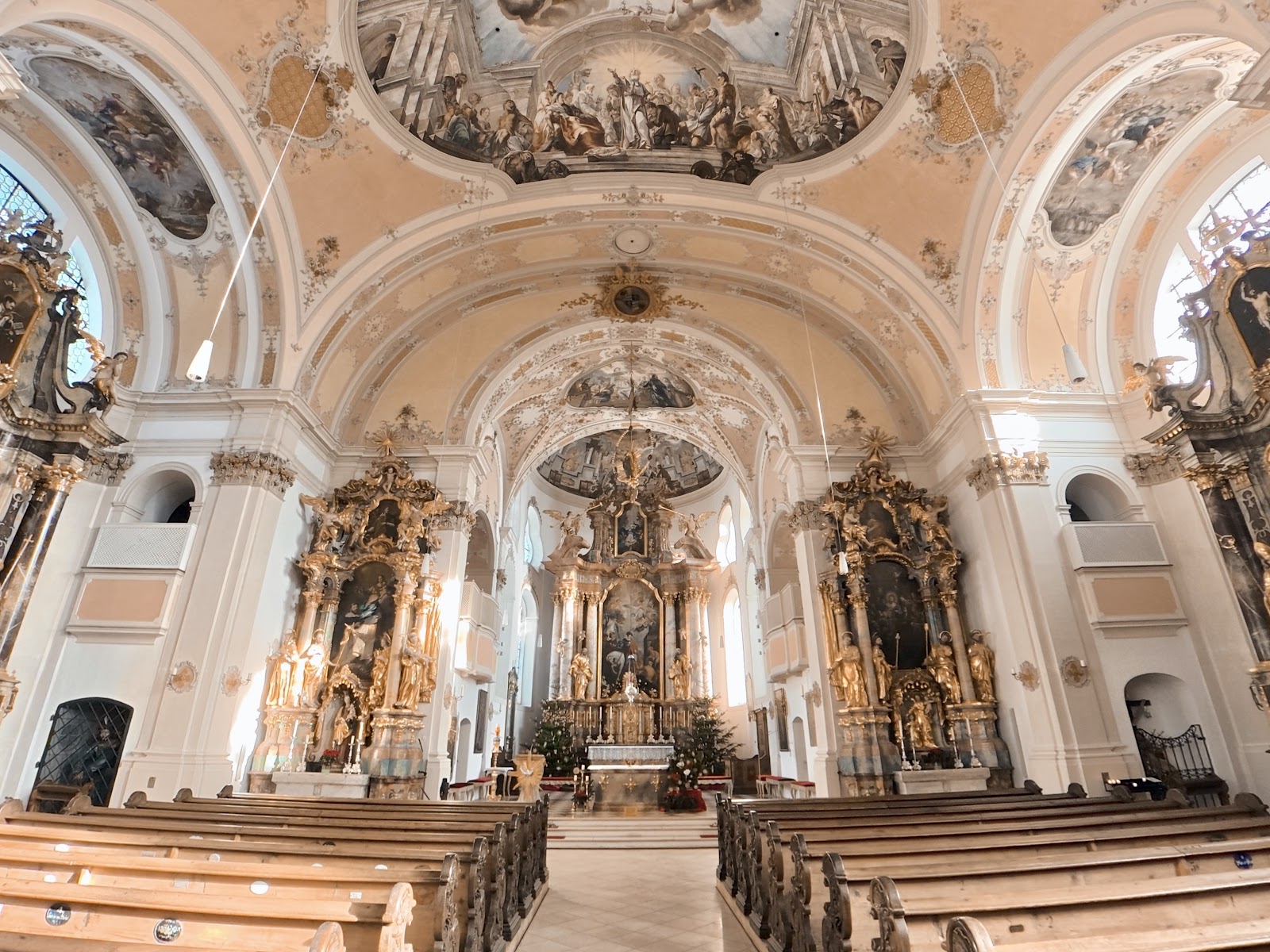
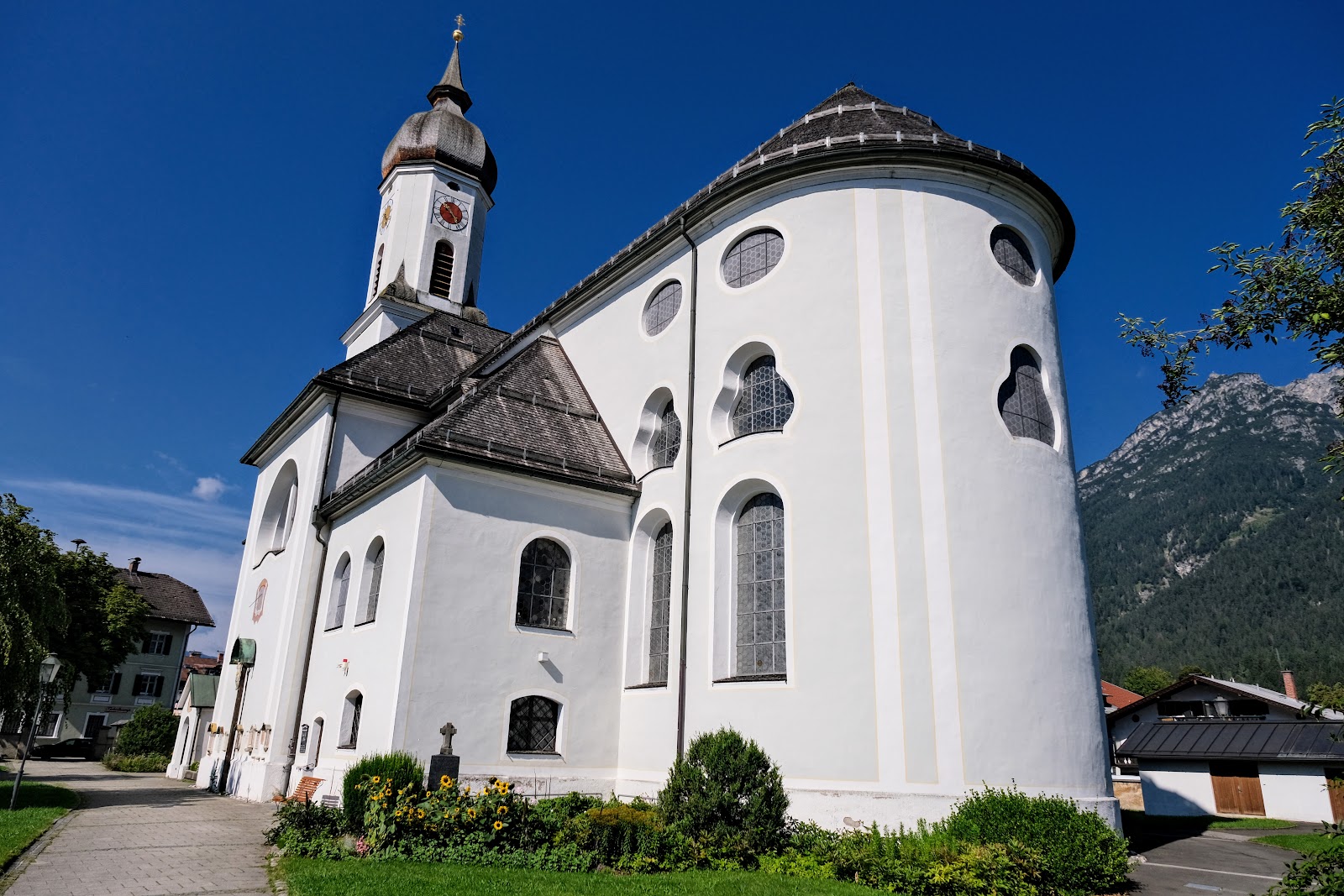
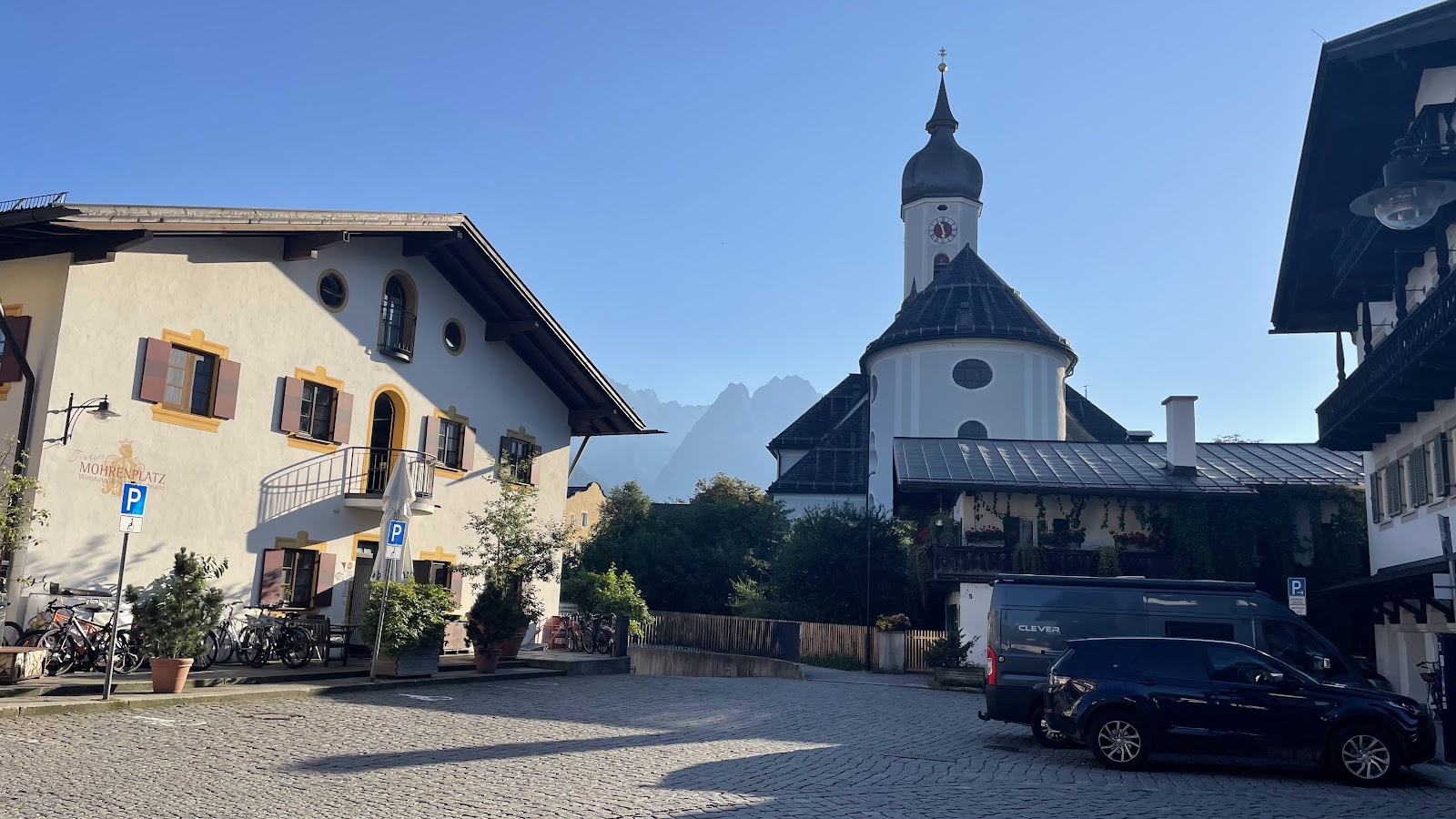
The pink spire of St. Martin's rises above the rooftops of central Garmisch with enough confidence that locals use it to give directions. Step off the main street and you find the church sitting quietly at Marienplatz 6, its South German Baroque exterior modest enough that the interior comes as a genuine surprise.
Inside, Matthäus Günther's ceiling paintings unfurl overhead while Franz Seraph Zwinck's frescoes fill the walls, and Martin Speer's 1734 altarpiece — St. Martin dividing his cloak — anchors the high altar between six Corinthian columns. A gilded tabernacle catches whatever light finds its way in.
💛 What travellers fall for
People who come back tend to time a visit for a weekday morning, when the church is nearly empty and the ceiling paintings get the quiet attention they deserve. The 1513 bell — oldest of the eight in the tower — rings every quarter-hour, so if you're sleeping nearby, a room on the far side of the building is worth requesting.
The story behind St. Martin's Church Garmisch
Christianity reached this corner of the Bavarian Oberland around 750 AD, carried by Irish and Scottish monks moving through the Alps. By the early 18th century, the congregation had outgrown its existing building, and a new site was chosen south of the Loisach on a meadow called Nikolausanger.
On August 15, 1730, Prelate Patritius — Provost of Rottenbuch — laid the foundation stone. Master builder Joseph Schmuzer led construction, completed in 1734 at a cost of 12,000 guilders, much of it raised through voluntary community labor. The Prince-Bishop of Freising permitted only one tower rather than the two originally planned. The church was consecrated on September 23, 1734, and has been a protected historic monument since 1973.
Good to know
Entry is free and the church is generally open 9:00–17:00, but Sunday Masses at 8:30 and 11:00 can limit access — check ahead. Flash photography and tripods are not permitted. From the train station, the spire is visible on foot in under ten minutes.
Where is St. Martin's Church Garmisch?
Location
- In Garmisch-Partenkirchen
- 47.4930, 11.0940
- Open in Google Maps
Rating
4.6 ★ · 450 Google reviews
More tickets & tours for St. Martin's Church Garmisch
Book directly at the provider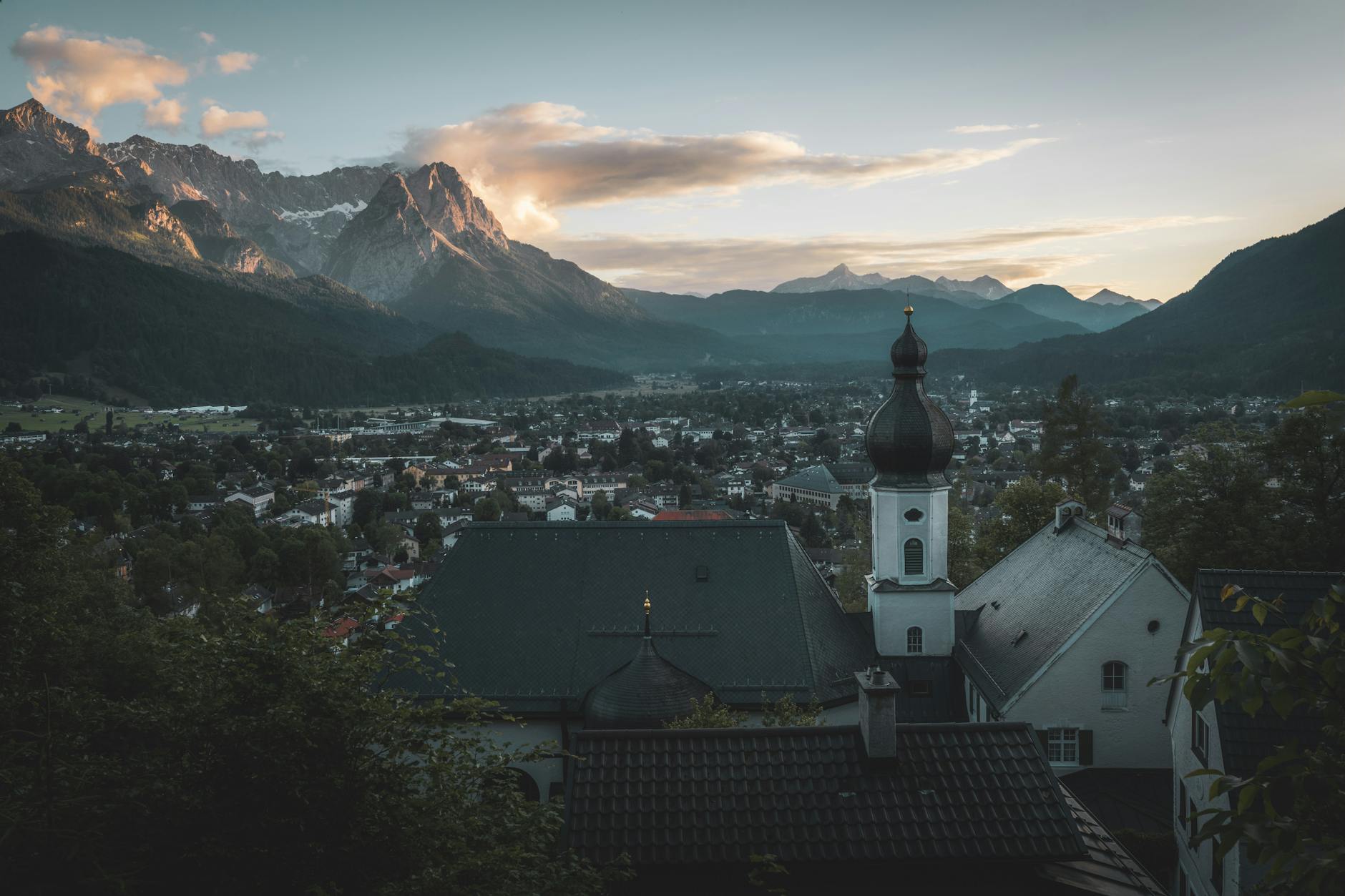
What travellers say about St. Martin's Church Garmisch
Not too far from the main street in Garmisch is this quiet church. Large enough to be seen from the top of Mt. Wank, like others, it is simple on the outside topped by an onion dome on the single tower and with a small garden area, and elaborately decorated on the inside with gilded frames and highly frescoed ceilings. The church is just enough off of the main path through Garmisch that it is very quiet and not a lot of people unless there is a service. Even though there are no true masterpieces inside, it is very beautiful and inviting to contemplation. Would recommend visiting with an experienced guide if you can to get the full history.
Beautiful church, with very nice decoration
For those who posted that it is quiet, no it is NOT QUIET AT ALL .... It has an annoying giant bell that rings EVERY 15 MINUTES, and rings also during the whole night, which makes it impossible to sleep. It ruins the beauty and serinity of the place.
Beautiful baroque church. Almost two weeks back, I attended a Sunday service. Authentic Bavarian Catholic service. Loved the music sung by the priest. Great location in Marienplatz. Such a peaceful place. Great architecture, mosaics, statues, decor, and a great organ.
We worth popping in to see the gilded statues and alters...don't forget to look up as there are a number of detailed ceiling paintings and look to the back and see the huge organ.
More of Garmisch-Partenkirchen
Discover where to stay, what to do and the best deals for your trip.
Explore Garmisch-Partenkirchen →More attractions in Garmisch-Partenkirchen
All of Garmisch-Partenkirchen →

Background adapted from Wikipedia (CC BY-SA) · map data © OpenStreetMap contributors · ratings & place photos via Google · other photos with per-image credit. Ticket links may earn us a commission at no extra cost to you.