

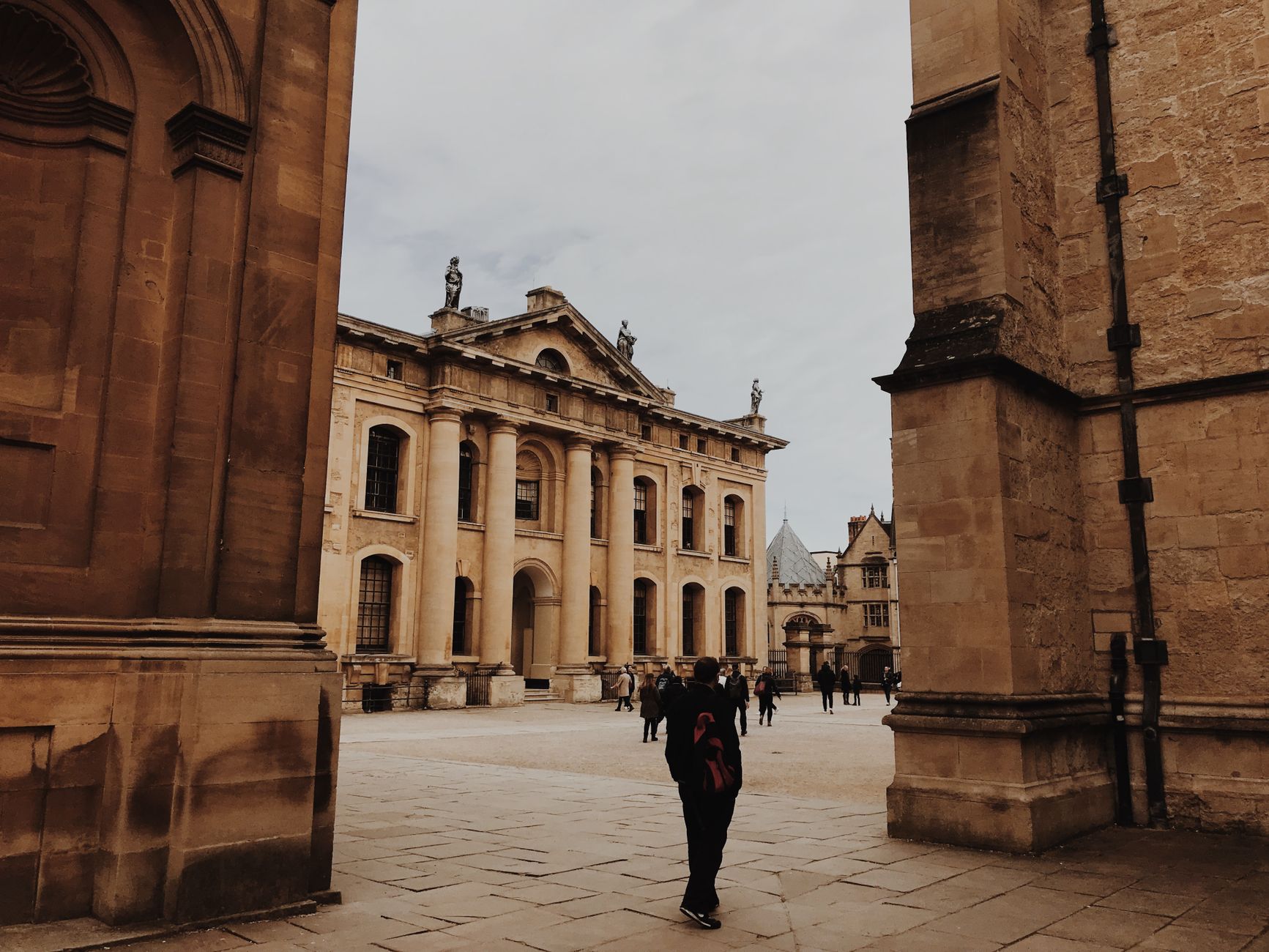
City

St John's College

St John's College
Photo by yoldakocayanlaar |•UK on Pexels
St John's College
Photo by Michelle Chadwick on Pexels
St John's College
Photo by Jean-Luc Benazet on Pexels
St John's College
Photo by Helena Jankovičová Kováčová on Pexels
St John's College
Photo by Dominiquemel16 Ramos on Pexels
St John's College
Photo by Mark Neal on Pexels

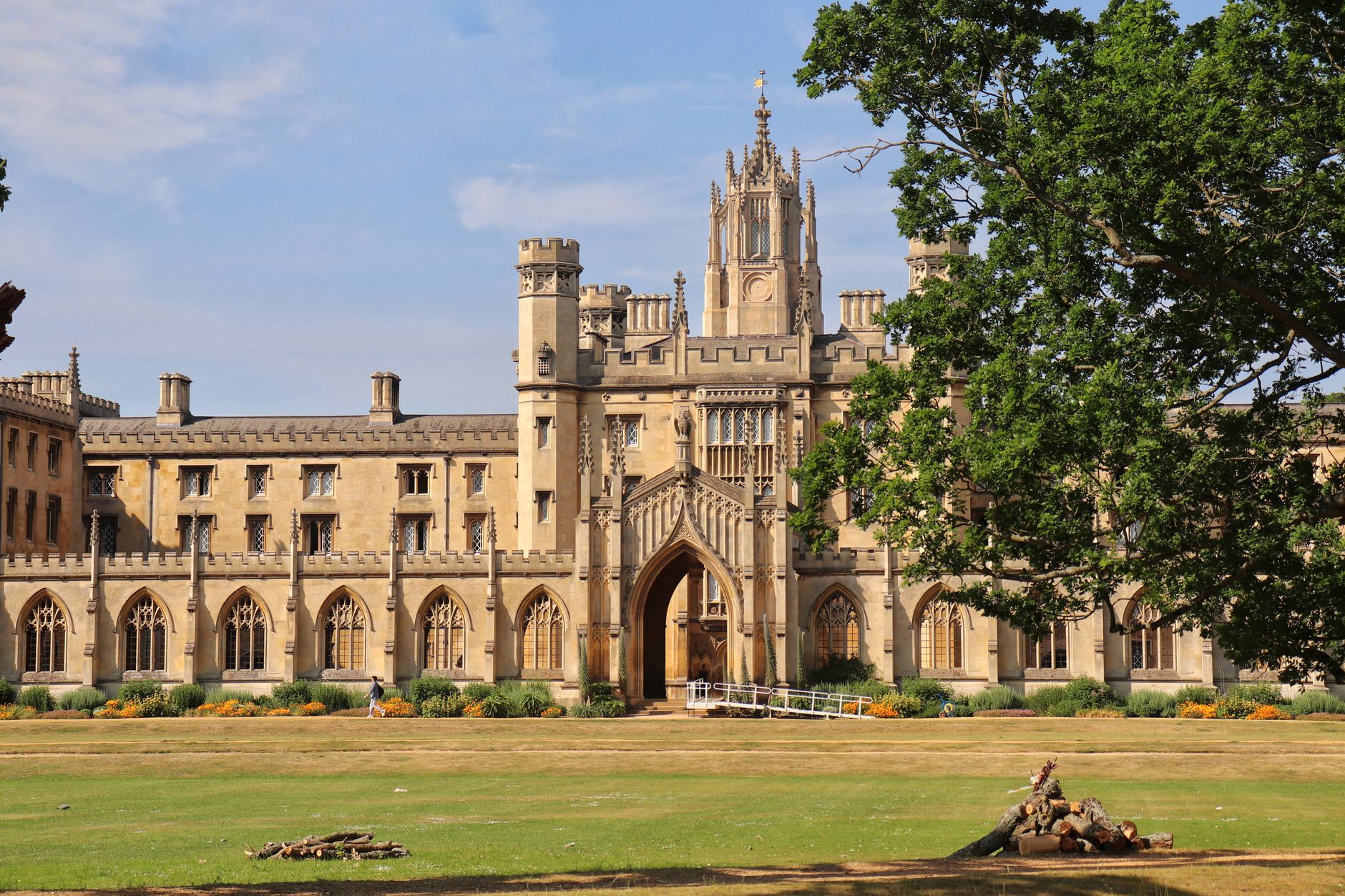
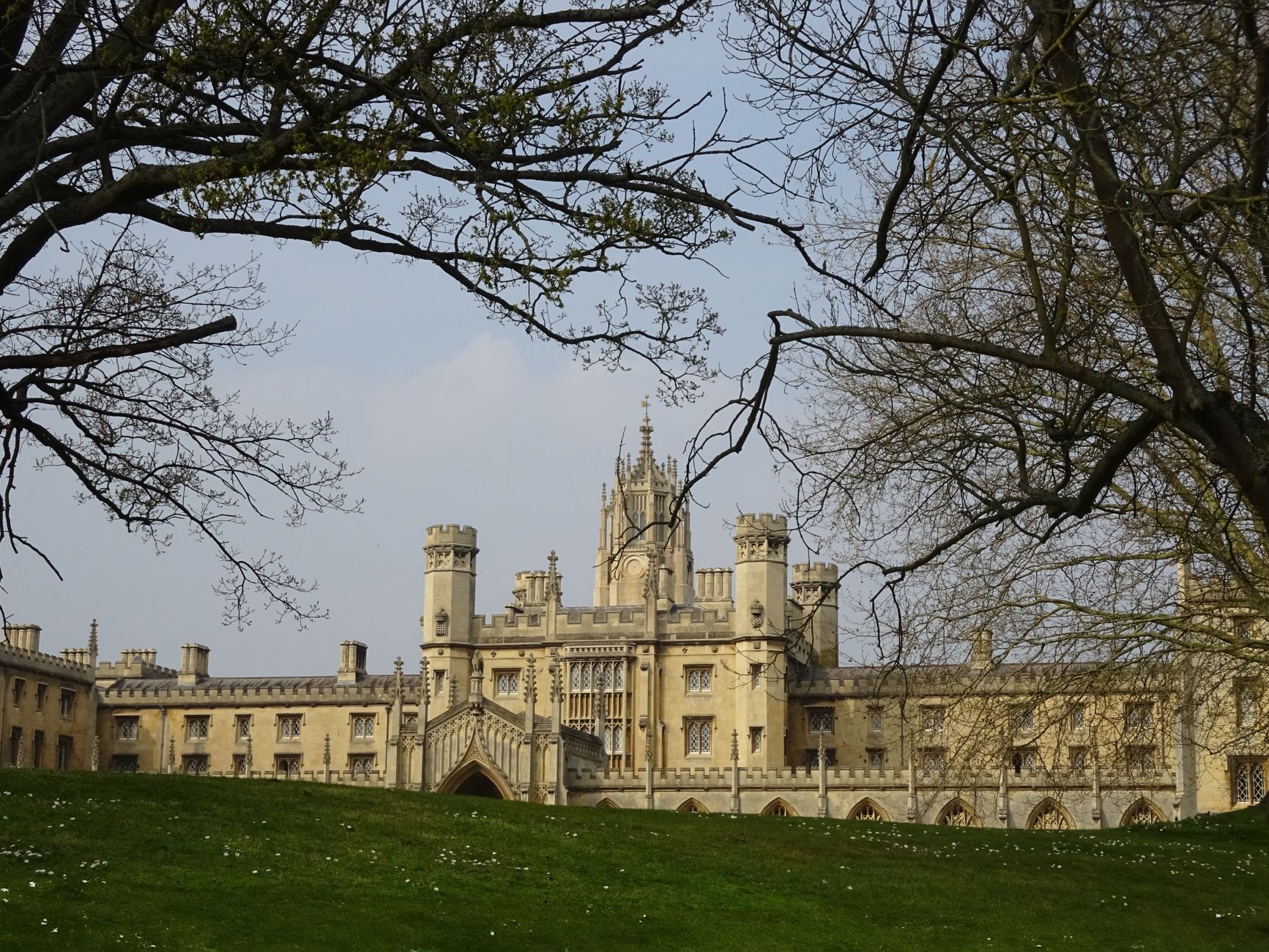
The first thing you notice at St John's is the gatehouse: a limestone face decorated with heraldic yales — mythical creatures standing guard on either side of Lady Margaret Beaufort's coat of arms, and above them a statue of St John himself, chalice in hand. Five courts unfold behind it, each from a different century, so walking the full length of the college is something close to a compressed history of English architecture.

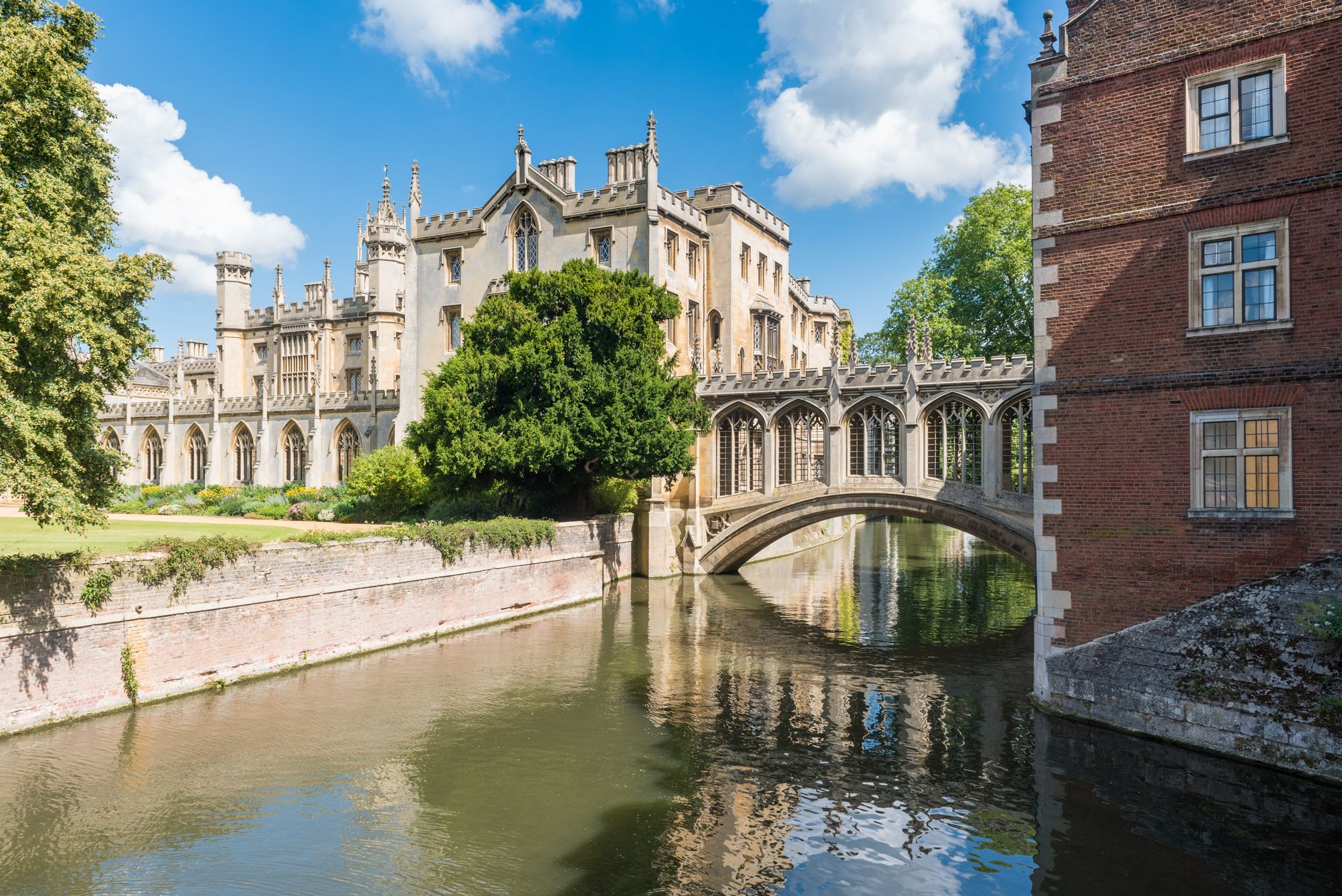
The River Cam runs through the back of it all, crossed by the covered Bridge of Sighs, and beyond that lie the Backs — the long meadow views that make Cambridge look, for a moment, exactly as imagined.

💛 What travellers fall for

People who come back tend to time it for a weekday morning, before the tourist foot traffic builds. The Hall is worth seeking out specifically: the hammerbeam roof painted black and gold, the linenfold panelling from 1528. The Cripps Building, Grade II* listed and almost always overlooked, repays a slow walk around its two river courts.

Good to know
St John's is a short walk north along St John's Street from King's College. Entry fees apply for visitors during term; check the college website for current opening hours, which shift seasonally. Allow at least an hour for the full sequence of courts.

Deals in St John's College

Book directly at the provider
The story

How St John's College came to be

Lady Margaret Beaufort, mother of Henry VII, chartered the college on 9 April 1511 — though she had died two years earlier in 1509, never seeing it built. It was John Fisher, Bishop of Rochester, who fought to release the funds from her estate and oversaw the college's establishment on a site previously occupied by the Hospital of St John the Evangelist, founded around 1200.

What followed was five centuries of construction in almost every style: First Court completed by 1520, Second Court (1598–1602) described as the finest Tudor court in England, the Old Library in 1624, the neo-Gothic New Court in 1831, and the Cripps Building in the late 1960s, designed by Philip Powell and Hidalgo Moya. Women were first admitted in October 1981.

People & landmarks

Who and what shaped it

People who shaped it

Lady Margaret Beaufort
Foundress (1443–1509); mother of Henry VII; chartered college 9 April 1511, two years after her death.
John Fisher
Bishop of Rochester; secured funding from Lady Margaret's estate and oversaw college's establishment from 1511; canonised 1935.
William Wordsworth
Arrived 1787 age 17; Romantic poet and central figure in English literature; described as 'perhaps our most famed alumnus'.
William Wilberforce
Began studies 1776; abolitionist who led campaign to abolish slave trade and slavery.
Thomas Clarkson
Began studies 1779; abolitionist who led campaign to abolish slave trade and slavery.
William Cecil, Lord Burghley
Arrived age 14; leading adviser to Elizabeth I for 40 years; elected Chancellor of University 1559.
Viscount Palmerston
Entered as student; elected Parliament 1806; served two terms as Prime Minister.
Roger Penrose
Won 2020 Nobel Prize in Physics for discovery that black hole formation is a robust prediction of general relativity.

Landmark buildings

Great Gate
Completed 1516; main entrance decorated with Lady Margaret Beaufort's coat of arms flanked by heraldic yales; statue of St John the Evangelist above.
First Court
Built 1511–1520 from Hospital of St John the Evangelist buildings; front retains 1500s appearance; south side updated 1770s.
Hall
Fine hammerbeam roof with linenfold panelling (1528–1529); extended from five to eight bays by Sir George Gilbert Scott 1863.
Second Court
Built 1598–1602; described as 'finest Tudor court in England'; designed by Ralph Symons and Gilbert Wigge.
Old Library
Built 1624 largely with funds from John Williams, Bishop of Lincoln; notable for premeditated use of revived Gothic forms in reign of James I.
Third Court
West and South ranges completed 1669–73; entered through Shrewsbury Tower which housed observatory 1765–1859.
New Court
Nineteenth-century neo-Gothic design completed 1831; designed by Henry Hutchinson and Thomas Rickman.
Cripps Building
Built late 1960s; designed by Philip Powell and Hidalgo Moya; Grade II* listed; forms Upper and Lower River Court.
Fisher Building
Completed 1987; named after Cardinal John Fisher; contains teaching rooms, conference facilities, and student cinema; designed by Peter Boston.
Bridge of Sighs
Covered bridge crossing the River Cam at rear of college.
Practical

Plan your visit

On the map

When to go

Right now

17°C
Partly cloudy
Sat
20°
15°
Sun
22°
11°
Mon
23°
Tue
23°
13°
Weather data: Open-Meteo

Background & history adapted from Wikipedia (CC BY-SA) · specs from Wikidata (CC0) · weather from Open-Meteo · map data © OpenStreetMap contributors · photos from Wikimedia Commons / Unsplash with per-image credit. No third-party reviews or social posts reproduced.

Top