
Slano

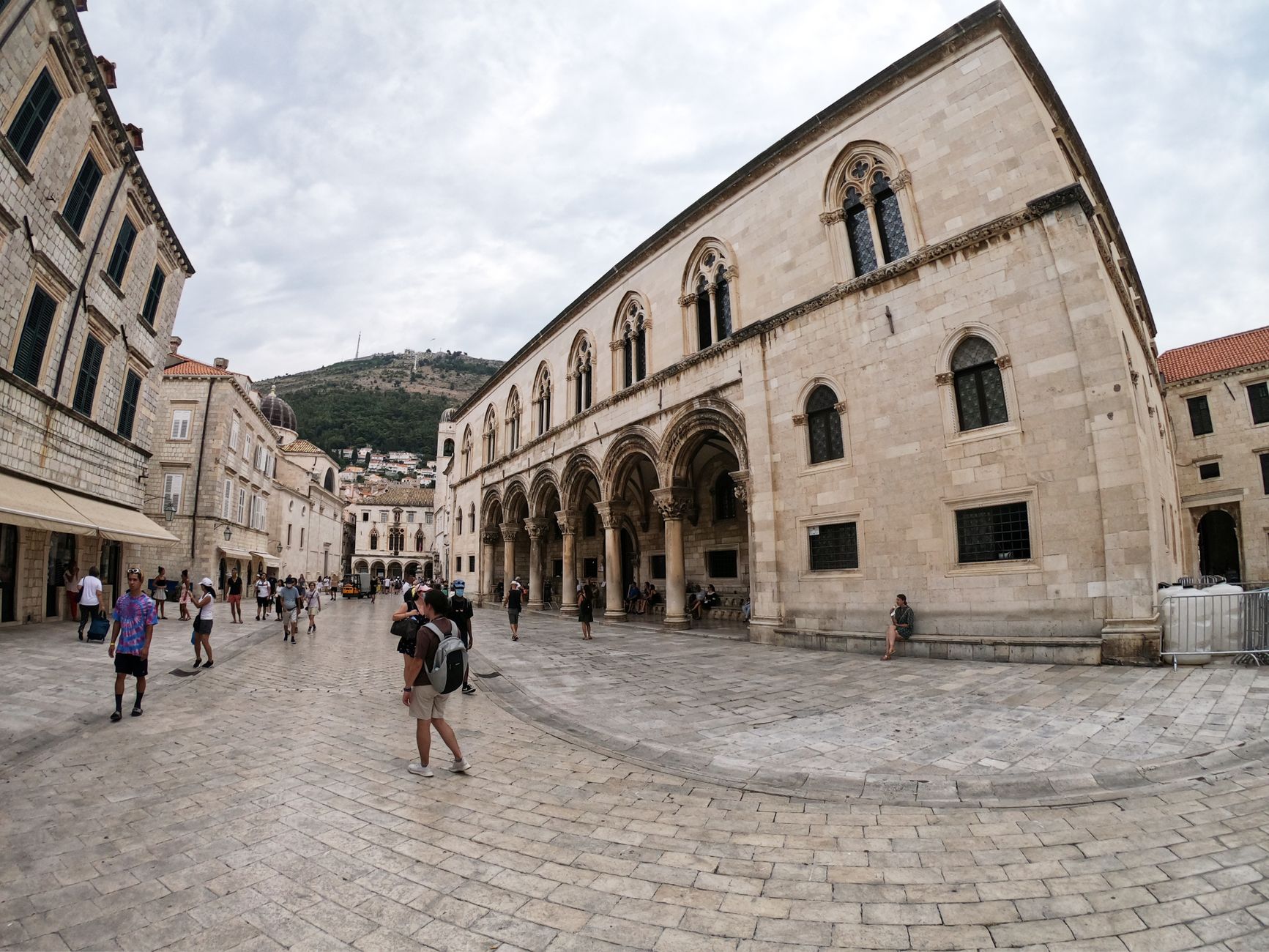
Slano sits at the head of its own bay on the Dubrovnik coast, where a long inlet of the Adriatic pinches between forested hills before opening onto a quiet harbour. The village is small enough that you can walk its length before the morning gets warm, past the reconstructed Rector's Palace with its stone courtyard and the Franciscan church where early Christian sarcophagi stand in the open air, unhurried.
On the first Sunday of August the pace shifts. The Siđ festival, tied to the feast of Our Lady of the Angels, draws people for what was historically the region's largest cattle market — now a rural flea market where the main event is lamb cooked in the traditional way over open fire. The rest of the year, Slano is largely left to itself and the boats in the ACI Marina.
💛 What travellers fall for
People who come back tend to time it for late May or June, when the water is warm enough to swim and the hills above Gradina are still green. The bus from Dubrovnik runs regularly and costs next to nothing — around €3-4 — which means you can leave the car behind and arrive without the stress of parking a Croatian coastal summer.
Deals in Slano
Book directly at the provider


How Slano came to be
Slano has been a place people chose to hold things — a Roman castrum on Gradina Hill, then early Christian burials, then, in 1399, the seat of the Ragusan Republic's Primorje Countship after the territory was redeemed from Bosnian king Stjepan Ostoja. The village grew into a working commercial port with two shipyards, salt warehouses and markets, administered by a duke whose palace became the civic centre of the region.
The 1667 earthquake that levelled much of Dubrovnik also struck Slano, and in 1806 Montenegrin forces burned what remained. Engineer Lorenzo Vitelleschi redesigned the Rector's Palace in 1831 — administrator's quarters, offices and a prison under one roof — but the building burned again in 1991 during the Serbian aggression on Croatia. Its reconstruction was finally completed in May 2017 by the Society of Friends of Dubrovnik Antiques.
Who and what shaped it
Landmark buildings
See Slano in motion
Plan your visit
On the map
When to go
July brings 11.5 hours of daily sun and almost no rain, with sea temperatures reaching 26°C — peak summer in every sense. May and June are cooler and greener, with comfortable daytime temperatures around 23-27°C; October marks the turn toward a wet autumn that lasts through December.
Right now
Background & history adapted from Wikipedia (CC BY-SA) · specs from Wikidata (CC0) · weather from Open-Meteo · map data © OpenStreetMap contributors · photos from Wikimedia Commons / Unsplash with per-image credit. No third-party reviews or social posts reproduced.