
Seville Cathedral
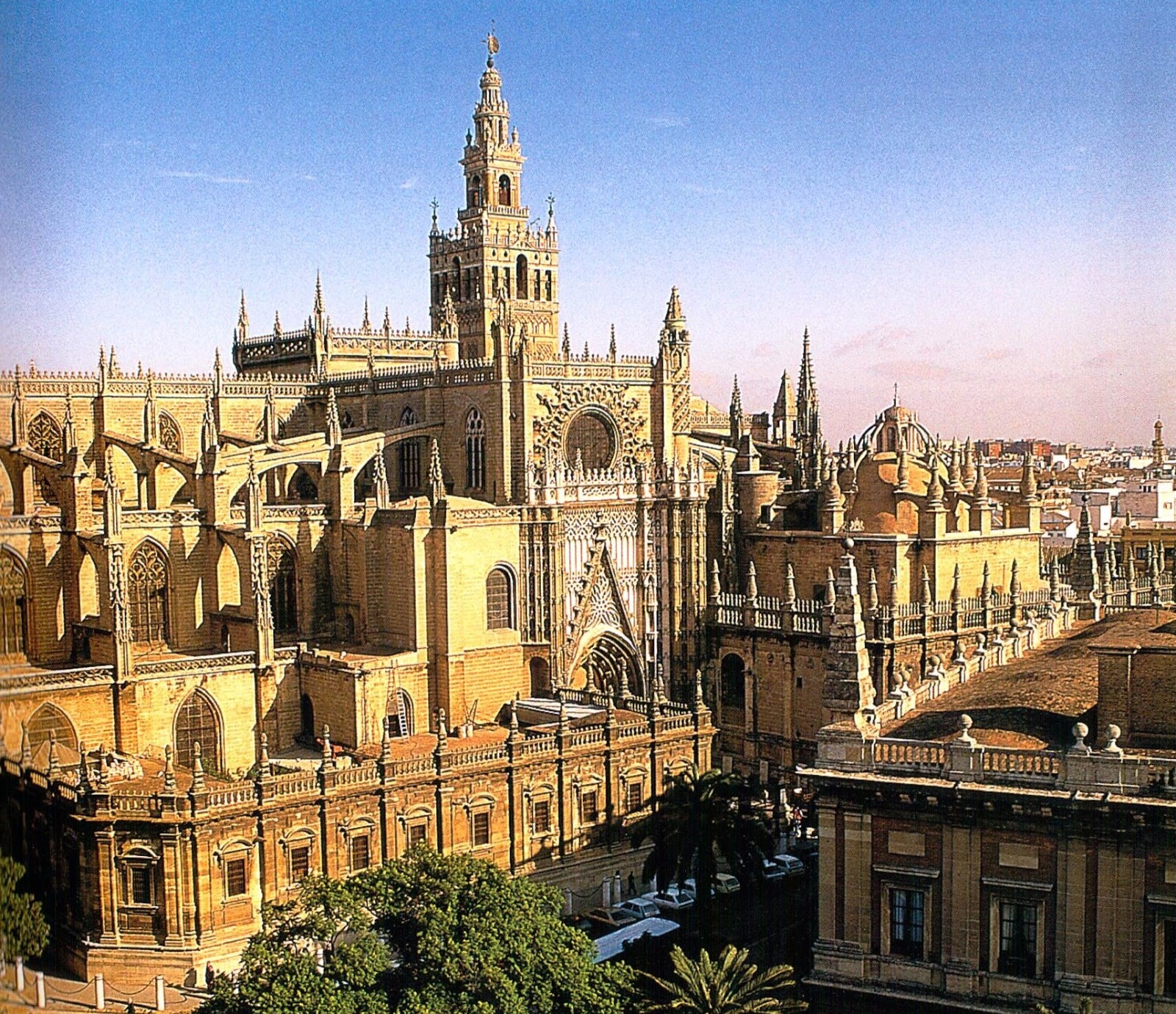
The chapter house alone is worth the ticket: a circular room finished in 1592 with a carved dome that the builders modelled on Michelangelo's Piazza del Campidoglio, sitting quietly inside the largest Gothic building in Europe. The cathedral's five naves stretch 135 metres from end to end, rising 42 metres at the centre, and somewhere in the south transept a 475-kilogram silver monstrance catches whatever light filters down from above.
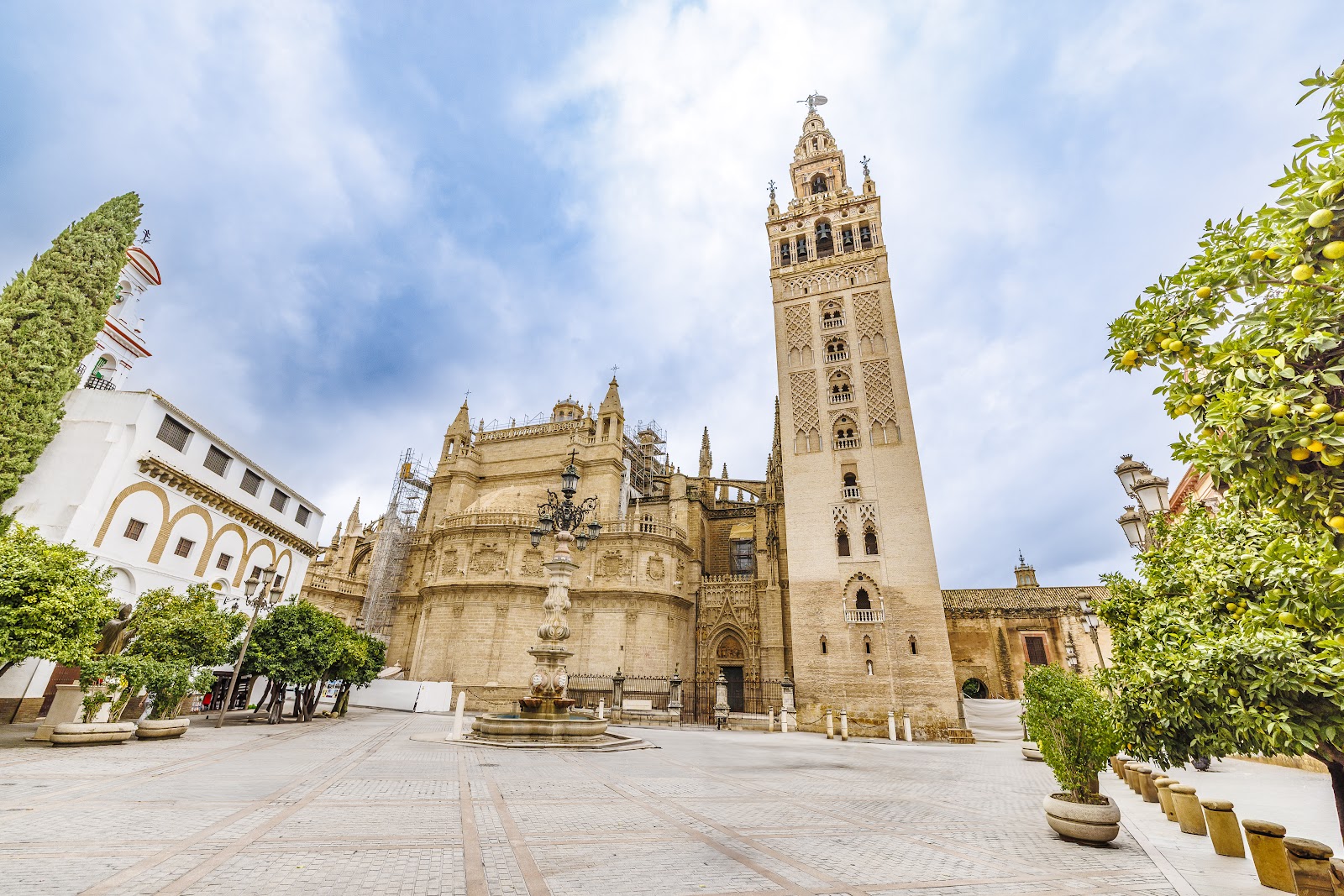
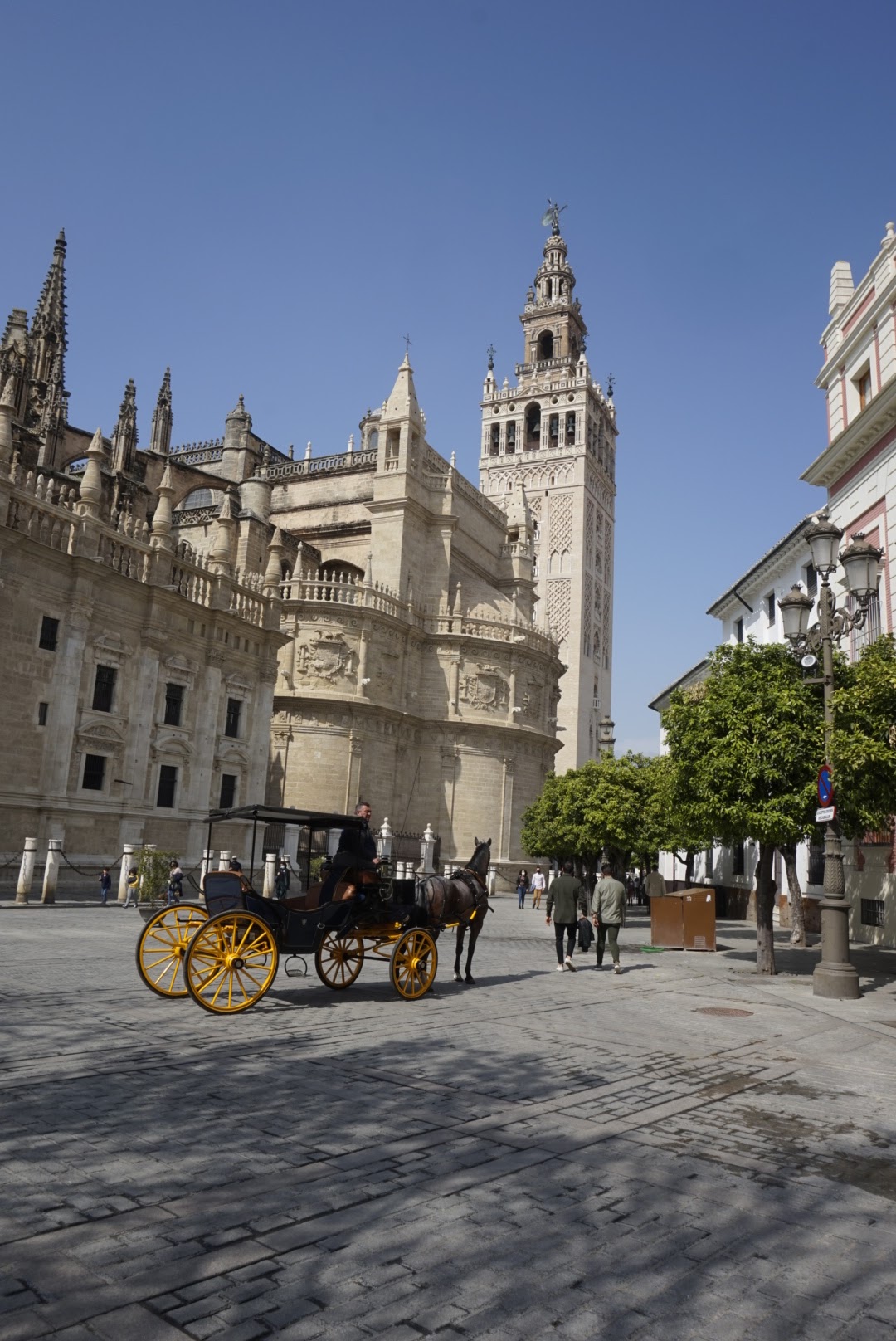
The building holds Christopher Columbus and his son Diego, Ferdinand III of Castile, Alfonso the Wise, and King Peter the Cruel — a compressed history of medieval Iberia arranged in stone and gilded wood. The Giralda tower beside it was a minaret before it was a bell tower, and you reach the top via 35 ramps wide enough for a horse.
💛 What travellers fall for
People who return tend to buy the 21 € extended ticket for the rooftop — the view across the city is the payoff for the price difference. The Sunday free window (14:30–18:00 with an online reservation) fills quickly; book it the morning you arrive. The Patio de Naranjas, the old mosque's orange-tree courtyard, is the quietest corner in the complex.
The story behind Seville Cathedral
In July 1401, the chapter of Seville resolved to replace the Almohad grand mosque — itself built from 1172 and dedicated in 1182 — with something so large that future generations would think the builders mad. Work started in 1402 under master Alonso Martínez, passed through a succession of architects including the Frenchman Carlín (Charles Galter, from Normandy), and concluded when Carlín placed the last stone in the dome on 10 October 1506.
The structure has never stopped being rebuilt. A pillar collapse on 28 December 1511 brought down the transept dome; Juan Gil de Hontañón designed its replacement, finished 1519. That dome fell again in 1888 and was rebuilt by Joaquín Fernández. The Giralda — the former minaret, modelled on the minaret of the Koutoubia Mosque in Marrakesh — received its bell tower in 1568, topped by a weather vane cast by Bartolomé Morel. UNESCO added the site to its World Heritage list in 1987.
Good to know
The T1 tram stops directly across from the entrance at Archivo de Indias; Puerta Jerez metro is a five-minute walk. Allow 75 minutes for the cathedral and Giralda together. The cathedral is closed on Christmas Day, New Year's Day, 6 January, and Good Friday. General admission is 14 € (13 € online).
Where is Seville Cathedral?
More tickets & tours for Seville Cathedral
Book directly at the provider
What travellers say about Seville Cathedral
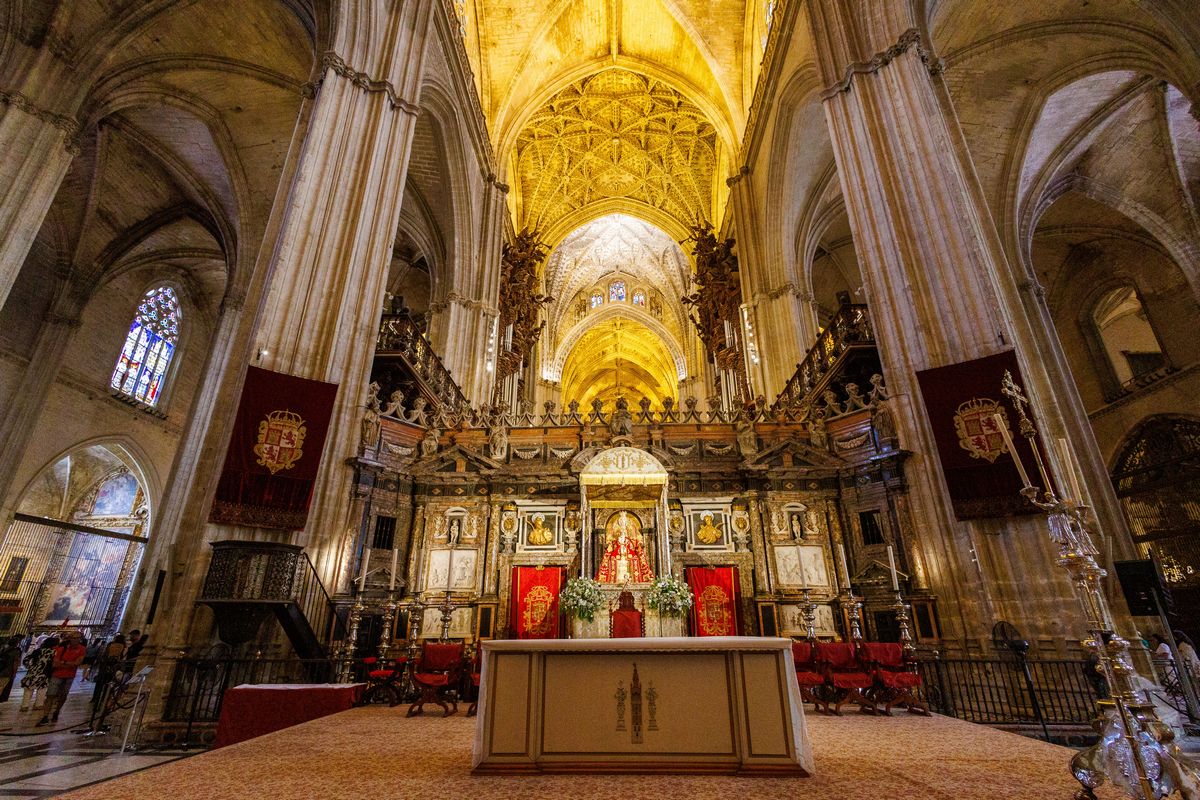
Oh my god is the expression once one enters the cathedral. Humongous huge maze beautiful mesmerising wood work , unbelievable carving on wood and iron , gorgeous artwork and stunning master pieces. Full of surprises. Room within room within a room. Each room has its own collection of visually striking pieces Altar is so striking and vivid. It remains with you even after one leave the cathedral organ and choir area were so exquisitely carved Must visit
There are no tours on Sunday due to mass, but here is the tip to see inside and out. We booked the 9am guided tour of the cathedral roof. You need to book in advance, online as places are limited. We were there in June and the first tour was the best as by 10am the sun was very hot. It is a 90 min tour walking up narrow spiral staircases to see the views of the city, close up of the small domes, getting near the tower, but more importantly starting the tour inside the cathedral! We got to see Christopher Columbus’s tomb inside the cathedral even though it wasn’t part of the tour. The guide stopped to explain. We went behind the main altar and from you could see the massive timber supports holding it up. There you had a perfect straight line view of the rose stained glass window. The tour was in English and the Spanish guide spoke very good English and explained a lot about the 70 year building time and how it was sped up by using clay pots! It is high at over 130m, so you need to be good at stair climbing and not afraid of heights. Overall, an excellent tour and well worth the 20€ per person price plus 2€ handling fee.
An impressive blend of architectural styles and cultural. Influences. A must visit if you are in Seville. Keep in mind that it is better to book your ticket in advance - many people want to visit this site and there are queues. In the high season the tickets sell fast days in advance. I visited Seville in the beginning of October last year and naively thought that I don't need advance booking as the peak season was over. Well, I was wrong 😉. October is actually a peak season for Seville just because the summer months are simply too hot...i was lucky to get a ticket through local agent for the following day and for a much higher price. Plan ahead for this site and for Alcázar. Do not use Get your guide offers, book directly with the cathedral and Alcázar - much better deal
Seville Mosque (Almohad period) ke waqt yeh Europe ki sabse badi aur shaan daar masjidon mein se ek thi. Yahan azaan hoti thi, aur iska minaret (jo aaj Giralda hai) poore shehar par dominate karta tha. 1248 mein jab Castilian forces ne Seville ko conquer kiya, toh masjid ko dhire dhire Christian use ke liye convert karna start hua. Kuch parts tod diye gaye, kuch reuse hue, aur kuch centuries tak change hota raha. Baad mein yahan par bani Seville Cathedral-jo aaj duniya ke largest Gothic cathedrals mein se ek hai Giralda - yeh original minaret hai masjid ka. Isko pura destroy nahi kiya gaya, balki baad mein iske upar Renaissance style bell tower add kar diya gaya. Structure ka core ab bhi Islamic architecture ka hai.La Giralda is the famous bell tower of the Seville Cathedral in Seville, Spain, originally built as a Moorish minaret before being transformed into a Christian belfry. It is one of the most important symbols of the city and forms part of a monumental complex registered as a UNESCO World Heritage Site.Key Architectural & Historical FactsIslamic Origins: It was constructed between 1184 and 1198 as the minaret for the Great Mosque of Seville during the Muslim Almohad dynasty. Its design was inspired by the famous Koutoubia Mosque in Marrakech, Morocco.Christian Transformation: Following the Christian Reconquista of Seville in 1248, the mosque was converted into a church. In the 16th century, architect Hernán Ruiz II added the Renaissance-style upper section to hold 24 cathedral bells.The "Giraldillo": The tower stands 104.5 metres tall and is crowned by a massive bronze weather vane statue called El Giraldillo, which represents the victorious Christian faith. The name "Giralda" literally means "weather vane" because the statue turns with the wind.No Stairs Inside: Instead of stairs, the interior contains 35 gently sloping ramps. This historic design allowed the Muslim muezzin (and later Christian bell ringers) to ascend the tower quickly on horseback or donkey.Visiting InformationTo explore the tower, you must book tickets to the main church, formally known as the Catedral de Sevilla.What's Included: Admission provides entry to the massive Gothic cathedral nave, the tomb of Christopher Columbus, the orange-tree courtyard (Patio de los Naranjos), and the climb up the Giralda ramps for 360-degree views of the city.Rules & Dress Code: Visitors must wear modest clothing that covers their knees and shoulders. Flash photography and large bags are prohibited inside. Due to the steep ramps, climbing the tower is not wheelchair accessible.
I followed the advice to climb the Giralda tower first after entering the catedral. Something beautiful happened when I was sitting alone on the bench midway. "That is very sweet of you, lady. " You made my day. A lot to see and I enjoyed it. I bought my souvenir, of couse, featuring Giralda tower to remind me of beautiful moments in life.
More of Seville
Discover where to stay, what to do and the best deals for your trip.
Explore Seville →More attractions in Seville
All of Seville →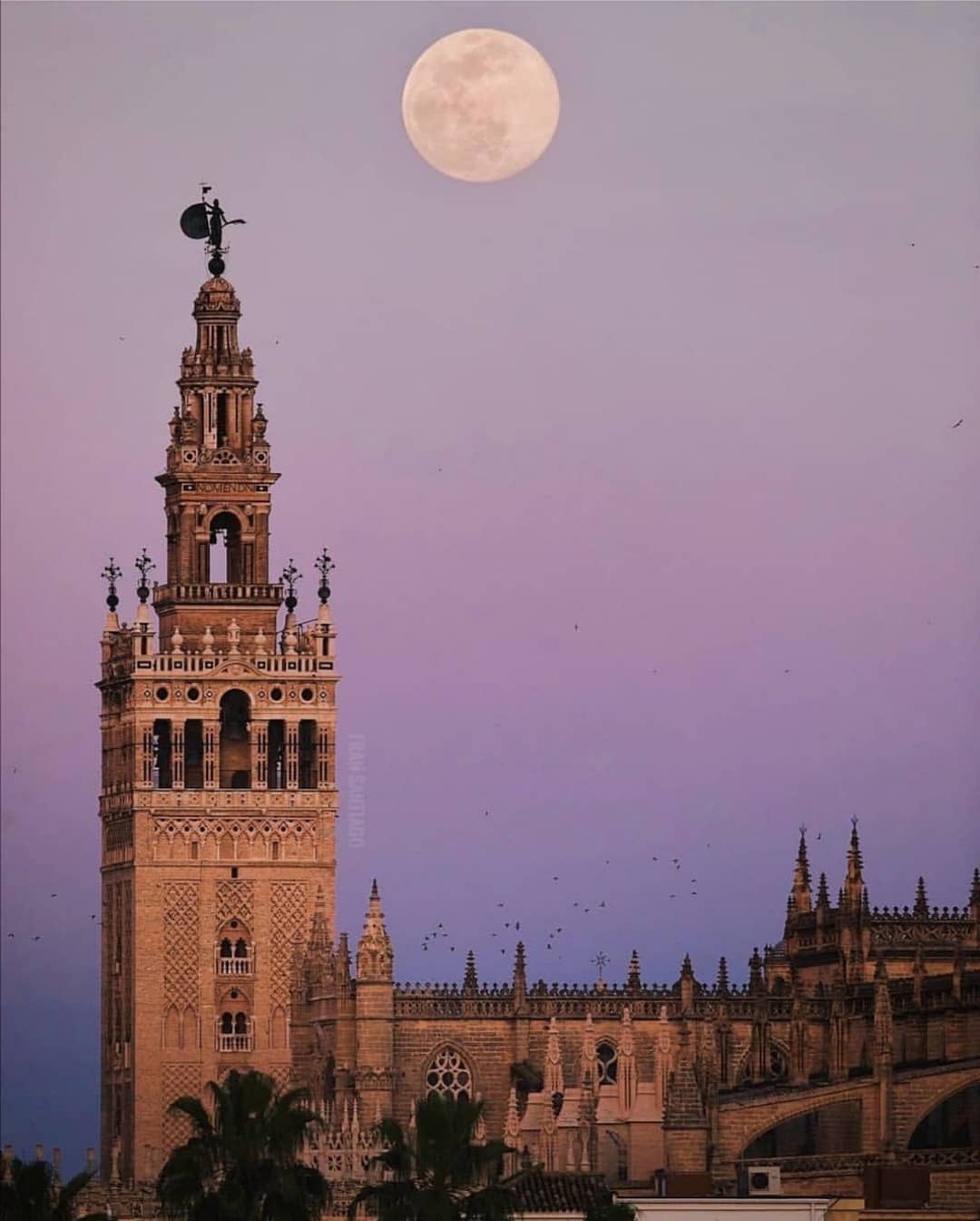
Background adapted from Wikipedia (CC BY-SA) · map data © OpenStreetMap contributors · ratings & place photos via Google · other photos with per-image credit. Ticket links may earn us a commission at no extra cost to you.