
Santiago Bernabéu Stadium
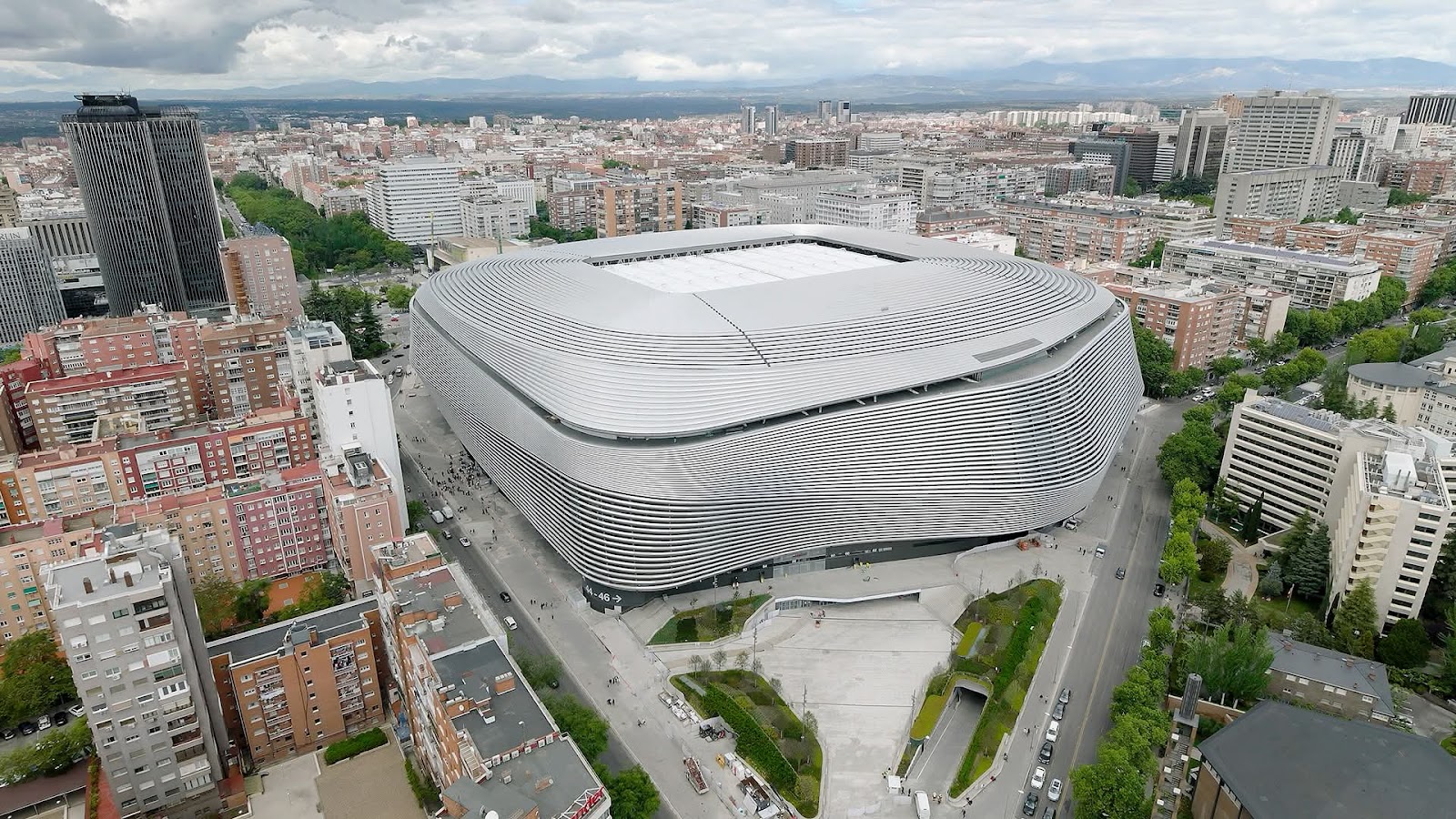
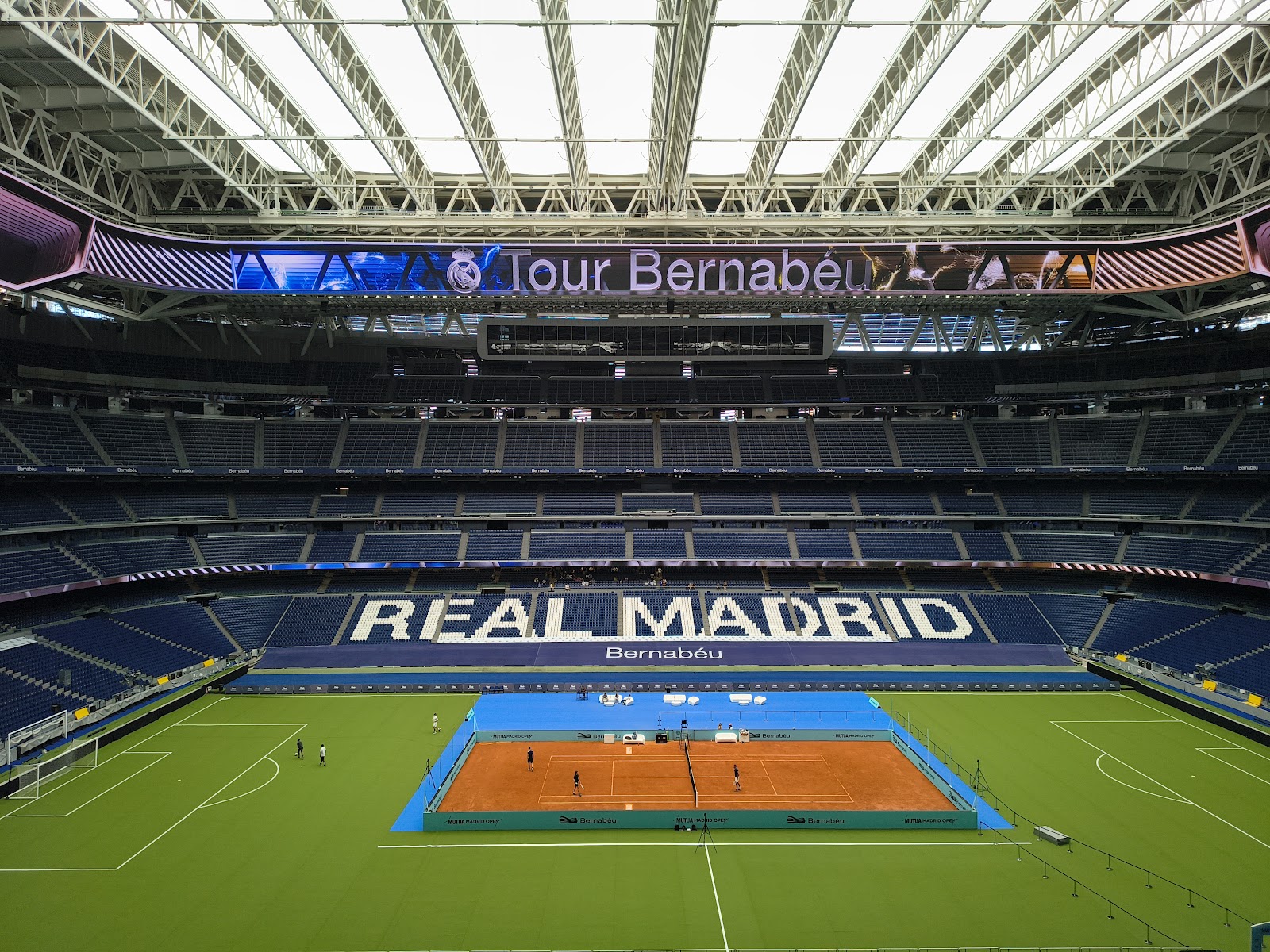
The new skin of the Bernabéu is a curtain of curved stainless-steel louvres that catch the Castellana light and make the old concrete beneath it almost impossible to imagine. Completed in late 2024, the renovation cost over a billion euros and added something genuinely strange: the grass pitch can be moved in sections and lowered underground, leaving the bowl free for concerts and events. It is, by most measures, the most technologically elaborate football stadium in Europe.
What holds it together is the weight of the institution inside. The trophy cases, the names on the walls, the sheer scale of the upper tiers — this is a building that has been accumulating significance since 1947, and you feel it.
💛 What travellers fall for
People who come back tend to time their arrival for opening or after 3pm, when security queues are short. The panoramic skywalk from the upper concourse is the shot most visitors miss by rushing the museum. The dressing rooms close on match days, so if that corridor matters to you, plan a regular tour day.
The story behind Santiago Bernabéu Stadium
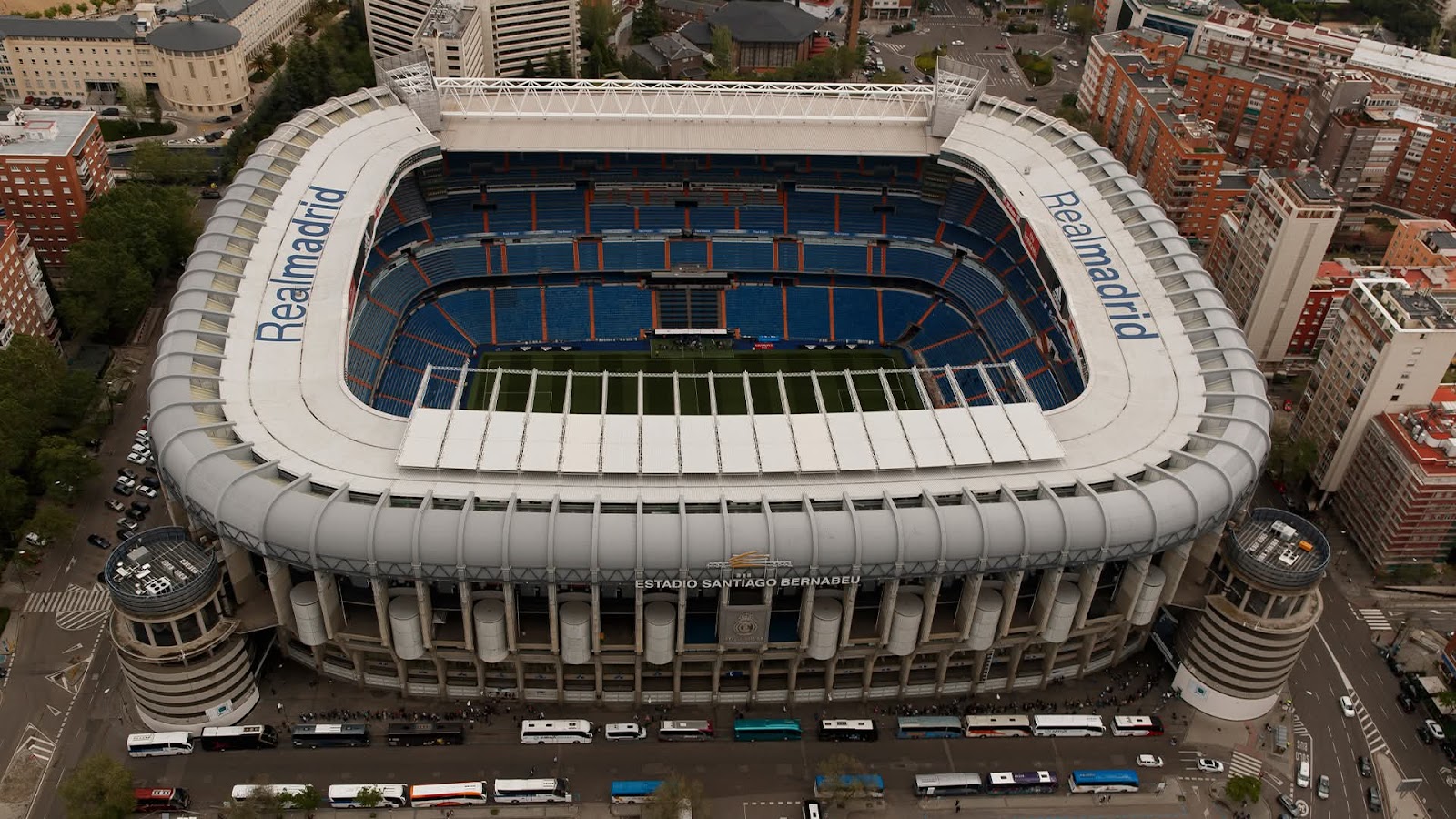
Construction began in 1944 and the stadium opened on 14 December 1947 as Nuevo Estadio Chamartín, designed by architects Manuel Muñoz Monasterio and Luis Alemany Soler. It was renamed in 1955 for Santiago Bernabéu Yeste — player, director, and long-serving club president — who drove the project and shaped Real Madrid into a continental power. He served as president until his death on 2 July 1978.
The stadium expanded to 125,000 capacity by 1954, was redeveloped for the 1982 World Cup final, and grew again through the 1990s with added tiers and corner towers. A design competition in 2014, won by GMP, L35 Arquitectos, and Ribas & Ribas, set the course for the current transformation. The building has hosted four European Cup finals, the 1964 European Championship final, and the 2018 Copa Libertadores final.
Good to know
Line 10 of the Madrid Metro drops you at Santiago Bernabéu station, right outside. Timed tickets start at €37 and sell out well ahead during football season and summer — book before you travel. Avoid the 11am–2pm window if queues bother you. No re-entry once you leave, so pace accordingly.
Where is Santiago Bernabéu Stadium?
More tickets & tours for Santiago Bernabéu Stadium
Book directly at the provider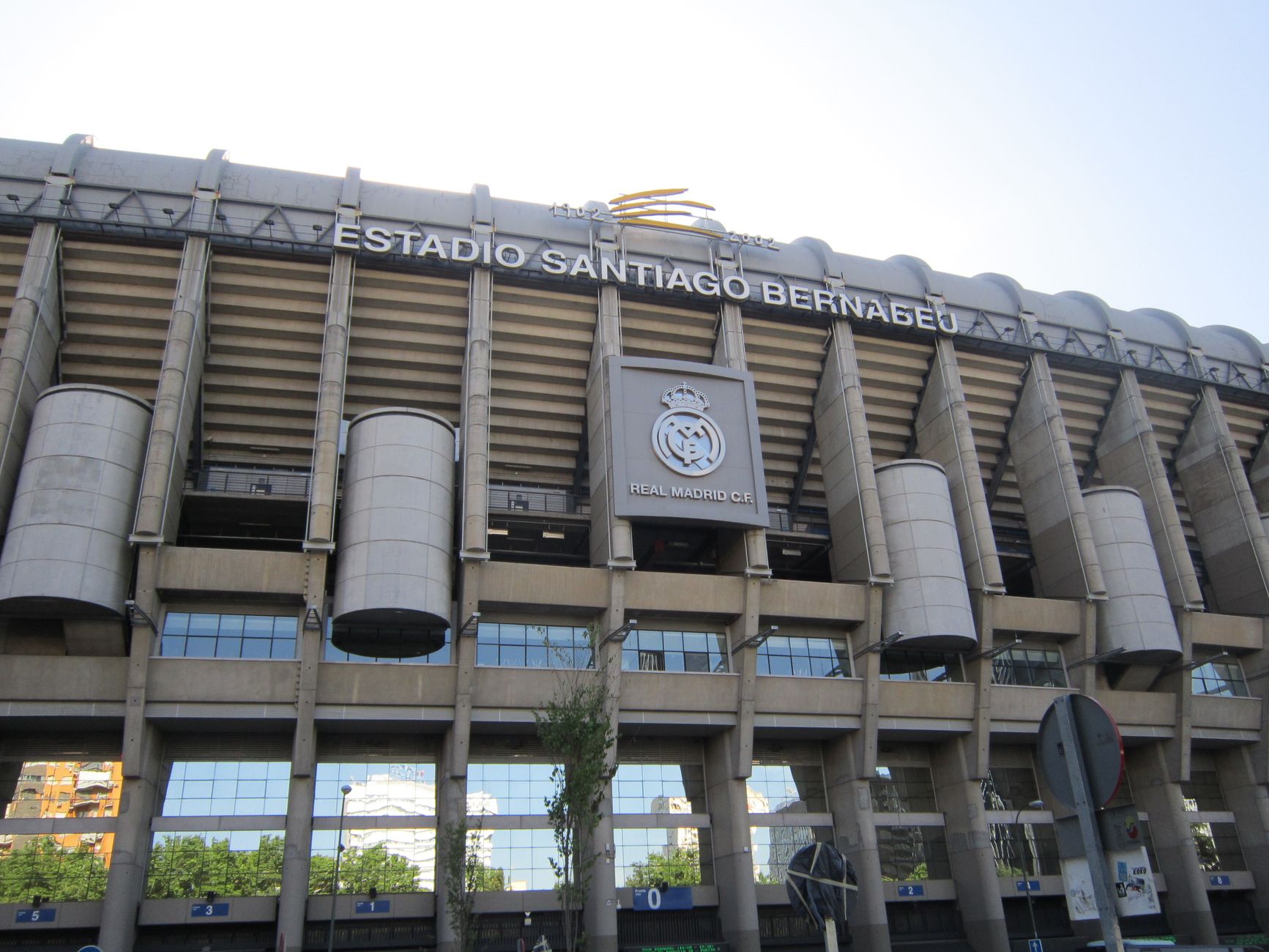
What travellers say about Santiago Bernabéu Stadium
The stadium is absolutely massive, you really need at least 3 hours to walk around and see everything properly. The whole place is beautiful and incredibly impressive. Everything looks modern, luxurious, and on another level. You can truly see how much history, prestige, and money are behind this club. Even if you’re not a huge football fan, it’s still something worth seeing while in Madrid.
My Grandson really enjoyed the tour of the stadium, he got to see it all and has some great photos, he had a lovely memorable time.
Santiago is a place for entertainment, and home for Real Madrid
Very good experience!
Loved it
More of Madrid
Discover where to stay, what to do and the best deals for your trip.
Explore Madrid →More attractions in Madrid
All of Madrid →
Background adapted from Wikipedia (CC BY-SA) · map data © OpenStreetMap contributors · ratings & place photos via Google · other photos with per-image credit. Ticket links may earn us a commission at no extra cost to you.