
San Lorenzo de El Escorial

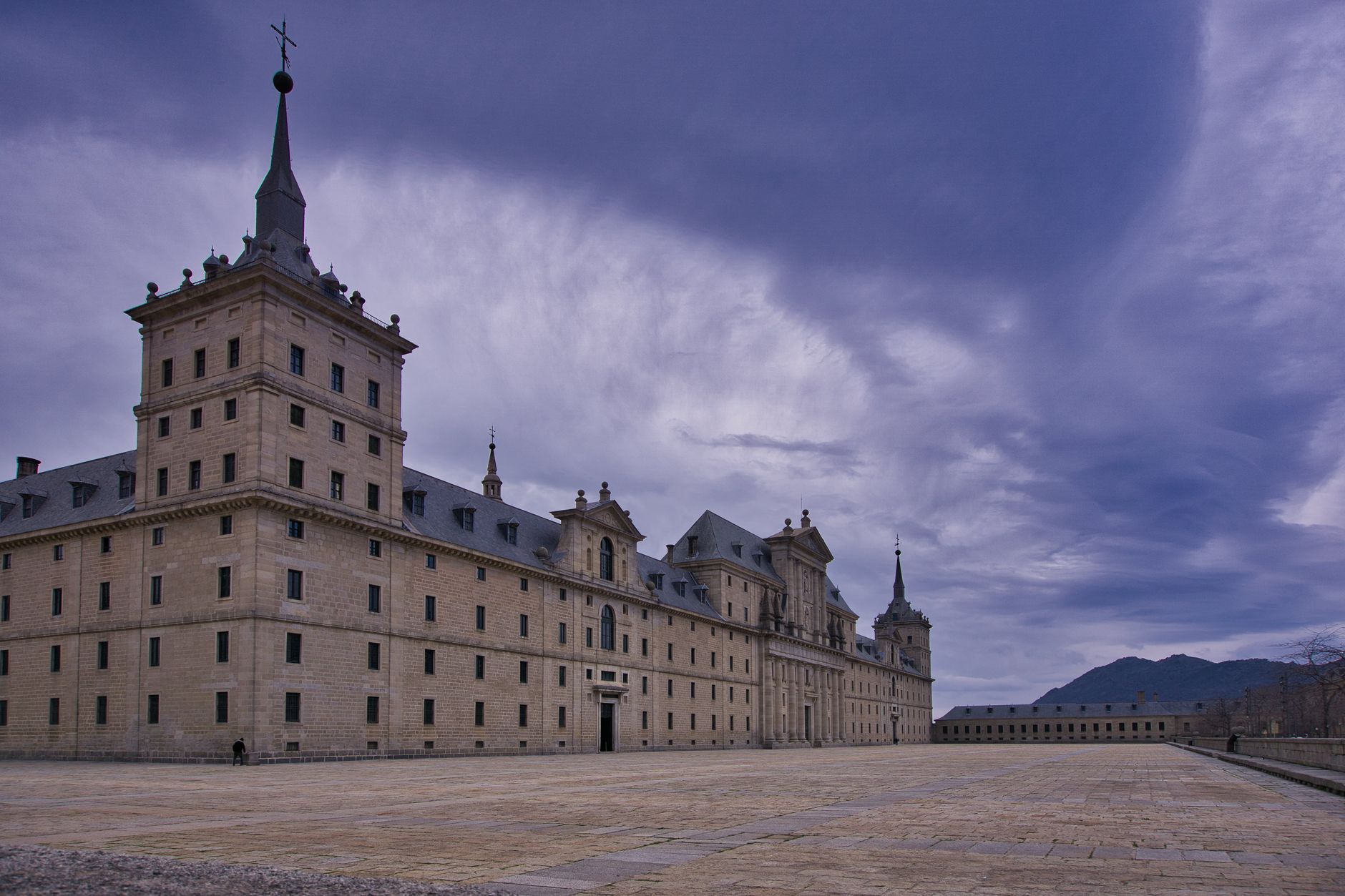
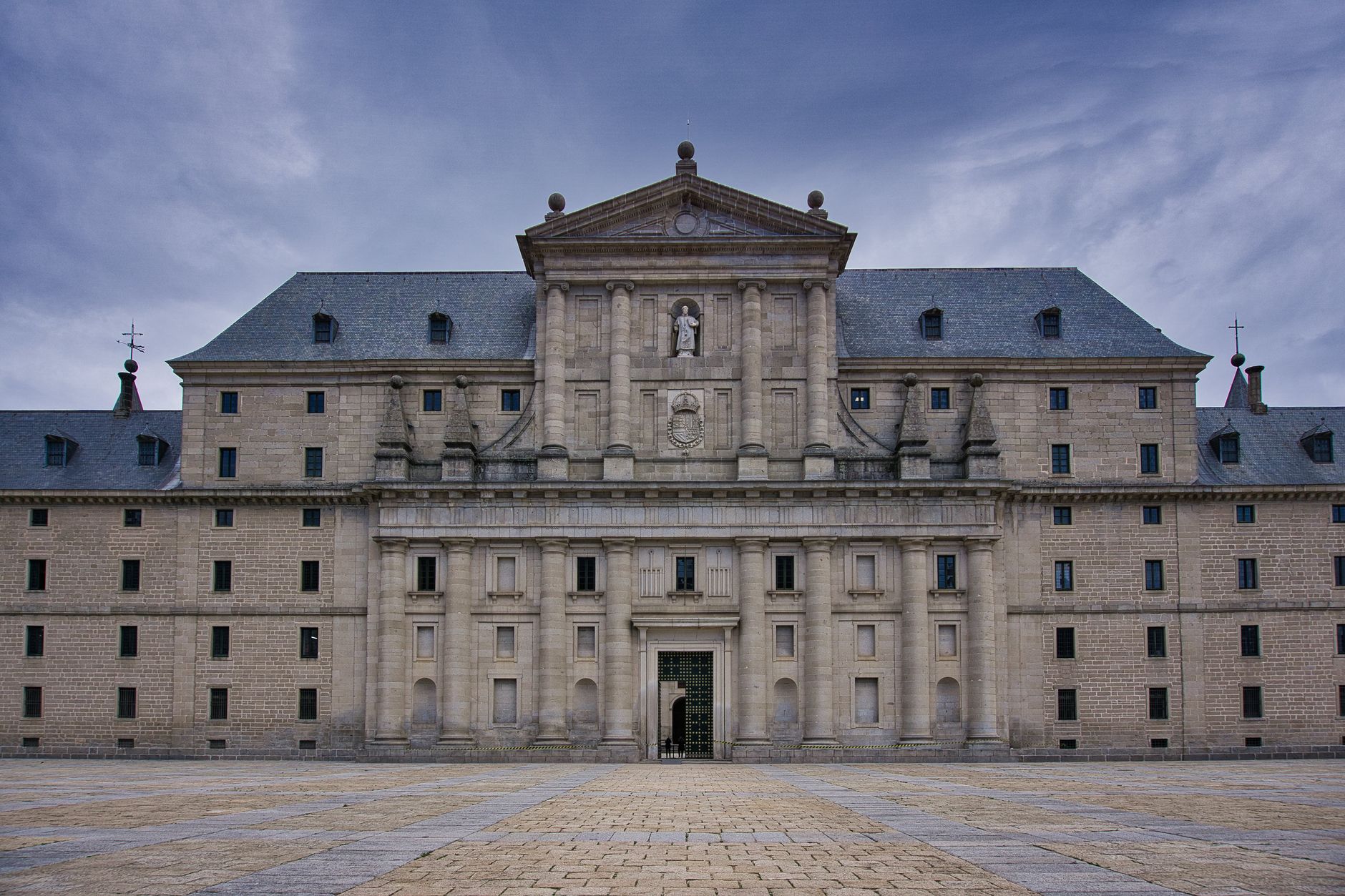


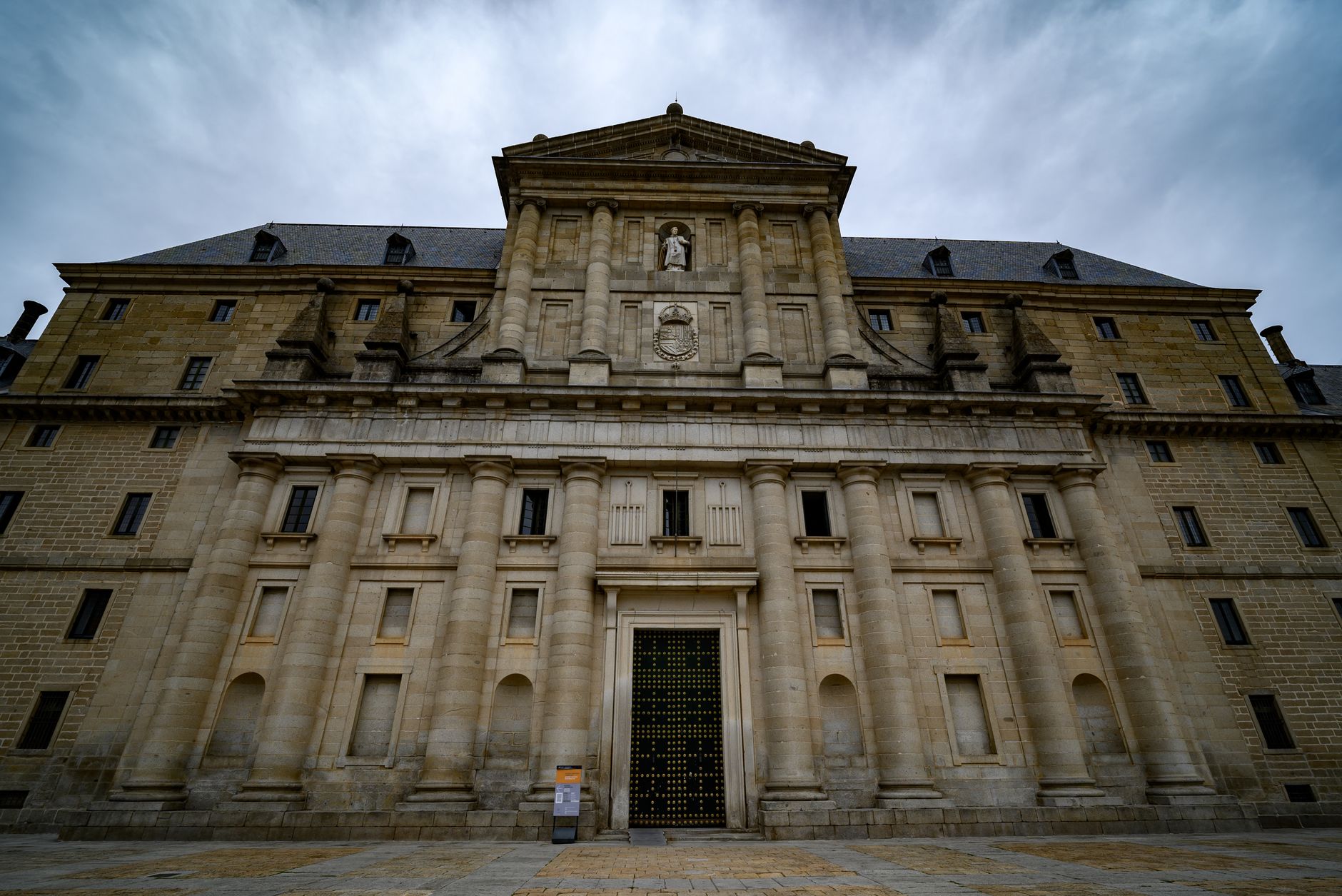
The first thing you notice is the scale. The Royal Monastery of San Lorenzo de El Escorial sits on the lower slopes of the Sierra de Guadarrama like a small city that decided to become a single building — a granite quadrangle roughly 224 by 153 metres, enclosing a palace, a basilica with a 92-metre dome, a library of more than 40,000 books, a royal pantheon, a monastery, and a college, all within one austere perimeter.
Philip II ordered it built in 1563, and the place still carries his particular severity. The town that grew up around it — granite houses, wide pavements, a handful of good restaurants — exists largely in the monastery's shadow, which is not a complaint. That shadow is worth the 47-kilometre journey from Madrid.
💛 What travellers fall for
People who come back tend to linger in the library rather than rushing to the pantheon. The painted vault ceiling alone takes time to read. They also take the walk up to the Casita del Infante — Juan de Villanueva's small neoclassical retreat built for a prince who wanted somewhere quiet to listen to chamber music — which most day-trippers miss entirely.
Experiences you don't want to miss


Deals in San Lorenzo de El Escorial
Book directly at the provider
How San Lorenzo de El Escorial came to be
Philip II conceived the complex to fulfil two obligations at once: honouring his father Charles V's wish for a royal burial place, and commemorating the Spanish victory at the Battle of Saint-Quentin in 1557. The first architect, Juan Bautista de Toledo — who had worked on St Peter's Basilica in Rome — laid out the ground plan on a gridiron scheme, a deliberate reference to the gridiron martyrdom of San Lorenzo, the building's patron saint. Toledo died before the work was finished, and Juan de Herrera completed it in 1584, giving Spanish architecture its first large dome in the process.
Fires in 1671, 1731, 1763, and 1825 caused repeated damage. The Hieronymite monks who first occupied the monastery were expelled three times during the 19th century; the Augustinians replaced them in 1885 and remain today. UNESCO listed the site in 1984.
Who and what shaped it
People who shaped it
Landmark buildings
See San Lorenzo de El Escorial in motion
Plan your visit
On the map
When to go
July can reach 31°C, which makes the cool interior of the monastery a relief rather than a compromise. January sits around 9°C, often clear and sharp — a good time to visit if you want the complex to yourself, but bring a proper coat for the walk up from the bus stop.
Right now
Background & history adapted from Wikipedia (CC BY-SA) · specs from Wikidata (CC0) · weather from Open-Meteo · map data © OpenStreetMap contributors · photos from Wikimedia Commons / Unsplash with per-image credit. No third-party reviews or social posts reproduced.