
San Lorenzo
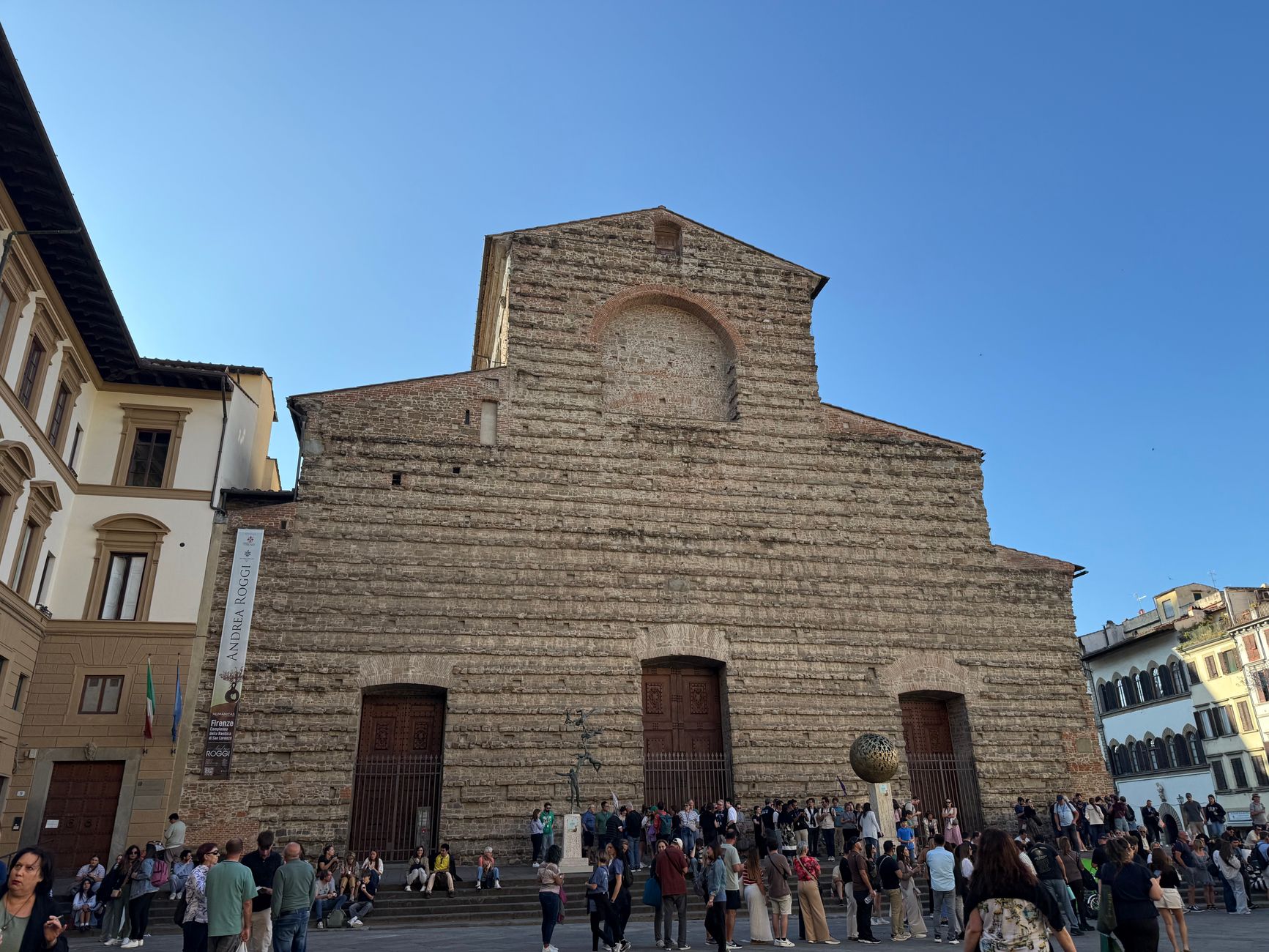
The façade of San Lorenzo has never been finished. Michelangelo accepted the commission in 1518, quarried the Carrara marble, and then the project collapsed — leaving the basilica with a rough brick face that still looks, five centuries later, like a building interrupted mid-thought. That unfinished front is the first true thing to know about this place: it is not a monument to completion but to ambition, money, art, and the particular Medici habit of setting things in motion that outlasted them.
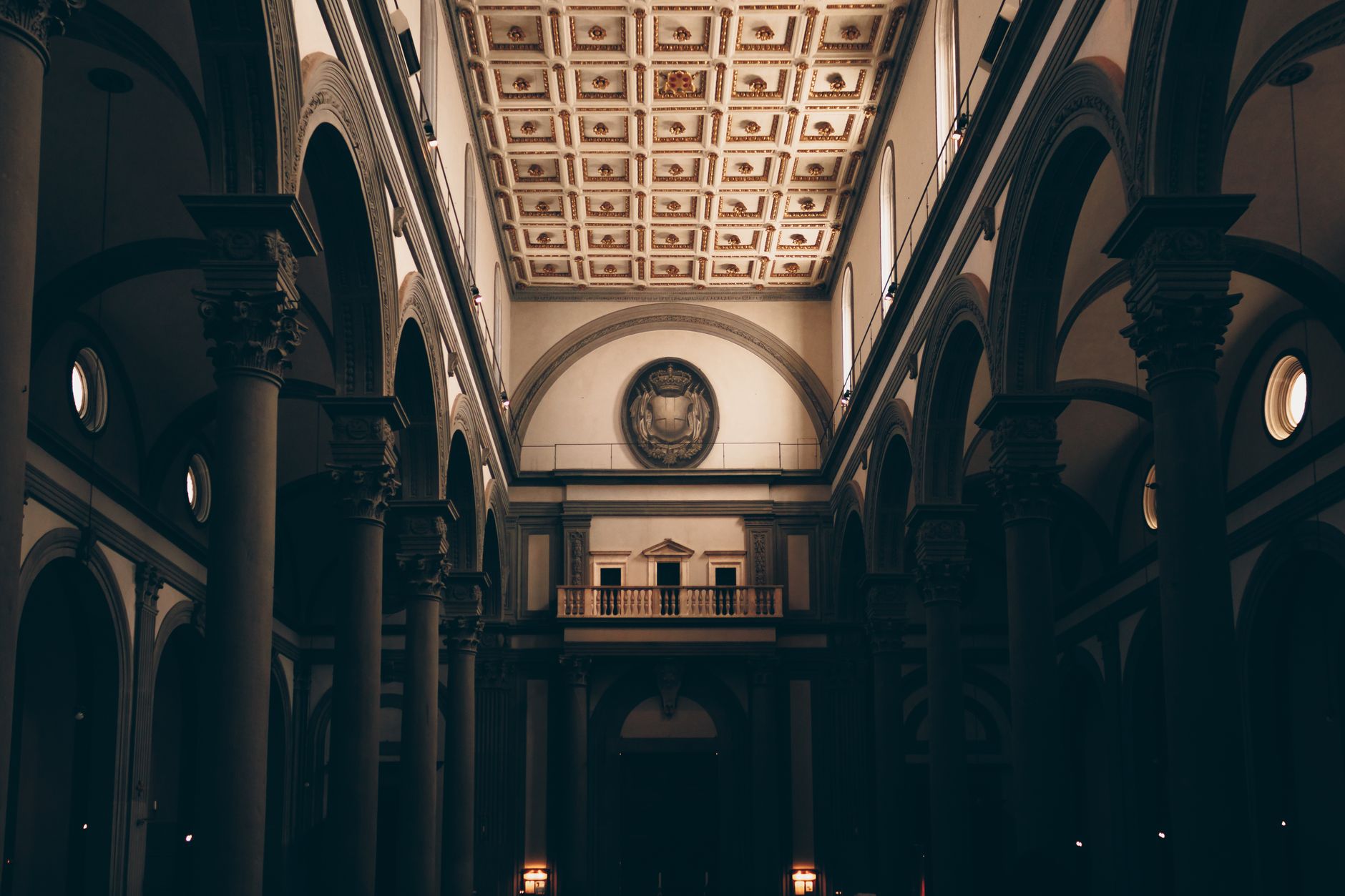
Inside, the geometry Brunelleschi worked out from 1419 onward still holds the space with unusual calm. Grey pietra serena columns divide the nave in ratios that feel, even now, like a deliberate argument for human scale.
💛 What travellers fall for
People who come back tend to head straight for Donatello's bronze pulpits — his last major work, finished by assistants in the 1460s, raw and restless in a way his earlier pieces are not. The Old Sacristy, completed by Brunelleschi in 1428, rewards a second visit more than the first. And the Laurentian Library's vestibule staircase, built by Ammannati in 1559 to Michelangelo's design, is worth the separate look.
Experiences you don't want to miss


Deals in San Lorenzo
Book directly at the provider

How San Lorenzo came to be
The site has held a church since 393 AD, when Saint Ambrose consecrated it and appointed Florence's first bishop. After losing cathedral status to Santa Reparata, it was rebuilt in the 11th century as a Romanesque basilica, then again — more ambitiously — from 1419, when Giovanni di Bicci de' Medici agreed to finance an entirely new building. Brunelleschi designed it; he died in 1446 before it was done, and the completion fell to Antonio Manetti, who finished the basilica by 1461.
What accumulated around that core over the following century is effectively a catalogue of Medici patronage: Donatello's stuccos and pulpits, Michelangelo's New Sacristy and Laurentian Library (both commissioned by Medici popes), and the Chapel of the Princes, begun in 1604 and not fully decorated until 1962. Every principal member of the Medici family from Cosimo il Vecchio to Cosimo III is buried here.
Who and what shaped it
People who shaped it
Landmark buildings
See San Lorenzo in motion
Plan your visit
On the map
When to go
Right now
Background & history adapted from Wikipedia (CC BY-SA) · specs from Wikidata (CC0) · weather from Open-Meteo · map data © OpenStreetMap contributors · photos from Wikimedia Commons / Unsplash with per-image credit. No third-party reviews or social posts reproduced.