
Sainte-Menehould
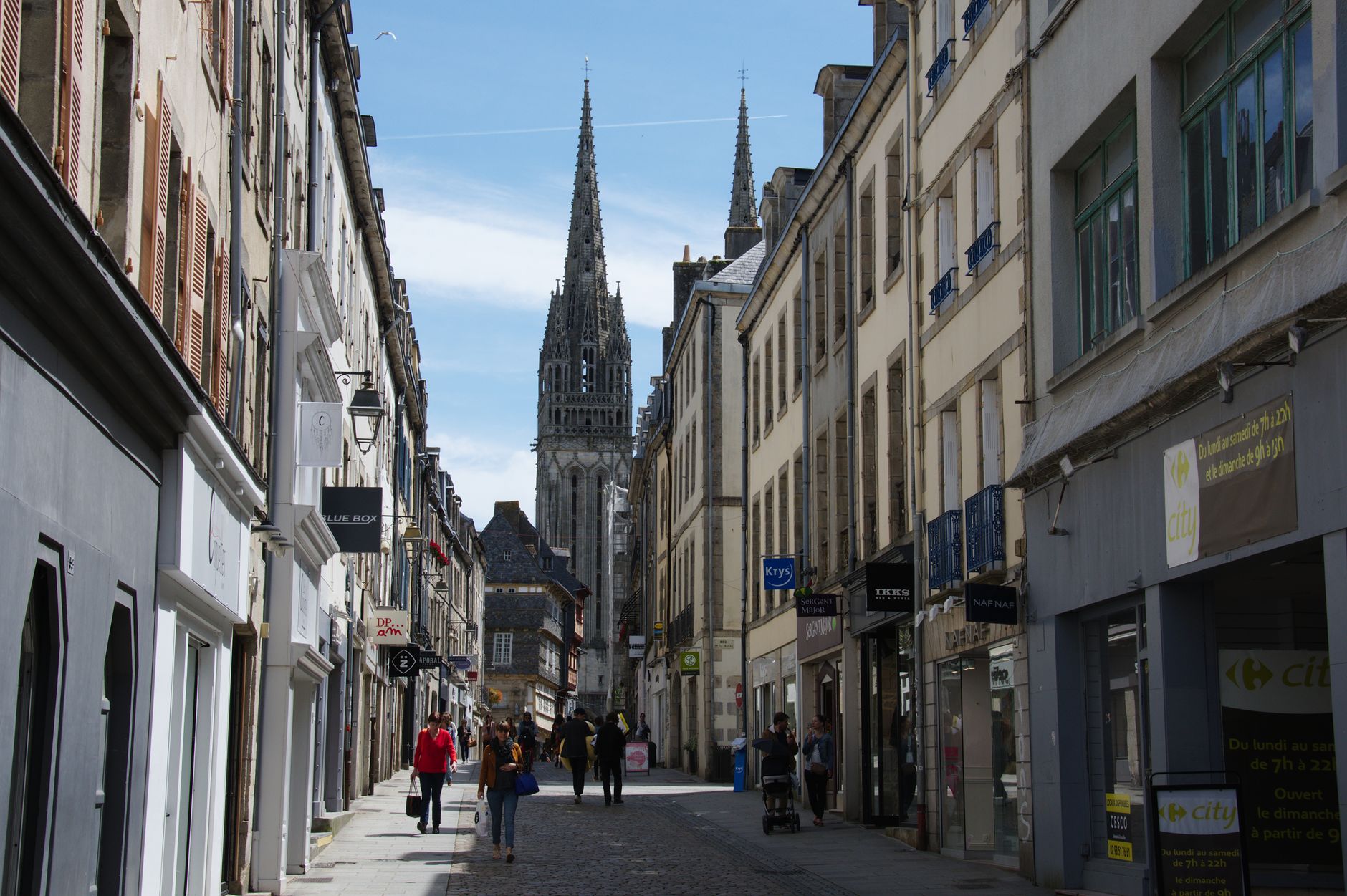
The thing that stops you in Sainte-Menehould is the coherence of it. The lower town was razed by fire in 1719 and rebuilt from 1728, which means the brick-and-stone facades along the main square arrived as a set — a rare 18th-century ensemble that survived intact enough to be listed as historical monuments. Climb the Butte du Château above it all and the medieval mound still holds its shape, with half-timbered houses leaning into the slope and Notre-Dame-du-Château anchoring the rise.
This is also the town where Louis XVI's flight to Varennes ended. The king, travelling incognito in June 1791, was recognised by the local postmaster, Jean-Baptiste Drouet, and arrested — a moment that changed the course of the Revolution. That weight sits quietly in the streets.
💛 What travellers fall for
People who come back tend to make a point of eating pied de cochon à la Sainte-Menehould — pig's trotters slow-cooked until the bones themselves go tender, a dish the town has claimed since at least the 18th century. Find it at a local table rather than a tourist menu, and pair it with something from the Argonne rather than reaching for the nearest Champagne.
Experiences you don't want to miss



Deals in Sainte-Menehould
Book directly at the provider


How Sainte-Menehould came to be
The town takes its name from Manehildis, a 5th-century figure venerated for her piety. For centuries it sat within the county of Clermont-en-Argonne, part of the Duchy of Lorraine, before France absorbed it in 1641. Louis de Bourbon, the Grand Condé, received it as an appanage in 1648 and made it his capital, fortifying it from 1652 — work that drew a young Vauban, then serving in Condé's regiment during the Fronde.
The fire of 1719 erased most of what Condé had built. Reconstruction began in 1728 and produced the harmonious brick-and-stone town you walk through today. The Musée d'Art et d'Histoire occupies the former Hôtel de la Subdelegation de Champagne, itself an 18th-century building, and the Dom Pérignon statue — raised in 1956 to honour the Benedictine monk born in this region around 1638 — stands as a quieter kind of civic pride.
Who and what shaped it
People who shaped it
Landmark buildings
See Sainte-Menehould in motion
Plan your visit
On the map
When to go
Summers are mild rather than hot, with highs around 21°C, and spring reaches similar temperatures — both seasons suit the walking the town rewards. Autumn cools to the high teens and the Argonne forests around the valley turn; winter data is scarce, but this part of Champagne can be grey and sharp.
Right now
Background & history adapted from Wikipedia (CC BY-SA) · specs from Wikidata (CC0) · weather from Open-Meteo · map data © OpenStreetMap contributors · photos from Wikimedia Commons / Unsplash with per-image credit. No third-party reviews or social posts reproduced.