
Rue d'Antibes
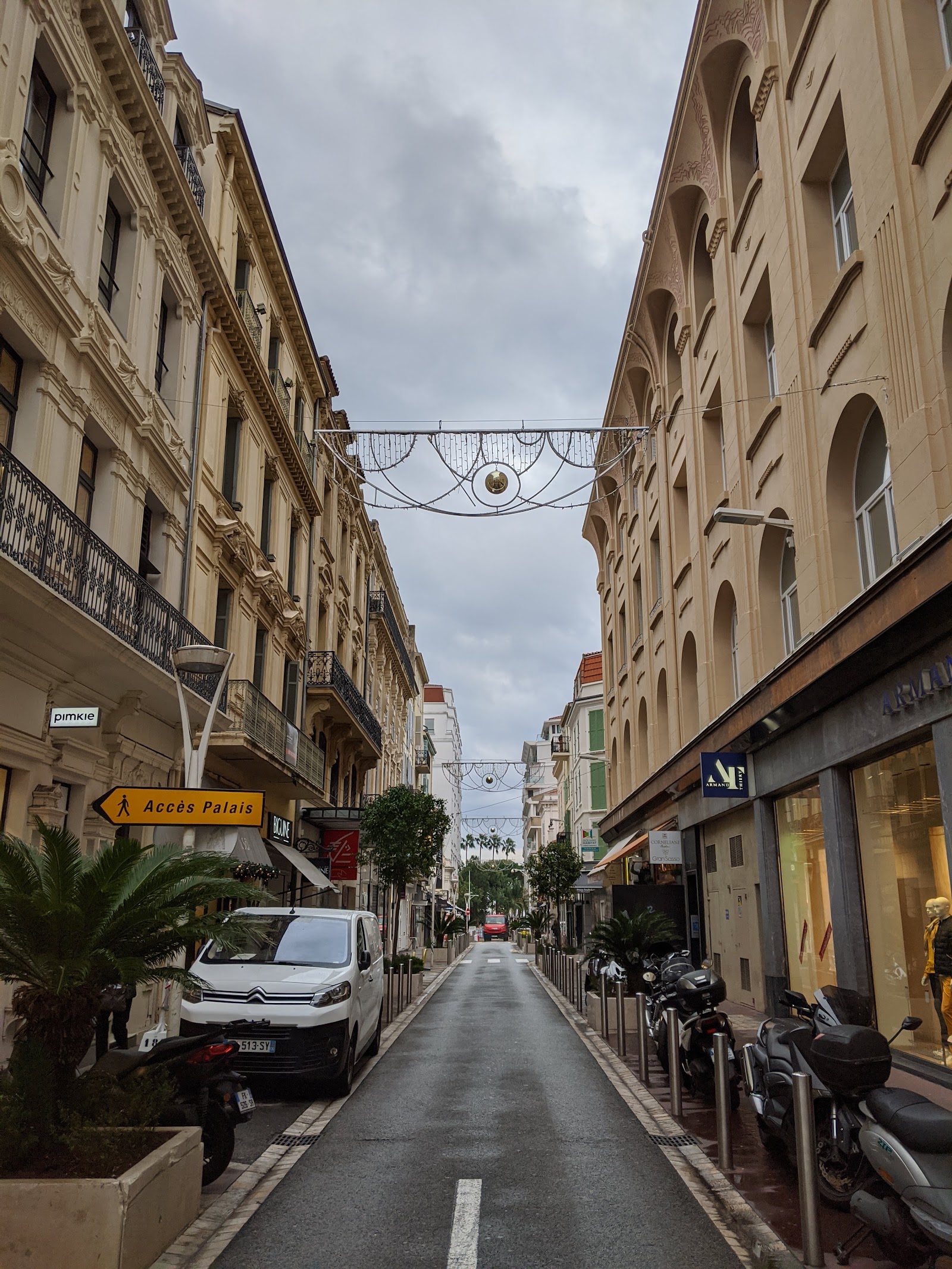
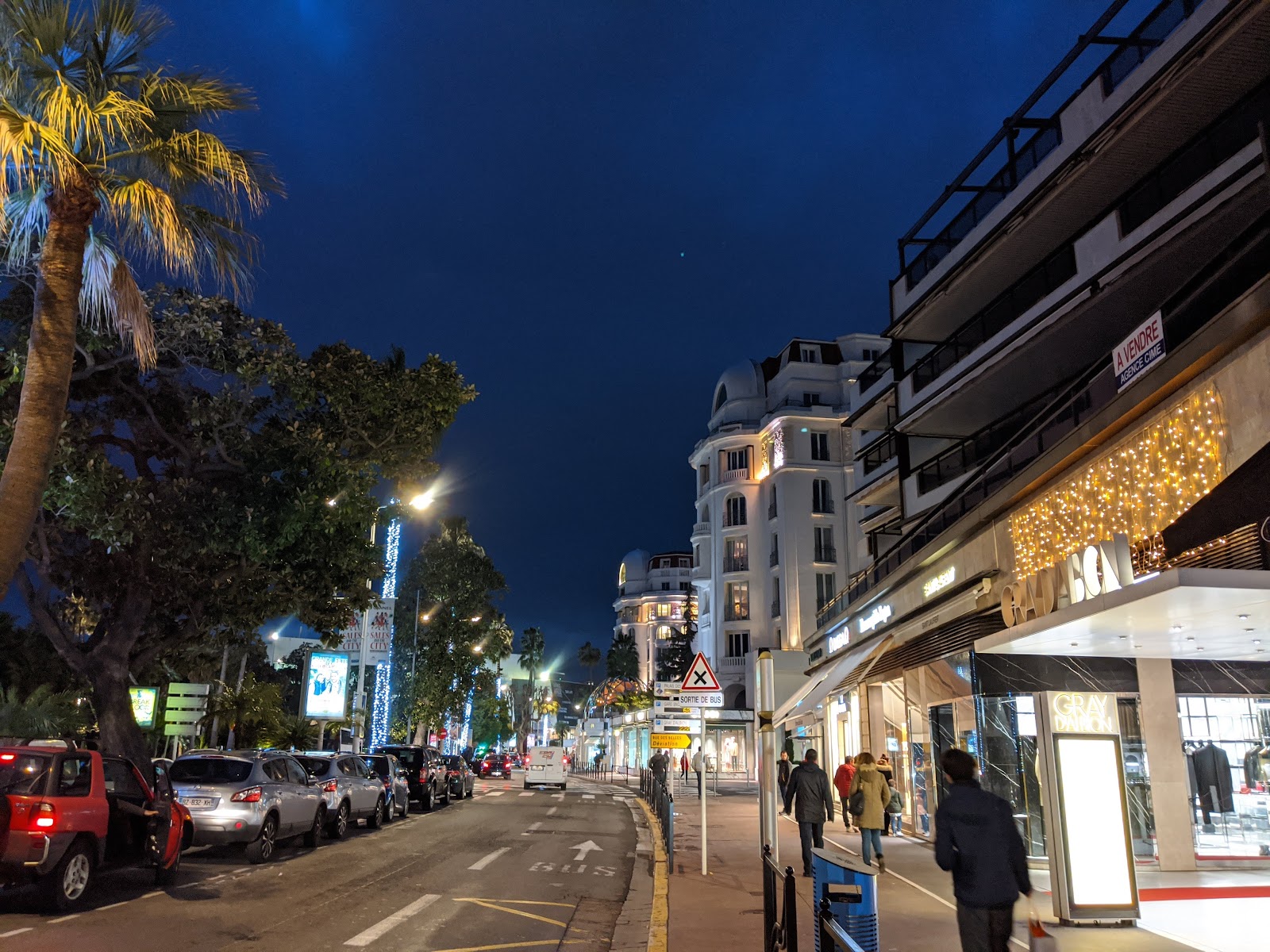
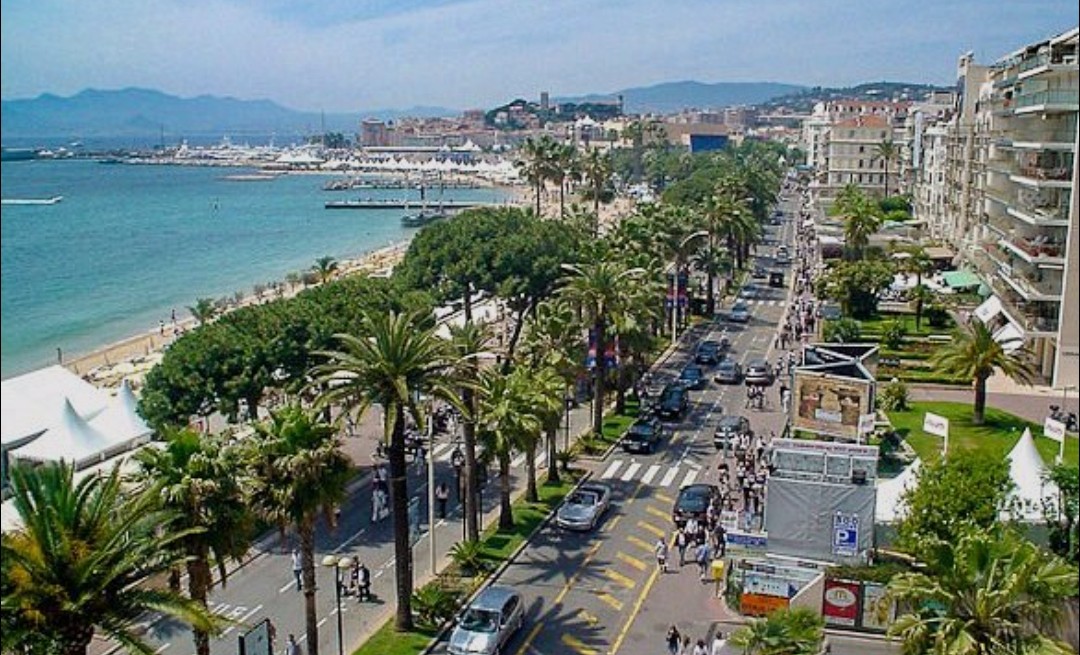
Rue d'Antibes runs for about three kilometres through the centre of Cannes, parallel to the seafront but a block or two inland — which means it has always been the street where people actually shop, rather than the one they photograph. More than 800 shops line its 136 facades, ranging from the jeweller Julian, in business since 1862, to the arcaded passage of the Gray d'Albion connecting through to La Croisette.
The fabric of the street is older than it looks. Most of the buildings went up between the 1830s and 1914, and the ironwork and carved ornament on the 19th-century facades — much of it by the sculptor Pellegrini — rewards a slower pace than the shop windows usually allow.
💛 What travellers fall for
People who know the street well tend to walk the western end first, while energy is fresh, stopping at No. 101 to look up at the four caryatids on the Résidence Le Cid. The Crédit Lyonnais building at No. 11, finished in 1929 by architect Félix Biasini, is easy to miss mid-stride — worth pausing at before the window-shopping takes over.
The story behind Rue d'Antibes
The street traces its origins to around 1830, built along the route of the old Royal Road No. 97 that once linked Toulon to Antibes, running east from Le Suquet. Development was gradual through the late 18th century, then accelerated sharply from the second quarter of the 19th century as Cannes expanded eastward — drawn partly by the kind of wealthy winter visitors whose presence prompted a jeweller like Julian to open here in 1862.
By 1914, 119 facades had been built. A theatre went up at No. 102 in 1881, designed by Cannois architect Charles Baron for an industrialist named Loubet, then quietly converted to residential use around 1900 when ticket sales proved insufficient. The street is now listed in the general inventory of cultural heritage as part of Cannes' seaside heritage census.
Good to know
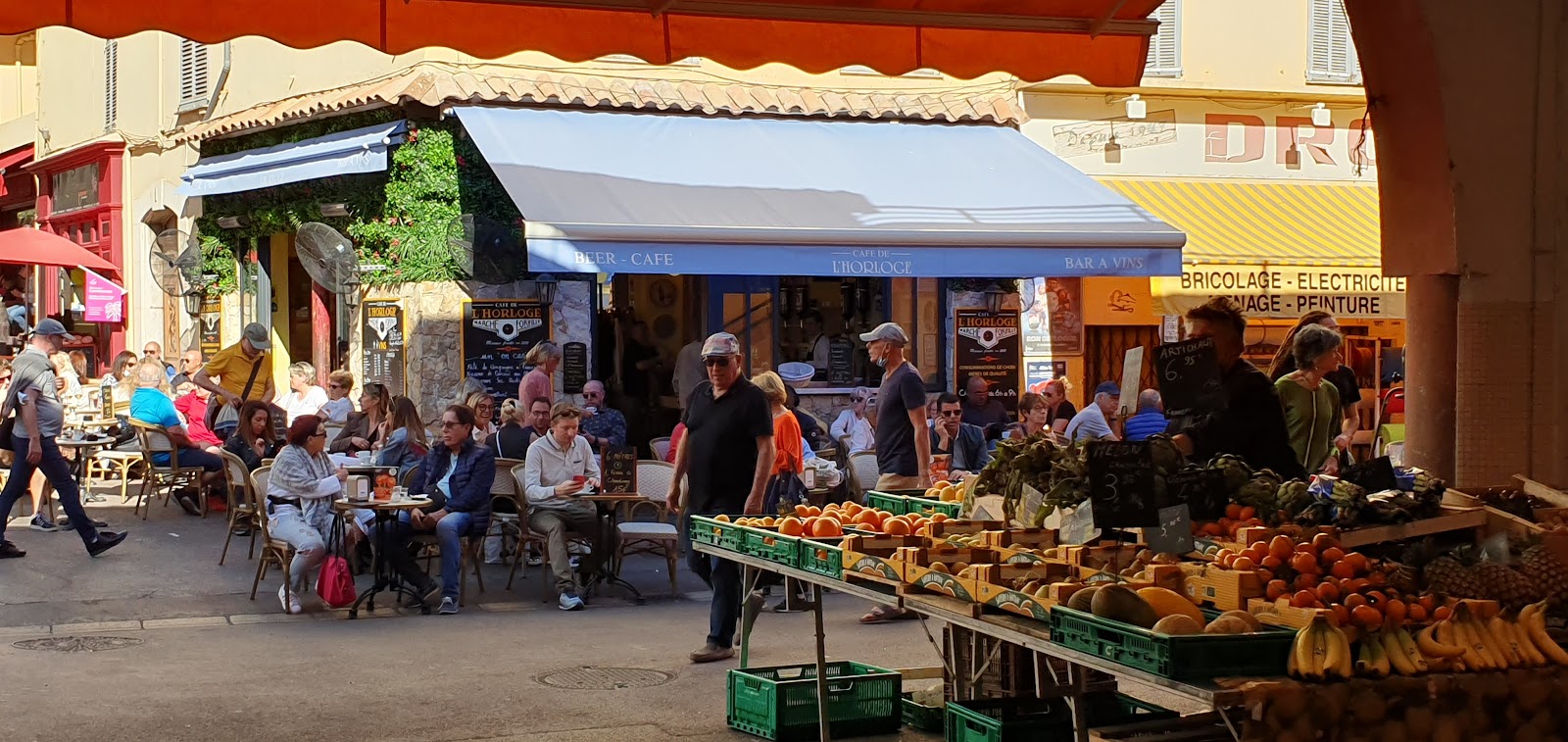
Five minutes on foot from Cannes train station, or reachable by almost any bus line in the city. Shops open around 10:00 and close by 19:30, with a lunch pause at some. For fresh food, Marché Forville nearby is the better call than anything on the street itself.
Cannes has a Mediterranean climate — winters are mild and summers warm and dry. The street is comfortable to walk year-round, though the midday heat in July and August makes a shaded cafe stop somewhere along the route a reasonable idea.
Where is Rue d'Antibes?
Location
- In Cannes
- 43.5530, 7.0240
- Open in Google Maps
More tickets & tours for Rue d'Antibes
Book directly at the provider
More of Cannes
Discover where to stay, what to do and the best deals for your trip.
Explore Cannes →More attractions in Cannes
All of Cannes →
Background adapted from Wikipedia (CC BY-SA) · map data © OpenStreetMap contributors · ratings & place photos via Google · other photos with per-image credit. Ticket links may earn us a commission at no extra cost to you.