
Rüdesheim am Rhein


Stand at the river's edge in Rüdesheim and the first thing you notice is the gondola lift threading up through the vineyards toward a 38-metre stone Germania on the ridge above. The Niederwalddenkmal — finished in 1883, inaugurated by Kaiser Wilhelm I himself — watches over the whole bend of the Rhine from up there, and the walk beneath it through terraced Riesling vines is worth the ride alone.
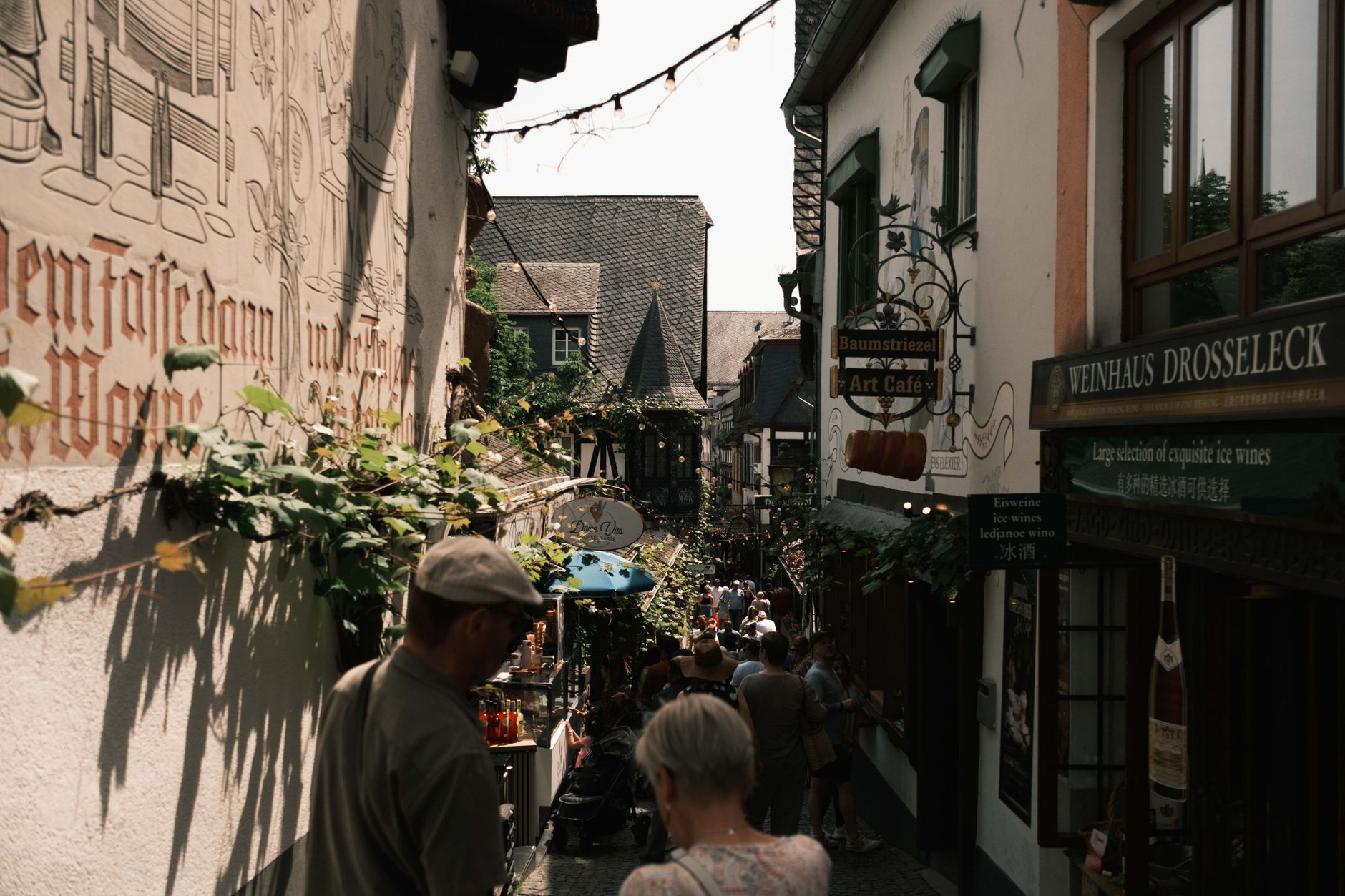
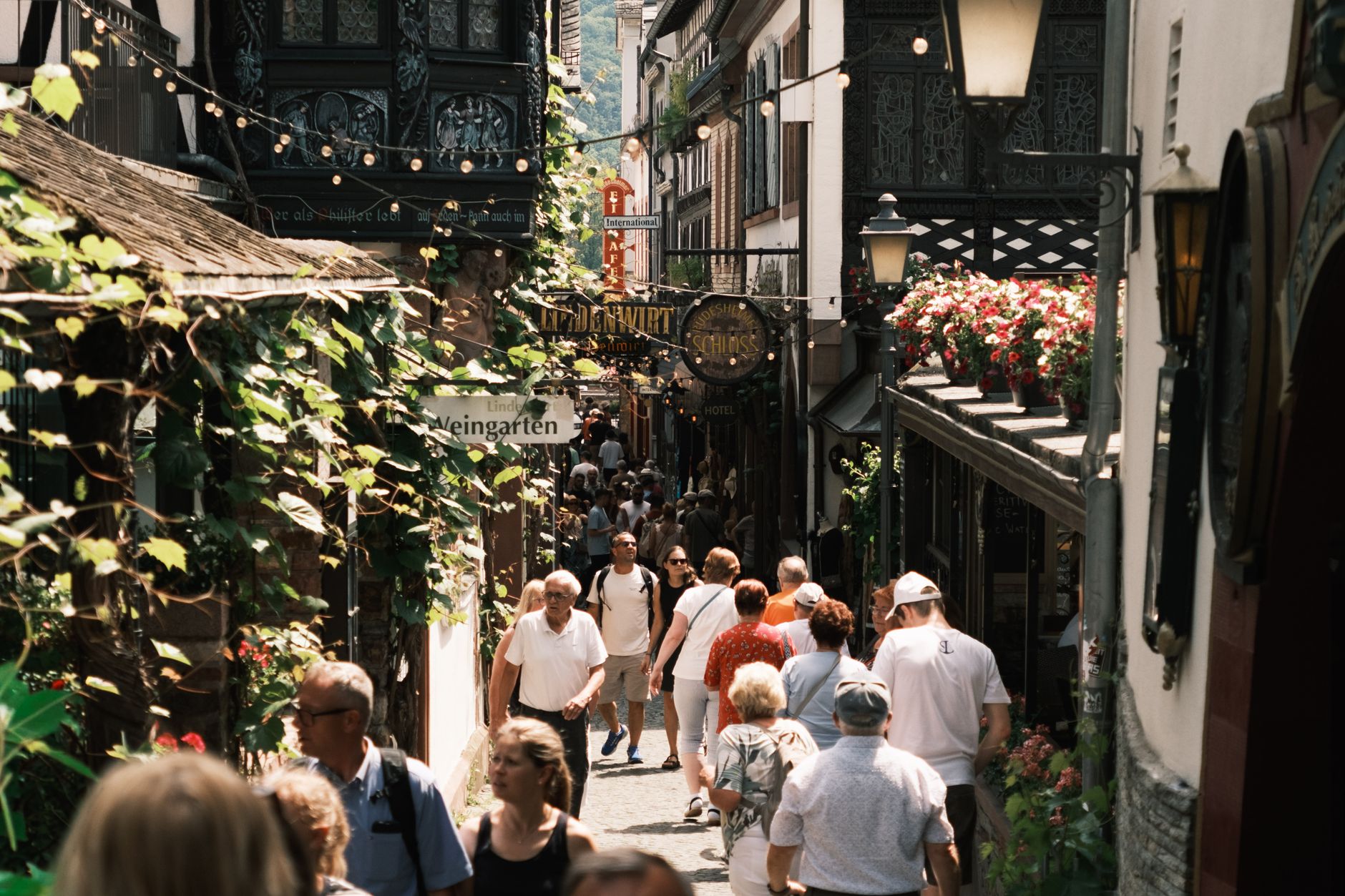
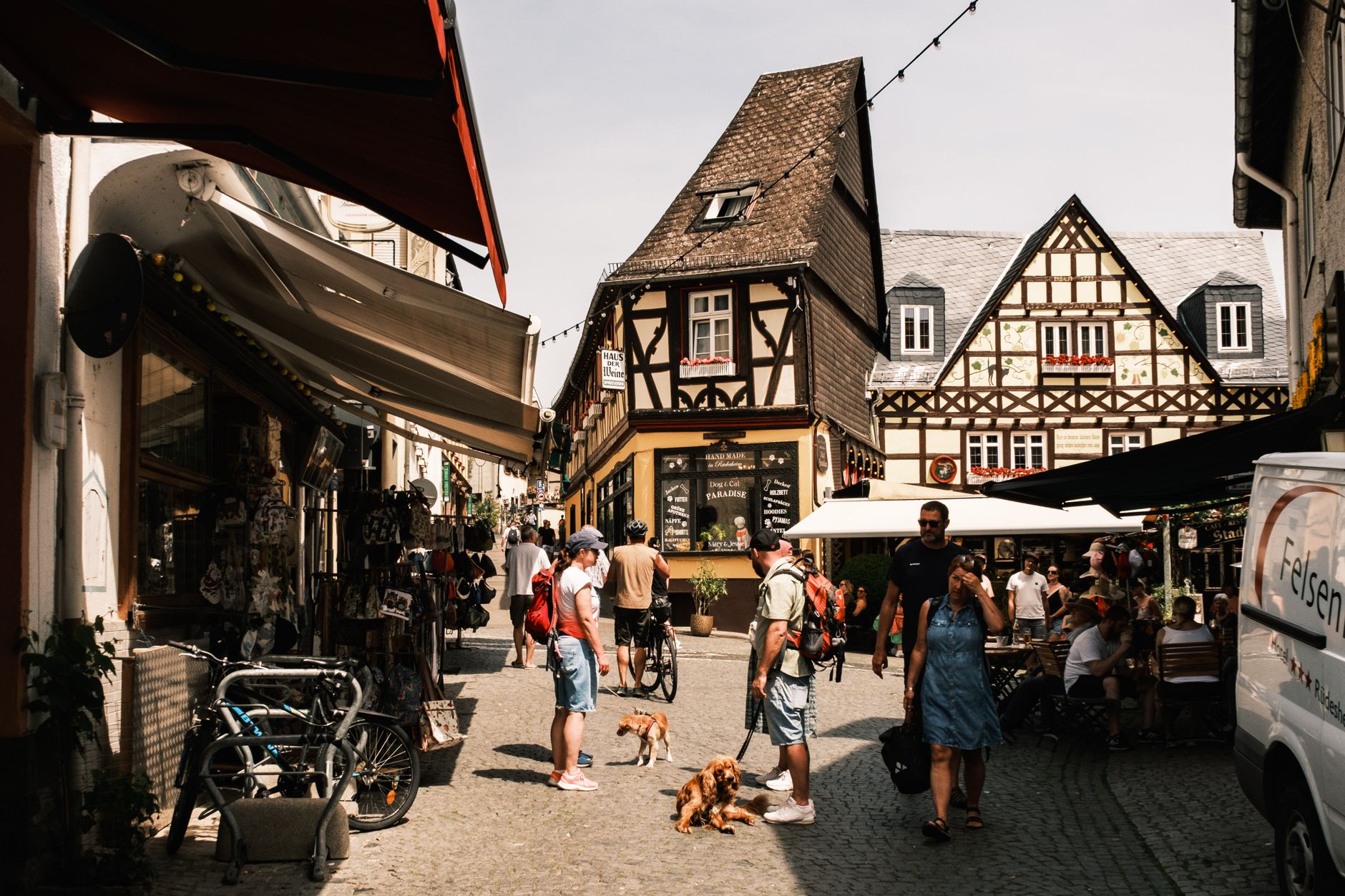
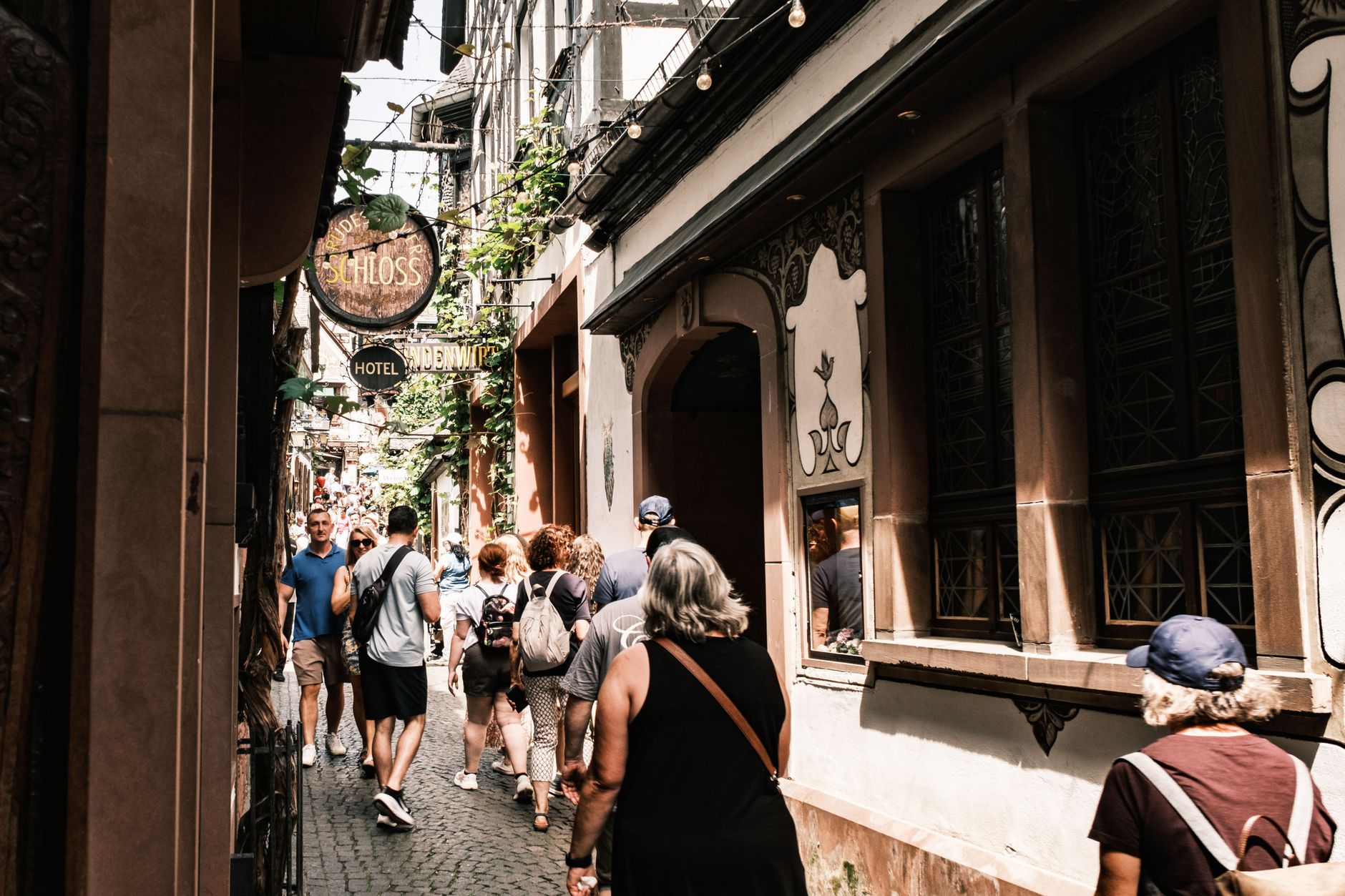
Down in town, the Drosselgasse pulls most of the crowds: 144 metres of cobblestone, bar after bar, Rhine boatmen's lane turned 19th-century pleasure strip. It's loud and unapologetic. But Rüdesheim has quieter registers too — a wine museum inside a castle rebuilt around 1200, a museum of mechanical instruments housed in a medieval knight's residence, and an abbey above Eibingen where nuns still make wine.
💛 What travellers fall for
People who come back tend to time it for early September, when the Rheingau harvest is just starting and the gondola queues are shorter than in August. They eat at the tables farthest from Drosselgasse, walk the river promenade to the station, and take the ferry across to Bingen rather than drive. Siegfried's Mechanisches Musikkabinett, they say, is genuinely stranger and better than it sounds.
Deals in Rüdesheim am Rhein
Book directly at the provider

How Rüdesheim am Rhein came to be
Rüdesheim appears in the written record in 864, and its vineyards are documented in deeds of the Counts of Katzenelnbogen by 1399. The Brömserburg castle — later home to the wine museum — was rebuilt as a residence around 1200, having already belonged to the archbishops of Mainz since the early 10th century. The town received formal city rights on January 1, 1818, during the reorganization of the Duchy of Nassau, then passed to Prussia in October 1866 after the Austro-Prussian War.
The monument on the ridge above came out of that same political moment: the foundation stone for the Niederwalddenkmal was laid on September 16, 1877 by Kaiser Wilhelm I, with sculptor Johannes Schilling and architect Karl Weißbach completing it by 1883. The surrounding municipality grew through the 20th century by incorporation — Assmannshausen, Aulhausen, and Presberg joined in 1977 — though Eibingen's earlier amalgamation in 1939 was carried out against the will of its inhabitants.
Who and what shaped it
People who shaped it
Landmark buildings
See Rüdesheim am Rhein in motion
Plan your visit
On the map
When to go
Summers are warm and dry enough to sit outside along the Rhine promenade, though July and August bring the heaviest visitor numbers. Spring and early autumn — particularly September during harvest — offer mild temperatures, lower crowds, and the vineyards at their most photogenic; winters are cold and quiet, with the river mist sitting low on the water most mornings.
Right now
Background & history adapted from Wikipedia (CC BY-SA) · specs from Wikidata (CC0) · weather from Open-Meteo · map data © OpenStreetMap contributors · photos from Wikimedia Commons / Unsplash with per-image credit. No third-party reviews or social posts reproduced.