
Rockefeller Center
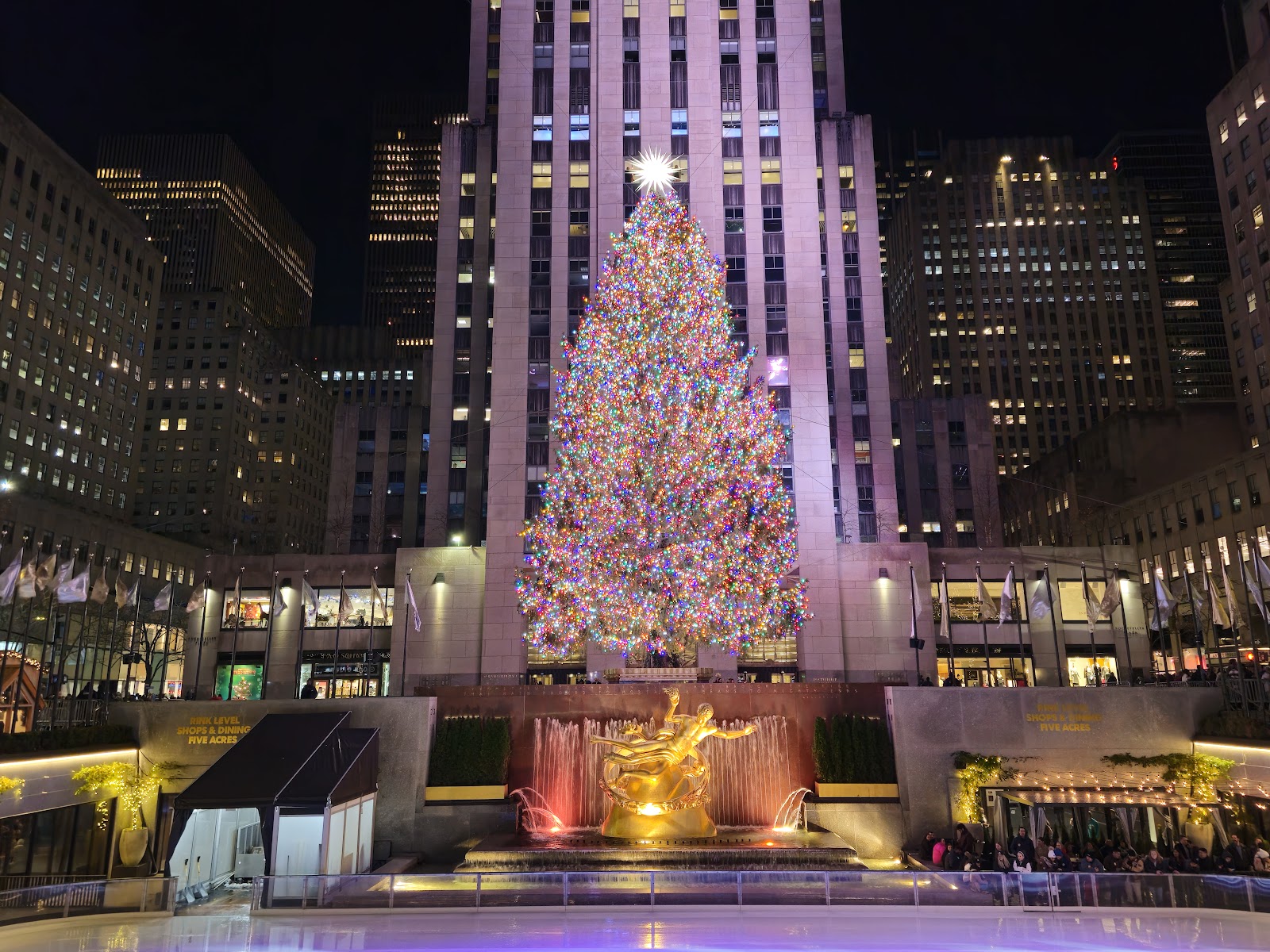
Paul Manship's gilded Prometheus has been reclining above the sunken plaza since the 1930s, watching the city change around him while the rink below fills with skaters each October. Rockefeller Center is fourteen Art Deco buildings arranged around a network of plazas and underground passages — a small city inside the city, where office workers have been slipping below ground to run errands without touching Fifth Avenue since the concourse opened in 1935.
At 70 floors, 30 Rockefeller Plaza is the tallest point of the complex, and its observation deck, Top of the Rock, gives you a view that includes the Empire State Building rather than being obscured by it. Radio City Music Hall, which opened in December 1932 as the largest indoor theater in the world, still anchors the western edge.
💛 What travellers fall for
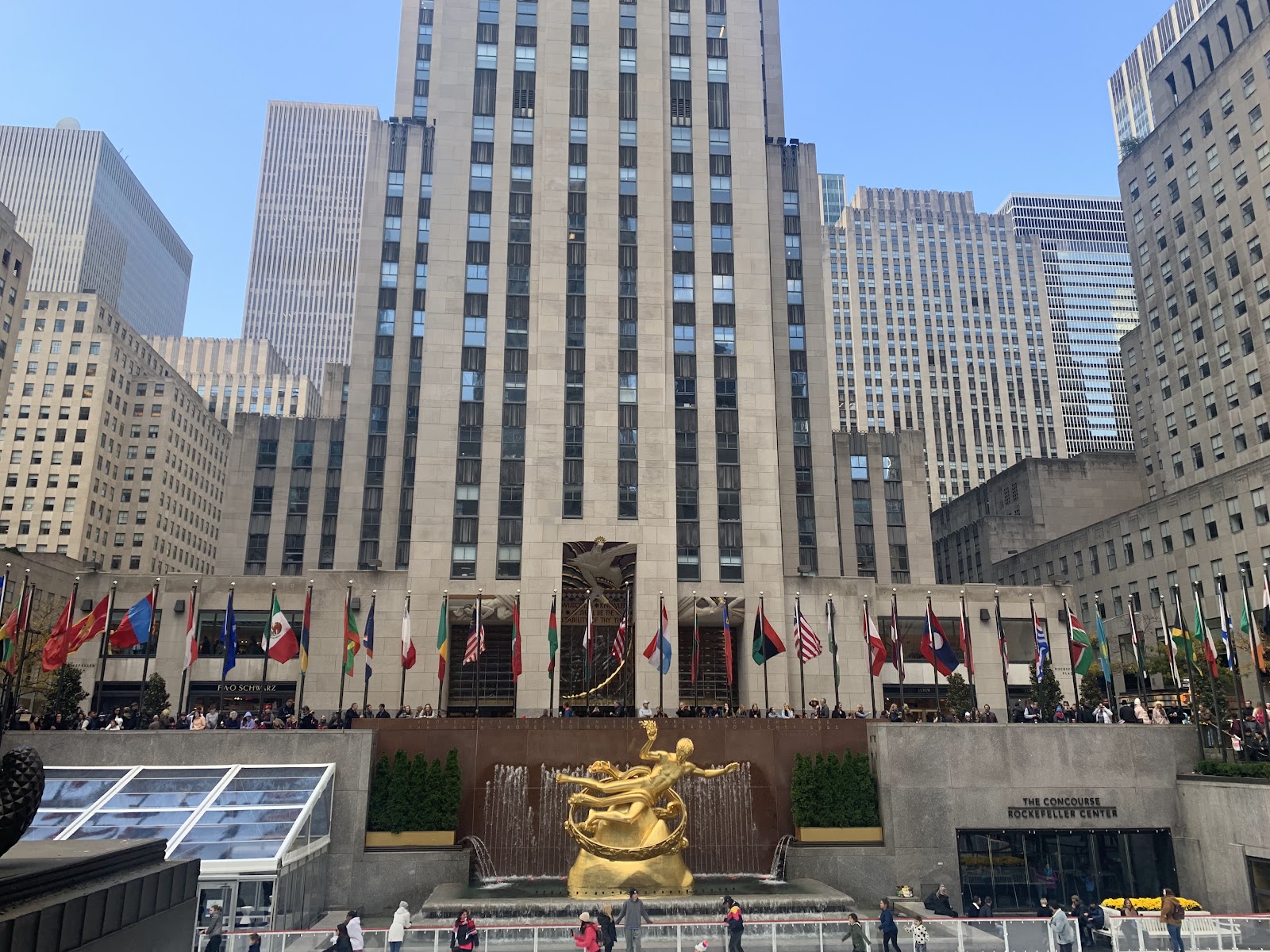
People who come back tend to walk the Channel Gardens first — the gentle slope between the French and British buildings that funnels you toward Prometheus and the plaza below. Early mornings before the lunch crowd descend are worth the effort. The underground concourse is genuinely useful, not just a curiosity, and connects you to the subway without resurfacing.
The story behind Rockefeller Center
Columbia University owned the land and leased it to John D. Rockefeller Jr. in 1928. The original plan called for a new Metropolitan Opera house, but when the Met couldn't finance the move, Rockefeller pressed ahead with a commercial complex instead. Raymond Hood led the Associated Architects — including Harvey Wiley Corbett and Wallace Harrison — through a design that became the defining statement of American Art Deco. Construction began in 1931; the first buildings opened in 1933.
The core was complete by 1939, when Rockefeller placed the final rivet on November 1st. Diego Rivera was commissioned to paint a mural for 30 Rockefeller Plaza's lobby, but his work — Man at the Crossroads — was demolished before completion. The Rainbow Room opened on the 65th floor in October 1934, briefly the highest-elevated restaurant in the country. The complex became a National Historic Landmark in 1987.
Good to know
Take the B, D, F, or M to 47–50th Street–Rockefeller Center. The plaza is open around the clock. Top of the Rock runs 8am to midnight daily; book tickets online in advance. The ice rink runs October through April — arrive at opening (8:30am) if you want elbow room.
Where is Rockefeller Center?
Location
- In New York City
- 40.7587, -73.9787
- Open in Google Maps
Rating
4.7 ★ · 201,341 Google reviews
More tickets & tours for Rockefeller Center
Book directly at the provider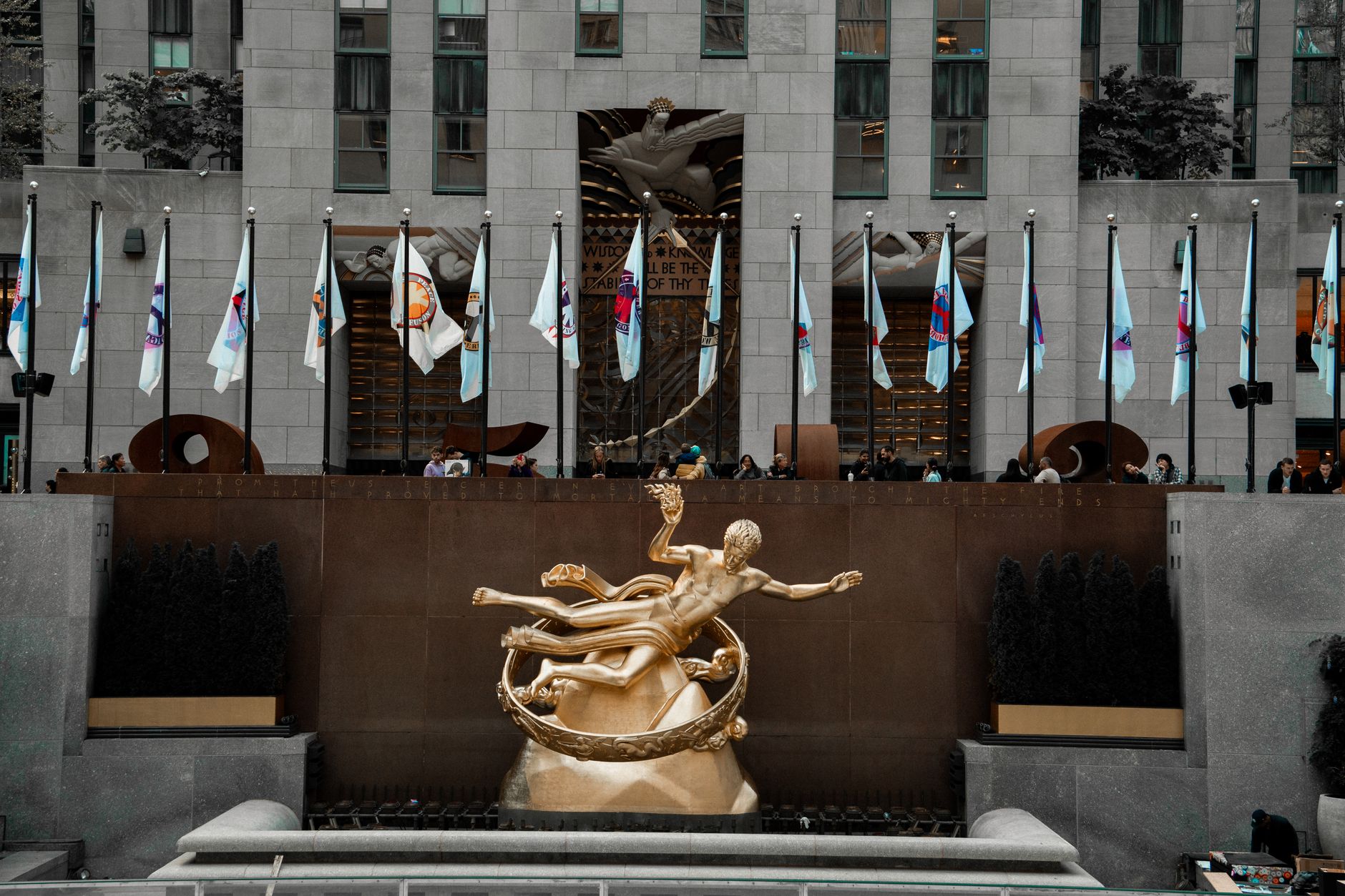
What travellers say about Rockefeller Center
Rockefeller Center Rockefeller Center in mid-December is the ultimate holiday experience in New York. The energy is vibrant, and the scale of the decorations is truly incredible to see in person. The centerpiece is the iconic Christmas tree, which towers over the ice skating rink. Seeing the continuous motion of the skaters under the festive lights creates a classic holiday atmosphere that feels both historic and high-energy. It is a perfect spot for taking in seasonal views from every angle, with lights reflecting beautifully off the ice and surrounding buildings. Beyond the main plaza, the attention to detail in smaller displays is just as impressive. The "Santa at Rockefeller Center" area and elaborate holiday window designs provide plenty of interesting visuals to explore while walking through the area. Every corner seems to have a new festive detail, from massive light displays to charming shop fronts like Teuscher Chocolates. The location is also perfect for visiting other nearby landmarks like St. Patrick’s Cathedral, which offers a beautiful architectural contrast to the holiday hustle. Even with the crowds, the overall spirit is worth experiencing after dark when the lights are at their peak. It remains a must-visit destination for anyone looking to see the best of the city’s holiday tradition and classic festive design.
Fantastic views are night. Bit cold in the winter but was an all around great view point in the city. If you have to choose one, choose this one. And the tree is stunning at Christmas.
This is a MUST SEE AND DO if you’re coming to the city for the first time. So sorry that these pictures are out of order from when I first came to the city to the third time I came to the city. Seeing Rockefeller Center from the first time to the third time I’ve came to the city was absolutely BEAUTIFUL and GORGEOUS. The Observation Deck was so cool to see the NYC Views from above. My Favorite Time to come to the City is right around Christmas Time. As y’all can tell, Christmas is my FAVORITE. I love the Holiday season so much. If you’re a first timer that is coming to the city around the holidays, I would recommend seeing the Tree during the day instead of the Nighttime. Here’s the Reason why: When I first came to the city in December 2021, We came in the evening and it was so crowded you couldn’t even get close to the Christmas Tree because of Covid Protocols at the time. I basically had to shove my way in through the people to at least get a picture in front of the Tree. It was so much different the 3rd time around in December 2023 because we came during the afternoon. The crowd wasn’t bad at all. It was in the evening when the crowds of people would show up. The Ice Skating Rink: 😍 It was so fun to see all of the people ice Skating and having a wonderful time. There are tons of shops and food places all close by as well. Highly Recommend from Tennessee.
We are tourists and came from very far away to visit one of the city’s most iconic landmarks. We paid for our tickets and arrived early to get a good spot to watch the sunset over the city. After we been standing there for 2 hours, wainting for the sunstet, Without any warning in the venue or nearby, some members of the staff asked us to leave an area because it was supposedly reserved for VIP guests. Only afterwards did they place a small sign and some ropes to mark the area, as shown in the picture. A very questionable “VIP area,” especially considering that it remained completely empty for about an hour. Only after the sunset did a few people arrive, stay there for around 10 minutes, take a photo, and leave. What frustrates me the most is the fact that they removed customers from an area where they had already been waiting for quite some time in order to enjoy a memorable view. At the last minute, the staff decided to remove guests simply because they had not paid for a more expensive ticket, even though this area had never been marked or restricted during the four hours we were there. The building itself is beautiful, and the indoor activities are also very enjoyable. It is disappointing that one of the best experiences of our trip was ruined because of this difference in treatment between customers. The staff should already have a proper, clearly designated area for VIP guests.
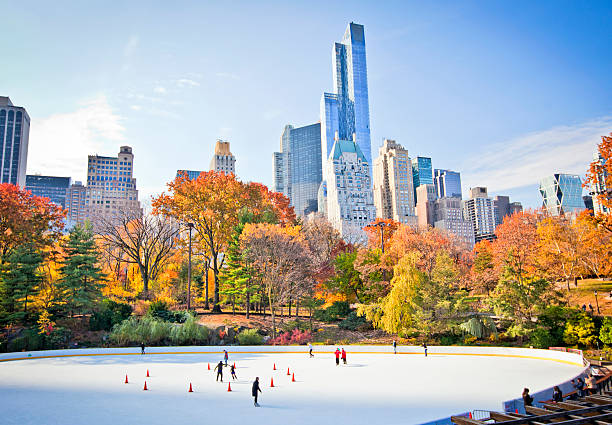
Rockefeller Center is one of those places that truly captures the spirit of New York. The architecture, constant movement, and energy make it exciting at any time of day. In winter, the famous ice rink adds a special magic to the area — skating here feels like a classic New York moment straight out of a movie. If you’re visiting the city during the colder months, skating at the rink is an absolute must.
More of New York City
Discover where to stay, what to do and the best deals for your trip.
Explore New York City →More attractions in New York City
All of New York City →
Background adapted from Wikipedia (CC BY-SA) · map data © OpenStreetMap contributors · ratings & place photos via Google · other photos with per-image credit. Ticket links may earn us a commission at no extra cost to you.