
River North
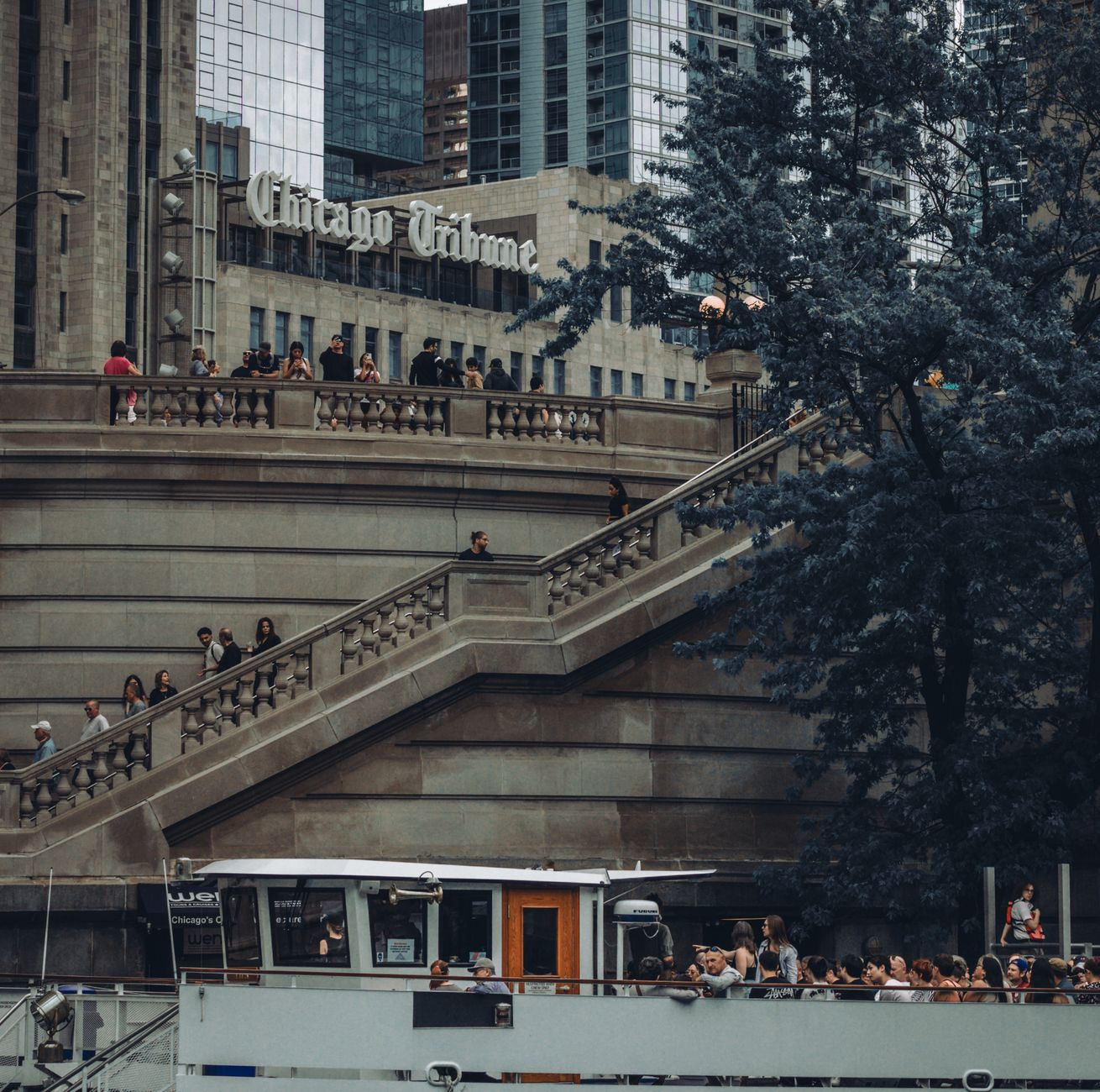
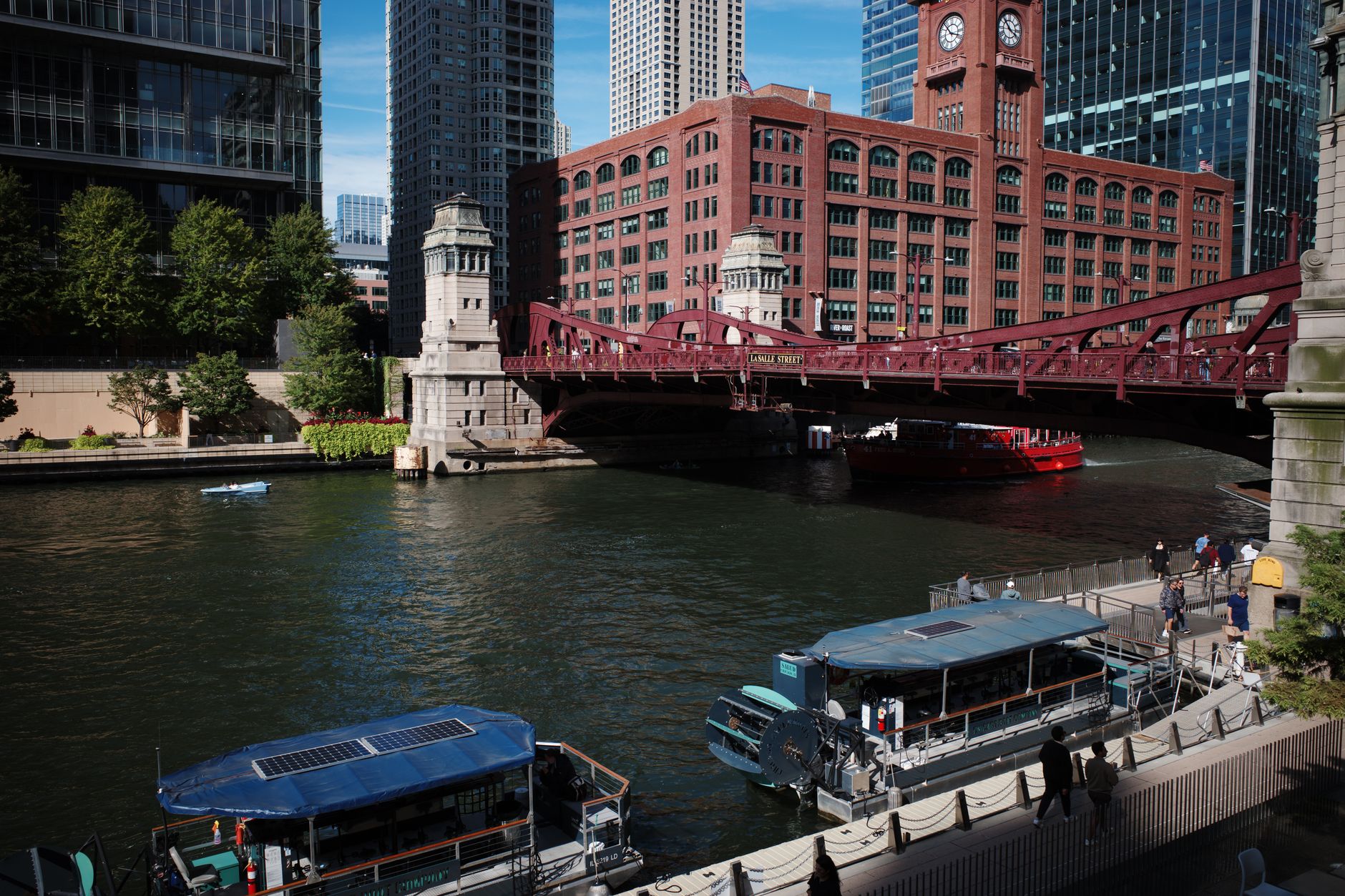
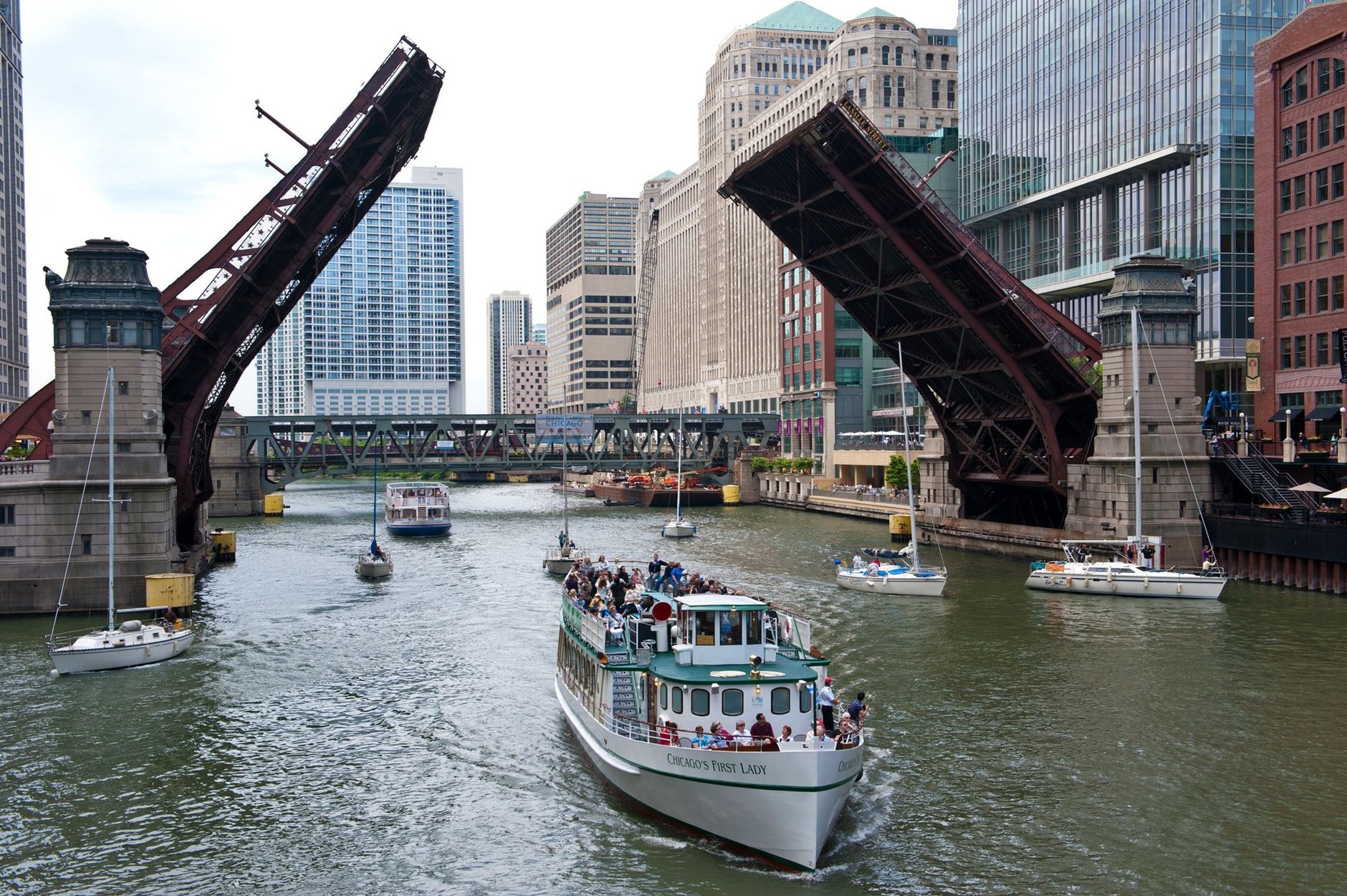
River North begins at the bend where the Chicago River turns toward the lake, and it has been a place people come to do business — and occasionally, to disappear — for nearly two centuries. Today the neighborhood is best known for its gallery district and its after-dark energy along Hubbard Street, but the bones underneath are older and stranger: warehouses, forges, a flower shop where a gangland murder happened mid-arrangement.
The skyline here is worth standing still for. Bertrand Goldberg's Marina City towers — the ones everyone calls the Corn Cobs — rise over the river alongside the terra-cotta white of the Wrigley Building, and on certain evenings theMART's 2.5-acre riverside facade becomes a canvas for digital art you can watch for free from the Riverwalk.
💛 What travellers fall for
People who come back tend to time a visit for after dark on the Riverwalk when Art on theMART is running — the scale of it doesn't read in photographs. They also tend to detour into the Richard H. Driehaus Museum on Hubbard Street, which rewards the kind of slow, room-by-room attention that gallery-hopping rarely allows.
Deals in River North
Book directly at the provider

How River North came to be
Jean Baptiste Pointe DuSable had a farm and trading post on the north bank of the Chicago River by 1779, and the area grew from there — early taverns, a ferry crossing, and the city's first hotel, the Sauganash, which Mark Beaubien expanded into a proper frame building in 1831. After the Great Chicago Fire of 1871 the neighborhood rebuilt as an industrial zone, earning the nickname Smokey Hollow for its factories and forges.
The transformation into something recognizable today came from a single real-estate decision. In 1974, developer Albert Friedman began buying and restoring warehouses in the southeast sector and started calling the area River North — a name he coined to attract tenants. Photographers and ad agencies came first, then art galleries, and the district took shape around the low rents and high ceilings that the old industrial buildings happened to provide.
Who and what shaped it
People who shaped it
Landmark buildings
See River North in motion
Plan your visit
On the map
When to go
Chicago winters are genuinely cold, with wind off the lake that sharpens the chill considerably from December through February. Spring and fall offer the most comfortable walking weather; summers are warm and sometimes humid, but the Riverwalk makes the heat easier to bear.
Right now
Background & history adapted from Wikipedia (CC BY-SA) · specs from Wikidata (CC0) · weather from Open-Meteo · map data © OpenStreetMap contributors · photos from Wikimedia Commons / Unsplash with per-image credit. No third-party reviews or social posts reproduced.