
Riomaggiore
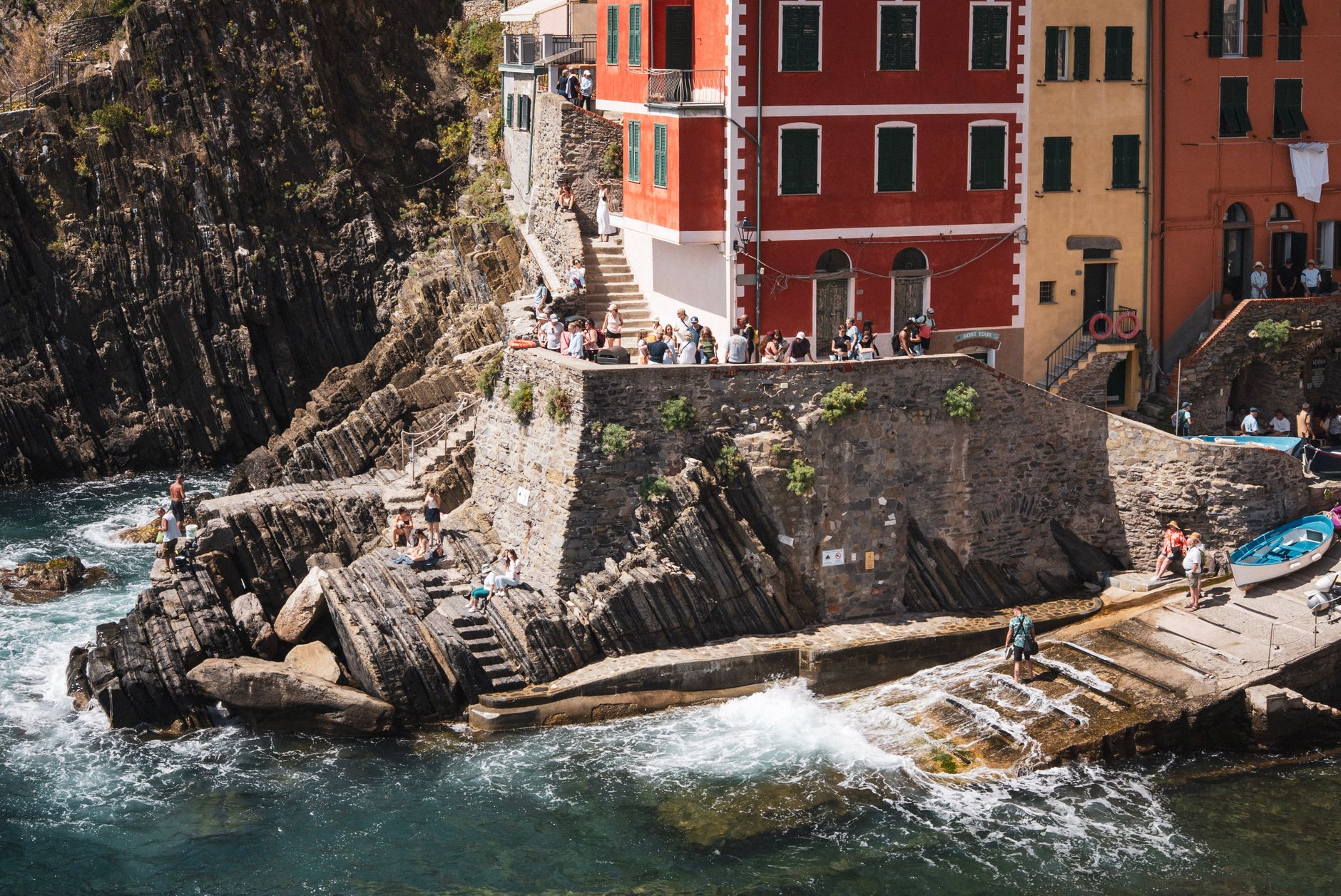
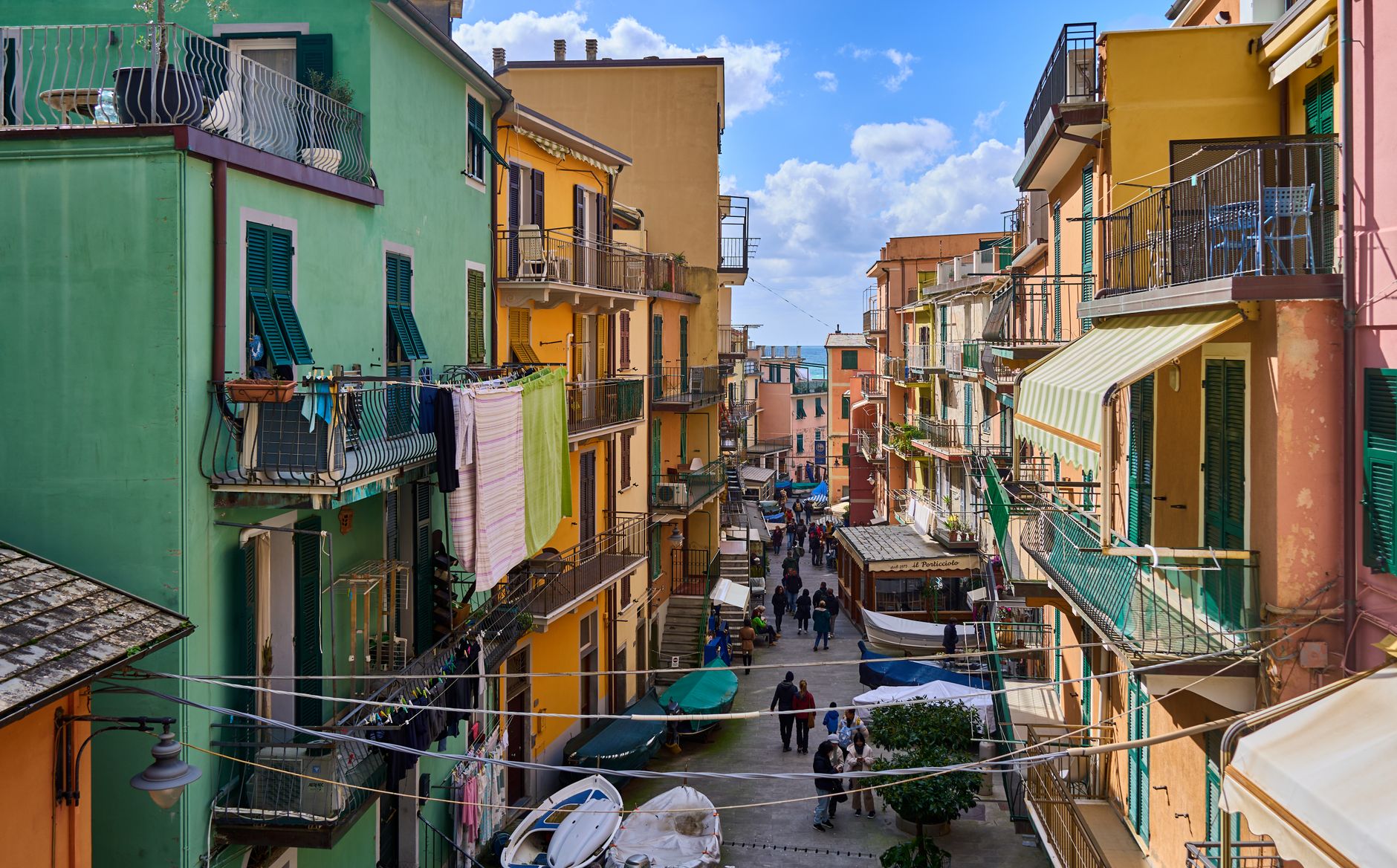
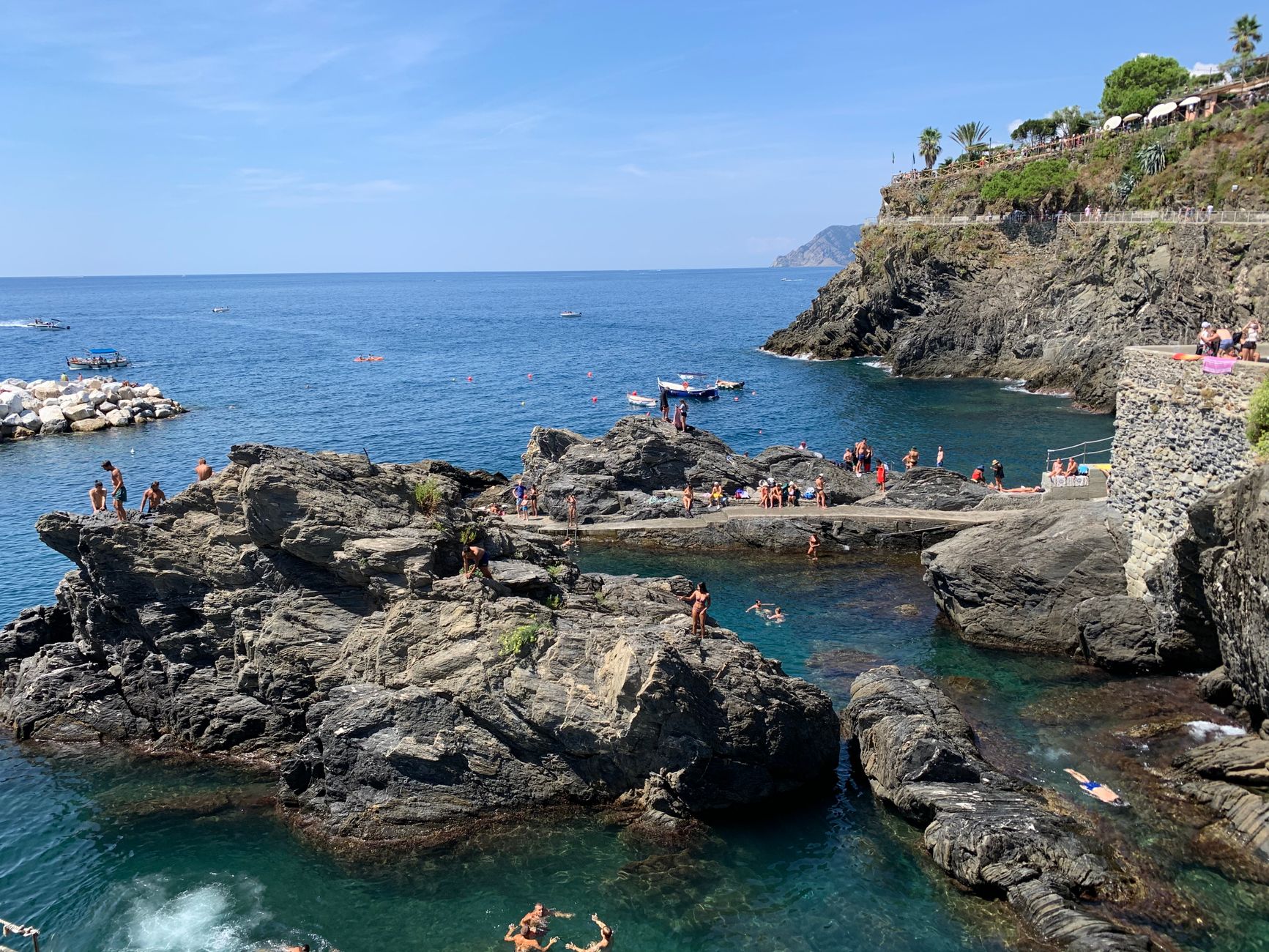
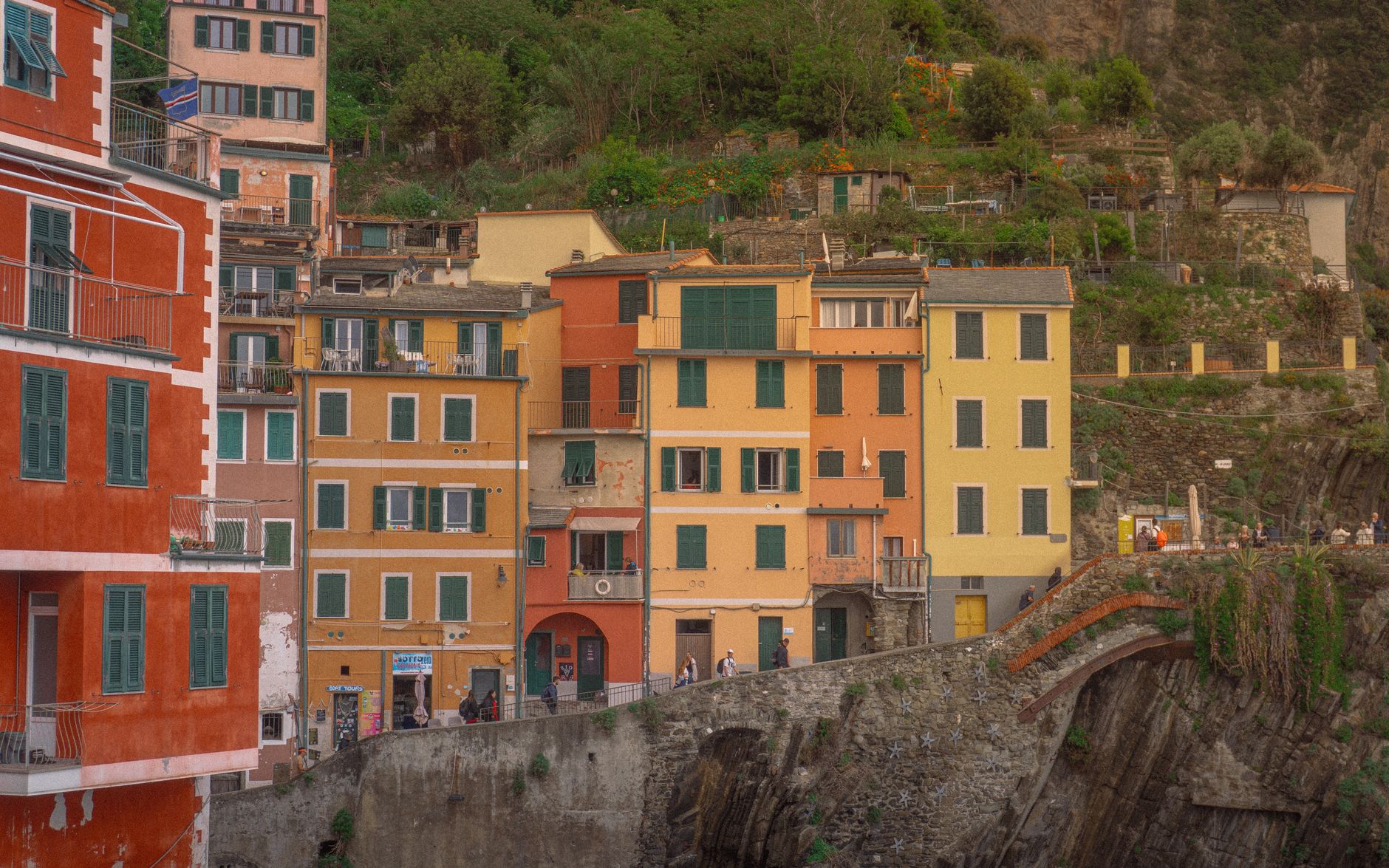
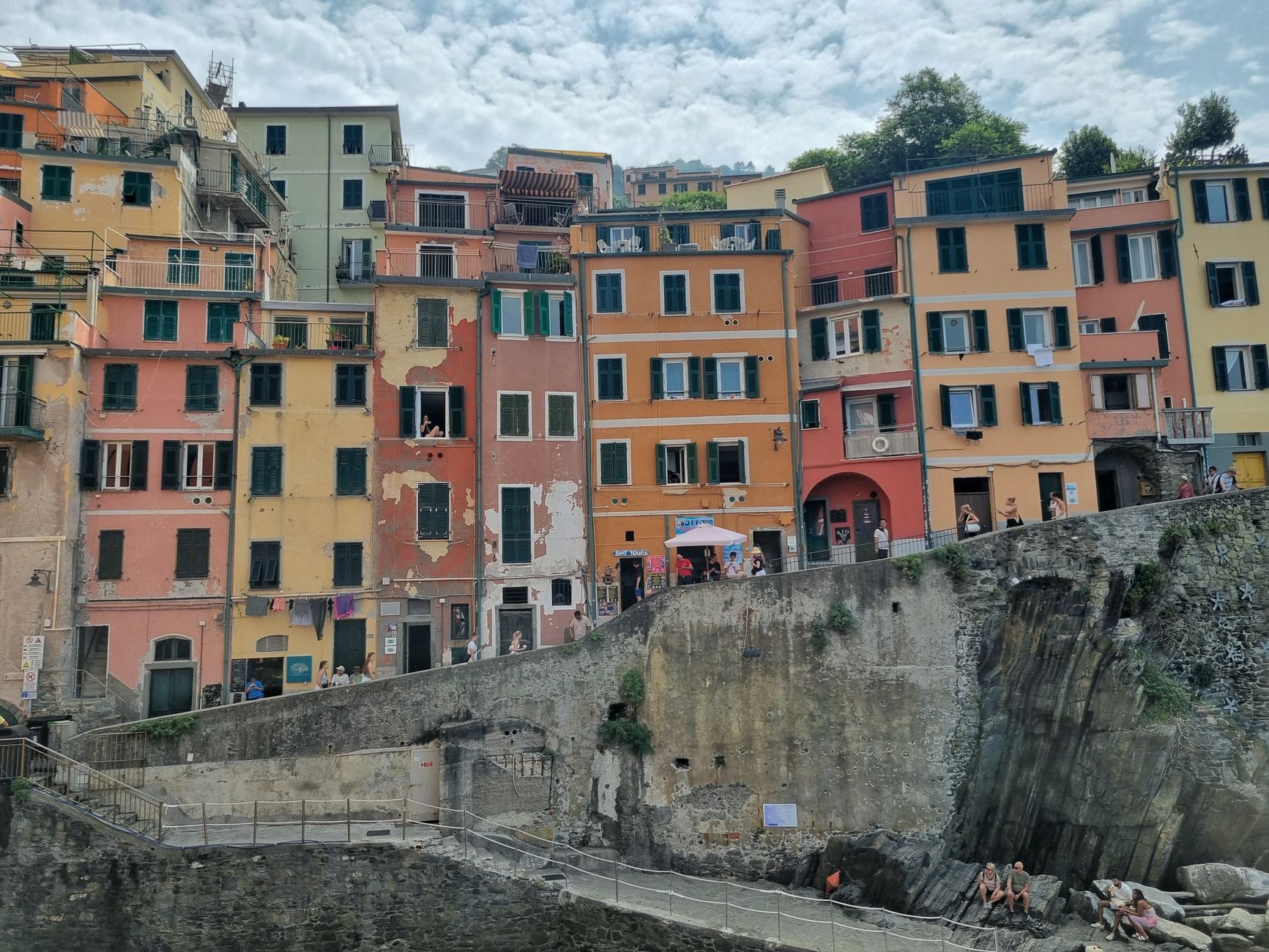
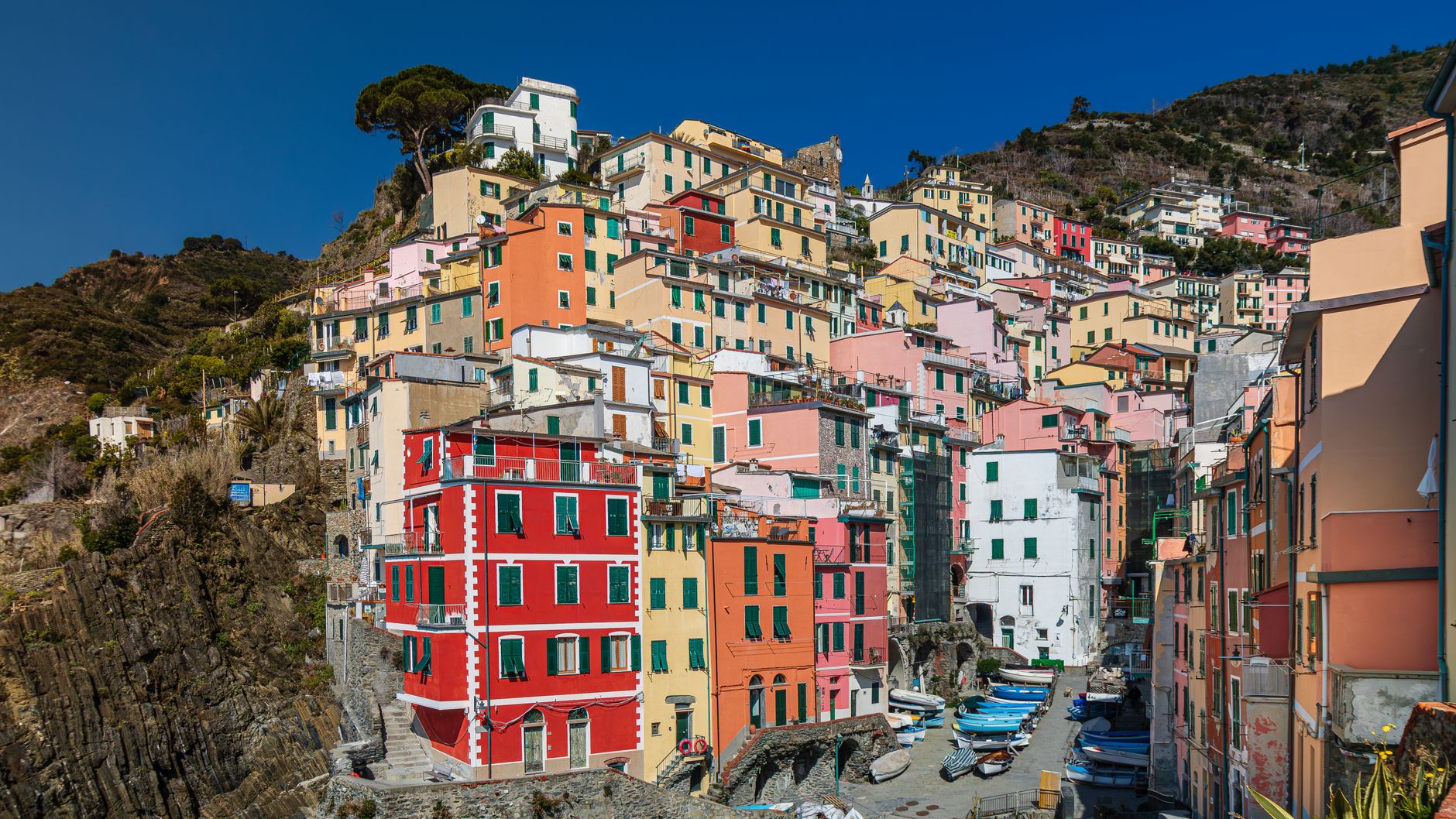
Riomaggiore is the southernmost of the five villages, and the one most people reach first — stepping out of a pedestrian tunnel from the train station and suddenly finding themselves above a crease in the cliffs where terracotta and ochre houses stack up like cards shuffled by the sea. The main artery, Via Colombo, runs downhill to a small harbour where fishing boats sit in colour-coded rows. It is compact enough to walk end to end in minutes, which is precisely why it rewards slowing down.
The village's railway connection dates to 1874, and from La Spezia you're here in seven minutes — a fact that makes Riomaggiore both the easiest entry point to the Cinque Terre and, in high summer, the most quickly crowded. The trick is to climb: up to the 13th-century castle, or further still to the Sanctuary of Montenero, where the ridge opens onto the Gulf of Poets.
💛 What travellers fall for
People who come back tend to time the Montenero hike for late afternoon, when the light drops low over the water and the 3.5 km trail is mostly clear. They also note that the Via dell'Amore — the cliff path to Manarola, closed for years after landslides — reopened in 2025, and is best walked early before the day warms up.
Experiences you don't want to miss


Deals in Riomaggiore
Book directly at the provider

How Riomaggiore came to be
Riomaggiore enters the written record in 1251, when the village swore allegiance to the Republic of Genoa as a fief of the Lords of Ripalta. It passed through the hands of the Fieschi family before Genoa purchased it outright in 1276. The castle on the hill above the harbour was built in the 13th century by order of Marquis Turcotti for defence; by the 19th century it had been repurposed as a cemetery, and today it hosts conferences and cultural events.
The parish church of San Giovanni Battista was founded on 8 November 1340 under licence from the Bishop of Luni, built by Antelami workers in the upper village. Its interior holds a 17th-century wooden crucifix attributed to Anton Maria Maragliano and an Agati organ from 1851. The Oratory of Saints Rocco and Sebastiano, constructed in 1480, was built as an act of thanks after a plague. Napoleon's administration absorbed the village in 1797; after 1815 it fell under the Kingdom of Sardinia, and joined unified Italy in 1861.
Who and what shaped it
People who shaped it
Landmark buildings
See Riomaggiore in motion
Plan your visit
On the map
When to go
May through September is the most reliable window, with daytime temperatures between roughly 20°C and 26°C. February is the coldest month, averaging around 8°C — the village is quieter then, and the light on the water has its own quality, but check trail conditions before heading up to Montenero.
Right now
Background & history adapted from Wikipedia (CC BY-SA) · specs from Wikidata (CC0) · weather from Open-Meteo · map data © OpenStreetMap contributors · photos from Wikimedia Commons / Unsplash with per-image credit. No third-party reviews or social posts reproduced.