
Ribérac

Ribérac sits quietly on the edge of the Dronne valley, a market town that earns its place on the map every Friday morning when more than two hundred traders — half of them food producers — spread across the centre in one of the Dordogne's most serious weekly markets. Come before nine if you want the good cheese.
The town has two Notre-Dame churches, a mairie that looks like it was designed to impress a prefect, and a path called the Chemin des Abeilles threading between them through a garden. It is a place that rewards wandering on foot rather than ticking off sights, and it works well as a base for the wider Périgord Blanc.
💛 What travellers fall for
People who come back tend to time it around the Friday market, then stay for the Tuesday producers' market at Place de la Liberté through the warmer months. The Chemin des Abeilles between the two churches is worth the short detour — quieter than the main square and easy to miss.
Experiences you don't want to miss


Deals in Ribérac
Book directly at the provider

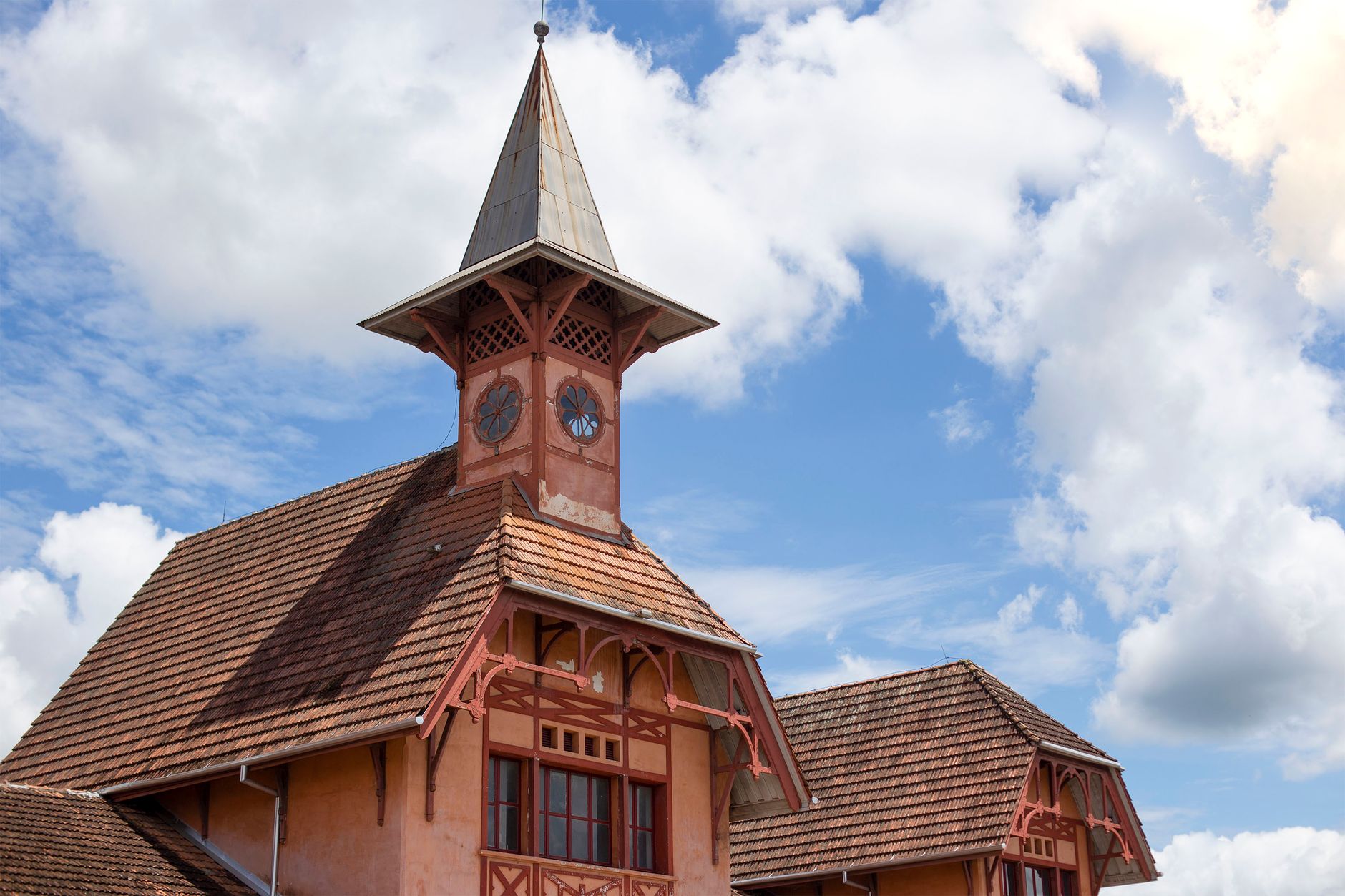
How Ribérac came to be
The town's origins are defensive: after Norman raiders plundered nearby Brantôme in 848, a fort went up near a ford of the Dronne. Around the year 1000 a castle followed, built on the hill where the cemetery now stands. The troubadour Arnaud Daniel, born here in the 11th century, gave the town an early cultural identity that sat oddly with its later turbulence — in 1568, Huguenot troops under Assiel burned the Collégiale Notre-Dame, leaving scars that the 17th-century wall paintings inside only partially answer.
By 1790 Ribérac had become a district prefecture, and in 1800 one of four sub-prefectures of the Dordogne, a status it held until 1926. The castle, long abandoned after the Wars of Religion, was already rubble by the Revolution.
Who and what shaped it
People who shaped it
Landmark buildings
See Ribérac in motion
Plan your visit
On the map
When to go
Summers are warm and long — August averages a high of 27°C with over thirteen hours of sun a day, and July through September are the driest months. Winters are mild but damp, with the occasional light snow between November and March.
Right now
Background & history adapted from Wikipedia (CC BY-SA) · specs from Wikidata (CC0) · weather from Open-Meteo · map data © OpenStreetMap contributors · photos from Wikimedia Commons / Unsplash with per-image credit. No third-party reviews or social posts reproduced.