
Rheinauhafen
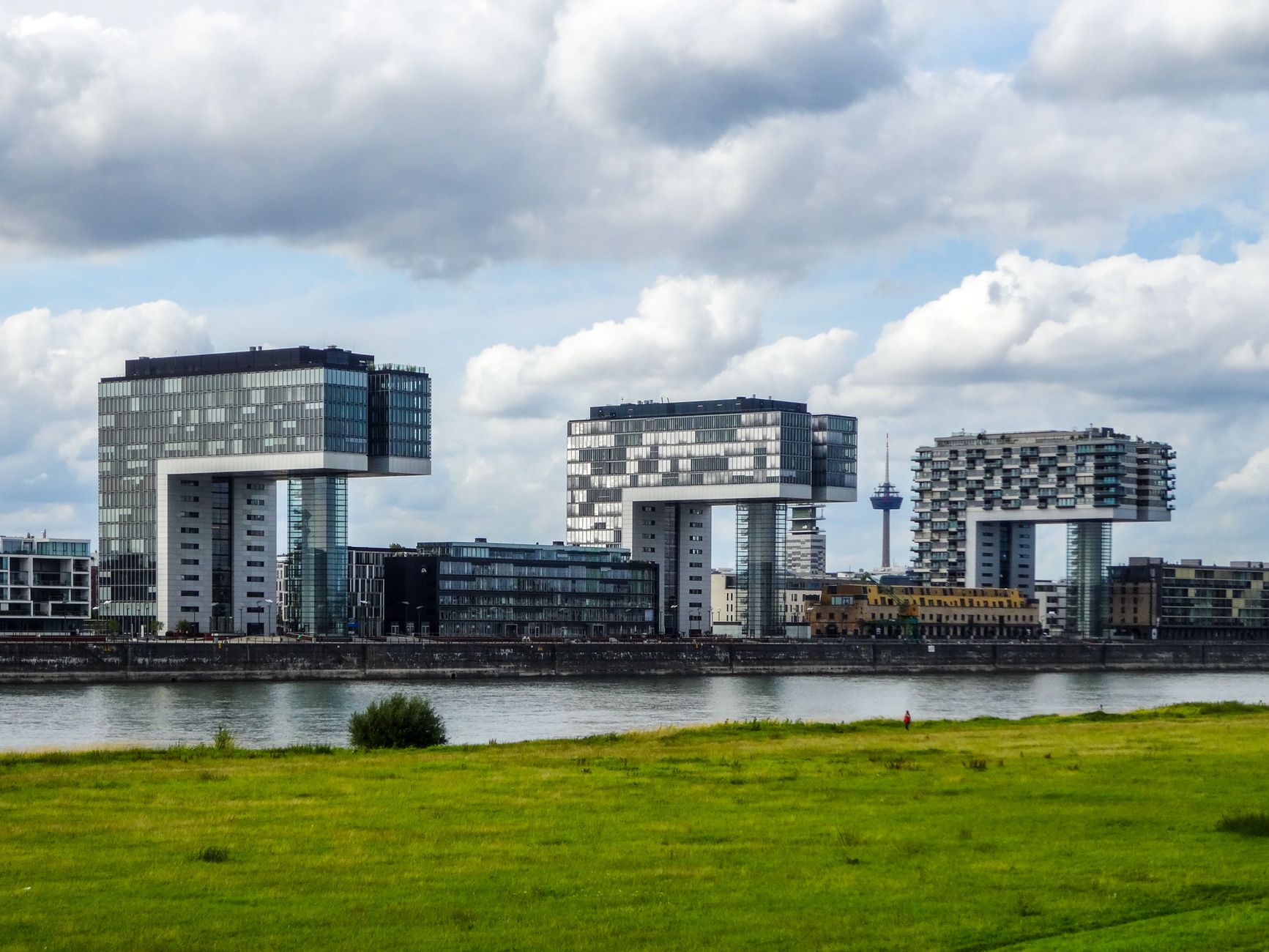
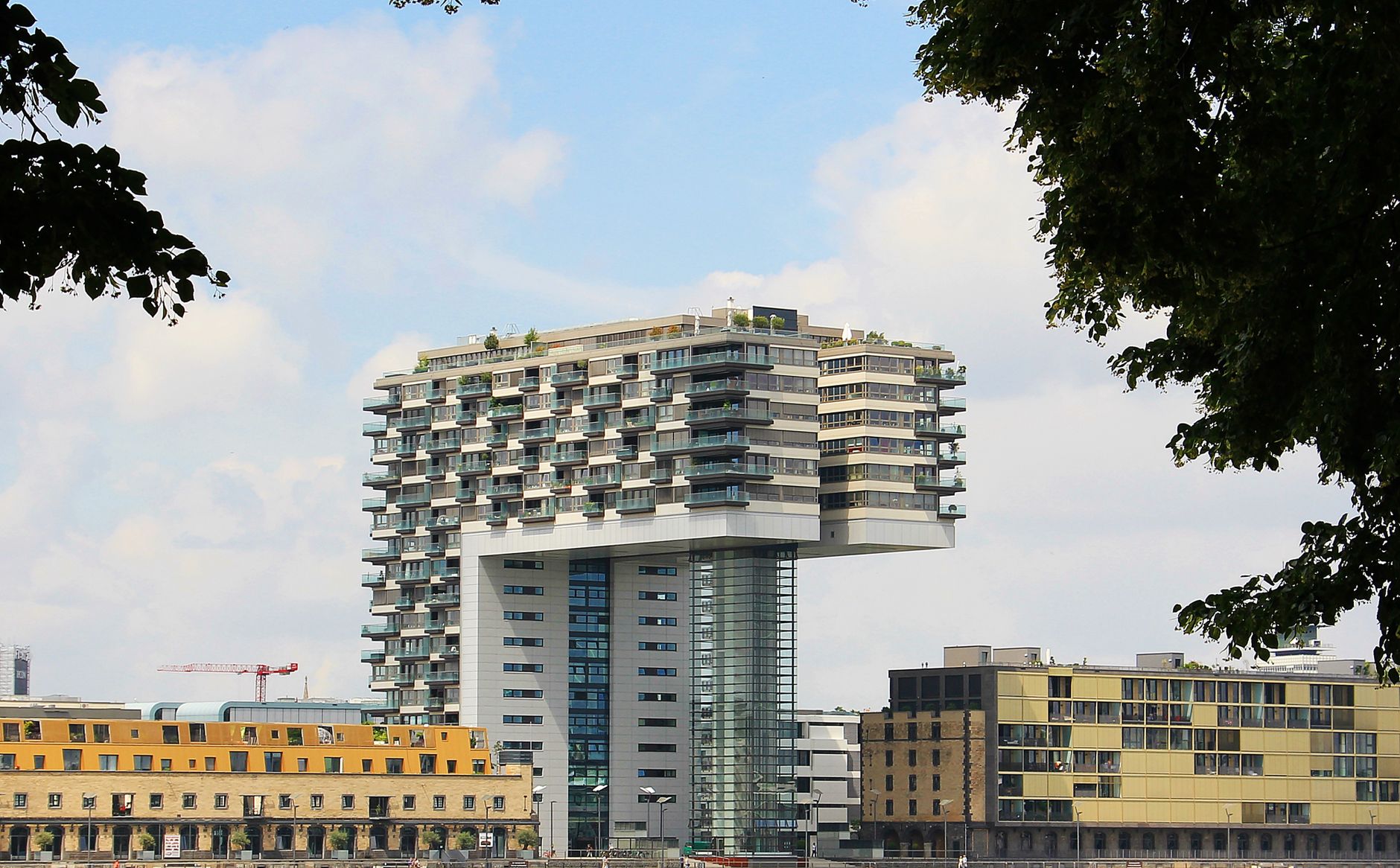
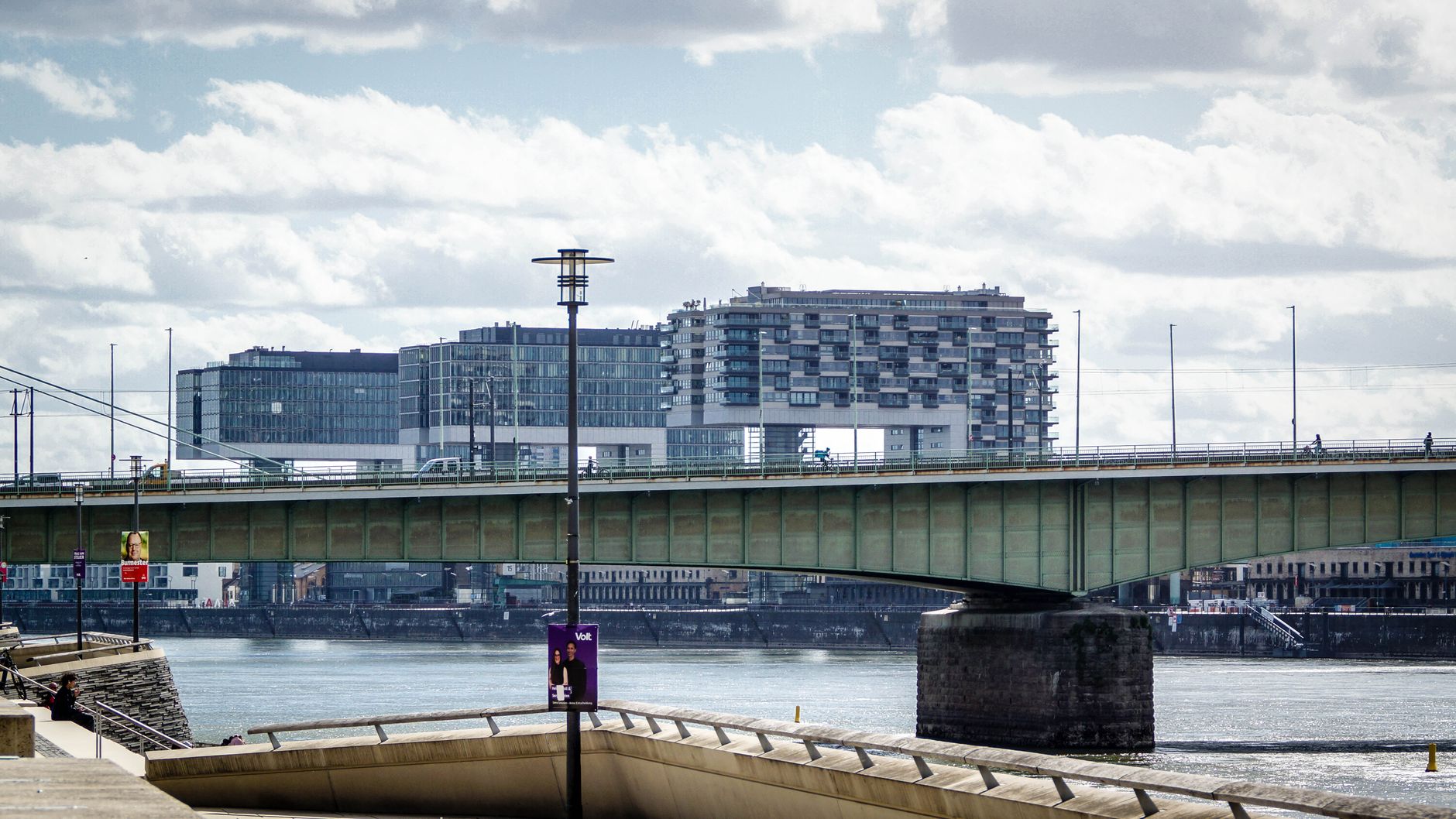
Three buildings shaped like harbour cranes rise over the Rhine's edge here, their cantilevered arms jutting out at 40 metres — not as nostalgia, but as a genuine structural idea. Rheinauhafen is Cologne's former commercial harbour, opened in 1898, and for most of the twentieth century it was the city's busiest working port. By 1970 even the cruise ships had stopped coming, the entrance too narrow for modern vessels.
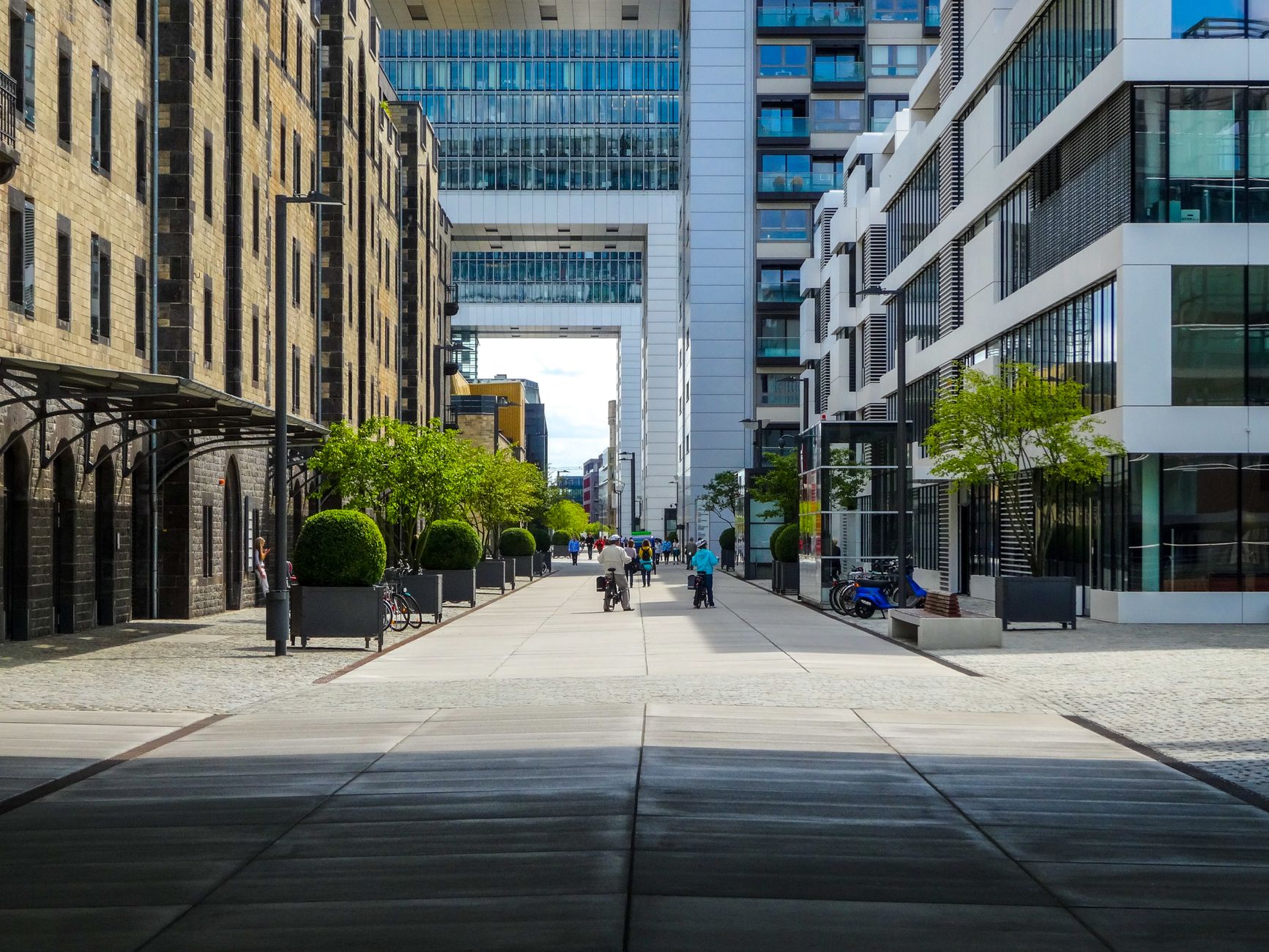
What replaced the working harbour is a long riverside strip of converted grain silos, a medieval tower, a 1,400-space underground car park that is the longest in Europe, and those three crane-shaped towers. It rewards a slow walk more than a destination visit.
💛 What travellers fall for
People who come back tend to do the same thing: walk the full promenade from the swing bridge — Cologne's oldest Rhine crossing, dating to 1896 — south past the Hercules crane and the Siebengebirge warehouses to the Bayenturm, then double back for a coffee with a view of the Kranhaus1 reflected in the water.
Deals in Rheinauhafen
Book directly at the provider

How Rheinauhafen came to be
The island the harbour now occupies was once called Werthchen by locals — a diminutive, affectionate name for a place that first appears in records as a site of execution, then as farmland and fishing ground. The commercial harbour was built in the 1880s and opened in 1898, and by 1951 it was still the most significant of Cologne's four working ports. Then the entrance silted into irrelevance for large ships, and it became a marina.
An urban design competition in the early 1990s set the redevelopment in motion. Architects Alfons Linster and Hadi Teherani won the 1992 competition with their crane-house concept; construction ran from 2002 to 2010, and the harbour reopened in its current form in 2014. The Bayenturm, a tower built around 1220 as part of Cologne's city wall, survived all of it — damaged in World War II, renovated in the 1990s, and now home to a feminist media archive.
Who and what shaped it
People who shaped it
Landmark buildings
See Rheinauhafen in motion
Plan your visit
On the map
When to go
Summer brings long evenings on the promenade when the light on the Rhine stays until well past eight, and temperatures can reach 30°C in July. Winter is cold and often grey, but the harbour Christmas market gives the waterfront a reason to visit even then.
Right now
Background & history adapted from Wikipedia (CC BY-SA) · specs from Wikidata (CC0) · weather from Open-Meteo · map data © OpenStreetMap contributors · photos from Wikimedia Commons / Unsplash with per-image credit. No third-party reviews or social posts reproduced.