
Real Alcázar of Seville
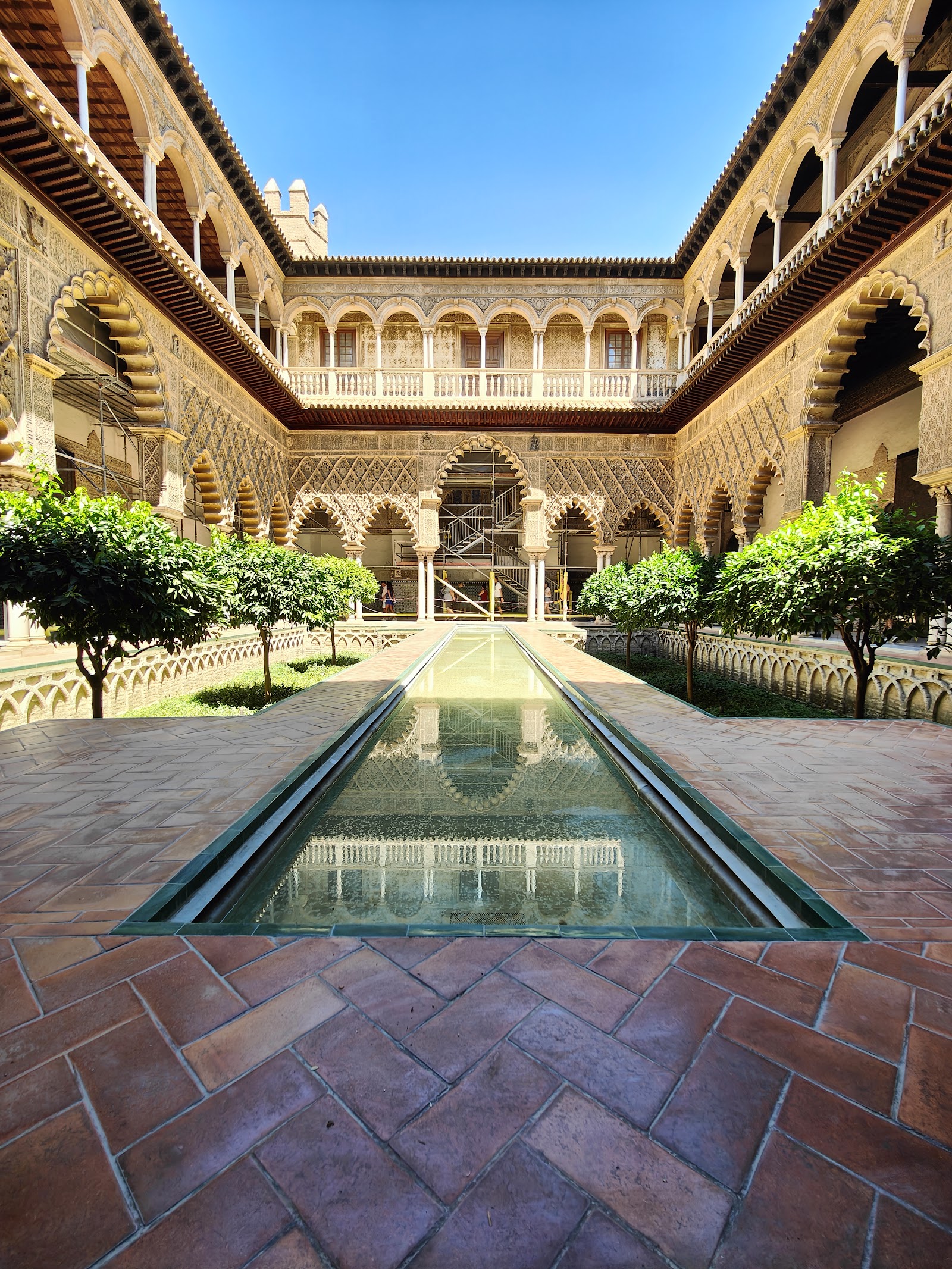
The oldest palace in Europe still in active royal use, the Real Alcázar has been continuously inhabited and rebuilt since 913 AD — and that layering is the whole point. Walk through the Lion's Door and you move between centuries without ceremony: Almohad stucco beside Gothic vaulting beside Mudéjar tilework so precise it reads as textile.
At its heart is the Patio de las Doncellas, the great courtyard Peter I ordered in the 1360s, its sunken garden and double-arched arcades built by craftsmen brought from Toledo, Granada and Seville itself. Upstairs, King Felipe VI and Queen Letizia still keep official rooms here. The palace is not a relic — it is a working address.

💛 What travellers fall for
People who return tend to go straight to the Patio del Yeso — the Stucco Courtyard, only rediscovered in 1885 — where the original Almohad fabric survives almost intact. It sees a fraction of the traffic of the Hall of Ambassadors. The gardens reward a second visit too: 20,000 plants, 187 species, and enough shaded corners to lose a slow afternoon.
The story behind Real Alcázar of Seville
Abd al-Rahman III, Umayyad Caliph of Córdoba, ordered the first fortress here in 913 AD. The Abbadid dynasty expanded it in the 11th century; the Almohads made it a palace complex in the 12th, with architects Ahmad Ben Baso and Ali al-Ghumari overseeing major works from 1169. The Patio del Yeso is all that visibly survives of their effort.
After Ferdinand III took Seville in 1248, the site passed to Castilian hands. Alfonso X built the Gothic Palace; Peter I commissioned the Mudéjar palace between 1364 and 1366, its dome finished by Diego Ruiz in 1427. Charles V added his own wing in 1537, Philip V brought Baroque rooms in the early 18th century, and a thorough restoration between 1863 and 1874 addressed the damage left by French occupation. UNESCO designation followed in 1987.

Good to know
Tram T1 stops at Archivo de Indias, two minutes from the entrance. Book online — capacity is capped at 750 visitors. Free entry Monday evenings 18:00–18:30 with advance reservation. Summer hours run to 19:00; winter closing is 17:00. Budget at least two hours; three is more honest.
Where is Real Alcázar of Seville?
More tickets & tours for Real Alcázar of Seville
Book directly at the provider
What travellers say about Real Alcázar of Seville
Everywhere you look there are incredible details, hidden secrets within the arquitectura and you can see the changes from one era to the next. The summer is too hot to walk the gardens and I would suggest getting your tickets weeks to months prior as there are areas that are booked out months ahead of time that I would have loved to see. Absolute must see.
A truly stunning place and one of the highlights of Seville. The architecture is beautifully preserved, both inside and out, with incredible attention to detail throughout the palace. The courtyards, intricate decorations, and lovely gardens make it easy to spend several hours exploring. I was glad to have a bottle of water with me, as the visit took around 2.5 hours at a comfortable pace. Buying tickets online in advance is definitely the best option, especially during busy periods. I also recommend combining your visit with the Cathedral, which is only about a 10-minute walk away. Highly recommended for anyone interested in history, architecture, and beautiful gardens.
Booked tickets 2 weeks before our trip. People turning up in the day, weren't able to get in as fully sold out. Amazing place to explore, few issues with audio listening but that was minor. Gardens are beautiful. Cafe there too Must do event in Seville
The Royal Alcázar of Seville is one of those places that makes you stop every few steps and say, “Okay, one more photo…” The architecture is breathtaking, the details are incredible, and the gardens are absolutely magical. We could have spent hours wandering through the pathways and courtyards. Every corner feels like a postcard. A few tips from a fellow traveler: book the earliest entry time possible because the Seville heat is no joke. Bring a fan, wear comfortable shoes, and don’t forget your headphones for the audio tour. And ladies… wear your cutest outfit. 📸✨ There are photo opportunities everywhere. Seriously. Every archway, garden path, fountain, and courtyard is begging for a picture. If you’re planning a trip to Seville, the Royal Alcázar is 100% worth it. Beautiful, historic, and somehow even more impressive in person than in photos. 10/10. Bring water, bring a fan, and make room on your phone for about 300 photos. 🇪🇸☀️🌴🏰📷
Incredible place. Was busy but it’s so big that you don’t feel like you’re constantly bumping into people. The rooms and the gardens were beautiful. A MUST see if coming to Seville. Would recommend booking tickets in advance- we still had to queue for our time slot despite being 15 mins early. Also need to bring passports or some form of id!
More of Seville
Discover where to stay, what to do and the best deals for your trip.
Explore Seville →More attractions in Seville
All of Seville →
Background adapted from Wikipedia (CC BY-SA) · map data © OpenStreetMap contributors · ratings & place photos via Google · other photos with per-image credit. Ticket links may earn us a commission at no extra cost to you.