
Rambouillet
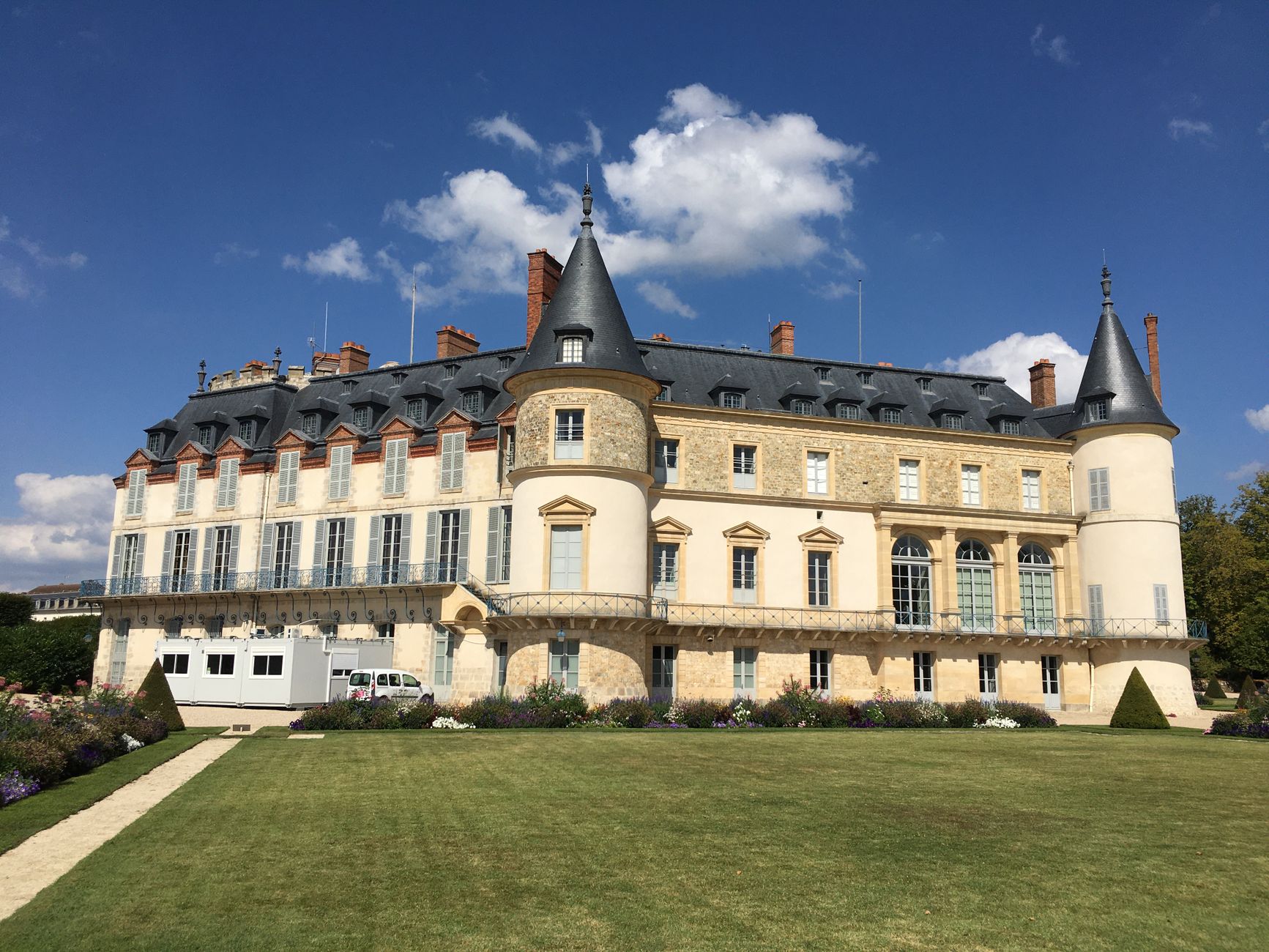
The François I tower stands at the heart of Rambouillet's château like a punctuation mark in stone — it's the room where a king died in 1547, and it sets the tone for everything that follows. Forty-five minutes southwest of Paris on the Montparnasse line, Rambouillet spent centuries accumulating royal decisions: Louis XVI built a dairy here for Marie-Antoinette, Charles X signed away his throne here in 1830, and on a single August evening in 1944, de Gaulle and Leclerc sat down in these same rooms to plan the liberation of Paris.
The château is compact enough to see in an hour, but the 150-hectare park behind it — canals, six islands, an English garden — asks for considerably more time.
💛 What travellers fall for
People who come back tend to head straight for the Chaumière aux Coquillages, the shell cottage built between 1779 and 1780 for the Princess of Lamballe — the mother-of-pearl interior is the kind of thing you need to see twice before you believe it. The Bergerie Nationale, still breeding the original Rambouillet merino line descended from that 1786 Spanish flock, is worth the detour if you arrive on a farm-open day.
Experiences you don't want to miss


Deals in Rambouillet
Book directly at the provider
How Rambouillet came to be
A fortified manor first took shape here in 1368, when Jean Bernier, an advisor to Charles V, acquired the site and rebuilt it by 1374. The powerful Angennes family held it through the Hundred Years' War, when fire and pillage damaged the castle between 1425 and 1428. Francis I, one of the most peripatetic monarchs of the French Renaissance, died in the tower that now carries his name on 31 March 1547.
Louis XVI bought the estate in 1783, extended the gardens, commissioned the Queen's Dairy — inaugurated in 1787 and still housing Pierre Julien's sculpted group of Amalthea — and established the sheep farm that introduced Spanish merinos to France in 1786. After Charles X's abdication here in 1830, the château eventually became the official summer residence of French presidents from 1896 until 2009, when it passed to the Centre des monuments nationaux.
Who and what shaped it
People who shaped it
Landmark buildings
See Rambouillet in motion
Plan your visit
On the map
When to go
Summers in Rambouillet are short and mild with stretches of cloud, good for walking the park without the heat of central Paris. Winters are cold and often overcast — the château's interior visits hold up well in the off-season, but save the park for April through October.
Right now
Background & history adapted from Wikipedia (CC BY-SA) · specs from Wikidata (CC0) · weather from Open-Meteo · map data © OpenStreetMap contributors · photos from Wikimedia Commons / Unsplash with per-image credit. No third-party reviews or social posts reproduced.