
Puerto de la Cruz
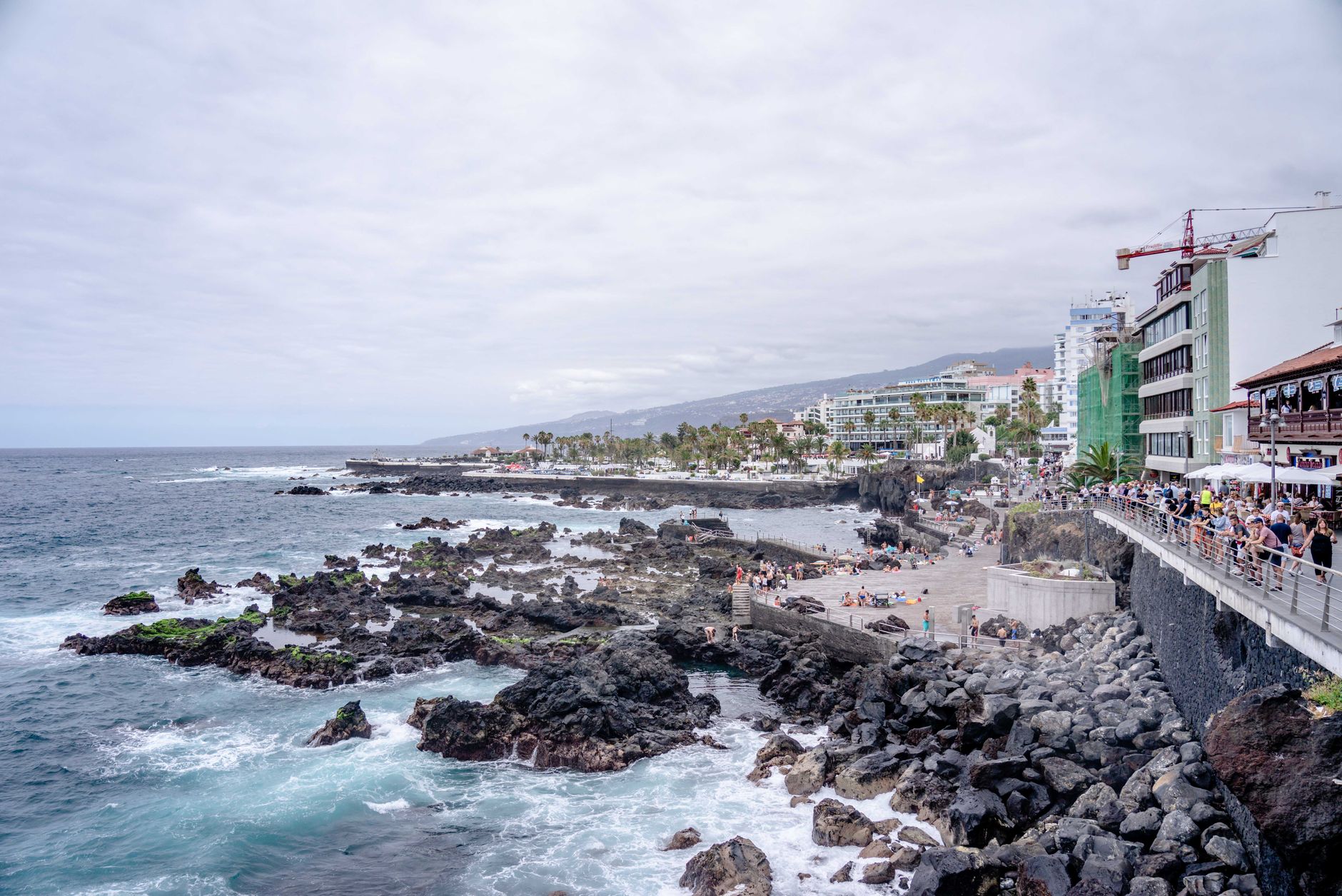
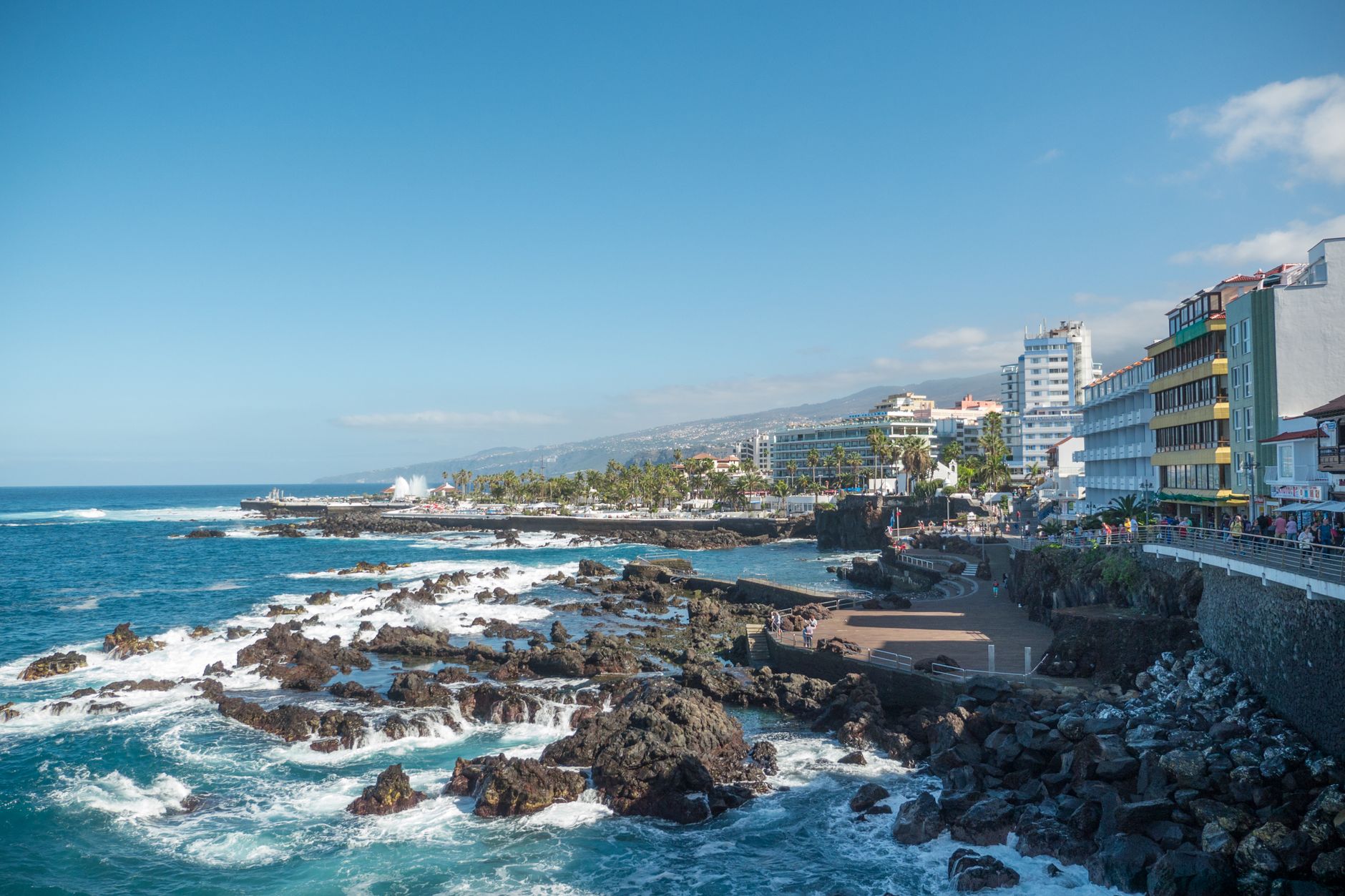
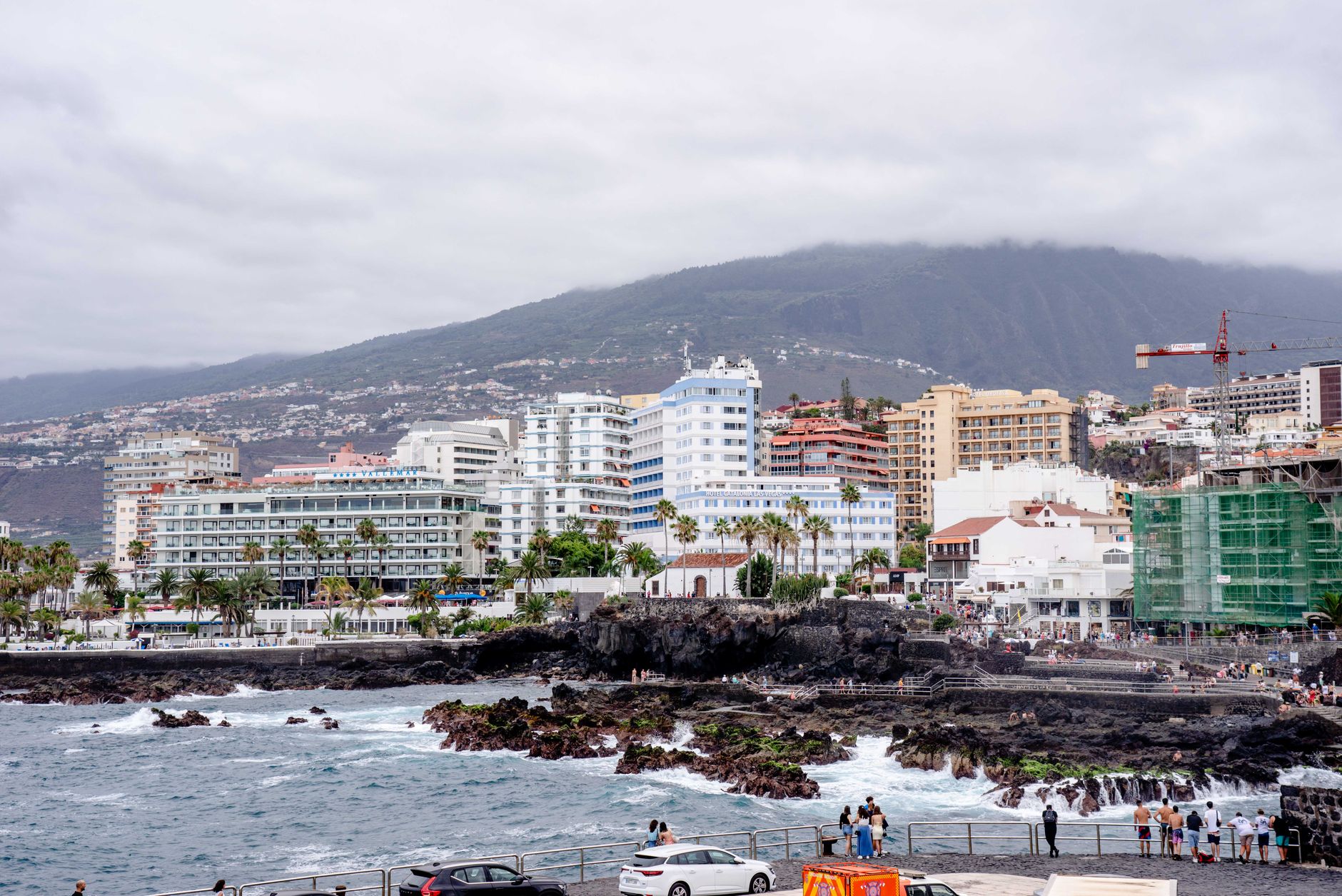
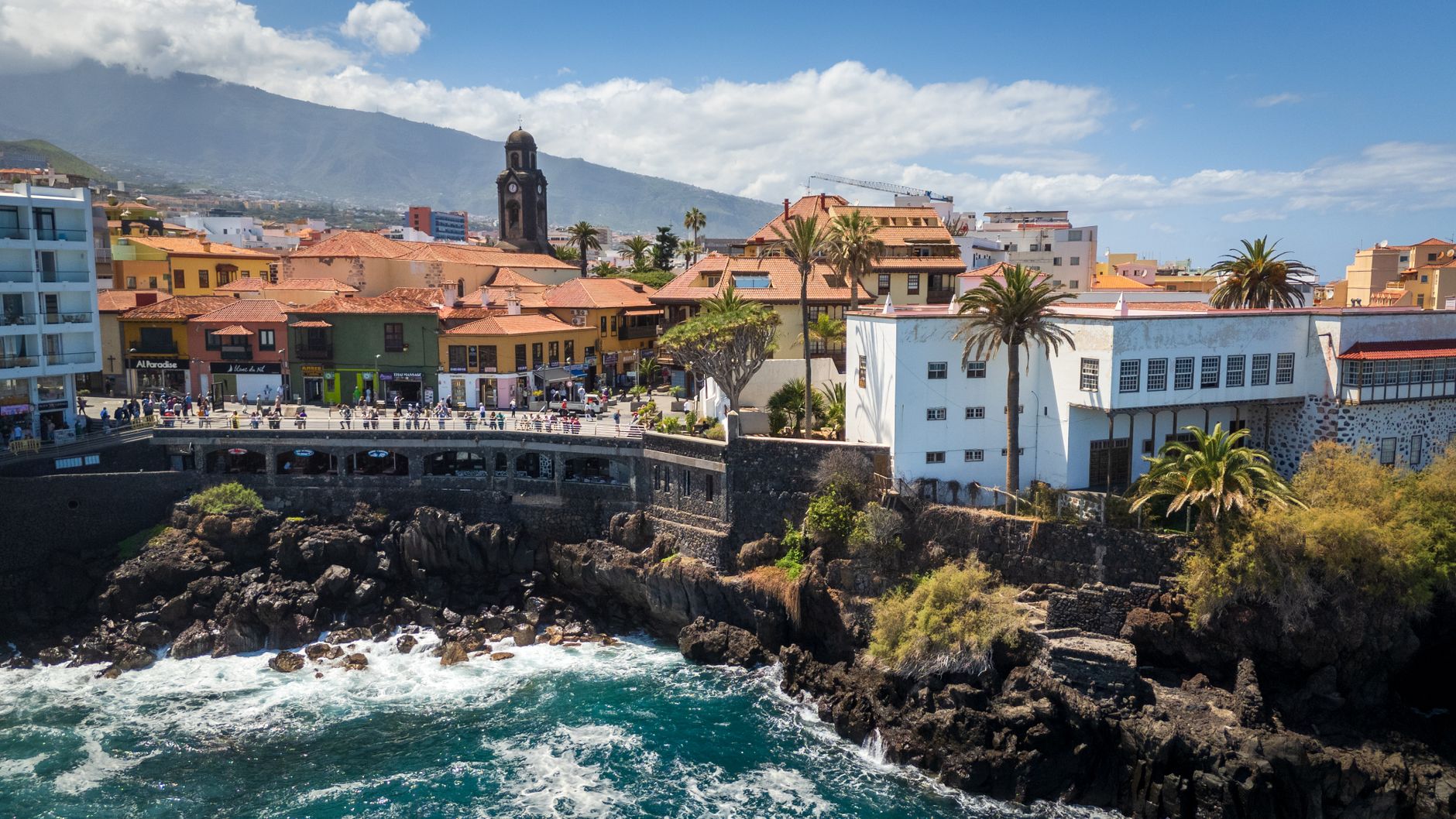
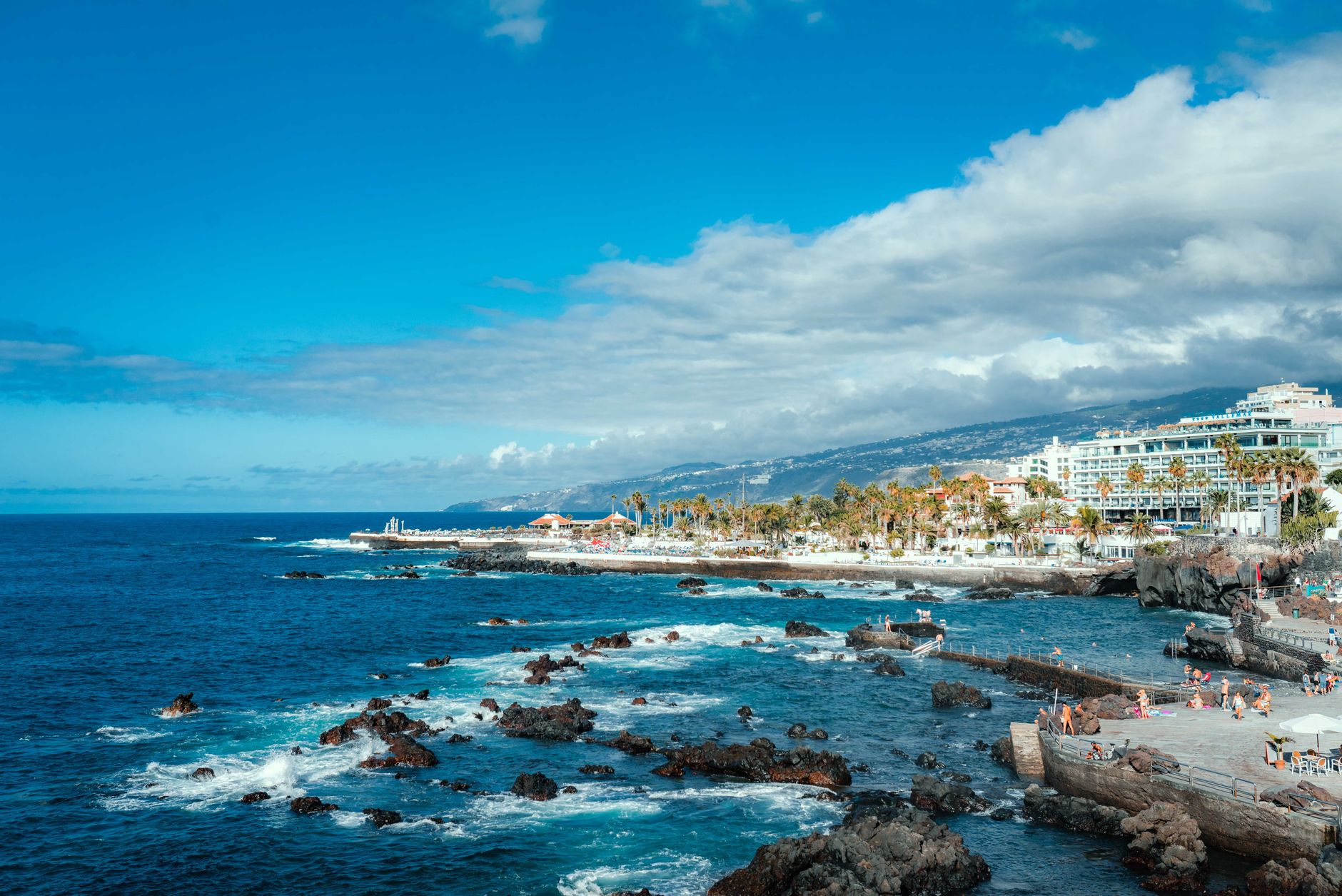
Puerto de la Cruz sits on the northern coast of Tenerife where the Atlantic comes in hard and dark — not the turquoise of the south, but deep volcanic green. The town grew up as the working port for La Orotava up in the valley, loading sugar cane and wine onto ships, and that mercantile past still shows in the old stone customs house on the waterfront and the merchant towers built to watch for incoming cargo.
Today the city holds two things in careful balance: a genuinely old town of cobbled lanes and Canarian wooden balconies, and the legacy of a century of tourism, from the Victorian British who came for their health to the lido pools César Manrique carved out of the lava shore in 1977.
💛 What travellers fall for
People who come back tend to anchor themselves at Plaza del Charco — under the Cuban laurel trees planted there in 1852 — with a coffee in the morning before the day gets going. They also tend to discover, on a second or third visit, that the Castillo de San Felipe facing the sea is worth slipping into whenever there's an exhibition on.
Experiences you don't want to miss



Deals in Puerto de la Cruz
Book directly at the provider

How Puerto de la Cruz came to be
The settlement began as a fishing village and grew into Tenerife's most consequential northern port through the 17th century, shipping the produce of the Orotava Valley — sugar, then wine — out to the wider world. Its importance accelerated after 1706, when a volcanic eruption destroyed Garachico and left Puerto de la Cruz as the island's primary port. The town gained full municipal independence from La Orotava in 1808, having already received its first mayor in 1603.
In 1890 the Spa Hotel Taoro opened — the first health-tourism hotel in all of Spain — drawing British elites who had begun arriving in the late 19th century to convalesce in the mild northern air. Alexander von Humboldt passed through, staying at the Hotel Marquesa on his way to the Americas. Mass tourism arrived in 1955 and reshaped the economy entirely, though the old town's architecture largely survived.
Who and what shaped it
People who shaped it
Landmark buildings
See Puerto de la Cruz in motion
Plan your visit
On the map
When to go
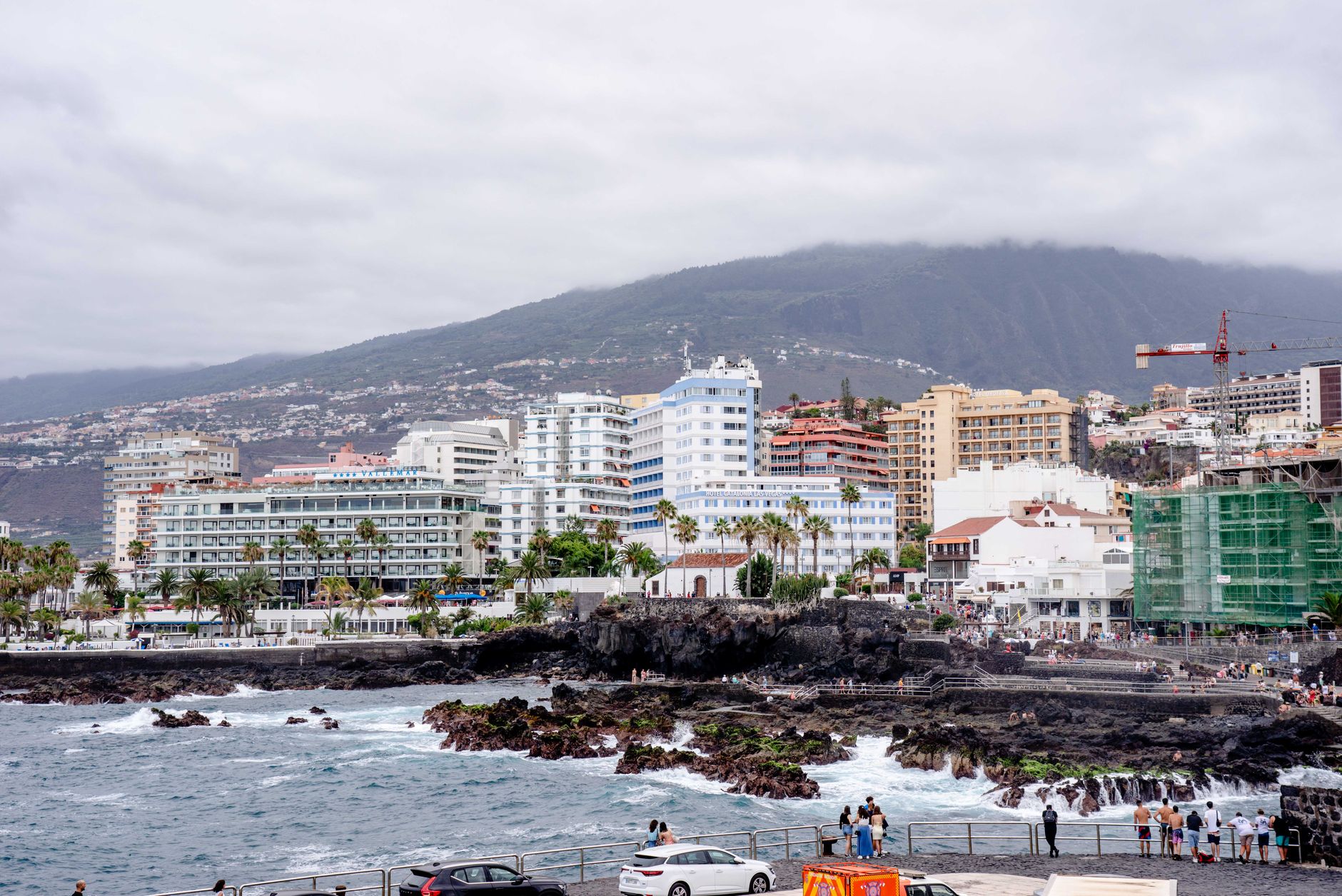
The north coast sits in the path of trade winds that keep temperatures steady year-round — warm without being oppressive in summer, mild rather than cold in winter. Cloud can settle over the hills behind the city, particularly in autumn and winter, but it rarely lingers at sea level for long.
Right now
Background & history adapted from Wikipedia (CC BY-SA) · specs from Wikidata (CC0) · weather from Open-Meteo · map data © OpenStreetMap contributors · photos from Wikimedia Commons / Unsplash with per-image credit. No third-party reviews or social posts reproduced.