
Puerto Banús
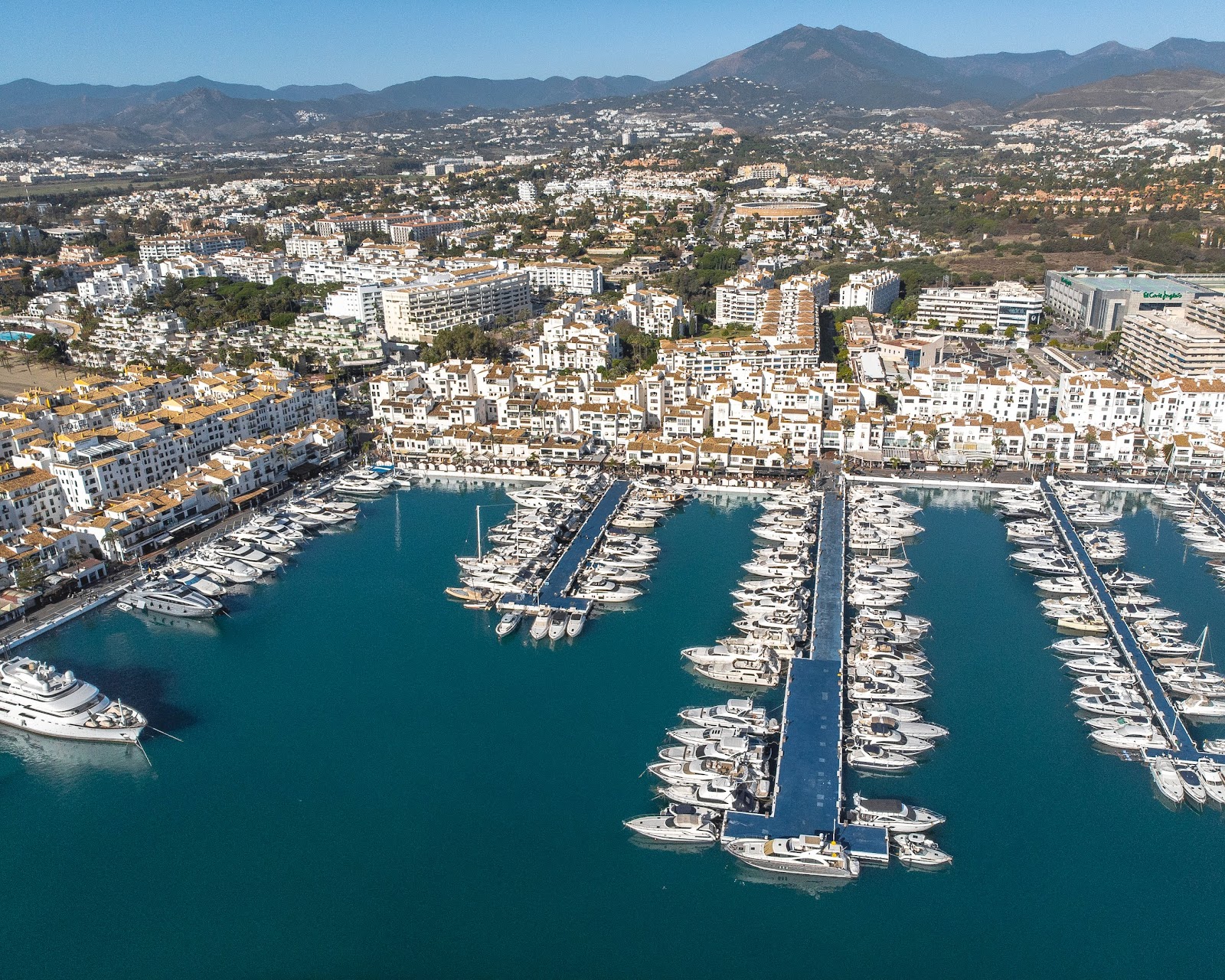
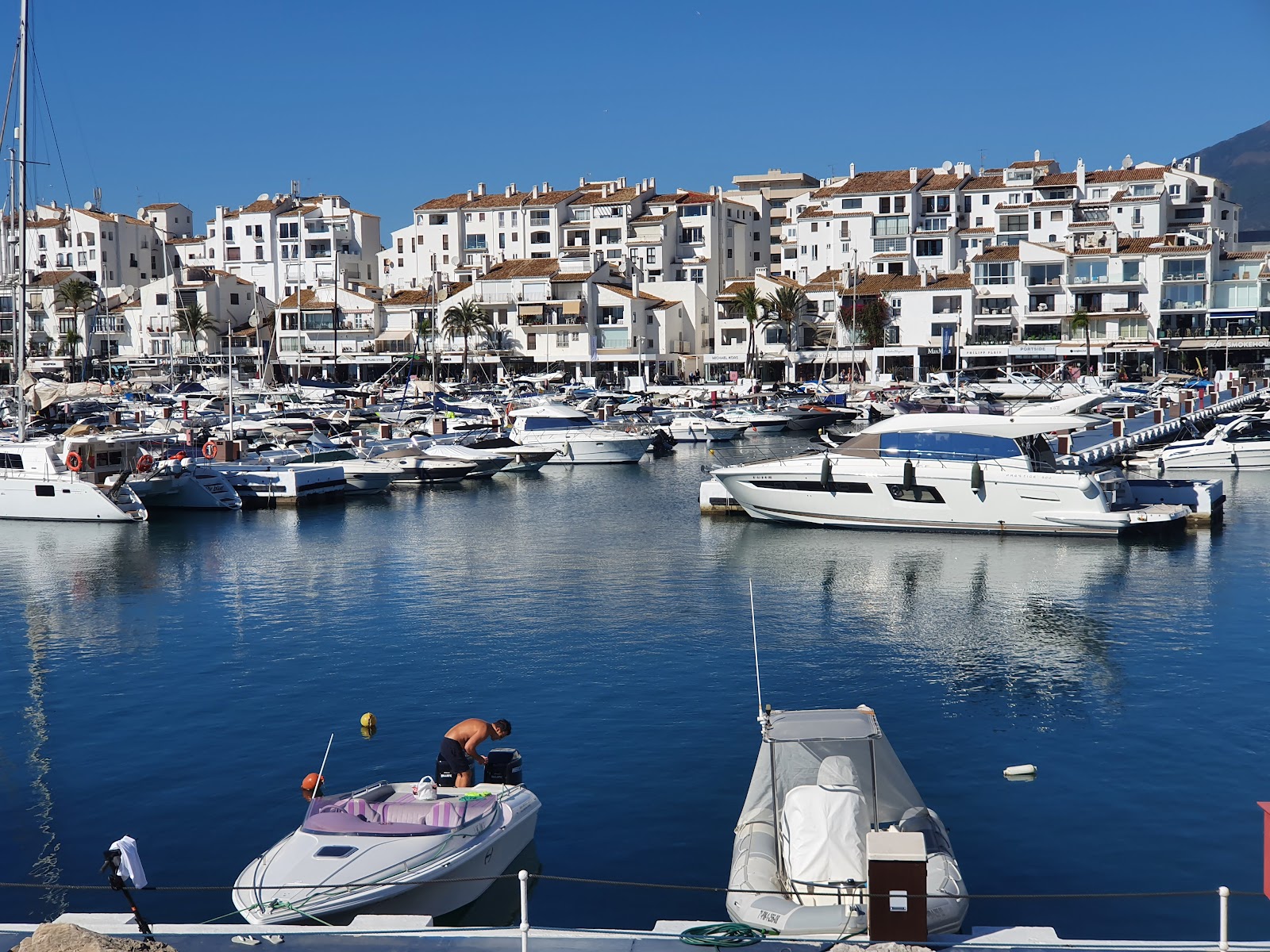
The marina at Puerto Banús runs about a kilometre of quayside, and on a summer afternoon the sight is unambiguous: superyachts stacked three-deep, their white hulls throwing light back at the Andalusian sun, while people at pavement tables watch the whole slow theatre of it. The place was built in a single push, opening in May 1970, and that unified origin gives it an unusual coherence — the low whitewashed facades, terracotta rooftops and archways all belong to the same architectural moment.
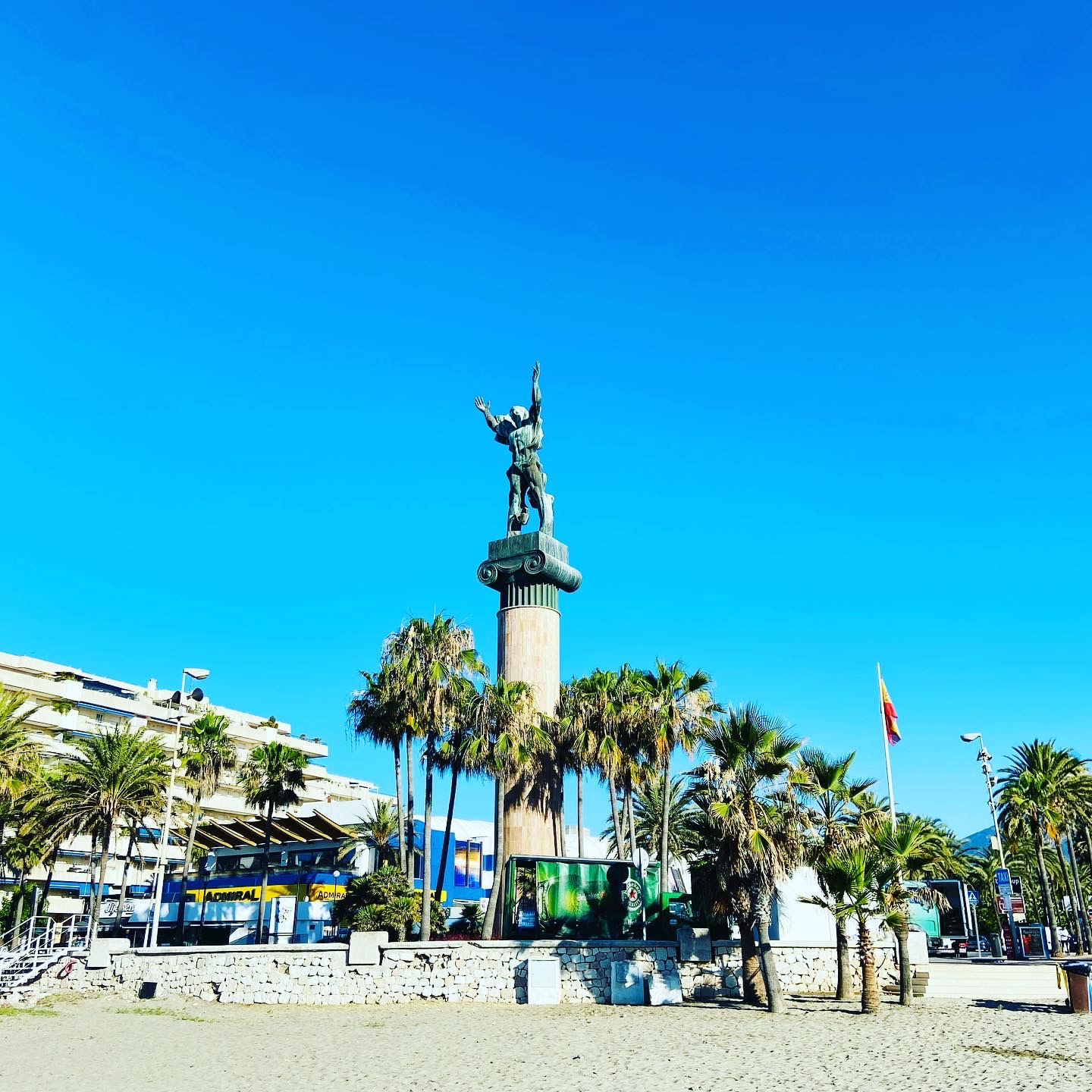
A three-ton rhinoceros cast by Salvador Dalí stands near the waterfront, placed here in 2004, and it stops people in their tracks in a way that the luxury boutiques do not. The marina holds 915 berths, some accommodating vessels up to 50 metres long, which means the boats themselves become the architecture.
💛 What travellers fall for
People who come back tend to arrive by catamaran from Marbella rather than by road — it takes roughly the same time and deposits you directly at the quay. The early evening walk along the promenade, before the restaurants fill, is when the light on the water is at its best and the pace is still human.
The story behind Puerto Banús
José Banús Masdeu, born in 1906 in Masó, Tarragona, bought land between the Guadaliza and Verde rivers in the late 1950s. He secured rights in 1964 to develop what was designated a Centre of National Tourist Interest, and construction began in 1965. His first architect, Antonio Lamela, drew plans for six futuristic 16-storey towers arranged in a semicircle — a vision that would have produced something closer to a resort complex than a port village.
The pivot came in 1966, when Prince Alfonso Hohenlohe introduced Banús to architect Noldi Schreck, who had already shaped the Marbella Club Hotel, and his assistant Marcos Sainz. Under their influence, the high-rise scheme was abandoned in favour of a low-rise Mediterranean vernacular. The marina opened on 28 May 1970. Banús died in Madrid in 1984, aged 78, having built the place that carries his name.
Good to know
Buses L-79 and several local líneas connect Marbella Centro to Puerto Banús every 30 minutes (journey ~23 minutes, €1.18 per ride). Catamarans also run hourly between the two. Summer, May to September, is peak season; winter is quieter but the marina never fully closes. Allow two to four hours.
Summers run hot, with July and August regularly reaching 30–35°C and sea temperatures around 24°C. Spring and autumn are mild and considerably less crowded. Winters are genuinely warm by northern European standards — January averages around 11°C — though November brings the most rain.
Where is Puerto Banús?
More tickets & tours for Puerto Banús
Book directly at the provider
What travellers say about Puerto Banús
Great place for a stroll and luxury spotting! It was so cool to walk through Puerto Banús and see all the massive, incredible yachts docked in the marina. If you love expensive, high-end sports cars, this is definitely the place to be, as you see them driving around constantly. It’s a major meeting spot for the glamorous, high-society crowd, which makes for some excellent people-watching. There are also plenty of luxury fashion shops to check out along the way. Overall, it's a really nice area to just stroll through, soak in the fancy atmosphere, and enjoy the views!
Puerto Banús was honestly one of the best places I have ever visited. The atmosphere there is absolutely amazing, and there is always something beautiful to look at everywhere you go. From the moment I arrived, I could see incredible luxury cars driving through the streets and parked along the marina — it honestly felt like something out of a movie. I saw so many amazing cars including Lamborghinis, Ferraris, Rolls-Royces, McLarens, and other rare luxury vehicles that you normally only see online. If you love cars, this place is definitely a dream because there are expensive and beautiful cars everywhere you look. The yachts were also unbelievable. Walking along the marina and seeing the huge, beautiful yachts lined up by the water was such an incredible experience. The views during the day were stunning, and in the evening everything looked even more beautiful with the lights reflecting on the water. The entire area feels lively, elegant, and full of energy. There are also so many nice restaurants, shops, and places to walk around while enjoying the scenery. I really enjoyed spending time there with my family because there was always something interesting to see. The weather, the palm trees, the ocean views, the luxury atmosphere, and especially the cars made the experience unforgettable. I can honestly say Puerto Banús is one of my favorite places I’ve ever been to, and I would highly recommend visiting if you are in Spain. It is the perfect place to relax, enjoy luxury views, see amazing cars and yachts, and make great memories. This review is completely based on my own experience, and I truly loved every moment there.
Puerto Banús is like a second home to me. I used to live and work in the port of Puerto Banús. I had the beach view on one side the other McDonald's with a hotel on top of it with a swimming pool. I think it is the only McDonald's that has a swimming pool on top of it. It has it all. The best beach, nicest place were people put their boats, rather yachts. The second one bigger than the first. It's insane. The el corte inglés shopping center is there. The Luís Vuitton shop, Gucci, Hugo boss, Fendi you name it. Three strip clubs among other hot night life and hotels that are insane. Luxury everywhere 💸💸💯💯🍸🍸💕💕💕
Very nice port in Spain, not alot of people around but I suppose that was because it was low season, alot of expensive cars and luxury shops if that's your thing, had a nice walk by the beach and up by the harbour on a nice clear day, will definitely visit again.
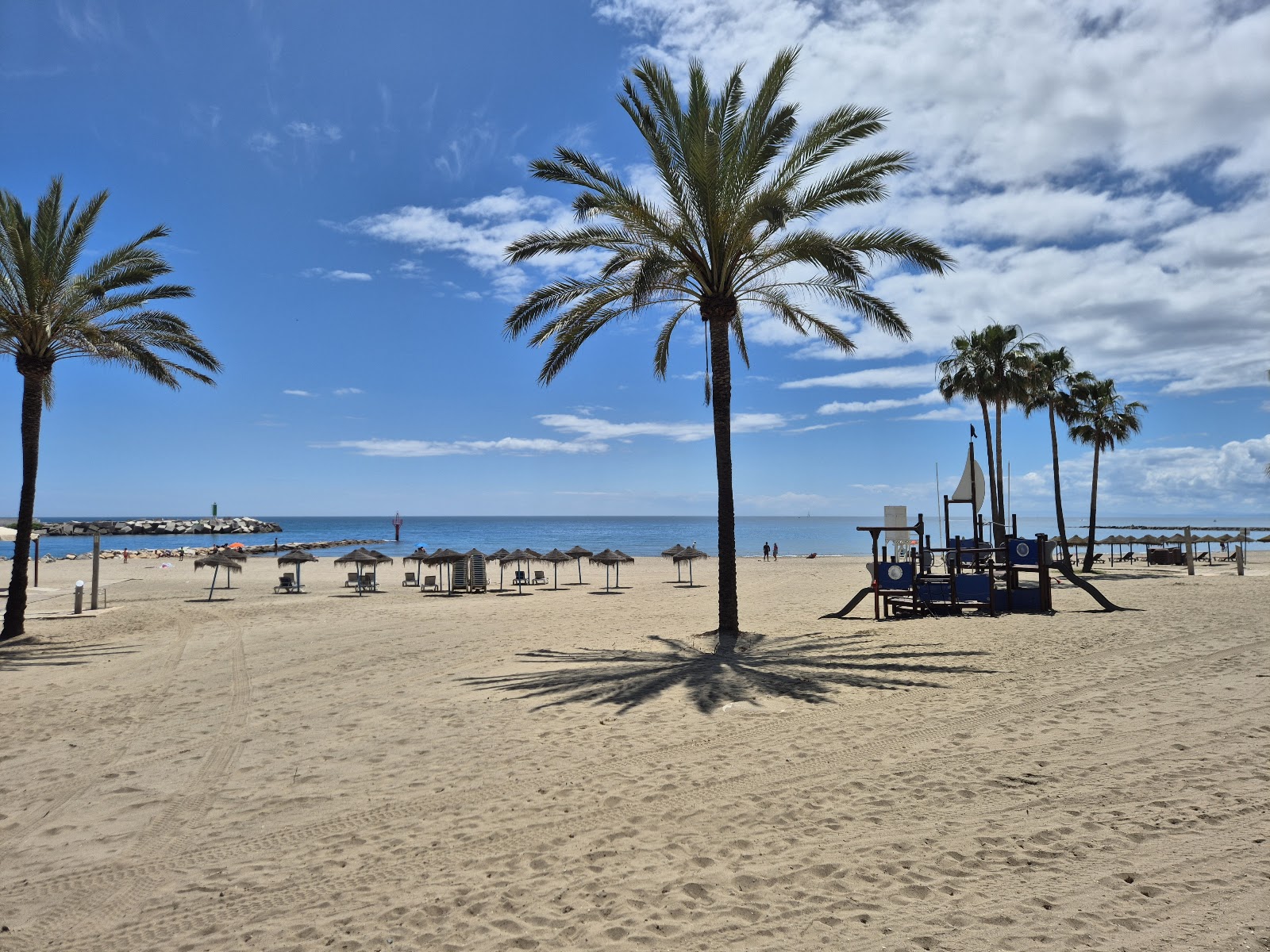
A beautiful beach with a great atmosphere. Playa de Puerto Banús is the perfect place to relax while enjoying the views of the marina and the Mediterranean. The water was clean, the beach well maintained, and there are plenty of restaurants and cafés nearby. A lovely spot to spend a sunny afternoon in Marbella.
More of Marbella
Discover where to stay, what to do and the best deals for your trip.
Explore Marbella →More attractions in Marbella
All of Marbella →

Background adapted from Wikipedia (CC BY-SA) · map data © OpenStreetMap contributors · ratings & place photos via Google · other photos with per-image credit. Ticket links may earn us a commission at no extra cost to you.