
Puerto Ayora
At the fish market on Avenida Charles Darwin, pelicans crowd the counter alongside the fishermen, and nobody seems to find this unusual. Puerto Ayora runs on that kind of matter-of-fact strangeness — the largest town in the Galápagos, where sea lions commandeer the pier benches and the main road dead-ends at a research station that has been tracking giant tortoises since 1964.
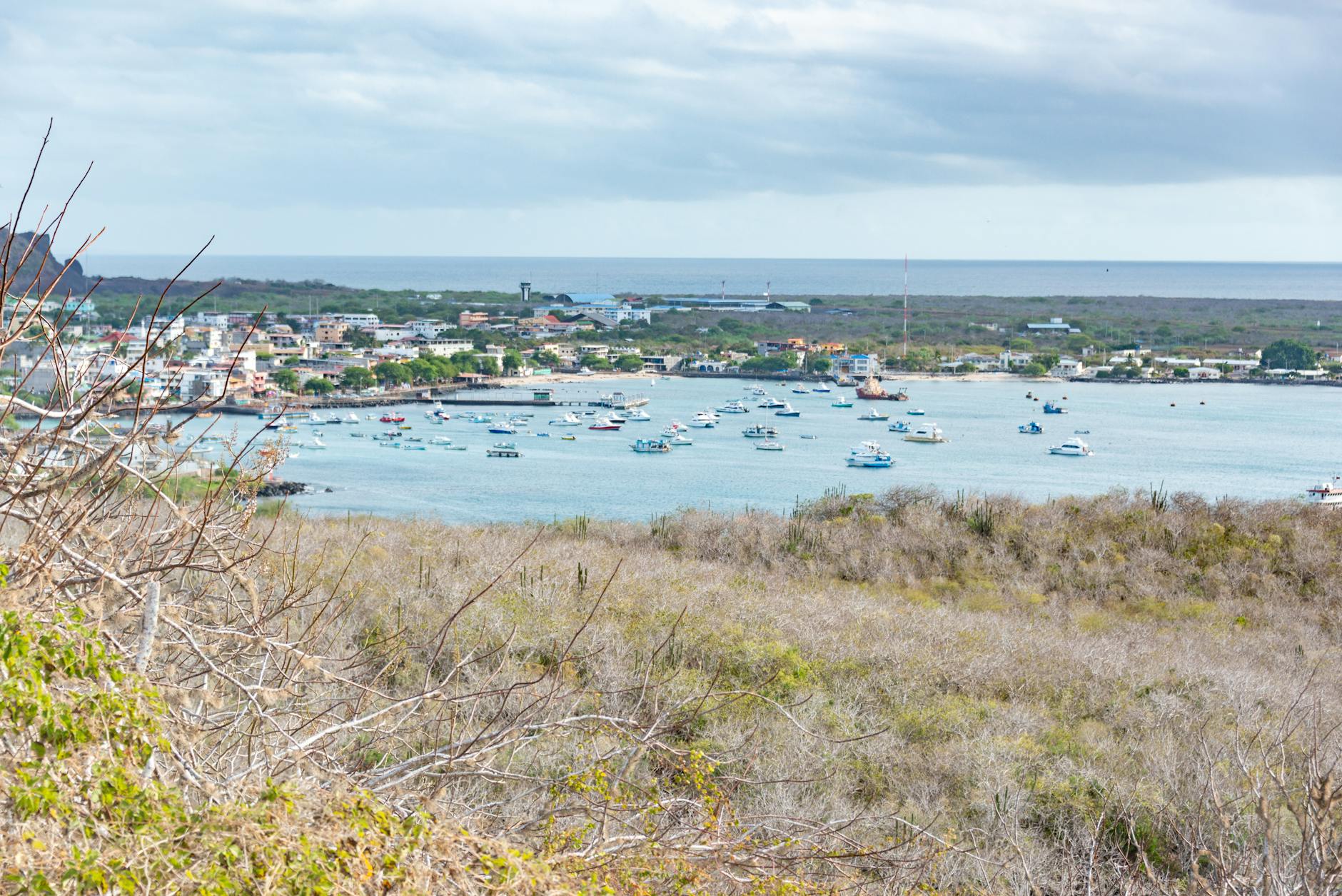
Academy Bay keeps the town cool and the harbor full of boats. Everything is within walking distance — three kilometers covers the whole place — but the ferry schedule and the $100 national park fee are the first things to sort before anything else.
💛 What travellers fall for
People who come back tend to mention the same two things: the evening shift at Santa Cruz Brewery, where you can drink a craft beer watching the bay go dark, and the early-morning walk to the Charles Darwin Research Station before the tour groups arrive. Get there at 8am and the tortoises are practically yours.
Deals in Puerto Ayora
Book directly at the provider
How Puerto Ayora came to be
Puerto Ayora's modern life began in the 1920s when Norwegian settlers arrived to run a canning factory and farm the interior of Santa Cruz. It was provisional and a little improvised. The town's name honours Isidro Ayora, Ecuador's president from 1926 to 1931 — a physician who backed the archipelago's integration into Ecuador and its first mapping expeditions.
The town's identity sharpened in the 1960s. The Charles Darwin Research Station opened in 1964 along the Academy Bay shoreline, and the national park administration anchored itself here too, turning Puerto Ayora from a small settlement into the scientific and administrative centre of the entire archipelago. The Angermeyer family and other European arrivals of the 1930s left their mark on Punta Estrada, the residential point across the bay.
Who and what shaped it
People who shaped it
Landmark buildings
See Puerto Ayora in motion
Plan your visit
On the map
When to go
July through November is the sweet spot: temperatures sit around 26–27°C and rainfall is almost nothing — September averages barely 5mm. The warmer season from January to May brings more cloud and occasional downpours, though the water temperature rises and the landscape turns greener.
Right now
Background & history adapted from Wikipedia (CC BY-SA) · specs from Wikidata (CC0) · weather from Open-Meteo · map data © OpenStreetMap contributors · photos from Wikimedia Commons / Unsplash with per-image credit. No third-party reviews or social posts reproduced.