
Puerta del Sol
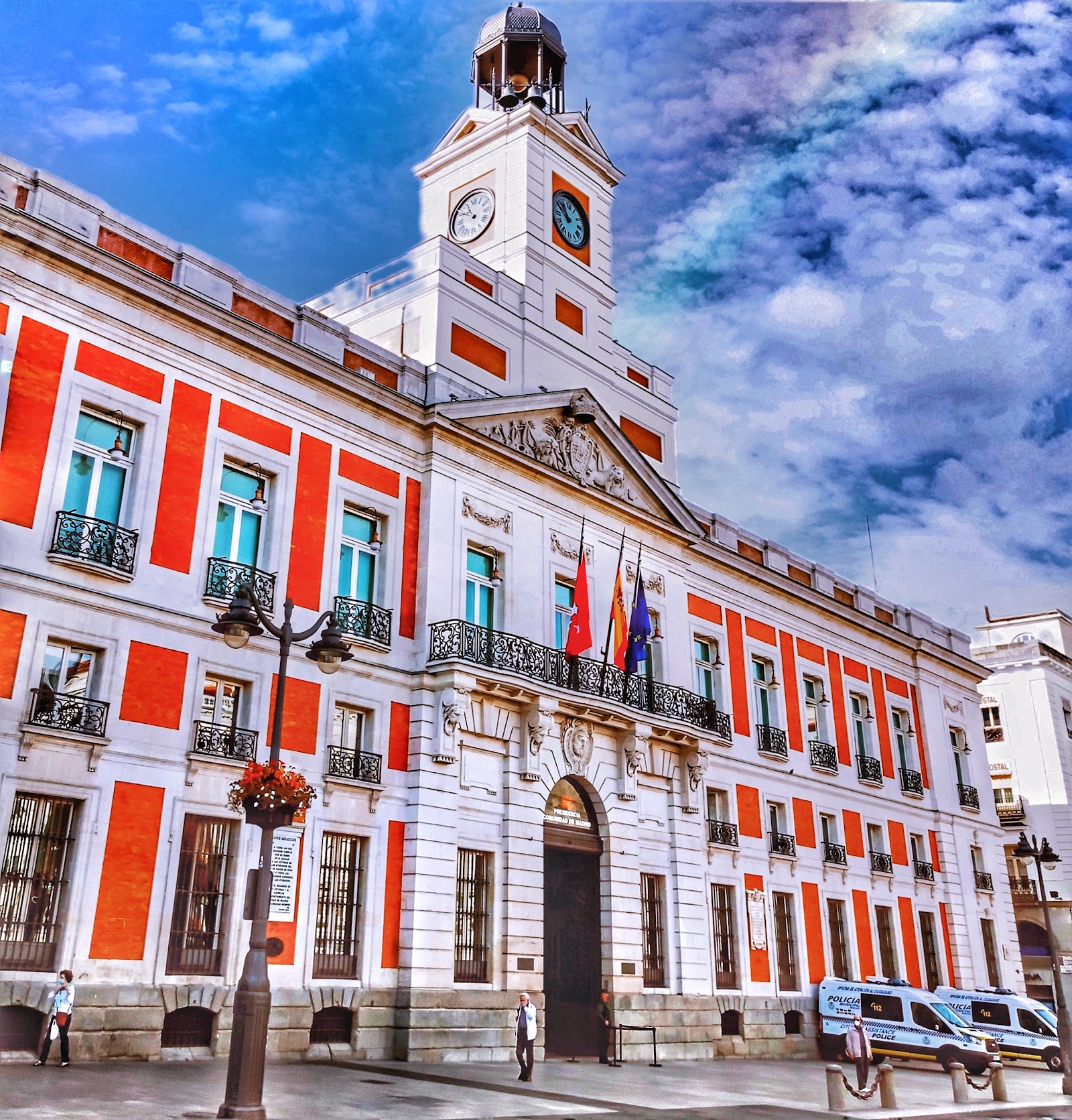
A plaque set into the granite north of the old Post Office marks the point from which every road distance in Spain is measured. You can stand on Kilómetro Cero and, if you look up, take in the clock tower that has counted down to midnight on Spanish television every New Year's Eve since 1962. Puerta del Sol is Madrid's civic centre of gravity — not because anyone decreed it so, but because the city keeps returning here, generation after generation, to mark the things that matter.
The square takes its name from a gate that once faced east, decorated with a rising sun, first noted in documents from 1570. That gate is long gone, but the orientation holds: this is where Madrid begins.
💛 What travellers fall for
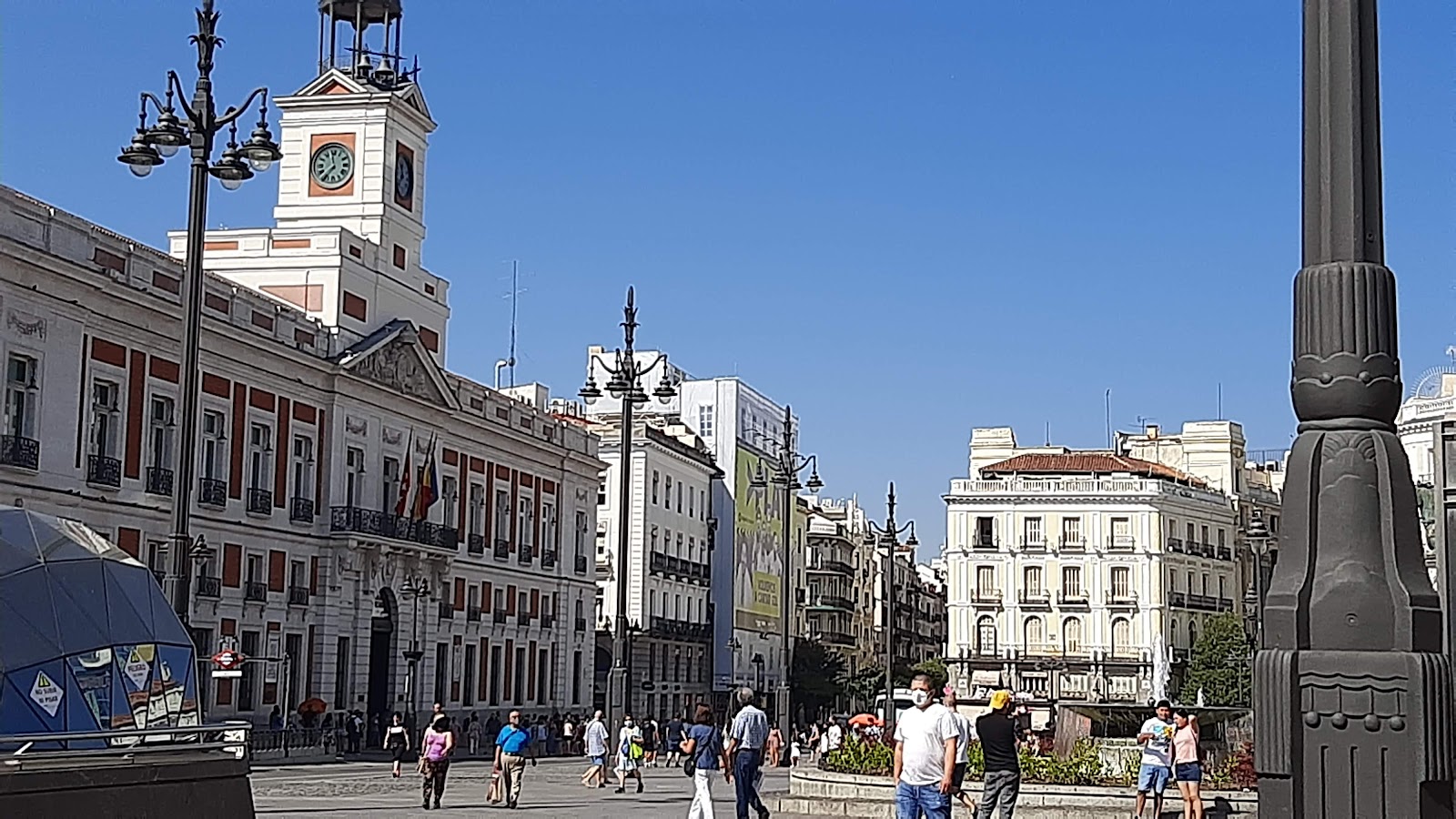
People who know Sol well tend to arrive just after eight in the morning, when the granite is cool and the Bear and Strawberry Tree statue can be photographed without a queue. They come back at golden hour, when the Casa de Correos glows and the Tío Pepe neon sign earns its heritage-monument status. Midday in July, they are somewhere else entirely.
The story behind Puerta del Sol
The original Puerta del Sol was a gate in Madrid's 15th-century city wall, oriented eastward toward the rising sun that gave it its name. By 1580, construction around the square was already underway alongside work on the neighbouring Plaza Mayor. The Convento de San Felipe el Real, founded in 1546, became the social engine of the area — Lope de Vega, Cervantes, Quevedo, Tirso de Molina and Calderón de la Barca all gathered on its steps to argue and observe.
The square's present shape came from a mid-19th-century overhaul: between 1857 and 1862, architects Lucio del Valle, Juan Rivera and José Morer demolished a cluster of buildings and gave Sol its elliptical form. The Casa de Correos, built by French architect Jacques Marquet between 1766 and 1768, predates that redesign and anchors the southern edge still — now the seat of the Madrid regional presidency, its clock the ritual timekeeper of the Spanish new year.
Good to know
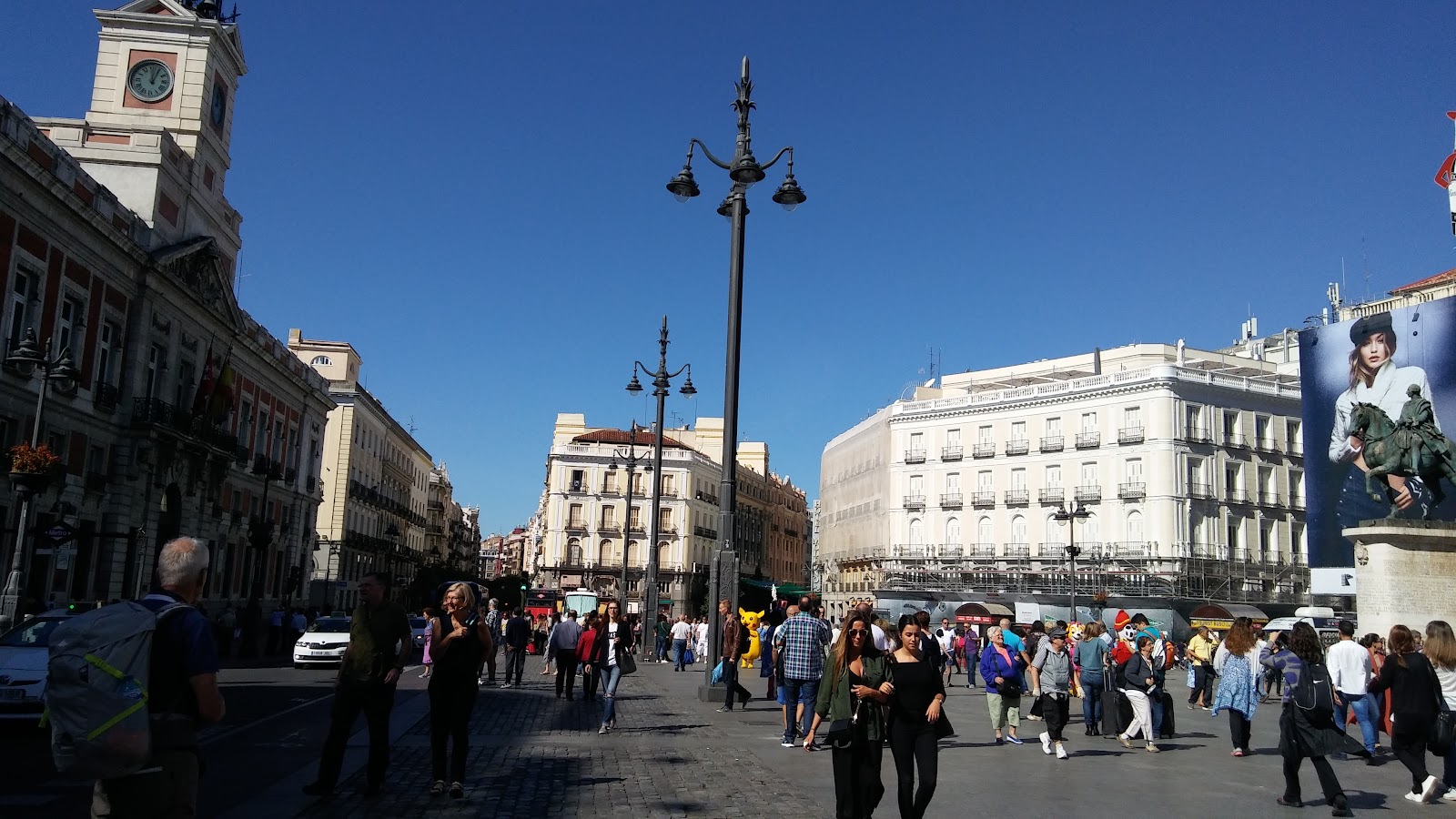
Sol station (lines 1, 2 and 3 of the Metro, plus commuter rail connecting to Atocha and Chamartín) puts you here in minutes from most of the city. The square is fully pedestrianised and free. Skip the 2–5 PM window in high summer — the post-2026 renovation left it open granite with minimal shade.
Spring brings mild temperatures and some rain through April, easing into warm evenings by May. Summer (June–August) runs hot, with July and August regularly exceeding 33°C and little shade on the open granite; early mornings or evenings are the only comfortable windows then. Autumn and the cooler months of March and April are the most straightforward times to linger here without planning around the heat.
Where is Puerta del Sol?
Location
- In Madrid
- 40.4169, -3.7035
- Open in Google Maps
More tickets & tours for Puerta del Sol
Book directly at the provider
More of Madrid
Discover where to stay, what to do and the best deals for your trip.
Explore Madrid →More attractions in Madrid
All of Madrid →
Background adapted from Wikipedia (CC BY-SA) · map data © OpenStreetMap contributors · ratings & place photos via Google · other photos with per-image credit. Ticket links may earn us a commission at no extra cost to you.