
Prairie des Filtres
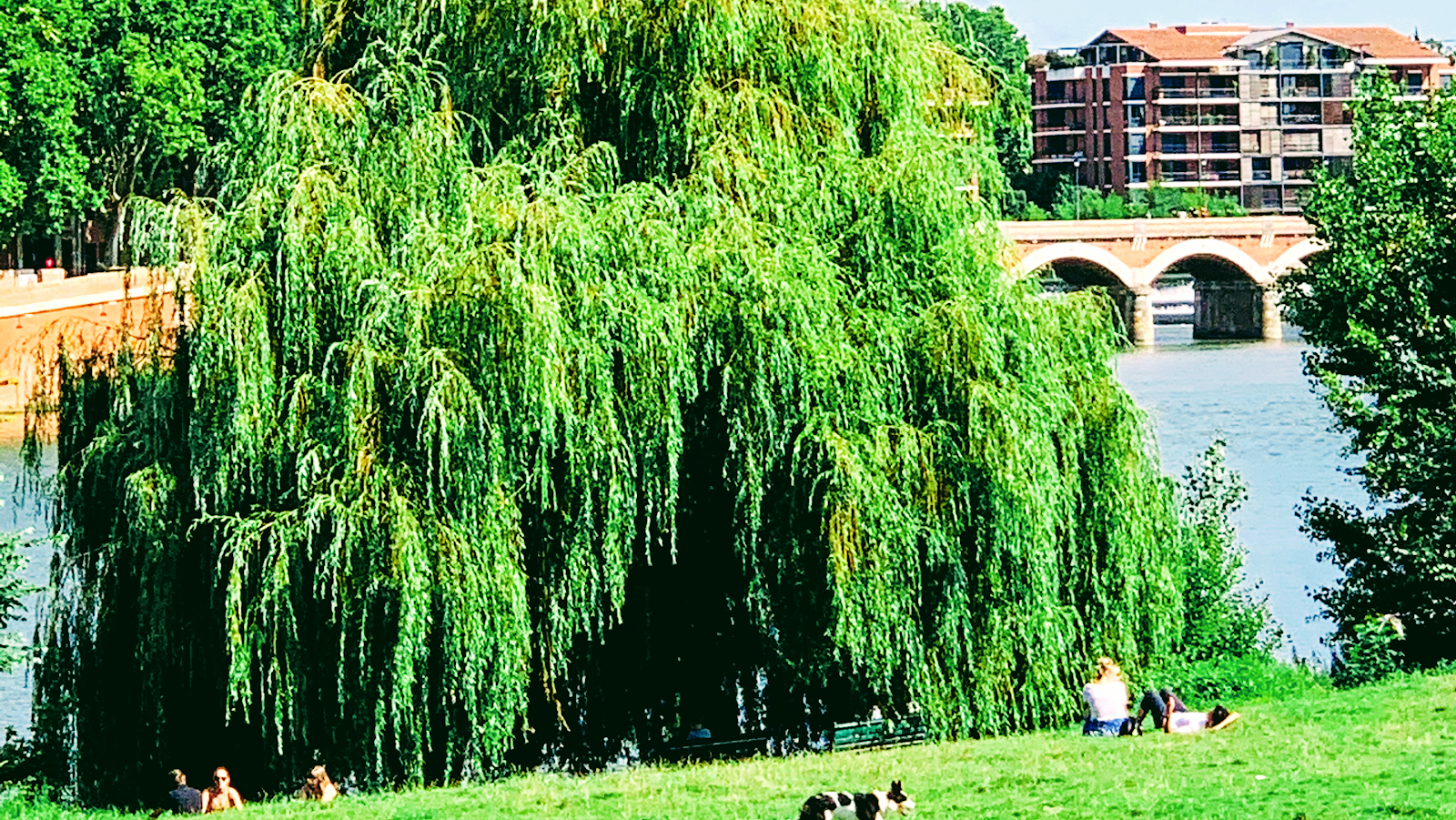
The Garonne does something to light here. Standing on the Prairie des Filtres, facing the river with the pink-brick facades of the Quais de Tounis on the far bank, you get one of Toulouse's longest unobstructed waterfront views — and almost no one outside the city seems to know it exists. The Pont-Neuf anchors the northern edge; a concrete barge alongside it houses a water-skiing club, which tells you something about the place's character.
This long, flat stretch of grass and gravel has been a public garden only since 1976, though Toulousains have been gathering here for festivals, military re-enactments and summer swimming since the 1840s. In June it becomes the stage for Rio Loco, a world-music festival that has run since the mid-1990s.

💛 What travellers fall for
Regulars from Saint-Cyprien tend to arrive with a few hours and no particular plan. The boules court draws the same faces most afternoons. In summer, sand gets laid along the bank for Toulouse Plage, and the whole atmosphere shifts — bring something to read and stay longer than you intended. Metro Line A to Saint-Cyprien–République drops you two minutes away.
The story behind Prairie des Filtres
The ground under your feet was once a street. Until the early 15th century, the Rue des Teuliers ran through a built-up quarter here, but two catastrophic Garonne floods — in 1430 and 1437 — levelled the Saint-Cyprien neighbourhood and left the land too scarred to rebuild. By 1756, the site was a sandy sedimentary flat, the river still shaping it each season.
The name comes from what was installed underground: filter galleries built from 1821 onward to purify Garonne water before it reached Toulouse's water tower. A second network of eleven interconnected wells followed in 1827, a third in 1829. Above these workings, the prairie became a gathering ground — a celebration organised by municipal councillor Atoze Arzac in November 1846, charity festivals under Mayor Amilhau in 1866, a re-enactment of the Battle of Valmy in September 1892. The city finally designated it a public garden in 1976.

Good to know
Metro Line A (Saint-Cyprien–République or Esquirol) or trams T1/T2 to Fer-à-Cheval get you here easily. Entry is free, gates open at 7:45 AM and close at nightfall — earlier in winter, around 9 PM in summer. An hour is plenty for a stroll; stay longer if Rio Loco is on in June.
April through October is the window when the prairie is at its most comfortable, with daytime temperatures ranging from around 19°C in spring to the high 20s in July and August. Winters are mild but short-dayed — the park closes at dusk, which comes early in December and January.
Where is Prairie des Filtres?
More tickets & tours for Prairie des Filtres
Book directly at the provider
What travellers say about Prairie des Filtres
I loved the airy space. The bar drinks are great and there are also nice places for kids to play. Ensure you bring your kids along as they would have an amazing time .
When the weather is good, this is the place to be at and have a picnic. Prairie des Filtres is a park located in the bank of river Garonne. A little crowded on a sunny weekend but still you can find a place to chill out with friends and have beers.
Season I went : Autumn Perfect place for weekend outing with friends/family or just a book reading session , right near in city center with the view of garone river. Very nice play area for kids also. In summer they have plages also :)
Great park with a buzzing atmosphere! When we arrived, there were a host of free activities, including table tennis, badminton and volleyball. Well worth a visit to relax in on a lounger and look at the views
Excellent park on the other side of Ponte Neuf bridge. There's contained space to let your dog off leash and the park is well maintained. Maybe people go there for lunch on a nice day. It's a great place to picnic.
More of Toulouse
Discover where to stay, what to do and the best deals for your trip.
Explore Toulouse →More attractions in Toulouse
All of Toulouse →
Background adapted from Wikipedia (CC BY-SA) · map data © OpenStreetMap contributors · ratings & place photos via Google · other photos with per-image credit. Ticket links may earn us a commission at no extra cost to you.