
Plaza Mayor de Madrid
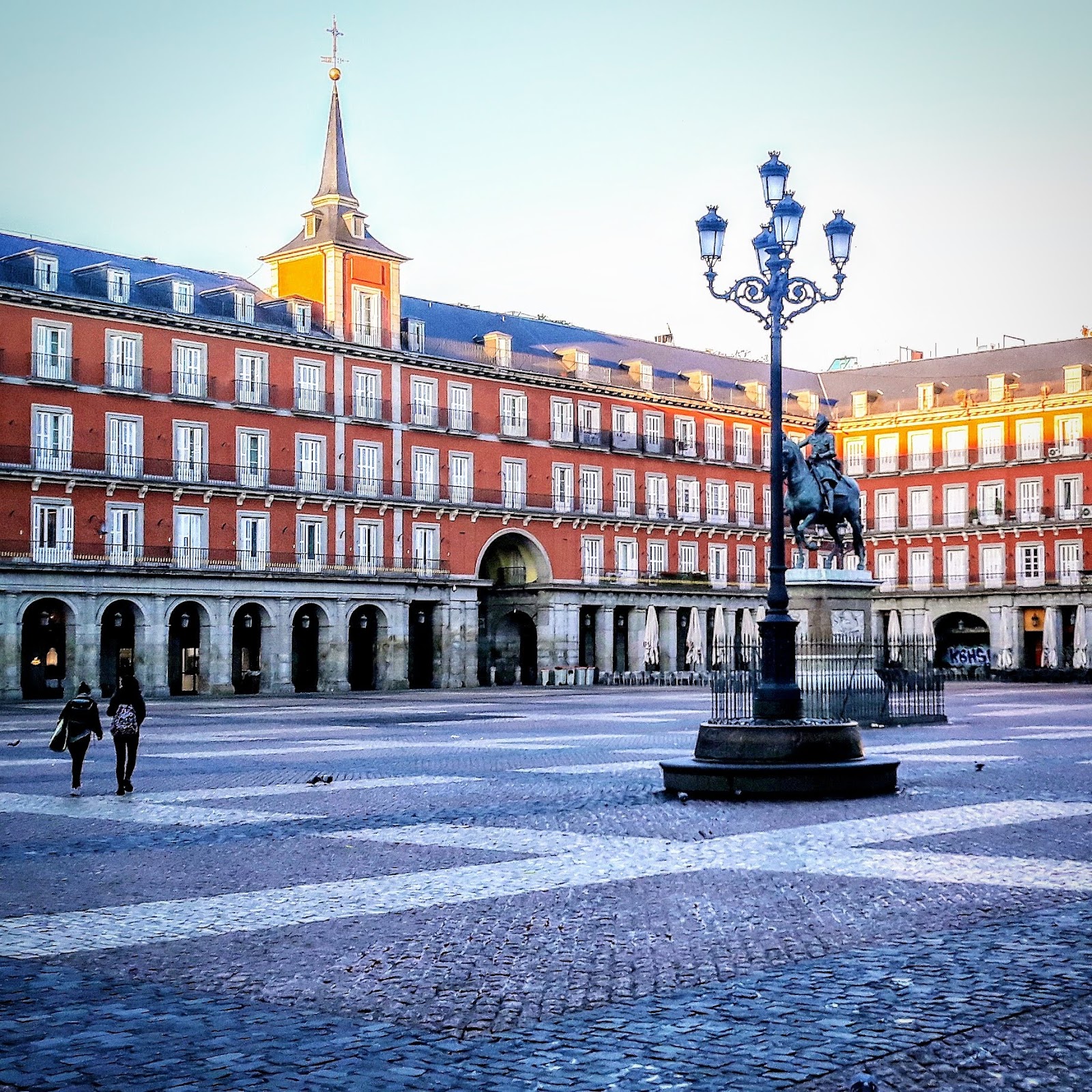
Stand at the center of Plaza Mayor and count the balconies: there are 237 of them, stacked across the surrounding residential buildings, all facing inward onto 129 by 94 metres of open stone. People have been watching from those balconies since 1620 — royal processions, bullfights, the occasional auto-da-fé. The square has outlasted every name it's ever been given.
Today the ground floor runs to cafés and tourist shops, but look up and the architecture does most of the talking. The painted façade of the Casa de la Panadería — those mythological figures in saturated colour — was added in 1992, which surprises most people who assume it's centuries old.
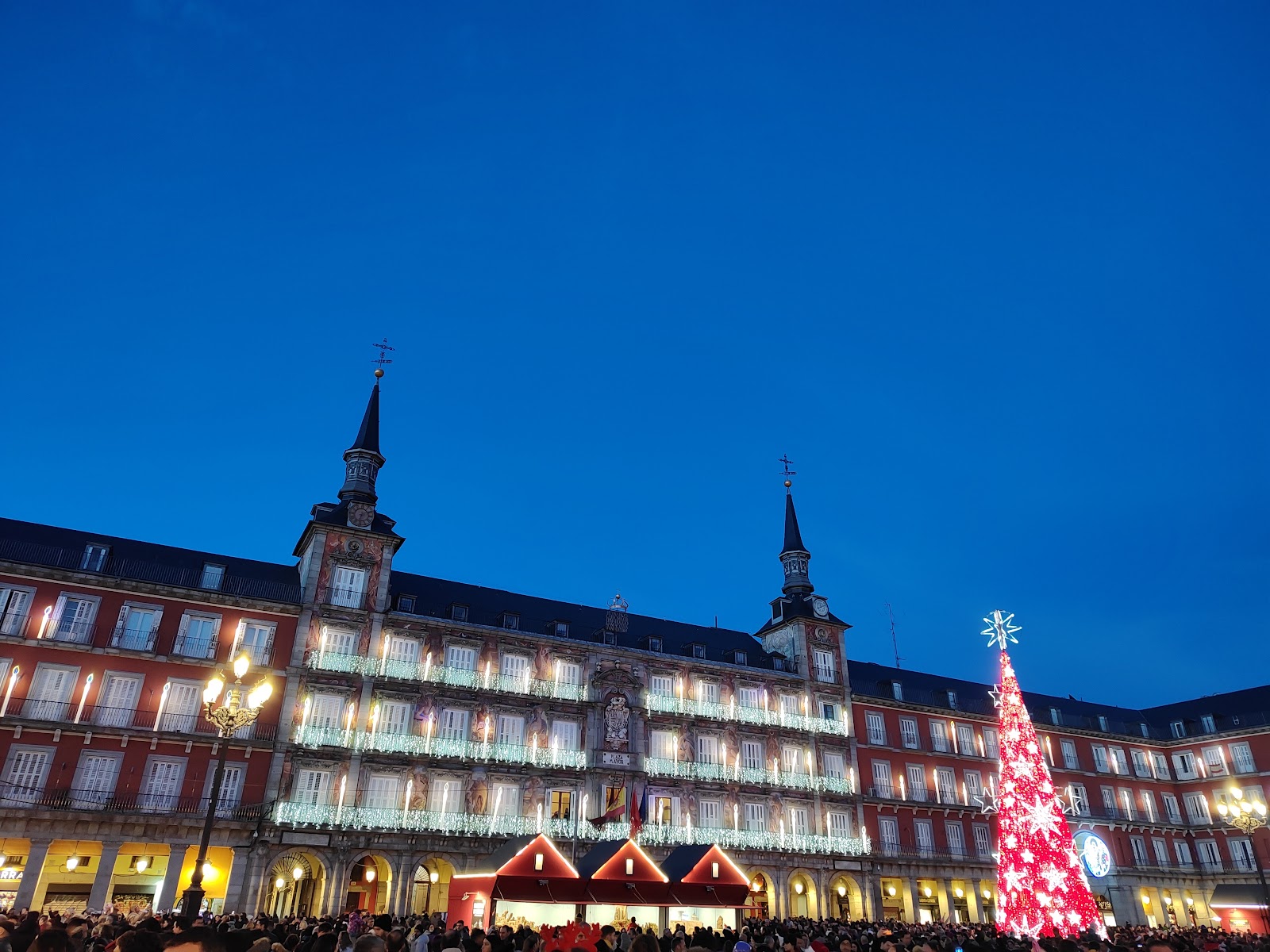
💛 What travellers fall for
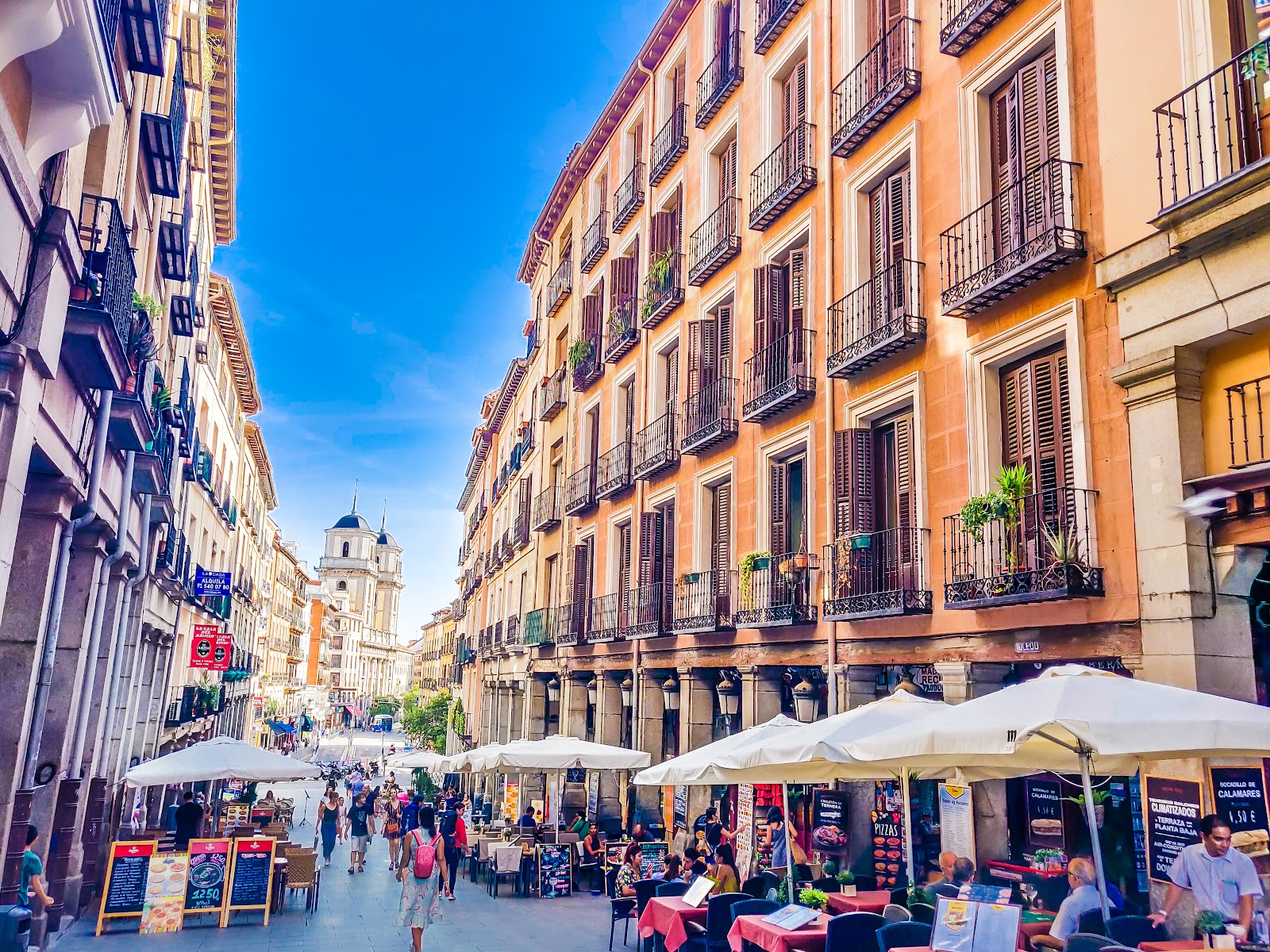
People who come back tend to arrive early, before the tour groups, when waiters are still setting out chairs and the Philip III statue catches the low light. The Cuchilleros gate, on the south side, leads down a staircase directly into the old city — follow it and you'll find the restaurant strip on Cava de San Miguel running right along the plaza's outer wall.
The story behind Plaza Mayor de Madrid
The site began as the Plaza del Arrabal, Madrid's medieval market on the city's edge. When Philip II moved the Spanish court to Madrid in 1561, Juan de Herrera was brought in to impose Classical order on the area. Construction of the plaza proper started in 1617 under Philip III, with Juan Gómez de Mora directing the work; the square was complete by 1619 and officially opened in 1620.
Three fires reshaped it over the following centuries. The worst, in 1790, prompted Juan de Villanueva to rebuild more modestly — he reduced the buildings from five storeys to three and enclosed the corners with the archway entrances that define the space today. That work wasn't fully finished until 1854, under Antonio López Aguado and Custodio Moreno. The bronze equestrian statue at the center, cast in 1616 by Giambologna and Pietro Tacca as a gift from the Medici to the Spanish crown, didn't arrive in the plaza until Queen Isabel II ordered it moved there in 1848.
Good to know
The square is open around the clock with no admission charge. Sol metro (lines 1, 2, 3) is the most direct approach. Weekend mornings bring a coin and stamp market; Sunday afternoons draw crowds. Skip the overpriced terrace coffees and duck through any of the nine gate archways to find cheaper options a street away.
Madrid summers are dry and genuinely hot — the open stone square amplifies the heat through July and August, so mornings are far more comfortable than afternoons. Spring and autumn are the easiest seasons to linger here; winters are cold but clear, and the square takes on a quieter character that the summer crowds rarely allow.
Where is Plaza Mayor de Madrid?
More tickets & tours for Plaza Mayor de Madrid
Book directly at the provider
What travellers say about Plaza Mayor de Madrid
Plaza Mayor was one of my favorite places in Madrid and one of the most beautiful squares I visited in the city. The moment I entered, I immediately understood why so many people love it. The architecture is stunning, with elegant buildings surrounding the square in a way that makes the whole place feel very grand, historic, and full of character. Everything looks carefully balanced and beautiful, and it has that rare atmosphere where you feel like you are standing in one of the most iconic parts of the city. I really loved simply walking around, looking at the façades, and taking in the feeling of the place. What I enjoyed most was the atmosphere. Plaza Mayor feels lively, classic, and very Spanish in the best way. There is something special about the entrances, the open space, and the restaurants and cafés around the square that makes it feel warm and memorable. It is the kind of place where you can stop for a few minutes and end up staying much longer because the surroundings are so pleasant. I also thought it was great for photos because every angle looks beautiful and the entire square has a very elegant look. For me, Plaza Mayor is absolutely a must-visit in Madrid. It is not just a square, but one of those places that gives you the feeling of the city immediately. I loved it a lot and would happily return there again.
30-Minute Walking Tour Guide – Plaza Mayor 0–5 Minutes: Main Entrance & First View Enter the square through one of the historic archways and pause in the center to admire the grand symmetry and architecture. Highlights: * Red-brick historic buildings * Traditional balconies * Large open central plaza * Classic Madrid atmosphere Best photo spot: Center of the square facing the surrounding arcades. ⸻ 5–10 Minutes: Statue of Philip III Walk toward the famous equestrian statue. What to notice: * Bronze statue of Philip III of Spain * Historical significance of the square * Architectural harmony around the plaza Great location for iconic Madrid photos. ⸻ 10–15 Minutes: Arcades & Historic Corners Explore the covered walkways and arches around the plaza. Scenic details: * Traditional Spanish architecture * Stone archways * Old cafés and shops * Street performers and local atmosphere Perfect for relaxed walking and photography. ⸻ 15–20 Minutes: Casa de la Panadería Exterior Stop near one of the square’s most decorated buildings. Highlights: * Colorful frescoes * Historic façade details * Traditional Madrid architectural style One of the most photographed sections of Plaza Mayor. ⸻ 20–25 Minutes: Café Break & Local Atmosphere Pause briefly at one of the terrace cafés. Recommended experience: * Coffee or light snack * Watch the lively square atmosphere * Enjoy street music and movement around the plaza ⸻ 25–30 Minutes: Sunset / Wide Angle Photos & Exit Finish the tour with wide-angle views of the plaza and surrounding arches. Best final viewpoints: * Corner archways * Central panoramic shots * Evening lighting on the buildings ⸻ Quick Tips * Early morning = quieter photos * Evening = best atmosphere and lighting * Comfortable shoes recommended * Great area for cafés and souvenirs nearby A perfect short tour to experience the history, architecture, and lively atmosphere of Plaza Mayor in just 30 minutes.
Visiting Plaza Mayor was an unforgettable experience and one of the most iconic places in Madrid. The square is absolutely magnificent, surrounded by elegant red facades, beautiful arcades, and centuries of history. Walking into Plaza Mayor feels like stepping back in time while still enjoying the vibrant energy of modern Madrid. The atmosphere is lively and full of character, with street performers, cafés, and people from all over the world enjoying this historic setting. What impressed me most was the architectural harmony and the sense of grandeur that makes the square so visually striking. Overall, a must visit landmark in Madrid historic, vibrant, and truly spectacular. ¡Madre mía, qué plaza tan impresionante!
We unknowingly went to Madrid and stayed next to this place on a spanisg public holiday, celebrating once of their saints. There was a music hall stage set up in place with lots of spainish dancing and spanish music of varying genres and regions. It was heaving. On the edge of the square there are food outlet, restaurants and souvenir places including a hattier, and jewellers.
Busy touristy square with lots of ops for people watching and beautiful architecture. The square serves as a gathering place for music concerts and celebrations. There are a lot of restaurants and shops nearby and inside the square itself. We saw part of the celebration that centers around Madrid's patron saint, San Isidro Labrador, and is the city's grandest traditional celebration in mid-May. The square was full of people all and into the early am. Free entry.
More of Madrid
Discover where to stay, what to do and the best deals for your trip.
Explore Madrid →More attractions in Madrid
All of Madrid →
Background adapted from Wikipedia (CC BY-SA) · map data © OpenStreetMap contributors · ratings & place photos via Google · other photos with per-image credit. Ticket links may earn us a commission at no extra cost to you.