
Plaza de Zocodover
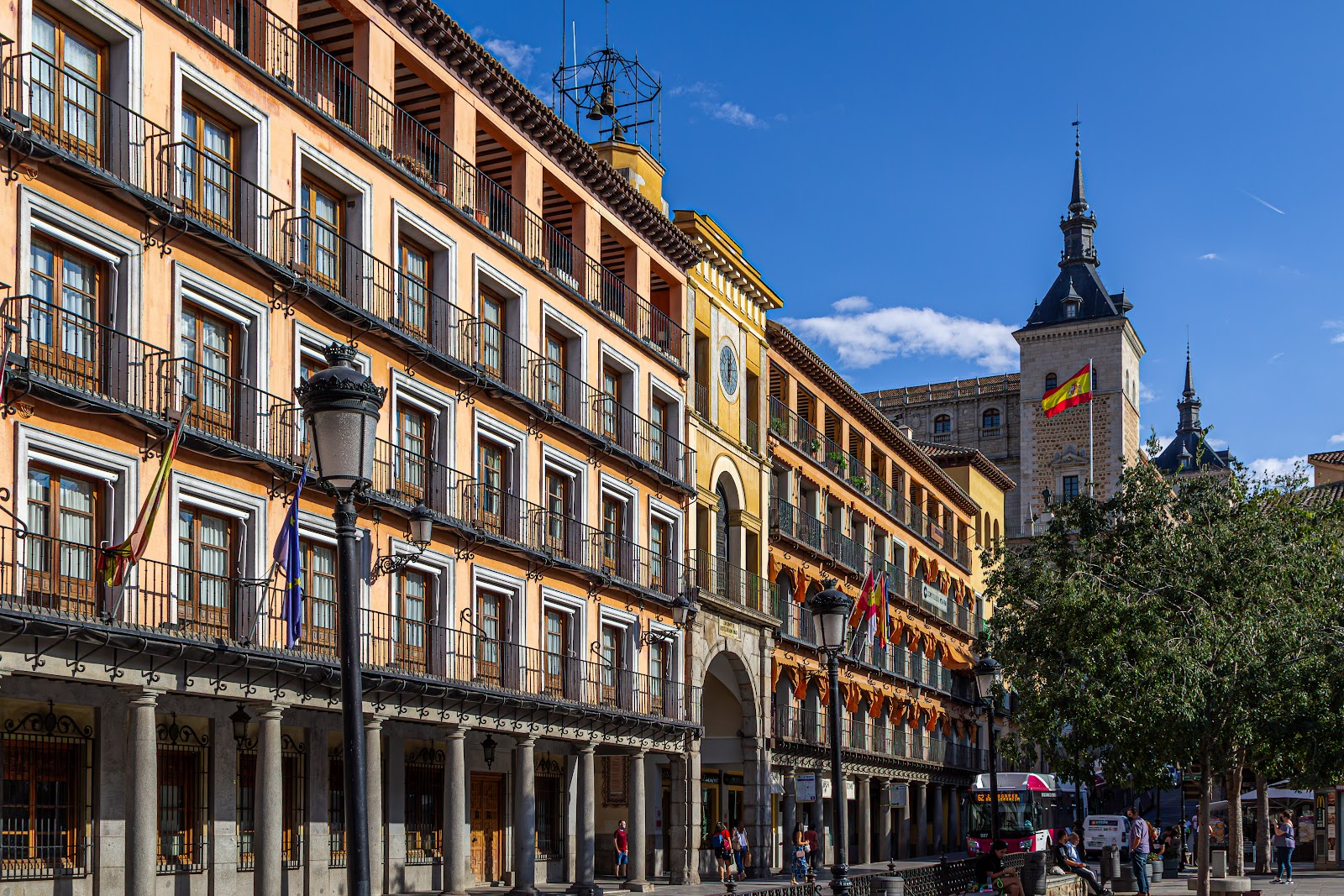
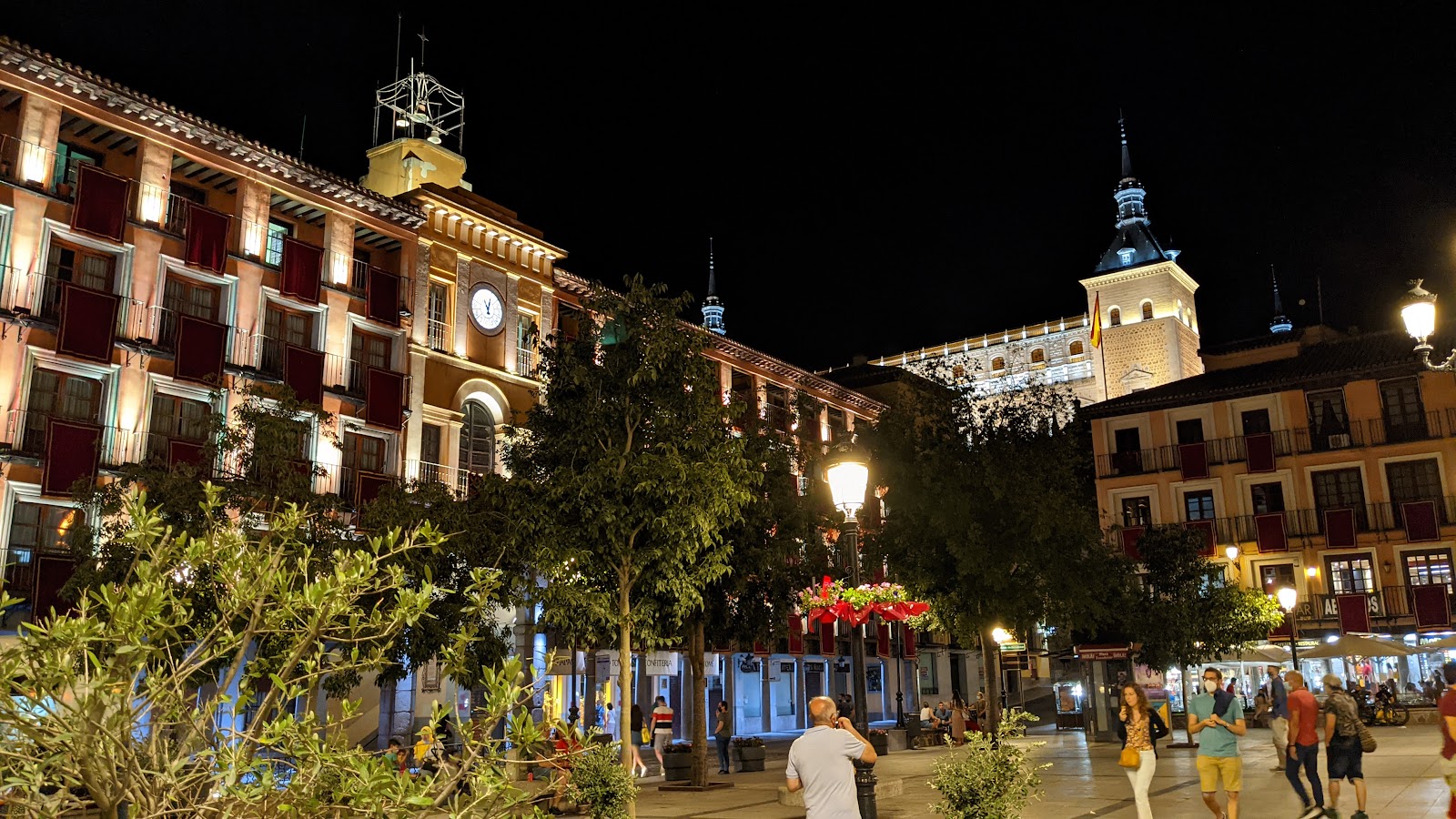
The name gives it away before you arrive: Zocodover comes from the Arabic sūq ad-dawābb — market of burden beasts. Animals, traders and goods moved through here for centuries before the square took the roughly triangular shape it holds today. Stand at its centre and you are standing at Toledo's hinge point, the place the city has always used to orient itself.
The Arco de la Sangre cuts through one edge, a stone gateway that frames a sudden drop of narrow alleys and, beyond them, the green valley falling toward the Tagus. Most walking tours start here, which means the square fills early and empties late.

💛 What travellers fall for
Regulars tend to arrive before the tour groups gather — coffee at one of the terrace bars while the light is still low and the stone is cool. The Tuesday market, now held near the Paseo de Merchán rather than the square itself, rewards an early look before the stalls thin out. Walk through the Arco de la Sangre for the valley view most visitors miss entirely.
The story behind Plaza de Zocodover
A fire on 29 October 1589 destroyed the old square, and the city used the moment to rebuild. Juan de Herrera, the architect Philip II favoured for the Escorial, designed part of the new layout. By the 16th century the plaza was fully porticoed on all sides; those arcades have gradually disappeared over the following centuries, though traces remain.
Isabella of Castile had already approved a widening project in 1502, and Henry IV had granted Toledo the right to hold a weekly Tuesday fair here in 1465 — a market tradition the square carried for generations. Miguel de Cervantes mentioned Zocodover in at least three works, and Garcilaso de la Vega, Lope de Vega and Calderón all knew it on foot. The last significant reform of the paving and traffic circulation came in 1961.
Good to know
The square is open around the clock and free. From Toledo's train station it's a 25-minute walk via the Alcántara Bridge, or a 3-minute bus ride (lines 5, 61, 62; €1.40, pay on board). Allow roughly an hour to move around the square itself before heading to the cathedral or Alcázar nearby.
Toledo runs hot in summer — July averages above 33°C at the high end, and the square offers little shade. Mid-April through late May is easier, with mild days and occasional Atlantic rain. Spring mornings and autumn afternoons are when the stone holds the best light.
Where is Plaza de Zocodover?
More tickets & tours for Plaza de Zocodover
Book directly at the provider
What travellers say about Plaza de Zocodover
A pretty and busy Toledo plaza.
Beautiful and amazing! A must-see place. Prepare to be amazed by the scenic streets and buildings. But also be ready to walk a lot! Parking is a bit challenging, so make sure you find public parking before you go. The walk up and down the hill is totally worth it. It's okay for families with children, but not so much for the elderly unless they don’t mind the ups and downs. A must-see place at least once in your life!
One of the main squares in Toledo.
wonderful cozy square in the heart of Toledo, beautiful architecture, always crowded and great atmosphere
Amazing area with lot of shops and restaurants and other outlets. Happening part of Toledo.
More of Toledo
Discover where to stay, what to do and the best deals for your trip.
Explore Toledo →More attractions in Toledo
All of Toledo →


Background adapted from Wikipedia (CC BY-SA) · map data © OpenStreetMap contributors · ratings & place photos via Google · other photos with per-image credit. Ticket links may earn us a commission at no extra cost to you.